MEDICAL DISCLAIMER: This article is for informational purposes only and does not constitute medical advice. Breastfeeding decisions, including pumping schedules and milk supply concerns, should be discussed with your healthcare provider, OB-GYN, or a certified lactation consultant (IBCLC). Always consult a professional before making significant changes to your feeding routine.
Best Breast Pumps for Working Moms 2026: Your Complete Guide to Pumping at Work Without Sacrificing Your Supply
Rachel's Story: The Pump That Saved Her Breastfeeding Journey
Rachel, 32, had always planned to breastfeed. She'd read all the books, attended a breastfeeding class at the hospital, and felt fully prepared when her daughter Lily was born. For the first eight weeks of maternity leave, everything went beautifully. Lily latched well. Rachel's supply was strong. She felt like she'd finally found her rhythm.
Then her return-to-work date crept closer, and the anxiety hit hard.
Rachel worked as a marketing manager at a mid-size company. She had a lactation room available — a small, private space with a chair and an outlet — but she'd only have 20 to 30 minutes between meetings. She worried constantly: Would she pump enough? Would her supply drop? Would she have to give up breastfeeding entirely?
"I spent hours on forums at 2 a.m. reading about other working moms," Rachel recalls. "Some women were devastated when they had to stop breastfeeding because they couldn't find a pump that worked with their schedule. I didn't want that to be me."
The difference for Rachel? Finding the right breast pump. After trying a bulky hospital-grade option that was too slow for her tight schedule, she switched to a portable double electric pump that let her express milk efficiently in under 20 minutes. She pumped twice a day at work, kept her supply strong, and continued nursing Lily until her first birthday — exactly as she'd hoped.
If you're a working mom preparing to return to the office, or you're already back and struggling with your pumping routine, this guide is for you. We'll walk through everything you need to know about choosing the best breast pump for your lifestyle — and share the top options available at AllCare Store's feeding collection.
Why Choosing the Right Breast Pump Matters More Than You Think
Not all breast pumps are created equal. The difference between a good pump and the wrong pump for your body and schedule can mean the difference between successfully maintaining your milk supply and struggling to produce enough for your baby's daycare bottles.
Here's what's at stake when you choose a breast pump for work:
Milk supply: Your body operates on a supply-and-demand system. Every time you express milk — whether by nursing or pumping — your body receives a signal to produce more. If you miss pumping sessions at work, your supply will drop. The right pump helps you express efficiently and consistently, keeping your supply stable.
Time efficiency: Most working moms have 20 to 30 minutes per pumping session, sometimes less. A pump with strong, consistent suction — and the right flange fit — can fully express both breasts in that window. A weaker or slower pump may not, leaving you engorged and your supply threatened.
Comfort and let-down: Stress inhibits let-down — the reflex that releases milk. If your pump is uncomfortable, noisy, or hard to operate, it adds stress to an already stressful situation, making it harder to express milk effectively. A pump that feels intuitive and comfortable makes a real physiological difference.
Portability: Working moms need pumps that travel easily. A heavy, bulky machine tethered to an outlet may be impractical if you work in multiple locations, travel for business, or need to pump in your car. Lightweight and battery-powered options have transformed pumping for on-the-go moms.
Types of Breast Pumps: What's Right for Working Moms
Double Electric Breast Pumps
Double electric pumps are the gold standard for working moms. They allow you to express both breasts simultaneously, cutting your pumping time in half. Most double electric pumps complete a full session in 15 to 20 minutes. They're powered by AC adapter or battery, offer adjustable suction and speed, and many have multiple modes (stimulation/letdown followed by expression).
Best for: Moms who need to maintain supply with regular daily pumping, especially if pumping 2+ times per day at work.
Single Electric Breast Pumps
Single electric pumps express one breast at a time, which doubles your pumping time but costs less upfront. They're a good option for moms who pump less frequently (once a day) or primarily pump after nursing rather than instead of nursing.
Best for: Occasional pumping, building a freezer stash, or moms who nurse more often than they pump.
Manual Breast Pumps
Manual pumps use hand-operated compression rather than electric suction. They're completely silent, ultra-portable, and don't require electricity or batteries. They're less efficient for regular work pumping but invaluable as a backup or for occasional use.
Best for: Travel, backup use, or occasional pumping when away from home.
Hospital-Grade Pumps
Hospital-grade pumps offer the strongest suction and the most efficient milk expression. They're designed to establish and maintain supply for mothers whose babies can't nurse directly (NICU moms, for example) or for mothers who have supply challenges. They're heavy, expensive, and often rented rather than purchased.
Best for: Moms with supply issues, NICU moms, or situations where establishing supply quickly is critical.
What to Look for in a Work Pump: Key Features
Before we dive into specific products, here are the features that matter most when choosing a breast pump for work use:
Suction strength (mmHg): Most quality pumps offer suction between 150 and 300 mmHg. Higher suction isn't always better — the right suction level is the highest that's still comfortable for you. Look for pumps with wide suction adjustment ranges so you can customize to your body.
Closed vs. open system: A closed system has a barrier that prevents milk from entering the tubing or motor, making the pump more hygienic and allowing you to use replacement parts without contamination concerns. Open systems can grow mold in the tubing with improper care. For work use, a closed system is highly recommended.
Flange size: The flange is the funnel-shaped piece that fits over your nipple and areola. Using the wrong flange size is one of the most common reasons women struggle with pumping — it causes pain, reduces output, and can damage tissue. Most pumps come with 24mm or 25mm flanges, but many women need different sizes. Look for pumps that offer multiple flange sizes.
Battery life and portability: If you work in multiple spaces, travel, or have a commute, battery operation or car adapter compatibility is a significant advantage.
Noise level: Pumping at work means pumping in shared spaces, cars, or thin-walled lactation rooms. A quiet pump provides discretion and reduces stress.
Ease of cleaning: Fewer parts mean faster cleanup, which matters when you have 5 minutes between meetings. Look for pumps with minimal components and dishwasher-safe parts.
Top Breast Pumps for Working Moms at AllCare Store
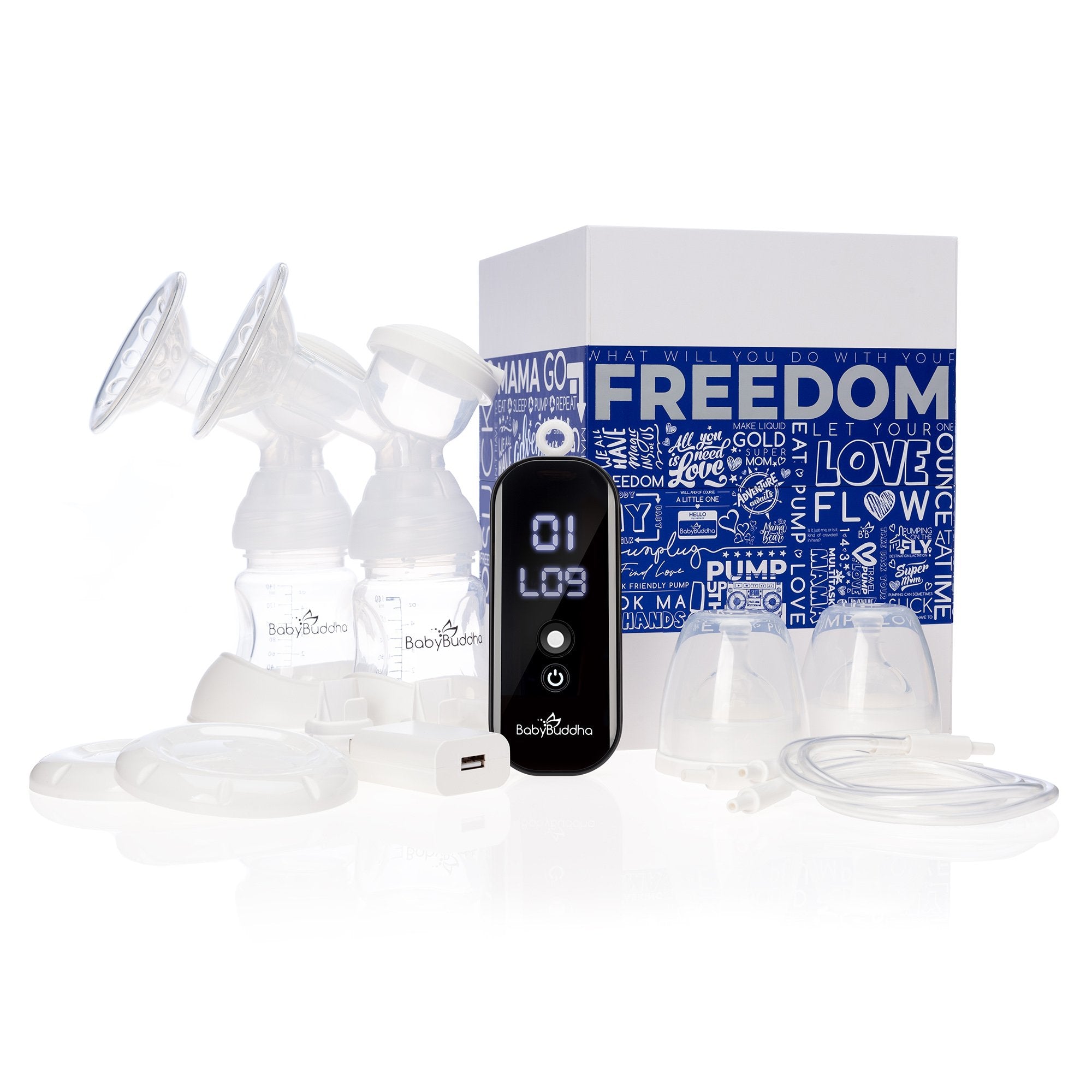
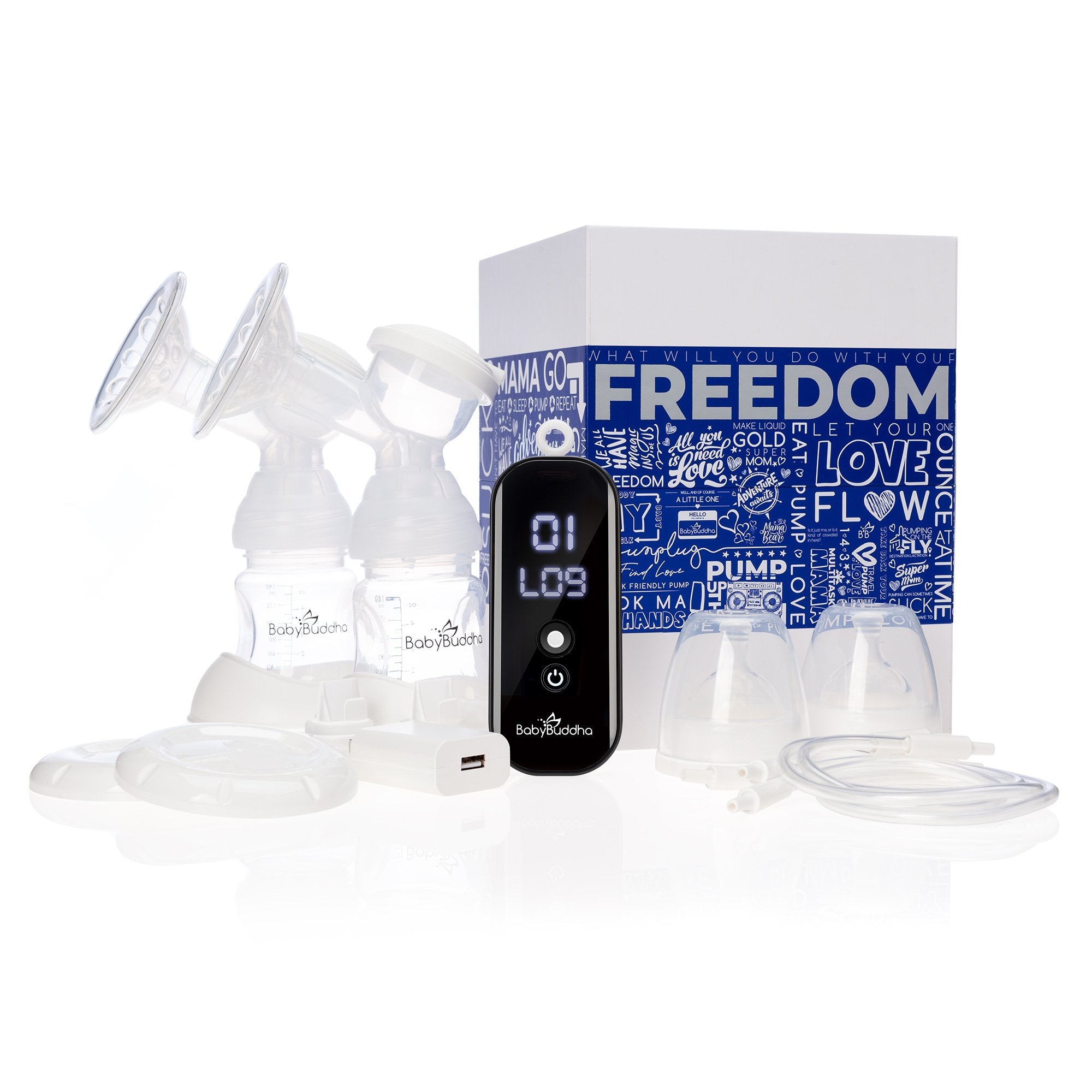
1. BabyBuddha Double Electric Breast Pump Kit — Best Portable Double Electric
The BabyBuddha Double Electric Breast Pump has become a favorite among working moms who need hospital-grade suction in a pocket-sized device. Weighing just 3.8 ounces — smaller than most smartphones — the BabyBuddha doesn't sacrifice performance for size.
Key features:
- Suction range of 53–320 mmHg — hospital-grade strength
- 15 comfort settings: 6 stimulation levels + 9 expression levels
- Closed system: prevents milk contamination in motor
- Rechargeable battery — pump anywhere without an outlet
- USB-C charging for convenience
- Ultra-quiet motor for discreet office pumping
- Includes standard and wide-mouth bottle adapters
Why working moms love it: The BabyBuddha's tiny size means it fits in a purse or laptop bag without bulk. The rechargeable battery means you're never hunting for an outlet. And at hospital-grade suction, most moms can fully express in 15 to 20 minutes per session.
Price point: Mid-to-high range — a worthwhile investment for moms who pump daily.
2. Ardo Calypso Double Plus Electric Breast Pump — Best for Gentle, Quiet Pumping
The Ardo Calypso Double Plus Breast Pump is Swiss-engineered and hospital-grade — and widely described as the quietest electric breast pump on the market. For moms pumping in shared office spaces or thin-walled rooms, quiet matters.
Key features:
- Hospital-grade, FDA-approved
- 64 total settings: independent vacuum and cycle adjustment
- Weighs just 1 lb — lightweight for travel and commuting
- Closed system for hygiene
- Runs on AC adapter, AA batteries, or car adapter (3 power options)
- BPA-free components
- Includes bottles, breast shells, and all essentials
Why working moms love it: The Ardo Calypso is remarkably gentle — many moms describe it as feeling most similar to actual nursing. The ultra-quiet motor means moms can pump discreetly even in open office environments with a privacy screen. Three power options eliminate range anxiety about where you'll pump.
Price point: Premium — reflects its hospital-grade engineering and build quality.
3. Evenflo Advanced Single Electric Breast Pump — Best Budget-Friendly Option
The Evenflo Advanced Single Electric Breast Pump is an excellent option for moms who pump less frequently at work — perhaps once a day to relieve pressure while nursing more at home and on weekends.
Key features:
- Compact, lightweight one-hand design
- Closed system for hygiene and safety
- 2 flange sizes included (24mm and 28mm)
- Multiple suction and speed settings
- Easy cleaning with minimal parts
Why working moms love it: Affordable and simple, the Evenflo Advanced is a great choice for moms who are primarily nursing but need to pump occasionally at work or to build a small freezer stash. Its lightweight design makes it genuinely portable.
4. Evenflo Manual Breast Pump Advanced — Best Emergency Backup
Every working mom should have the Evenflo Manual Breast Pump in her pumping bag as a backup. No batteries, no electricity, no noise — just reliable suction powered by your hand.
Key features:
- Completely silent — ideal for pumping anywhere discreetly
- No power required — works anywhere
- Lightweight and compact for travel
- Easy assembly and cleaning
Why working moms love it: Power outages, dead batteries, forgotten chargers — things happen. A manual pump ensures you're never stranded without a way to relieve engorgement. Many moms also prefer manual pumping in the morning to collect milk from the non-nursing breast while baby feeds on the other side.
5. Twist Double Pumping Kit — Best Accessory for Hands-Free Pumping
The Double Pumping Kit Twist transforms your existing pump into a more convenient double-pumping setup. Perfect for moms who want to maximize efficiency and free up their hands during pumping sessions to eat, type, or just relax.
Breast Pump Comparison Table: Find Your Perfect Work Pump
| Pump | Type | Portability | Suction Strength | Session Time | Best For |
|---|---|---|---|---|---|
| BabyBuddha Double Electric | Double Electric | ★★★★★ (pocket-sized) | 53–320 mmHg | 15–20 min | Daily pumpers, travel, on-the-go |
| Ardo Calypso Double Plus | Double Electric | ★★★★☆ | Hospital Grade | 15–20 min | Quiet offices, sensitive supply, all-day pumping |
| Evenflo Advanced Single | Single Electric | ★★★★★ | Moderate | 20–30 min | Budget-conscious, once-daily pumping |
| Evenflo Manual | Manual | ★★★★★ | Variable (user) | 25–40 min | Backup pump, occasional use, silent pumping |
How Many Times Should You Pump at Work?
The general guideline is to pump as often as your baby would normally nurse during those hours. For a baby who nurses every 2 to 3 hours, that typically means pumping 2 to 3 times during an 8-hour workday. Here's a sample schedule:
- Before leaving home: Nurse baby or pump to start the day with empty breasts and stimulate morning production
- Mid-morning at work: First pumping session (approximately 10:00–10:30 a.m.)
- Lunchtime: Second pumping session (approximately 12:30–1:00 p.m.)
- Mid-afternoon at work: Third pumping session if needed (approximately 3:00–3:30 p.m.)
- Evening at home: Nurse baby directly to reconnect and signal demand to your body
Note: Your schedule will evolve as your baby grows and nursing patterns change. Work with a lactation consultant to optimize your pumping schedule for your specific situation.
Tips to Maximize Your Pumping Output at Work
Create a Relaxing Pumping Environment
Stress significantly reduces milk output by inhibiting oxytocin release (the hormone that triggers let-down). Turn your pumping sessions into a mini-break: bring a photo or video of your baby, listen to calming music, and reduce screen time during the session. Even looking at your baby's photo has been shown in studies to increase milk production during pumping.
Warm Up Before Pumping
Applying a warm compress to your breasts for 1 to 2 minutes before starting helps dilate milk ducts and encourages faster let-down. A simple warm towel works perfectly.
Use the Correct Flange Size
This bears repeating: incorrect flange size is the #1 reason women struggle to pump effectively. Your nipple should move freely in the tunnel without rubbing the sides. If you're experiencing pain, redness, or low output, getting a flange fitting from a lactation consultant can be transformative.
Maintain a Consistent Schedule
Your body learns when to expect milk removal. Pumping at the same times each day helps regulate your supply and encourages faster let-down as your body anticipates the session.
Stay Hydrated and Nourished
Breastfeeding requires approximately 300 to 500 extra calories per day. Keep water at your desk and bring nutritious snacks. Dehydration and caloric deficit directly reduce milk supply.
Breast Pump Accessories You May Need
Your pump is just the beginning. Here are the accessories that make pumping at work easier:
Replacement parts: Valves, membranes, and tubing wear out with regular use. Evenflo Advanced replacement parts kits are available at AllCare Store so you're never caught without a functioning pump.
Car adapter: The Evenflo breast pump car adapter lets you pump during your commute — saving precious time in your day and ensuring you don't miss a session on long drives.
Pumping bra: A hands-free pumping bra allows you to work on your laptop, make phone calls, or eat lunch while pumping — maximizing productivity during your sessions.
Insulated bag with ice packs: Expressed breast milk can be stored at room temperature for up to 4 hours, refrigerated for 4 days, or frozen for 6 to 12 months. An insulated cooler bag keeps milk safely chilled from office to home.
Breast pads: Leaks happen — especially when you hear a baby cry or when a session is overdue. Disposable or reusable breast pads protect your work clothes. Browse AllCare Store's complete feeding and nursing collection for all the accessories you need.
Know Your Rights: Pumping at Work Laws
The PUMP for Nursing Mothers Act, signed into law in 2022 and expanded in 2023, requires employers to provide:
- Reasonable break time to pump for up to 1 year after your baby's birth
- A private space (not a bathroom) that is shielded from view and free from intrusion
Most employers covered by the Fair Labor Standards Act (FLSA) — including those with fewer than 50 employees in many cases — must comply. If your workplace isn't accommodating pumping, speak with HR or consult an employment attorney about your rights.
Common Pumping Challenges and How to Solve Them
Low Output During Work Sessions
Possible causes: Stress, wrong flange size, insufficient suction, dehydration, or declining supply from infrequent pumping.
Solutions: Reduce stress during sessions, get a flange fitting, try power pumping (pump 20 min on / 10 min off for 1 hour), stay hydrated, and ensure you're not going too long between sessions.
Engorgement Before Pumping Sessions
Possible cause: Sessions are spaced too far apart for your supply level.
Solution: Add an additional pumping session or adjust timing. A manual backup pump allows you to relieve pressure between scheduled sessions without missing a meeting.
Painful Pumping
Possible cause: Suction too high, wrong flange size, or cracked nipples from low humidity.
Solution: Reduce suction to the highest comfortable level (not maximum), check flange fit, and apply nipple cream after sessions.
Supply Drop After Returning to Work
Possible cause: Fewer total milk removals per day as work sessions don't fully compensate for missed nursing sessions.
Solution: Nurse baby more frequently in the evenings and on weekends ("reverse cycling"), add a pumping session before bed, try power pumping on weekends, and ensure adequate hydration and caloric intake.
AllCare Store: Your Partner in Breastfeeding Support
At AllCare Store, we're committed to supporting working moms throughout their breastfeeding journey. Our complete feeding and nursing collection includes breast pumps, accessories, replacement parts, and everything you need to pump confidently at work.
We offer:
- Free shipping on qualifying orders
- Discreet packaging — your privacy matters
- 30-day returns on eligible products
- Expert phone support — call us at 1-888-889-6260 for help choosing the right pump or accessories for your needs
Our team understands that pumping at work can feel overwhelming. We're here to help you find the right equipment so you can focus on what matters most: providing for your baby while thriving in your career.
Frequently Asked Questions About Breast Pumps for Working Moms
Q: How long should a pumping session take at work?
A: Most moms using a quality double electric pump can fully express both breasts in 15 to 20 minutes. Add 5 minutes for setup and cleanup, and budget 25 to 30 minutes total per session. If sessions consistently run longer than 30 minutes, consult a lactation consultant about suction settings, flange fit, or let-down timing.
Q: Can I pump in my car?
A: Yes — many moms pump during their commute using a hands-free pumping bra and a car adapter (like the Evenflo car adapter). Note that the legal requirement for a private pumping space applies to your workplace, not your commute — but car pumping is perfectly safe and very common among working moms.
Q: How do I store breast milk pumped at work?
A: Store expressed milk in clean, airtight containers or breast milk storage bags. At room temperature (68–77°F), breast milk is safe for up to 4 hours. In a refrigerator, it's safe for up to 4 days. In a deep freezer at 0°F, breast milk can be stored for up to 12 months. Label each bag with the date expressed. Keep a small insulated cooler with ice packs in your bag for the commute home.
Q: Is a hospital-grade pump worth it for work pumping?
A: For most working moms, a quality consumer-grade double electric pump (like the BabyBuddha or Ardo Calypso) provides sufficient suction for maintaining supply. Hospital-grade pumps are typically recommended for mothers with significant supply challenges, premature babies, or situations where establishing supply quickly is critical. If you're concerned about supply, discuss your situation with a lactation consultant before investing in hospital-grade rental equipment.
Q: How often should I replace pump parts?
A: Valves and membranes — the small rubber pieces that control suction — should be replaced every 4 to 8 weeks with regular use, or sooner if you notice reduced suction. Tubing should be replaced if condensation or moisture appears inside the tubing, which can harbor mold. Stock up on replacement parts so worn parts don't catch you off guard.
Q: What if my workplace doesn't have a proper lactation room?
A: Federal law requires a private space that is not a bathroom. If your employer isn't providing this, document the situation and speak with HR. If the issue persists, contact the U.S. Department of Labor's Wage and Hour Division, which enforces PUMP Act protections. You have legal rights as a nursing parent in the workplace.
Q: Can I use my breast pump from a previous pregnancy?
A: Electric breast pumps are generally considered single-user medical devices. Reusing the same pump from a previous pregnancy is typically fine for the same parent. However, sharing a pump between different users (sharing with a friend or buying used) is not recommended unless the pump is a multi-user/hospital-grade model specifically designed for shared use, as internal components may harbor bacteria or viruses. Flanges, tubing, and valves should always be new for each user.
Q: What's the difference between a closed and open system pump?
A: A closed system has a barrier that prevents milk from reaching the tubing and motor. Open systems lack this barrier, which means milk can sometimes enter the tubing and create hygiene concerns. For work pumping — where you're pumping multiple times daily — a closed system pump is strongly preferred for hygiene and longevity.
Your Breastfeeding Journey, Your Way
Returning to work as a breastfeeding mother is challenging, but with the right pump, the right schedule, and the right support, thousands of moms successfully nurse their babies for a year or more while maintaining fulfilling careers. The key is finding equipment that works with your body and your schedule — not against it.
Browse AllCare Store's complete selection of breast pumps and nursing supplies, and call our team at 1-888-889-6260 if you need help choosing the right pump for your specific situation. We offer free shipping, discreet packaging, and 30-day returns — because we want your breastfeeding journey to be as smooth as possible.
You've got this, mama.