Best Walkers and Rollators for Seniors 2026: How to Choose the Right Mobility Aid
Margaret's First Step Toward Independence
At 74, Margaret had spent three months recovering from a hip replacement, and the thought of leaving her living room without her daughter's arm to hold onto filled her with quiet dread. Her physical therapist had suggested a rollator — a wheeled walker with a built-in seat — but Margaret wasn't sure. "Those are for old people," she'd said, with a laugh that didn't quite reach her eyes.
Two weeks after getting her first rollator, Margaret walked to her neighborhood coffee shop alone for the first time since her surgery. She sat at her usual corner table, ordered her usual coffee, and called her daughter in tears — happy tears. "I forgot what it felt like to just go somewhere," she said.
A good walker or rollator isn't a concession. It's the thing that gives you your life back — your independence, your confidence, your ability to move through the world on your own terms. This guide will help you find exactly the right one.
Walker vs. Rollator: Understanding the Difference
The terms "walker" and "rollator" are often used interchangeably, but they describe meaningfully different devices. Knowing the distinction is the first step toward choosing wisely.
| Feature | Standard Walker (No Wheels) | 2-Wheel Walker (Front Wheels) | 4-Wheel Rollator |
|---|---|---|---|
| Stability | Maximum — all 4 legs touch ground | High — lifts and glides easily | Good — hand brakes for control |
| Ease of Use | Must lift with each step | Glide forward, lift back | Rolls continuously — easy stride |
| Built-in Seat | No | No | Yes — fold-down seat |
| Best For | Post-surgery, severe instability | Moderate weakness, slower pace | Active seniors, outdoor use |
| Indoor Use | Excellent | Excellent | Good (may be wider) |
| Outdoor Use | Limited — difficult on uneven ground | Moderate | Excellent — handles varied terrain |
As a general rule: if your primary concern is maximum support after an injury or surgery, start with a standard or 2-wheel walker. If you're reasonably steady but need support for fatigue, distance, or balance confidence, a 4-wheel rollator typically offers more freedom and ease of use.
Types of Walkers and Rollators Explained
Standard Walkers (No Wheels)
The most basic walker has four rubber-tipped legs and no wheels. The user lifts the walker forward with each step, sets it down, and then steps into it. This "lift-and-step" gait requires upper body strength and creates a slower, more deliberate walking pattern — which is exactly the point for people who need maximum support.
Standard walkers are the go-to recommendation immediately following hip or knee replacement surgery, for people with significant lower body weakness (such as after a stroke), or for anyone whose balance is severely compromised. They do not roll away, they provide a very stable base, and they force a slow, controlled pace that reduces fall risk.
The main drawbacks: they're tiring to use for longer distances, they can be cumbersome on stairs, and they don't work well on carpet or uneven outdoor surfaces.
Two-Wheel Walkers (Front-Wheeled)
Adding wheels to the front two legs of a walker creates a hybrid that's easier to use than a standard walker while still providing strong support. The user glides the front forward rather than lifting it, then lifts the rubber-tipped back legs slightly with each step. This creates a more natural gait pattern and reduces arm fatigue.
Two-wheel walkers are a popular choice for people who find standard walkers too tiring but aren't yet ready for the more mobile 4-wheel rollator. They're also an excellent choice for people with Parkinson's disease — the gentle resistance of the back legs can actually help regulate the hesitant, shuffling gait that Parkinson's sometimes produces.
Four-Wheel Rollators
A 4-wheel rollator rolls on all four wheels and includes hand brakes (typically squeeze-style, like bicycle brakes) that lock the wheels for stopping or sitting. The built-in padded seat allows users to rest whenever needed — a major advantage for people who fatigue quickly or need to stop frequently while navigating longer distances.
Rollators transform outdoor mobility for many seniors. Trips to the grocery store, walks in the park, and visits to the doctor become possible again when you have a stable rolling frame with a seat available whenever you need a break. Most rollators also include a storage pouch or basket under the seat for carrying keys, a wallet, medication, or groceries.
The most important feature on any rollator is the brakes. Before using a rollator, users must learn to engage the brakes before sitting and before stopping on a slope. A physical therapist can demonstrate proper technique in minutes.
Knee Scooters (Knee Walkers)
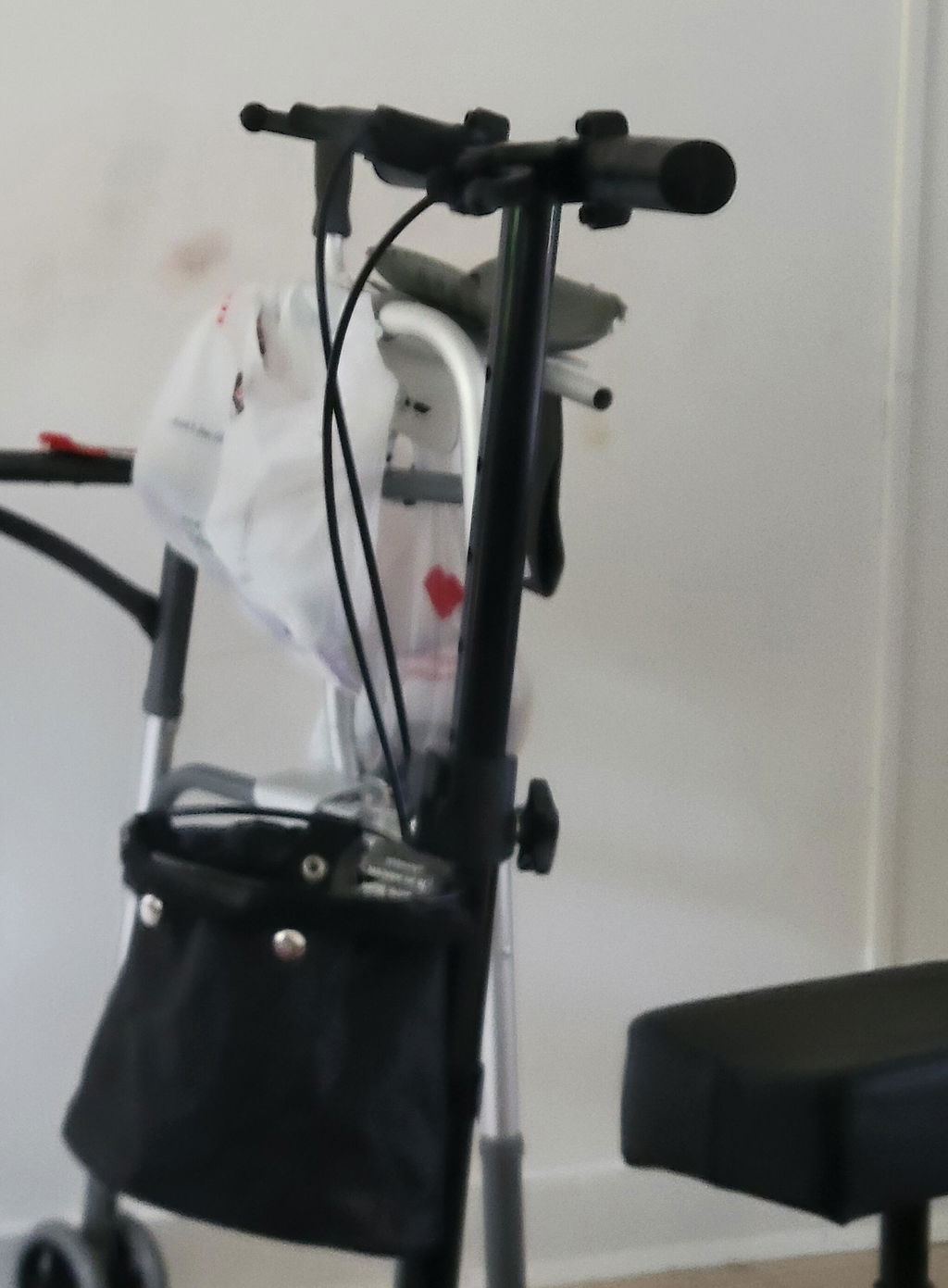
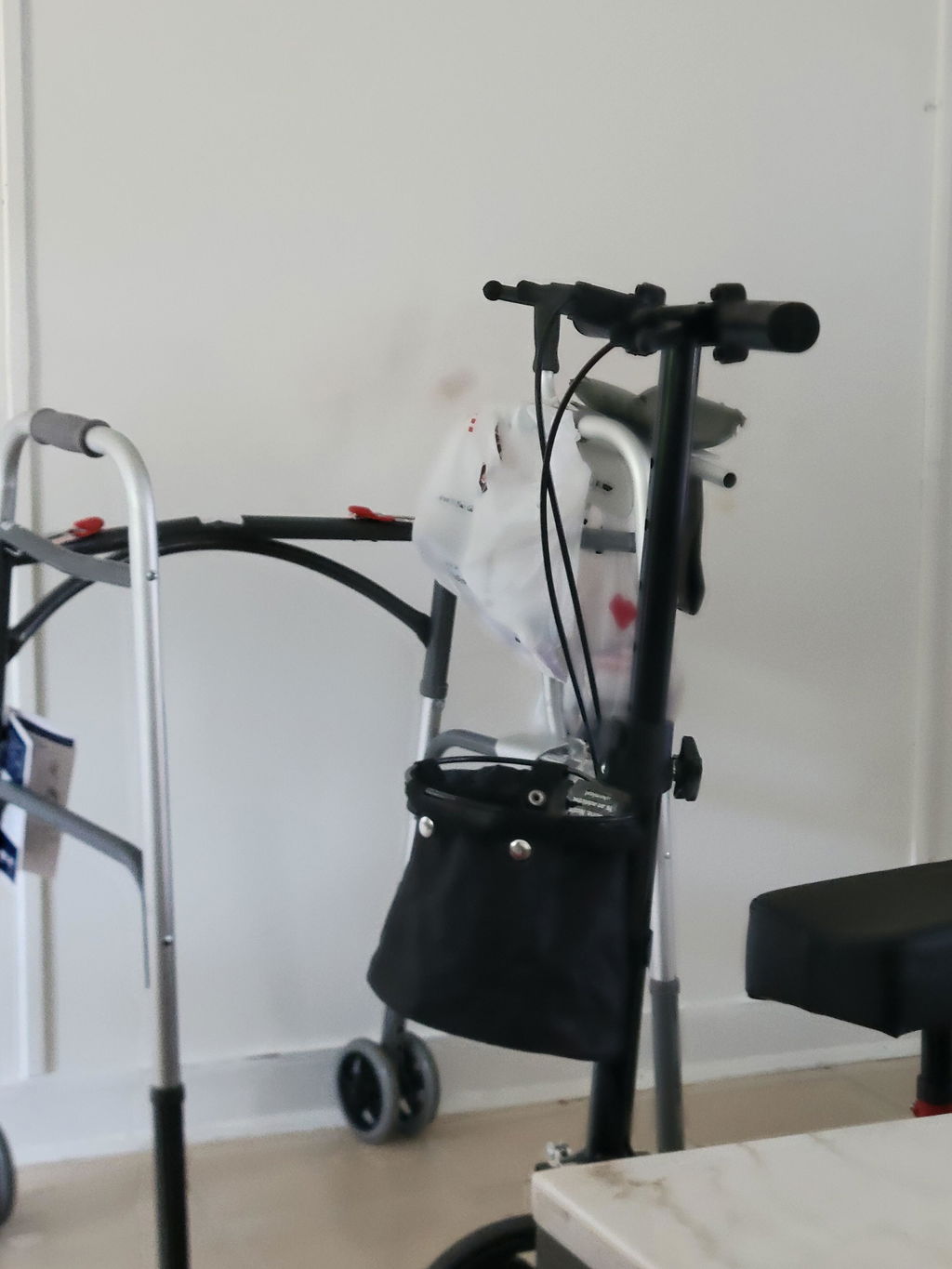
For foot or lower leg injuries — broken foot, foot surgery recovery, ankle procedures — a knee scooter allows the user to rest the injured leg on a padded platform while propelling with the uninjured leg. They're an alternative to crutches that many people find dramatically more comfortable for longer recovery periods. Explore our Walkers & Rollators collection for the full range of options.
Key Features to Look For
Height Adjustability
Proper walker height is critical for both safety and posture. A walker set too low forces the user to hunch forward; too high and the elbows can't bend comfortably. The general guideline: when standing with arms relaxed at your sides, the walker handles should be at wrist height. Most walkers and rollators adjust in 1-inch increments over a range of roughly 32–39 inches, accommodating most adults. Taller users (above 6'2") or very short users should specifically look for models with extended or narrow height ranges.
Weight Capacity
Standard walkers and rollators typically support 250–300 lbs. If the user weighs more than 250 lbs, look specifically for heavy-duty or bariatric models, which typically support 400–500 lbs and feature reinforced frames and wider seat widths. Using a standard walker beyond its rated capacity is a fall and equipment failure risk.
Seat Width and Comfort (Rollators)
Rollator seats typically measure 17–19 inches wide. Bariatric models may offer 20–22 inches. Users who spend significant time seated — resting during long walks or during outings — should prioritize a padded, wide seat with a comfortable backrest strap.
Wheel Size
Small wheels (5–6 inches) work fine indoors on smooth floors. For outdoor use on sidewalk cracks, gravel paths, or grass, larger wheels (8 inches or more) roll over obstacles much more smoothly. Many outdoor or all-terrain rollators feature 8-inch or even 10-inch wheels. If the user will regularly use their rollator outside, wheel size is a worthwhile consideration.
Weight of the Device
A lighter walker or rollator is easier to transport, lift into a car trunk, and maneuver. Aluminum-frame rollators typically weigh 12–18 lbs. Heavier-duty steel-frame models may weigh 20–25 lbs. If the user will be loading their rollator into a vehicle frequently, look for lighter models and check whether the unit folds compactly.
Foldability and Transport
Most walkers and rollators fold flat for transport and storage. The folding mechanism varies: some fold left-to-right (narrowing the width), others fold front-to-back (reducing depth). Left-to-right folding generally produces a narrower package that fits more easily in car trunks. Check the folded dimensions before purchasing if trunk space is a concern.
Top Walker and Rollator Picks for 2026
Best Overall Standard Walker: Drive Medical Folding Walker
The Drive Medical folding walker is the benchmark for basic, reliable walker design. It features a sturdy aluminum frame, height adjustment over a wide range, and a tool-free folding mechanism. The five-button push-pin adjustment system makes height changes simple. Rubber tips on all four legs provide secure non-slip contact. It weighs under 5 lbs, folds flat for easy transport, and supports up to 350 lbs. If you or a loved one needs maximum support after surgery or during recovery, this is the reliable starting point that hospitals and rehabilitation centers trust. Find it in our Walkers collection.
Best 2-Wheel Walker: Drive Medical Two Button Folding Walker
This two-button front-wheeled walker from Drive Medical offers the glide-and-lift movement that makes longer indoor use much more comfortable. Front wheels roll smoothly on hard floors; rubber-tipped back legs provide resistance and control. Height-adjustable, lightweight (under 7 lbs), foldable, and rated to 350 lbs. The two-wheel design is especially popular with physical therapists for patients who need support without the fatigue of a standard walker.
Best Entry-Level Rollator: Hugo Mobility Explore Side-Fold Rollator
The Hugo Explore is consistently recommended by senior care professionals as the best value rollator for indoor and light outdoor use. Its side-fold design folds narrowly for easy car transport. Features include 8-inch rear wheels and 6-inch front wheels, a padded seat, a loop-lock hand brake system, height adjustment from 32–37 inches, and a carrying pouch. Weight capacity 300 lbs. At under 16 lbs, it's easy to lift in and out of a vehicle. Widely available and well-supported for parts and accessories.
Best Premium Rollator: Drive Medical Nitro Euro Style Walker
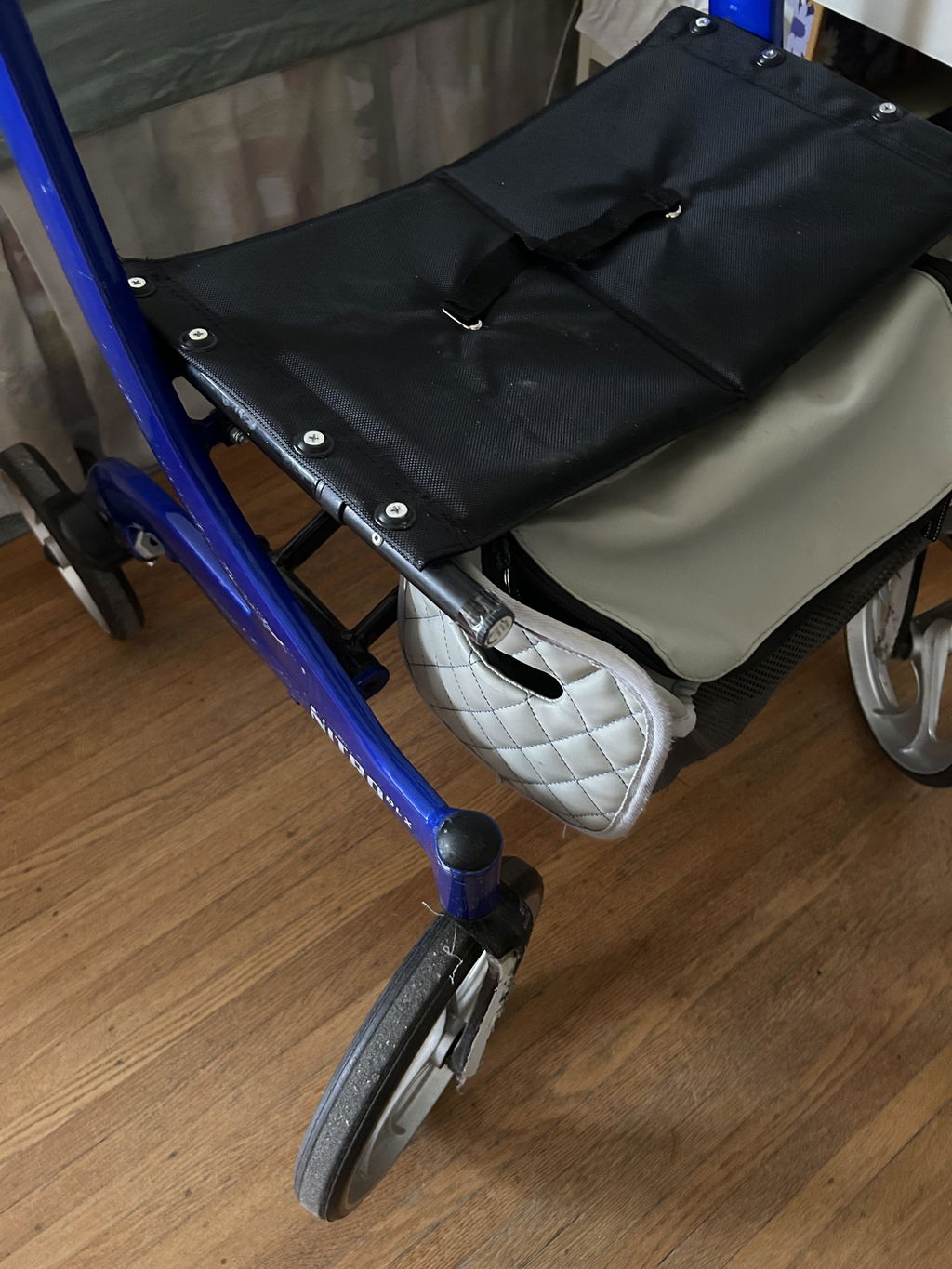
The Drive Medical Nitro is built for seniors who want both functionality and elegance. Its European-inspired design features a sleek frame, large 10-inch wheels ideal for outdoor terrain, a generously padded seat, a tool-free height adjustment, and a large under-seat storage bag. The cross-brace design makes it exceptionally stable. It folds compactly and weighs under 18 lbs. At around $130–$150, it's a step up in price but a meaningful step up in performance for active seniors who use their rollator daily.
Best Bariatric Walker: Drive Medical Heavy Duty Bariatric Walker
Built for users up to 500 lbs, this reinforced aluminum walker features extra-wide legs, an extended height range, and heavy-duty construction throughout. For larger individuals who've been told standard walkers can't safely support them, this model restores access to safe, supportive mobility. Available in our Mobility aids collection.
Best Knee Scooter: KneeRover Steerable Knee Walker
For foot and lower leg injuries, the KneeRover knee scooter is the most popular and well-reviewed option in its category. The padded knee platform is height-adjustable, the handlebars steer smoothly, and the hand brake provides reliable stopping control. Large 8-inch wheels navigate most indoor and outdoor surfaces. At around 19 lbs with a 350-lb weight capacity, it handles most users well. Far more comfortable than crutches for longer recovery periods.
Walker Safety Tips Every Senior Should Know
Having the right walker is only part of staying safe. Proper technique matters just as much:
- Don't carry the walker — let it support you. Some people pick up their walker instead of letting it bear weight. This defeats the purpose and can cause falls. Always keep the walker in contact with the ground as you move
- Lock the brakes before sitting (rollator users). Squeeze and engage both brakes firmly before lowering yourself onto a rollator seat. An unlocked rollator can roll forward when you sit, causing a fall
- Move the walker before you step, not at the same time. The proper sequence with a standard or 2-wheel walker: advance the walker, then step into it — not simultaneously
- Check rubber tips regularly. Worn or cracked rubber tips on walker legs can slip on smooth floors. Replace them when they show significant wear — replacement tips are inexpensive
- Get a physical therapist fitting. A PT can adjust your walker height precisely, demonstrate proper technique, and identify any gait issues. Many insurances cover a walker fitting appointment after a hospitalization
- Be extra cautious on wet floors and ramps. All mobility aids are less stable on wet surfaces. On ramps, go slowly and use the brakes on a rollator to control descent speed
Does Insurance Cover Walkers and Rollators?
Medicare Part B covers walkers and rollators as "durable medical equipment" (DME) when prescribed by a physician for a medical condition. The coverage typically includes 80% of the approved amount after the Part B deductible, with the remaining 20% covered by supplemental insurance if the beneficiary has it.
To qualify for Medicare coverage, the walker must be: prescribed by a Medicare-enrolled physician, deemed medically necessary, and purchased from a Medicare-enrolled DME supplier. The physician must document that you have a mobility-limiting condition that makes a walker necessary for safe ambulation in your home.
Medicaid coverage varies by state. Private insurance typically covers walkers with a prescription and documentation of medical necessity. Contact your insurance provider or ask your physician's office to check your specific coverage before purchasing.
AllCare Store: Your Mobility Aid Partner
At AllCare Store, we're committed to helping seniors and caregivers find exactly the right mobility equipment for their situation. Our Walkers & Rollators collection includes standard walkers, two-wheel walkers, four-wheel rollators, knee scooters, and accessories — with options for every budget and need level.
- Free Shipping on every order — no minimums
- 30-Day Returns — shop with confidence
- Expert Guidance — call us at 1-888-889-6260 to speak with a product specialist
- Discreet Packaging — all orders ship in plain packaging
Explore our full Mobility Aids collection and visit AllCare Store to find the support you need to move through life confidently.
Frequently Asked Questions: Walkers and Rollators
What is the difference between a walker and a rollator?
A standard walker has four legs with no wheels and must be lifted with each step. A rollator has four wheels, hand brakes, and a built-in seat — it rolls forward with your walking stride rather than being lifted. Walkers provide more stability; rollators provide more ease of movement and include a seat for resting. The right choice depends on your level of stability and how far you need to walk.
Will Medicare cover my walker or rollator?
Medicare Part B covers walkers and rollators as durable medical equipment (DME) when prescribed by a physician for a documented medical condition. Medicare typically covers 80% of the approved cost after your Part B deductible. To qualify, the walker must be purchased through a Medicare-enrolled DME supplier, and your doctor must document medical necessity. Ask your physician to write a prescription and call Medicare (1-800-MEDICARE) or your Part D plan to confirm coverage details.
How do I know if my walker is the right height?
When standing upright with your arms hanging naturally at your sides, the walker handle should be level with your wrist crease. When gripping the handles, your elbows should bend slightly — about 15–30 degrees. A walker set too low causes you to hunch forward; too high creates shoulder and elbow strain. Most walkers adjust in 1-inch increments. A physical therapist can confirm proper fit in a quick appointment.
Is a rollator safe on stairs?
Rollators are not designed for stair use. On stairs, a rollator should be folded and carried separately, or a different mobility solution (such as a stair lift or handrail) should be used. Standard walkers (without wheels) can be used on a single step with proper technique, but only with guidance from a physical therapist. If your home has significant stairs, discuss stair negotiation strategies with your PT or occupational therapist.
Can I use a rollator outdoors?
Yes — rollators are well-suited for outdoor use, especially models with larger wheels (8 inches or more). They handle sidewalk cracks, gentle slopes, and light gravel reasonably well. For rough terrain, all-terrain rollators with even larger wheels are available. On slopes, always use both hand brakes to control your speed going downhill. Avoid using any rollator on steep inclines or very uneven ground without confidence in your brake technique.