Using a feeding tube pump for the first time can feel overwhelming. If you or a loved one is currently on tube feeding, it’s completely normal to feel nervous. The good news is that once you understand the steps, tube feeding with a pump becomes a routine part of day-to-day lifestyles.
This guide will walk you through how to use a feeding tube pump step by step, using clear, simple language. It’s written for patients and caregivers and follows common clinical guidelines used by home healthcare providers.
Whether you’re using a G-tube, J-tube, button devices or another enteral feeding pump, the process is very similar.
About Tube Feeding With a Pump
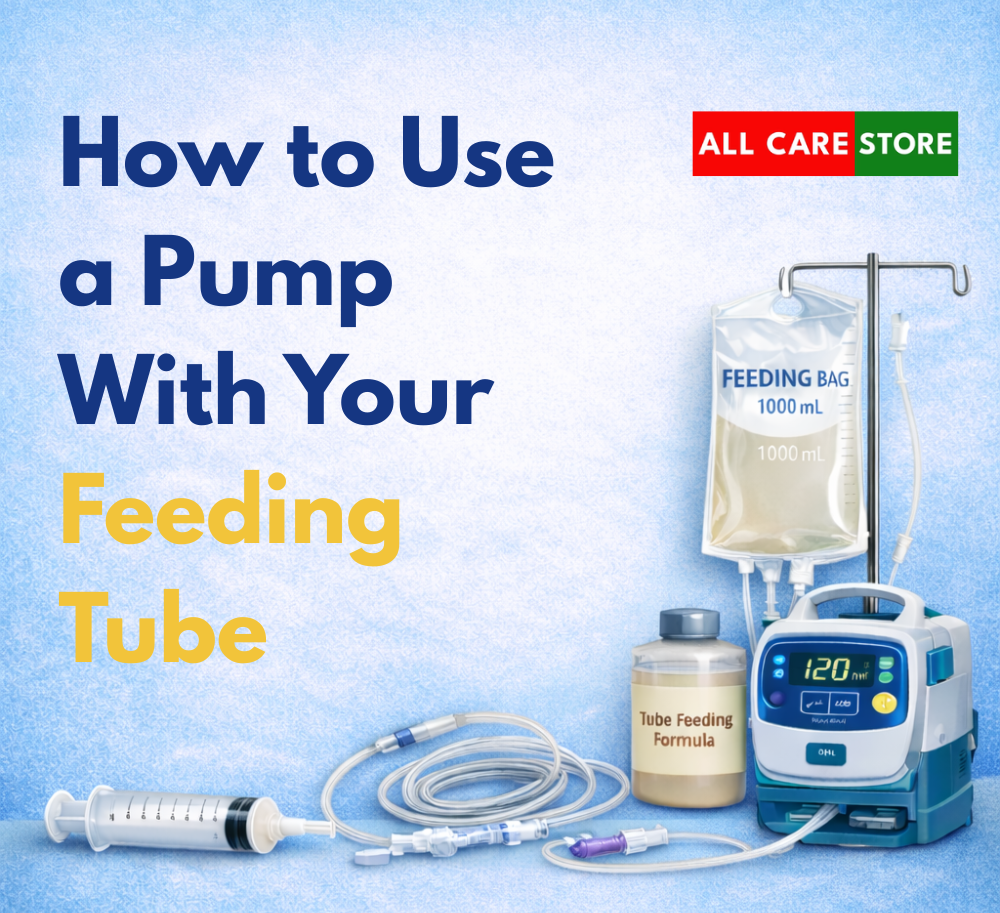
A feeding tube pump is a small, portable medical device that delivers liquid nutrition (formula) into your stomach or small intestine through a feeding tube. These pumps help control how fast and how much formula your body receives.

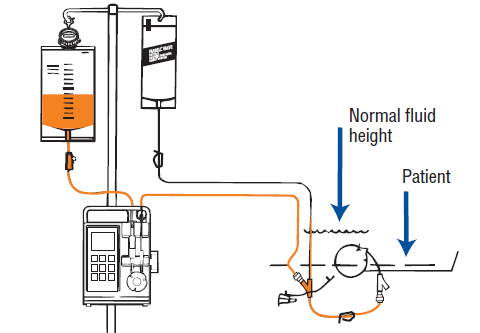
Types of Pump Feedings
There are two common ways a feeding tube pump is used:
Continuous Feeding
The pump runs slowly for over 24 hours. This is often used when digestion needs to be very gentle.
Cycled Feeding
This type runs only part of the day or night, such as overnight while sleeping. Many people prefer this option because it allows more freedom during the day.
Your healthcare provider or dietitian will determine the best option for you.
Important: If your tube feeds immediately into your small gut (duodenum or jejunum), your feeding rate should usually not exceed 150 mL per hour, unless your provider says otherwise.
Tube Feeding Goals
Your clinical dietitian will help set your daily goals for:
- Calories
- Protein
- Fluids
In addition to the formula, you must flush your feeding tube with water to:
- Prevent clogs
- Keep the tube clean
- Stay hydrated
Most humans flush with about 60 mL of water before and after feedings, but always follow your provider’s instructions.
How to Use a Pump During Your Tube Feeding
Below is a complete step-by-step guide for using a tube feeding pump safely at home.
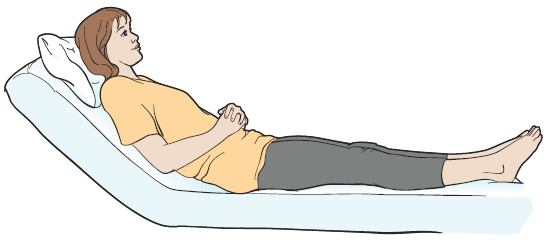
Positioning Matters: Always sit upright at 30 degrees or higher during feeding and stay upright for at least 1 hour after to prevent aspiration.


Step 1: Clean Your Hands
Wash your hands with soap and water for at least 20 seconds or use an alcohol-based hand sanitiser.

Step 2: Gather Your Feeding Tube Supplies
Choose a clean, comfortable place (not the bathroom). You will need:
- Prescribed tube feeding formula (example: Isosource, Peptamen AF and Pivot tube feeding formula)
- Feeding pump (Infinity, Kangaroo or similar)
- Feeding bag/feeding tube bags
- IV pole or backpack
- Cup
- Clean towel or paper towel
- Drinkable room-temperature water
- 60 mL syringe (legacy or ENFit)
- Tape
- Button adapter (if you use a MIC-KEY or button)

Step 3: Close the Roller Clamp
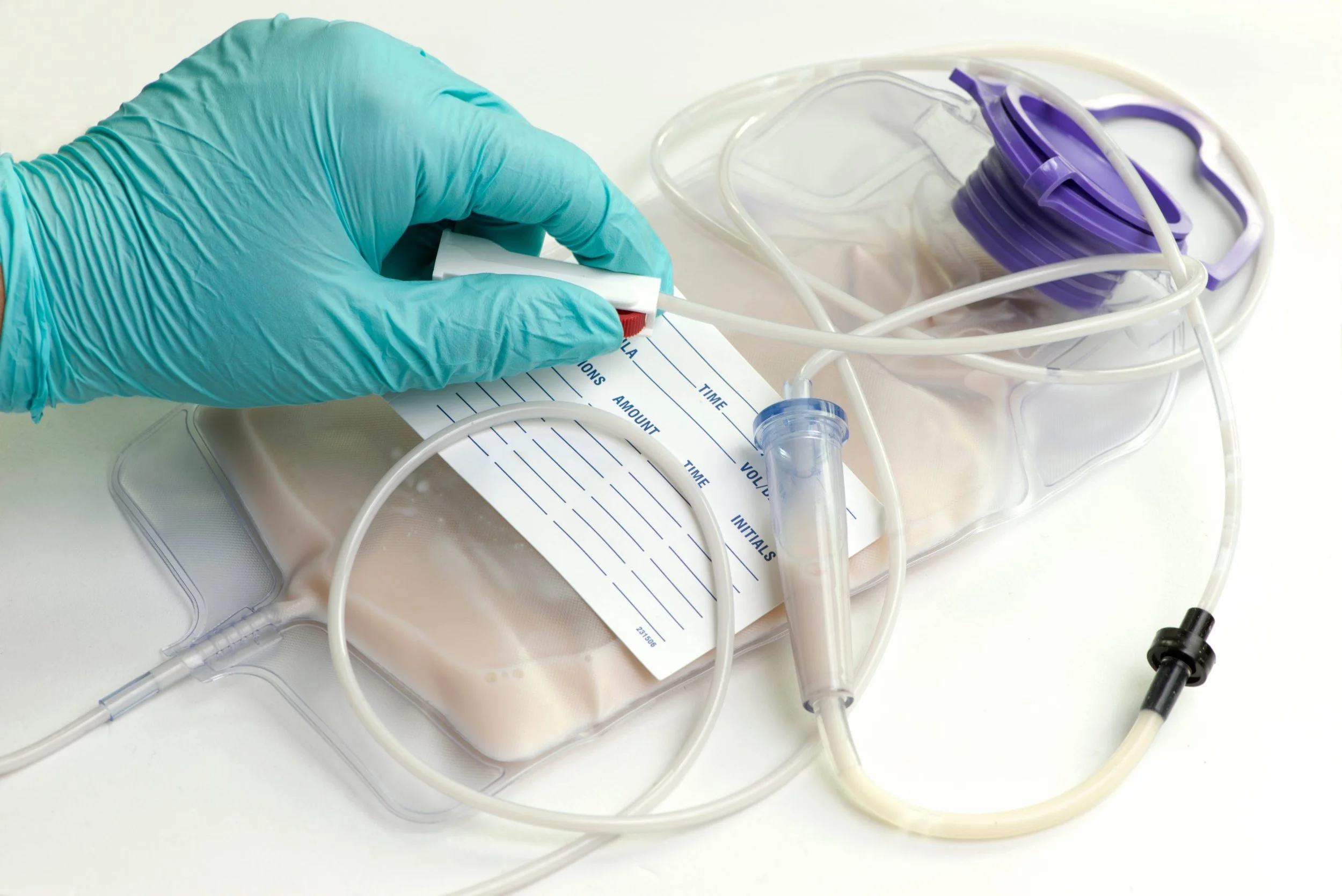
Before adding the formula, close the roller clamp on the feeding bag tubing.
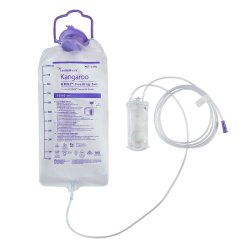
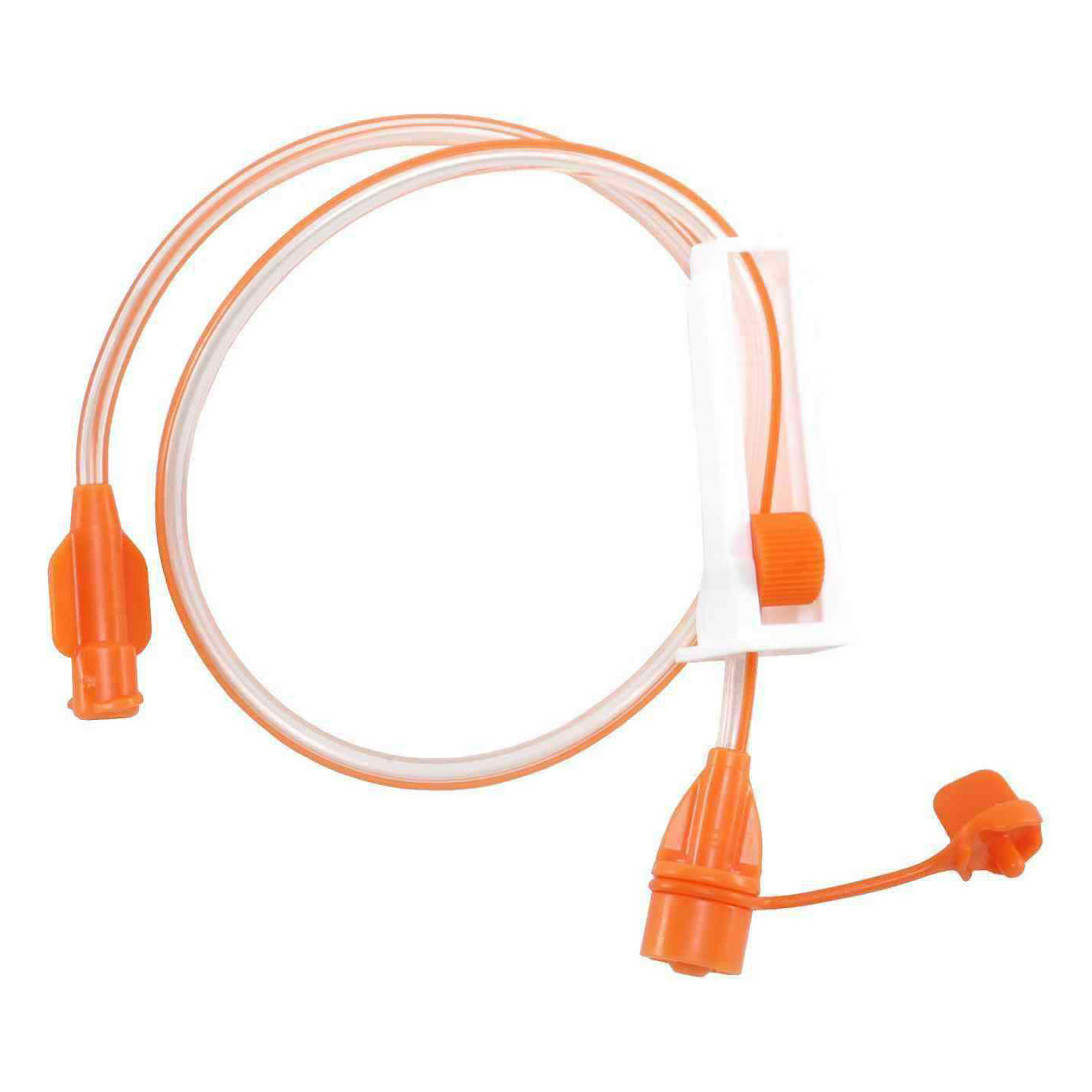
Kangaroo Epump Enteral Feeding Pump Set
Step 4: Fill the Feeding Bag
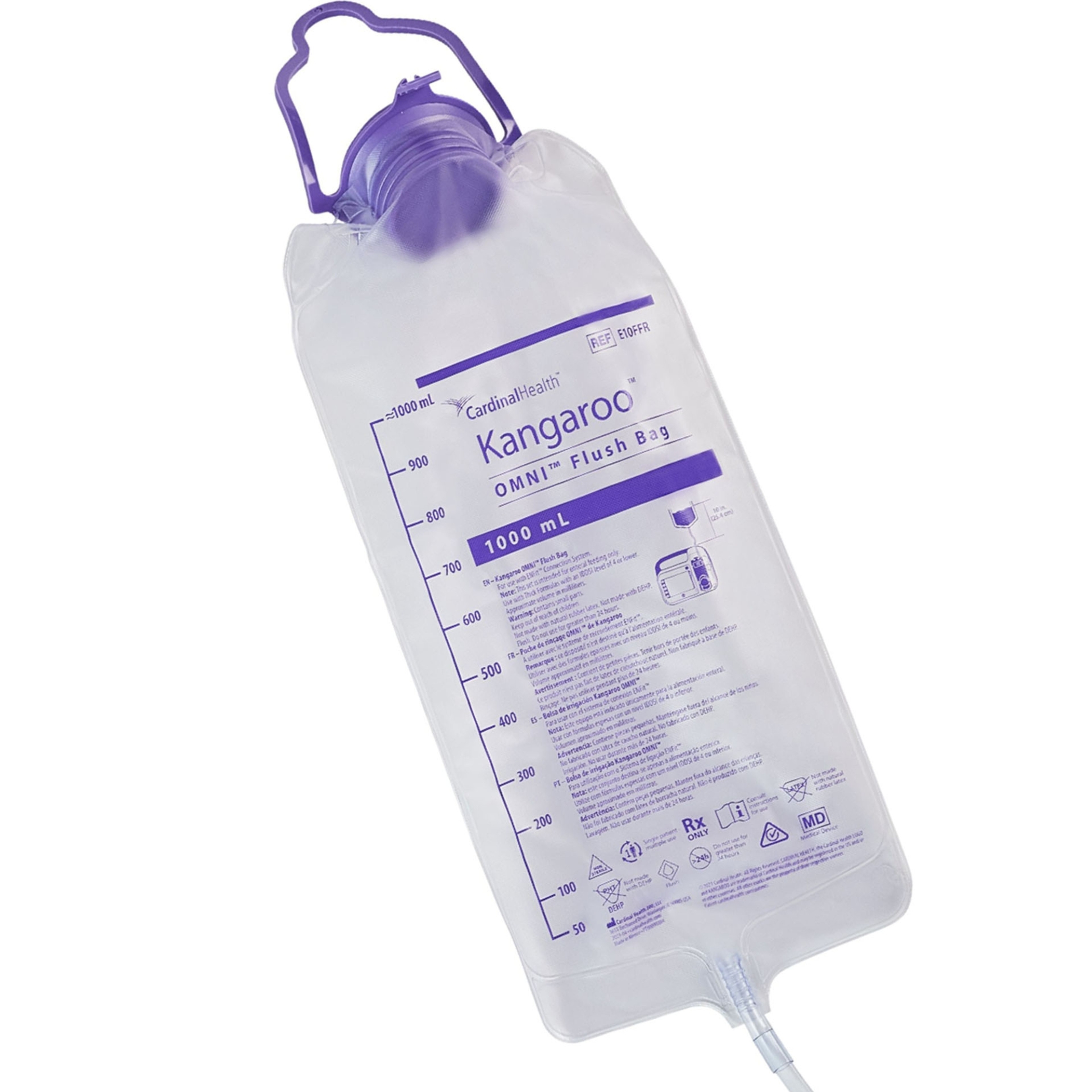
Wipe the top of the formula container. Pour the prescribed amount of formula into the feeding bag.
Important tips:
- Feeding bags hold up to 1,000 mL
- Only pour 6–8 hours' worth of formula at one time

Step 5: Hang the Feeding Bag
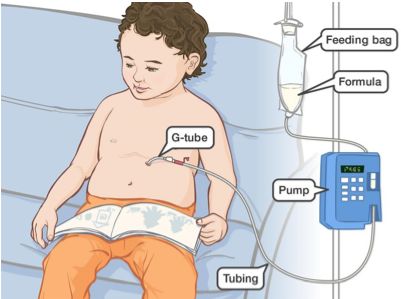
Hang the feeding bag 2–3 feet above you, on an IV pole or hook near your bed or chair.
Step 6: Prime the Feeding Bag Tubing
Hold the tubing over a cup. Open the roller clamp slowly and let the formula run through the tubing to remove air. Close the clamp once the tubing is full.

Step 7: Prepare Your Feeding Tube
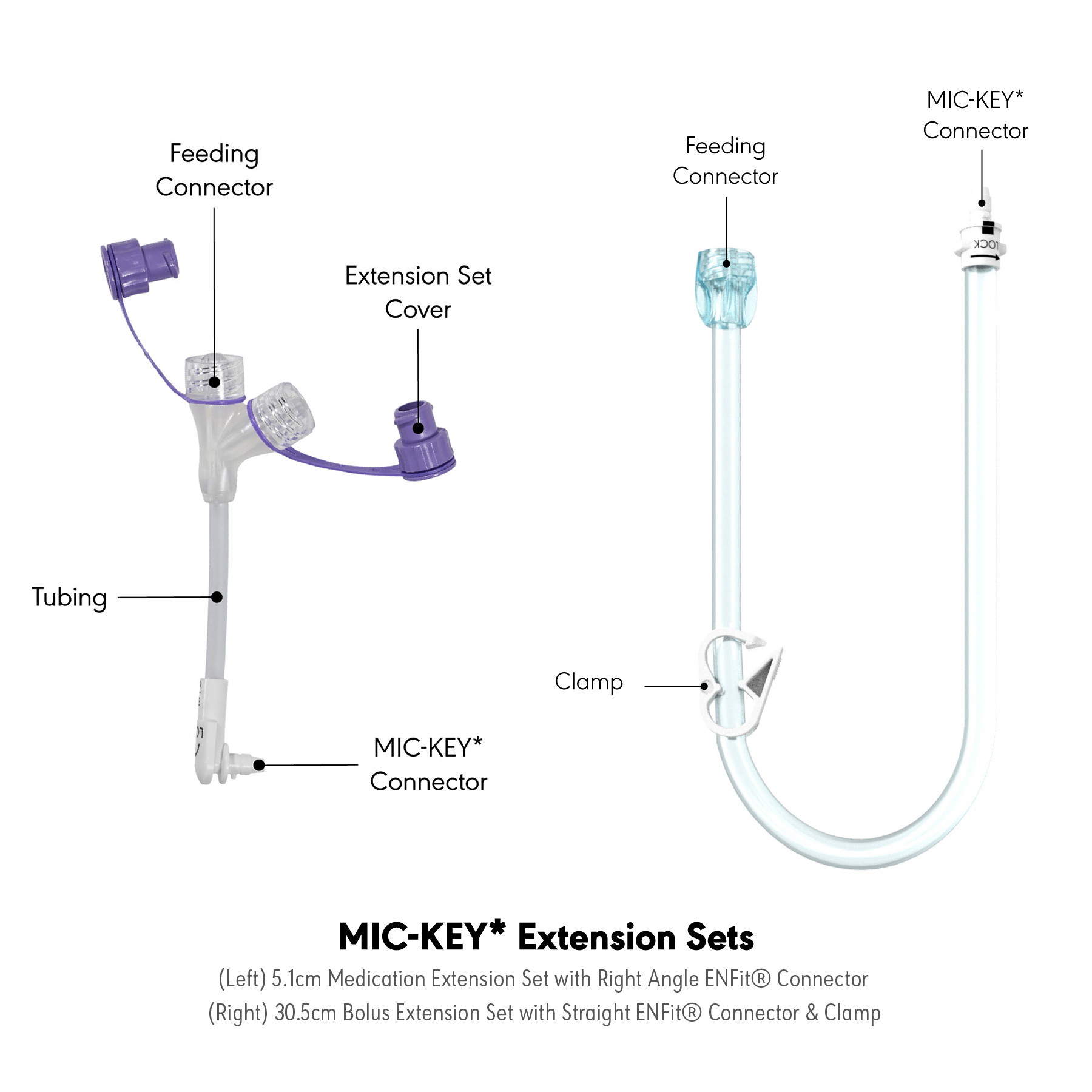
Open the cap at the end of your feeding tube. If you use a button, insert the adapter.

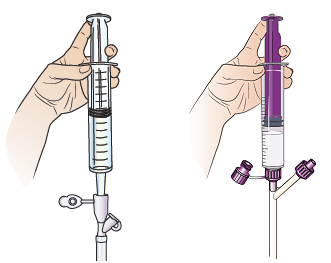
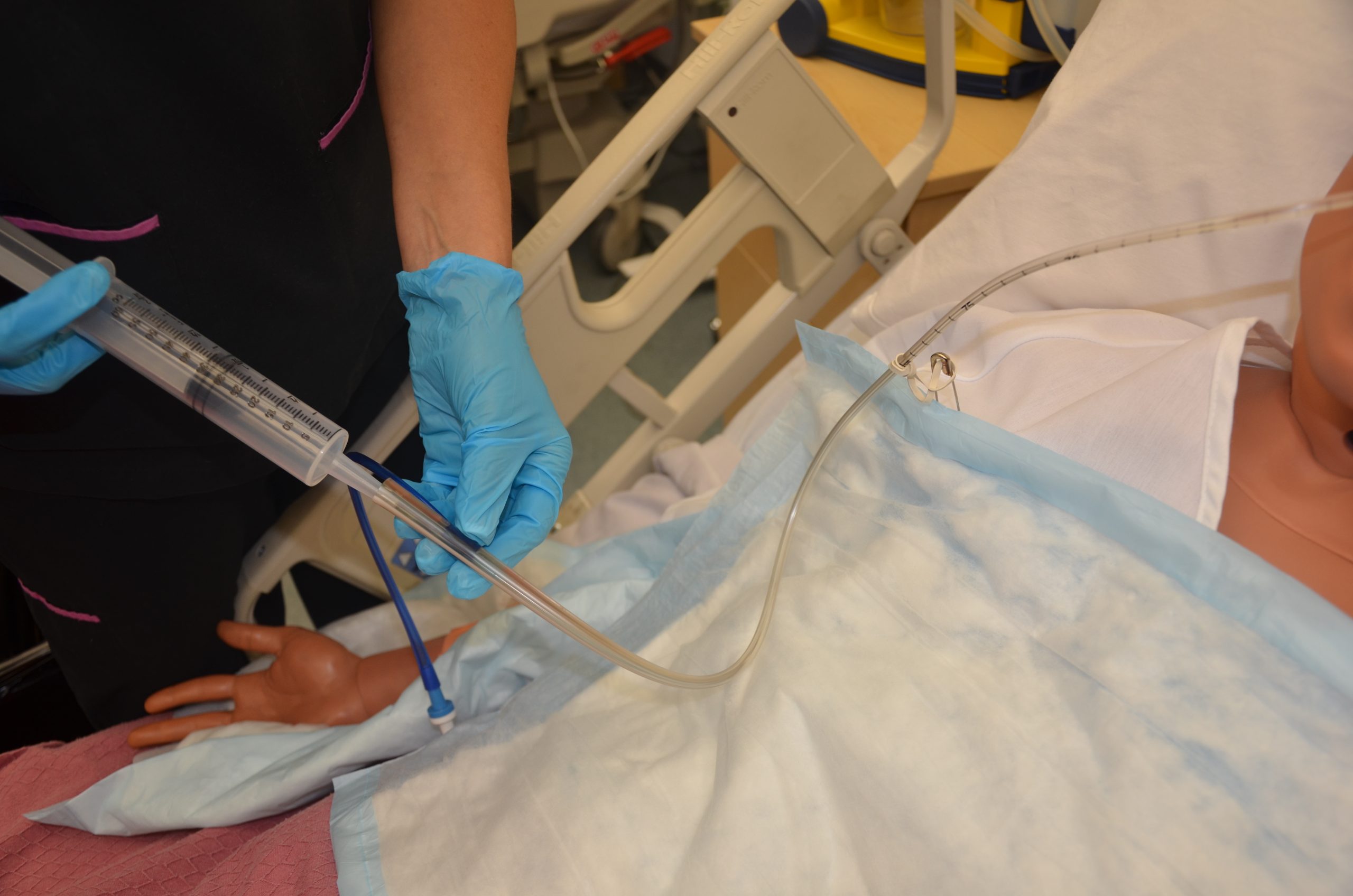
Step 8: Flush the Feeding Tube
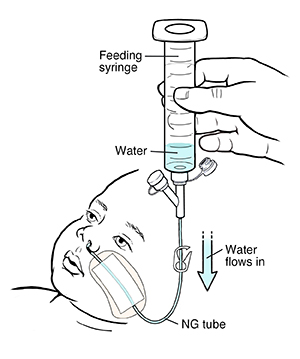
Fill your syringe with the recommended amount of water. Attach it to your tube, unclamp and flush gently.
.
Step 9: Connect the Feeding Bag to Your Tube
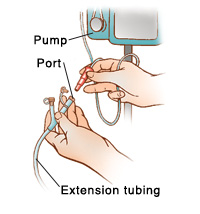
Attach the feeding bag tubing securely to your feeding tube or button adapter. Tape the connection if needed.

Step 10: Turn On and Program the Pump
Turn on the feeding tube machine. Set:
- Rate (mL/hour)
- Dose (total volume)
Press Start or Run.

Step 11: During the Feeding
While feeding:
- Watch for nausea, bloating, coughing or discomfort
- Pause or stop the pump if you feel unwell

Step 12: After the Feeding
When feeding is done:
- Turn off the pump
- Disconnect the feeding bag
- Flush the tube with water
- Clamp and cap the tube
Step 13: Clean Your Supplies
- Rinse the feeding bag with warm water
- Take the syringe apart and rinse
- Air-dry all supplies
Use new feeding bags and syringes every 24 to 48 hours.
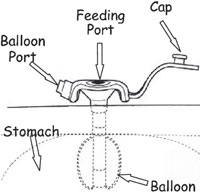
How to Connect and Disconnect a MIC-KEY Button Adapter
If you use a button:
- Uncap the button
- Line up black lines
- Push down firmly
- Turn clockwise to lock
To disconnect, turn counterclockwise and pull up.

Important Points to Remember
- Always flush before and after feedings
- Use new feeding tube bags regularly
- Move clamps to avoid tube damage
- Flush daily, even if not feeding
How to Order Feeding Tube Supplies in the USA
Ordering feeding tube supplies in the USA is usually simple once you know your options. Most patients receive their feeding supplies through insurance-approved home care providers, but many people also prefer ordering online for convenience and faster access.
Ordering Through Insurance
Your case manager or healthcare provider will check whether your insurance covers:
- Feeding pumps for G tubes
- Feeding tube bags
- Enteral feeding supplies
- High-calorie tube feeding formulas for adults
If approved, you may be referred to a home care provider such as Coram, feeding supplies or another U.S.-based supplier. Always reorder when you have at least 10 days of supplies left to avoid interruptions.
Ordering Feeding Tube Supplies Online
If your insurance does not cover supplies or if you prefer to buy directly, you can order feeding tube supplies online in the USA.
All Care Store is a trusted online store that sells a wide range of feeding tube products, including:
- Feeding tube pumps and feeding pumps for G tubes
- Feeding bags for G tube feeding
- Tube feeding supplies and accessories
- Enteral feeding supplies for home care
- Complete tube feeding solutions for adults
Shopping online from All Care Store allows patients and caregivers across the U.S. to get reliable, medically approved products delivered directly to their home, without delays.
Before ordering, always confirm:
- The type of feeding tube you use G-tube, J-tube and button
- Compatibility with your feeding tube machine
- Formula recommendations from your healthcare provider
How to Store Tube Feeding Formula
- Store unopened cans at room temperature
- Refrigerate the opened formula
- Discard after 24 hours
When to Call Your Healthcare Provider
Call your provider if you notice:
- Redness, swelling, pus or bleeding at the site
- Vomiting, diarrhoea or bloating
- Fever above 100.4°F
- Weight changes
- Trouble breathing
FAQs about Feeding Tube Pumps
What is the best feeding pump for G-tube patients?
Most patients use Infinity or Kangaroo feeding pumps for G tubes primarily based on the issuer's advice.
How often should feeding bags be changed?
Every 24 to 48 hours to prevent contamination.
Can I use high-calorie tube feeding formulas for adults?
Yes, if prescribed. These help with complete tube feeding needs.
Where can I buy feeding tube supplies?
From home care providers, pharmacies or online medical providers.
What should I do if my tube gets clogged?
Flush with warm water and get in touch with your company if it doesn’t clean.
Final Thought: Tube feeding may feel challenging at first, but with the right routine, tools and support, it becomes an everyday part of day-to-day life. Always follow your care team’s guidance and reach out when you need help.