Safety Disclaimer: This article is for informational purposes only. Bathroom fall prevention involves multiple factors beyond bath mats alone, including grab bars, proper lighting, and assistive devices. For individuals with significant fall risk or mobility limitations, consult a licensed occupational therapist or healthcare provider for a comprehensive home safety assessment.
When the Bathroom Becomes the Most Dangerous Room in the House
Dorothy was 71 and fiercely independent. She managed her garden, drove herself to appointments, and cooked dinner for her grandchildren every Sunday. It took a wet tile floor and one unguarded step out of the shower to change everything. She slipped, grabbed for the towel bar, missed, and went down hard. The result: a fractured hip, six weeks of inpatient rehab, and months of recovery that shadowed an entire year of her life.
Her daughter found out afterward that the one thing that might have prevented it — a proper non-slip bath mat — cost less than $25.
The bathroom is statistically the most dangerous room in the home for adults over 65. According to the CDC, approximately 235,000 Americans visit the emergency room each year due to bathroom injuries, and the majority involve slips and falls on wet surfaces. Among seniors, bathroom falls are a leading cause of hip fractures — injuries that carry a sobering one-year mortality rate of up to 30% in older adults.
A quality non-slip bath mat from AllCare Store won't eliminate every fall risk, but it addresses one of the most common and preventable causes of bathroom injury: the treacherous transition from wet tub or shower floor to the hard surface beyond.
Why Bathroom Floors Are So Dangerous
Ceramic tile, porcelain, fiberglass, and acrylic — the standard materials of tubs, shower floors, and bathroom floors — have extremely low coefficients of friction when wet. Water creates a near-frictionless film between the foot and the surface, especially on smooth or glazed finishes. Even younger adults with full strength and balance can slip on a wet bathroom floor. For older adults, who may have reduced muscle strength, slower reaction time, balance deficits, or medication side effects that affect stability, wet bathroom surfaces are genuinely hazardous.
The highest-risk moments are:
- Stepping out of the tub or shower — wet feet on a dry or damp floor outside the tub
- Turning within the shower — lateral weight shifts on a wet floor without grip
- Standing to reach for towels or toiletries — static balance challenged by reaching movements
- Early morning and post-medication use — times when alertness, balance, and coordination may be reduced
Non-slip bath mats address the traction component of this risk — providing the grip that wet tile cannot.
Types of Non-Slip Bath Mats: What's Available
1. Suction-Cup Tub Mats
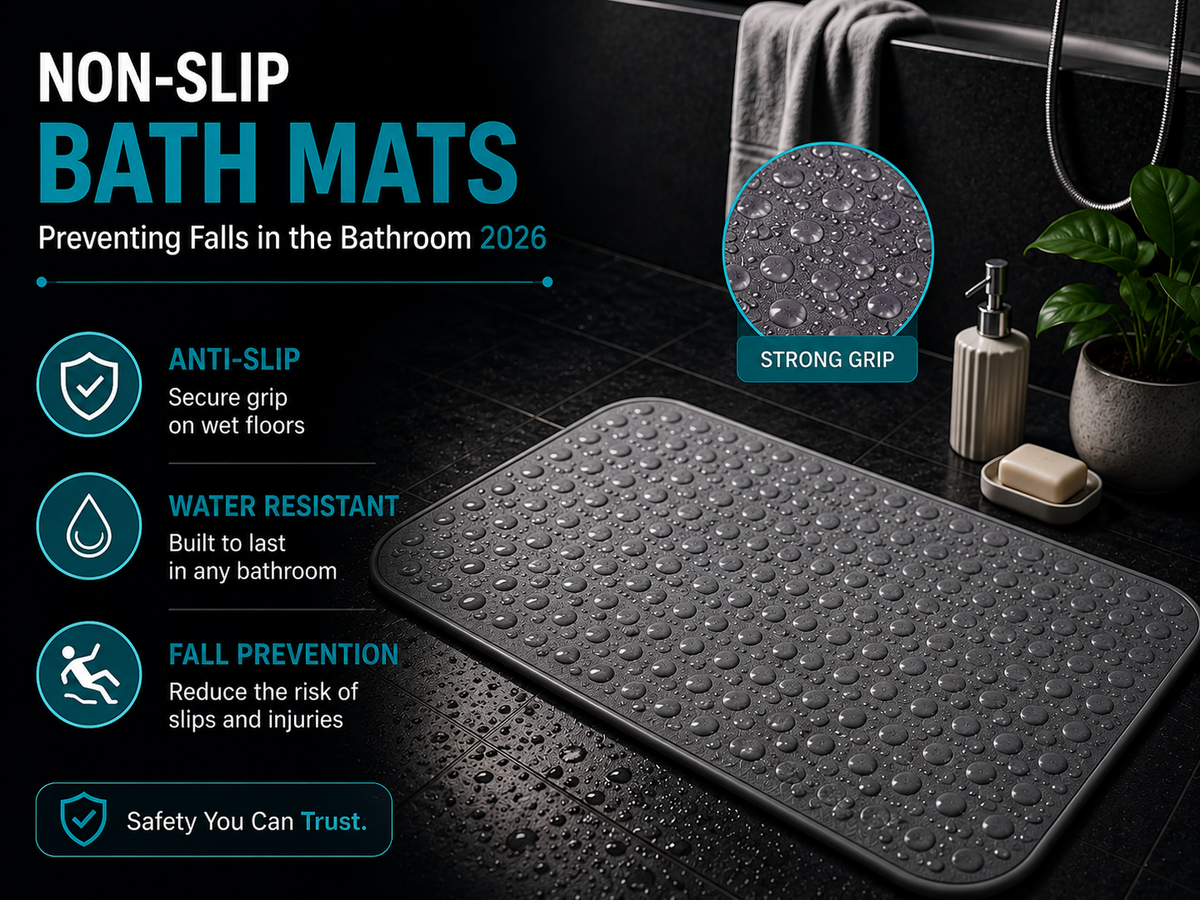
Designed to lie flat on the floor of the tub or shower stall, suction-cup mats use dozens of small suction cups on the underside to adhere firmly to the wet surface below. The top surface features raised ridges, bumps, or textured patterns that grip wet feet. These mats are purpose-built for in-tub use and are the most widely recommended option for preventing slips while bathing or showering.
Look for: At least 100+ suction cups (more cups = stronger grip), a texture pattern that drains water quickly, mold-resistant materials (PVC, rubber, or antimicrobial-treated foam), and a length that covers the full standing area of the tub.
2. Freestanding Floor Mats with Non-Slip Backing
Placed just outside the tub or shower, these mats catch the user as they step out onto the floor — the highest-risk transition point in bathroom safety. They typically feature a soft, absorbent top surface and a rubberized or latex-backed underside that grips the floor. The absorbent top layer wicks water from wet feet, reducing the amount of moisture transferred to the surrounding floor.
Look for: A non-slip backing with a suction or textured grip pattern, sufficient size (a mat that's too small won't catch where feet actually land), machine-washable materials, and adequate thickness for comfort without creating a tripping lip at the edge.
3. Adhesive Grip Strips and Decals
Non-slip strips or decals adhere directly to the tub or shower floor with waterproof adhesive — no suction cups required. They're ideal for textured tub surfaces where suction cups won't adhere properly, walk-in showers with tiled floors, and as a supplement to a mat for full coverage. The trade-off is removal difficulty and potential adhesive residue.
4. Teak and Bamboo Bath Boards
Slatted wooden bath boards elevate the user off the wet tub or shower floor entirely, providing a stable, naturally slip-resistant standing surface. They're aesthetically appealing and work well in walk-in showers with curbless or tiled floors. However, they require more maintenance (oiling to prevent mold), and the slatted design can be a tripping hazard for users with foot drop or severe gait impairments.
5. Combination Mat Systems
Some fall-prevention systems include both an in-tub mat and a coordinating exterior floor mat sold together, ensuring the slip-resistant coverage covers the full bathing zone from inside the tub through the step-out area.
| Mat Type | Best For | Key Strength | Consider If |
|---|---|---|---|
| Suction-Cup Tub Mat | In-tub use | Grips wet tub floor firmly | Tub has a smooth surface |
| Floor Mat with Non-Slip Backing | Outside tub/shower | Catches wet feet on exit | Step-out area is the highest risk zone |
| Adhesive Grip Strips | Textured or tiled showers | Works on uneven surfaces | Suction cups won't stick |
| Teak/Bamboo Board | Walk-in showers | Elevates off wet floor | Aesthetic matters and gait is stable |
| Combination System | Complete coverage | Full-zone protection | Highest-risk individuals |
What to Look for When Choosing a Non-Slip Bath Mat
Suction Strength and Cup Count
The grip a suction-cup mat provides depends on the number of suction cups, their size, and the flexibility of the mat material. A mat with 100+ suction cups distributed evenly across its surface — including the edges — creates significantly better adhesion than a mat with 30–40 cups concentrated in the center. Press down firmly on the mat after placing it to activate suction on all cups, and test the grip before stepping in.
Surface Texture
The top surface of the mat should provide grip even when soapy or shampoo-coated. Raised diamond patterns, circular bumps, and ridged channels all work effectively. Avoid mats with very deep channels or large flat areas between texture features — these create larger slip zones. For users with reduced foot sensation (common in diabetes or peripheral neuropathy), choose firmer textures that provide tactile feedback even with reduced sensitivity.
Mat Size
For in-tub mats, the mat should run the full length of the tub's flat standing area — typically 14" × 27" or larger for a standard bathtub. For exterior floor mats, ensure the mat is large enough to fully accommodate both feet as they land on exit — a mat that's too narrow leaves one foot on an unprotected floor.
Drainage Design
Water pooling on top of the mat creates a secondary slip risk. Choose mats with channels, holes, or textured surfaces that actively direct water away from the standing area and allow it to drain through or off the mat. This keeps the standing surface drier and cleaner between sessions.
Mold and Mildew Resistance
Bathroom mats live in a permanently damp environment. Without mold-resistant properties, a mat can develop fungal growth that creates health risks, odor, and degraded grip. Look for antimicrobial PVC, treated rubber, or foam materials, and choose machine-washable designs that can be laundered weekly.
Easy Removal for Cleaning
A mat that's difficult to remove won't get cleaned regularly — and a moldy mat is worse than no mat at all. Choose designs that lift easily with one hand, dry quickly, and are machine-washable. Avoid mats with suction cups so strong they require tools or significant force to remove.
Non-Slip Bath Mats for Seniors: Specific Considerations
For older adults, the stakes around bathroom safety are higher than for younger users. A few additional considerations apply:
Transition Height
A mat that's too thick can create a raised edge that becomes a tripping hazard — especially for seniors who shuffle their feet or have limited hip flexion. Look for mats under 0.5" in thickness unless the individual steps with a high-clearance gait. Memory foam mats, while comfortable, can be soft enough to destabilize someone with balance issues — a firmer mat provides a more secure platform.
High-Contrast Color
Age-related vision changes, including reduced contrast sensitivity, can make it harder to see the edge of a mat against a similarly colored floor. A high-contrast mat — dark on light tile, or a bright accent color — makes the mat's boundaries more visually distinct and reduces the risk of misjudging its position.
Pairing with Grab Bars
Bath mats are one layer of fall prevention, not the complete solution. The most effective bathroom safety interventions combine non-slip mats with properly installed grab bars near the toilet, tub entry point, and shower wall. An occupational therapist can assess the ideal placement of both. A mat paired with a grab bar gives the user both traction underfoot and a stable surface to hold during entry and exit.
Consider a Shower Chair or Bench
For seniors with significant fall risk, eliminating the need to stand while bathing is more protective than any mat. A shower chair or bench combined with a non-slip tub mat provides the highest level of safety — the user sits rather than stands, dramatically reducing fall exposure. AllCare Store carries a range of shower chairs and bath benches designed to complement floor mat safety systems.
Featured Non-Slip Bath Mat Products at AllCare Store
AllCare Store carries a curated selection of bathroom safety products, including non-slip bath mats for both in-tub and exterior floor use.
Premium Suction-Cup Tub Mat — Extra Large
Our extra-large tub mat covers the full standing area of a standard bathtub with 140+ suction cups and a raised diamond-textured surface that maintains grip even with soap and shampoo present. Made from antimicrobial PVC, it resists mold and mildew with regular rinsing, and lifts cleanly for machine washing. Available in white and gray to match most tub colors.
Absorbent Non-Slip Floor Mat with Rubber Backing
Placed outside the tub or shower, this mat's microfiber top layer absorbs water quickly from wet feet while the rubberized backing grips tile, vinyl, or wood floors without sliding. At 20" × 32" and just 0.4" thick, it provides full step-out coverage without a raised edge that could catch shuffling feet. Machine washable.
Combination Tub + Floor Mat Safety Set
A matched pair — one suction-cup in-tub mat and one absorbent exterior floor mat — that covers the complete bathing transition zone. Color-coordinated for consistent aesthetics, and designed so the exterior mat fits flush against the tub's edge to eliminate the gap between mat and tub rim.
Non-Slip Adhesive Grip Strips — 10-Pack
Ideal for textured shower floors, tiled stalls, or as supplemental coverage in corners and edges where suction cups don't reach. Waterproof adhesive bonds to virtually any clean, dry surface, and the textured strip surface provides reliable grip underfoot. Can be trimmed to size for custom fit.
Browse our complete bathroom safety collection to see our full range of fall prevention products.
Installing and Maintaining Your Bath Mat
Proper Installation
- Clean and dry the tub or floor surface first. Soap residue, oils, or existing mildew will prevent suction cups from adhering. Scrub the tub floor, rinse thoroughly, and dry before placing the mat for the first time.
- Press firmly across the entire mat surface. Run your hand from center to edges, pressing each suction cup down. Take a moment to press corners and edges where cups are hardest to activate.
- Test the grip before stepping on. Try to slide the mat sideways with your hand. It should resist movement firmly. If it slides easily, the surface may have residual soap or the mat's suction cups may be worn.
- Position exterior mats flush against the tub. Leave no gap between the tub's edge and the mat edge where a wet foot might land.
Cleaning and Maintenance
- Clean weekly at minimum. Rinse the mat after every use to clear soap and body oil. Machine wash weekly — most PVC and rubber mats tolerate cold or warm cycles with mild detergent. Hang to dry rather than tumble-drying, which can damage suction cups.
- Inspect suction cups monthly. Turn the mat over and check that suction cups are intact, flexible, and not cracked or flattened. A mat with damaged suction cups provides unreliable grip and should be replaced.
- Replace every 1–2 years. Even well-maintained mats lose suction cup flexibility and surface texture over time. A mat that feels less grippy than it once did is a fall risk — replacement is inexpensive relative to the injury it prevents.
- Never use a mat that smells of mildew. If a mat develops persistent mildew odor despite washing, discard it. Mildew-weakened materials are less reliable and introduce spores into the bathroom environment.
Beyond the Mat: A Layered Approach to Bathroom Fall Prevention
Non-slip bath mats are an essential first step in bathroom safety — but fall prevention research consistently shows that the most effective outcomes come from layered interventions that address multiple hazard points simultaneously:
- Grab bars: Professionally installed at the tub entry, inside the shower, and near the toilet. Towel bars are not a substitute — they're not designed to bear body weight and frequently pull from the wall under load.
- Adequate lighting: Nighttime bathroom trips are high-risk. A motion-activated night light in the hallway and bathroom dramatically improves visibility during the most vulnerable hours.
- Raised toilet seats or toilet safety frames: Sitting down and standing up from the toilet is a frequent fall event. Raised seats reduce the distance to sit and rise; safety frames provide grip handles on both sides.
- Shower chairs or transfer benches: For individuals with limited standing endurance or balance deficits, sitting while bathing removes the highest-risk element of the shower entirely.
- Medication review: Many medications — diuretics, sleep aids, blood pressure medications, antihistamines, and others — contribute to fall risk through dizziness, orthostatic hypotension, or sedation. A pharmacist or physician medication review can identify and adjust fall-risk contributors.
AllCare Store carries the full range of home safety products across these categories. Explore our bathroom safety and fall prevention collections for grab bars, raised toilet seats, shower chairs, and more.
AllCare Store: Bathroom Safety You Can Trust
Dorothy's daughter made sure her mother's bathroom was equipped before she came home from rehab — grab bars, a shower chair, and two non-slip mats, inside and out. Dorothy walked back into her own home, took her first post-recovery shower, and stood safely on a mat that cost less than her weekly grocery run.
Small investments in bathroom safety return enormous value — in independence, in peace of mind, and in outcomes that matter for the people we love.
AllCare Store stocks non-slip bath mats, tub mats, bathroom grab bars, shower chairs, and the full range of fall prevention products — all with free shipping on every order. Call us at 1-888-889-6260 or visit allcarestore.com to find the right solution for your home.
Frequently Asked Questions: Non-Slip Bath Mats
How do I keep a bath mat from sliding on tile?
For a mat placed outside the tub on a dry tile floor, choose a mat with a rubberized or latex backing with a textured grip pattern. Ensure the tile surface is clean and dry — residual soap film reduces grip significantly. For extra security, rug grippers or non-slip rug pads cut to size can be placed under any mat. Avoid placing mats over carpet — the cushioning creates instability rather than reducing it. For in-tub mats, the key to suction-cup adhesion is a clean, smooth tub surface — scrub off soap scum and rinse well before placing the mat.
How often should I replace a bath mat?
Most bath mats should be replaced every 1–2 years under regular use. Replace sooner if suction cups are cracked, flattened, or no longer adhere firmly; if the surface texture has worn smooth; if the mat has persistent mildew odor even after washing; or if the backing material has begun to crumble or peel. A mat that was safe when new can become a fall hazard as its grip properties deteriorate.
Are bath mats enough to prevent bathroom falls in seniors?
Bath mats are an important component of bathroom fall prevention but are most effective as part of a layered approach. Research on home fall prevention consistently finds that combining multiple interventions — non-slip mats, grab bars, adequate lighting, raised toilet seats, and where needed, shower chairs — produces significantly better outcomes than any single measure alone. For seniors at higher fall risk due to balance impairment, medication effects, or prior falls, an occupational therapy home safety assessment can identify which combination of interventions will be most effective for their specific situation.
What is the best non-slip bath mat for seniors?
For seniors, the best bath mat combination is typically an extra-large suction-cup tub mat (covering the full tub floor standing area) paired with a firm, low-profile absorbent floor mat at the tub exit. Key features for seniors specifically: a firm rather than squishy surface for stable footing, a thin profile (under 0.5") to avoid a tripping edge, high-contrast color to visually distinguish the mat from the floor, and a large enough size to fully catch both feet during the step-out. Pairing bath mats with a grab bar at the tub provides both traction and support for the highest-risk transition.
Do non-slip bath mats work in textured tubs?
Suction-cup mats require a smooth surface to adhere — they will not grip properly in tubs with textured, pebbled, or anti-slip finishes already built into the tub floor. For textured tub surfaces, adhesive non-slip strips or decals are the better option — they bond to the surface with waterproof adhesive rather than relying on suction. If you're unsure, try pressing one suction cup firmly onto your tub surface and lifting the mat — if it releases immediately, the surface is too textured for suction-cup mats.
Can I use a bath mat in a walk-in shower?
Yes — non-slip mats can be used in walk-in showers. For tiled shower floors, adhesive grip strips work well since suction cups don't adhere to grouted tile effectively. Teak or bamboo bath boards are another option for walk-in showers, elevating the user above the wet tile surface. A suction-cup mat may work on a fiberglass or acrylic shower pan if the surface is smooth. In all cases, place an exterior floor mat at the threshold of the shower exit to catch wet feet as you step out.