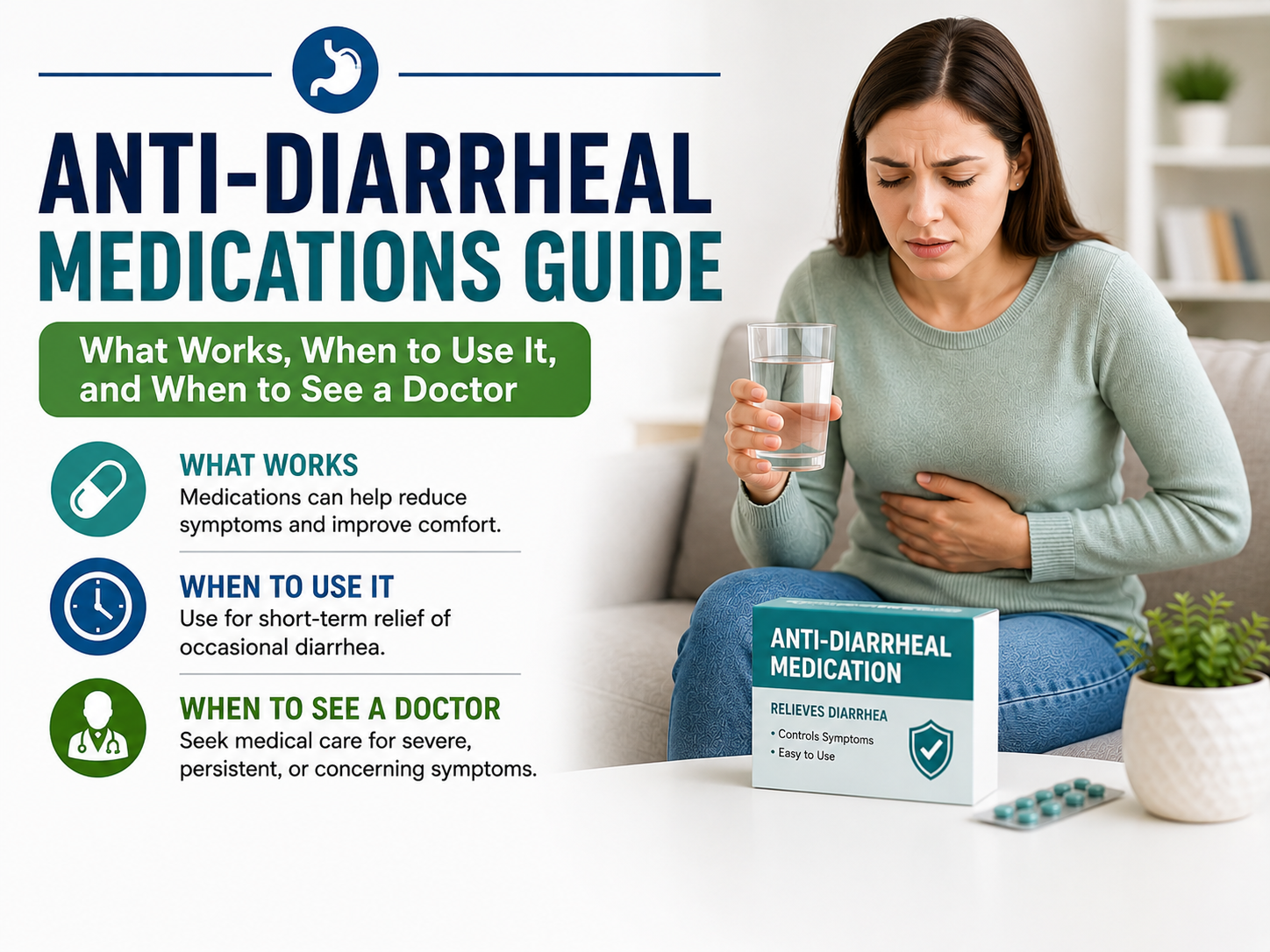
MEDICAL DISCLAIMER: This article is for informational purposes only and does not constitute medical advice. Anti-diarrheal medications are not appropriate for all types or causes of diarrhea. If you have severe diarrhea, diarrhea lasting more than 2 days in adults or 24 hours in young children, blood in stool, high fever, signs of dehydration, or diarrhea following recent antibiotic use, seek medical attention rather than self-treating.
Understanding Diarrhea — Before Reaching for Medicine
Diarrhea — loose, watery stools occurring three or more times in a day — is one of the most common medical complaints worldwide. Most adults experience it several times a year. In most cases, it resolves on its own within a day or two without treatment. In other cases, it's a symptom of something that needs attention and shouldn't be suppressed with medication.
The key question before reaching for an anti-diarrheal medication is: what is causing this diarrhea?
The most common causes of acute (short-term) diarrhea include viral gastroenteritis (stomach flu), bacterial or parasitic infections from contaminated food or water, antibiotic side effects, and reactions to specific foods. Some of these causes benefit from anti-diarrheal medication; others do not — and in some cases, suppressing diarrhea can actually be harmful by prolonging the illness or allowing a pathogen to stay in the body longer.
The Two Main OTC Anti-Diarrheal Medications
Loperamide (Imodium A-D and generics)
Loperamide is the most commonly used over-the-counter anti-diarrheal medication in the United States. It works by slowing the movement of the intestines, reducing the speed at which contents pass through the digestive tract and allowing more water to be absorbed from stool. The result is firmer, less frequent stools.
How it works: Loperamide is an opioid receptor agonist that acts specifically on the gut — it does not cross into the brain at normal doses, so it has no sedative effect and no abuse potential at recommended doses.
Onset: Typically 1–3 hours after the first dose.
Standard adult dosing: 4 mg (two 2mg caplets) initially, then 2 mg after each loose stool; maximum 16 mg per day unless directed by a physician.
Available as: Imodium A-D, Imodium Multi-Symptom Relief (with simethicone for gas), and numerous generic equivalents.
When loperamide is appropriate:
- Acute non-infectious diarrhea (dietary, stress-related, travel-related when no infection is suspected)
- Diarrhea-predominant IBS (irritable bowel syndrome) under medical guidance
- Traveler's diarrhea in adults when symptoms are mild to moderate and there is no fever or blood in stool
- Chemotherapy-related diarrhea (under oncologist supervision)
When loperamide should NOT be used:
- Diarrhea with blood in the stool (dysentery) — this suggests bacterial invasion that should not be suppressed
- High fever accompanying diarrhea (temperature above 101°F / 38.3°C)
- Suspected bacterial infections like E. coli O157:H7, Salmonella, Shigella, or Campylobacter — where slowing the gut can worsen outcomes
- Pseudomembranous colitis (C. difficile infection) following antibiotic use
- Children under 2 years old (serious safety concerns; consult a pediatrician)
- People with certain heart rhythm conditions (at high doses, loperamide can affect cardiac conduction)
Bismuth Subsalicylate (Pepto-Bismol, Kaopectate, and generics)
Bismuth subsalicylate works differently from loperamide. Rather than slowing intestinal motility, it has anti-inflammatory effects on the gut lining, antibacterial properties (it can kill some of the bacteria that cause traveler's diarrhea), and anti-secretory effects that reduce fluid output into the intestines. It also coats and soothes the stomach and intestinal lining.
How it works: Bismuth reduces inflammation in the gut, inhibits some bacterial growth, and decreases the secretion of fluids into the intestine.
Standard adult dosing: 524 mg (two tablets or 30 mL of liquid) every 30–60 minutes as needed; maximum 8 doses per 24 hours.
Available as: Pepto-Bismol (liquid and tablets), Kaopectate, and generics. Note: Kaopectate changed its active ingredient to bismuth subsalicylate (from kaolin) — the two brands are now pharmacologically equivalent.
When bismuth subsalicylate is appropriate:
- Traveler's diarrhea treatment and prevention (one of the few OTC agents with evidence for prevention)
- Mild to moderate acute diarrhea with nausea and upset stomach (its multi-symptom coverage makes it useful when stomach upset accompanies diarrhea)
- Indigestion and heartburn alongside diarrhea symptoms
When bismuth subsalicylate should NOT be used:
- Children and teenagers with viral illnesses (chickenpox, flu) — contains salicylate and carries risk of Reye's syndrome
- People allergic to aspirin or other salicylates
- People taking blood thinners (warfarin/Coumadin) — can increase bleeding risk
- People on medications for gout, diabetes, or arthritis that interact with salicylates
- Pregnancy — consult a physician before use
- People with kidney disease (bismuth clearance may be impaired)
Important note: Bismuth subsalicylate will turn your stools (and sometimes your tongue) black. This is completely harmless and temporary — a normal consequence of bismuth metabolism. Do not mistake this for blood in the stool.
Side-by-Side Comparison
| Feature | Loperamide (Imodium) | Bismuth Subsalicylate (Pepto-Bismol) |
|---|---|---|
| Mechanism | Slows intestinal motility | Anti-inflammatory, antibacterial, anti-secretory |
| Main use | Stopping frequent loose stools | Multi-symptom GI relief including diarrhea |
| Works for nausea? | No | Yes |
| Traveler's diarrhea prevention? | No | Yes (some evidence) |
| Safe for children? | Not under 2; caution 2–5 | Not for children/teens with viral illness |
| Safe in pregnancy? | Consult physician | Consult physician |
| Drug interactions | Cardiac medications (at high doses) | Blood thinners, salicylate-sensitive medications |
| Black stools side effect? | No | Yes (harmless) |
| Typical cost | $6–$14 | $6–$12 |
Hydration: The Most Critical Component of Diarrhea Treatment
Anti-diarrheal medications treat the symptom — but the most medically important aspect of managing diarrhea, particularly in children, the elderly, and immunocompromised individuals, is replacing lost fluids and electrolytes.
Diarrhea causes rapid fluid and electrolyte loss. Plain water alone is not sufficient — it lacks the sodium and glucose needed for optimal intestinal water absorption. Oral rehydration solutions (ORS) like Pedialyte, Liquid IV, or WHO-formulated ORS packets are the gold standard for rehydration during diarrheal illness.
Signs of dehydration requiring urgent medical attention include:
- Significantly decreased urination (or no wet diapers for 8+ hours in infants)
- Dry mouth and extreme thirst
- Dizziness when standing
- Sunken eyes
- In infants and toddlers: sunken fontanelle (soft spot)
- Rapid heartbeat or breathing
- Confusion or lethargy
Dehydration from diarrhea is one of the leading causes of pediatric hospitalization globally and is a serious risk in elderly adults who may not feel thirst as acutely. Don't wait for these signs to appear — begin oral rehydration early in any diarrheal illness.
When to See a Doctor Instead of Self-Treating
OTC anti-diarrheal medications are appropriate for mild, uncomplicated, acute diarrhea in otherwise healthy adults. Several scenarios call for medical evaluation rather than home management:
In adults, seek medical attention for:
- Diarrhea lasting more than 2 days without improvement
- Blood or mucus in stool
- Fever above 101°F (38.3°C)
- Severe abdominal cramping
- Signs of significant dehydration
- Diarrhea within 2–4 weeks of antibiotic use (possible C. difficile)
- Recent travel to regions with high-risk water supply
- Diarrhea in an immunocompromised person (cancer treatment, HIV, organ transplant)
In children, seek medical attention for:
- Any age: blood in stool, high fever, signs of dehydration, severe abdominal pain, vomiting that prevents fluid intake
- Infants under 6 months: any diarrhea warrants physician contact
- Children under 2: diarrhea lasting more than 24 hours
- Children 2 and older: diarrhea lasting more than 2 days
Anti-Diarrheal Use in Special Populations
Seniors
Older adults are at significantly higher risk of dehydration from diarrheal illness. Aging reduces thirst sensation, and many seniors take medications (diuretics, for example) that compound fluid loss. Additionally, some medications commonly prescribed in older adults (antibiotics, certain blood pressure medications, proton pump inhibitors) can themselves cause diarrhea. When an elderly person develops diarrhea, evaluate potential medication causes early and be aggressive about hydration support.
Loperamide is generally safe for older adults at standard doses, but caution is warranted with the cardiac interaction risk at higher doses — particularly important in seniors with pre-existing heart conditions.
People with Inflammatory Bowel Disease (IBD)
Individuals with Crohn's disease or ulcerative colitis experience diarrhea as a primary symptom of disease flares. Anti-diarrheal medications may provide some symptom relief between flare-ups, but diarrhea in the context of an IBD flare should generally be discussed with a gastroenterologist rather than self-managed with OTC agents. Loperamide is occasionally used in IBD management but requires physician guidance, as it carries a theoretical risk of toxic megacolon in severe colitis.
IBS (Irritable Bowel Syndrome)
For people with diarrhea-predominant IBS (IBS-D), loperamide is one of the most commonly recommended tools for managing acute episodes. Used judiciously and intermittently (not continuously), it can significantly improve quality of life. Discuss appropriate use patterns with your gastroenterologist or primary care provider.
Travelers
Traveler's diarrhea — caused most commonly by enterotoxigenic E. coli — is one of the clearest indications for anti-diarrheal medication use. The combination of loperamide (to slow symptoms) plus an antibiotic (such as azithromycin or rifaximin, by prescription) is more effective than either agent alone for bacterial traveler's diarrhea. For self-treatment, bismuth subsalicylate can reduce severity and duration and has modest evidence for prevention when taken during travel. If fever or blood in stool occurs while traveling, see a local physician — do not rely on OTC medications alone.
The BRAT Diet and Dietary Management
The traditional BRAT diet (Bananas, Rice, Applesauce, Toast) was long recommended during diarrheal illness for its binding, low-fiber properties. Current evidence suggests that normal, balanced nutrition resumed as tolerated is more beneficial for recovery than strict dietary restriction, but bland, low-fat, easily digestible foods remain sensible choices during acute illness. Foods to avoid during recovery: dairy products (especially for those with temporary lactase deficiency post-infection), fatty or fried foods, high-fiber vegetables, caffeine, and alcohol — all of which can aggravate gastrointestinal irritability.
Frequently Asked Questions
Can I take Imodium and Pepto-Bismol together?
They work through different mechanisms and are not known to have significant direct interactions. However, combining them is generally unnecessary — loperamide is more effective at stopping diarrhea, while bismuth subsalicylate is more useful for nausea and multi-symptom upset. If you want to address both diarrhea and nausea, Imodium Multi-Symptom Relief combines loperamide with simethicone for gas but doesn't address nausea. Using bismuth subsalicylate for nausea alongside loperamide for diarrhea is pharmacologically reasonable, but ask your pharmacist or physician if you have any concerns about interactions with your other medications.
How quickly does Imodium work?
Loperamide (Imodium) typically begins reducing stool frequency within 1–3 hours of the first dose. Full effect — firmer stool consistency — usually occurs within 3–5 hours. If you take the medication and have no improvement in diarrhea after 48 hours, you should see a physician rather than increasing the dose.
Can I use anti-diarrheal medicine for diarrhea caused by antibiotics?
Antibiotic-associated diarrhea has two forms. Mild diarrhea shortly after starting antibiotics (loose stools, no fever, no blood) can often be managed with loperamide, probiotics, and completing the antibiotic course. However, if diarrhea develops during or after antibiotic use with fever, significant abdominal cramping, or watery/bloody stools — particularly if it starts days to weeks after finishing the antibiotic — this may indicate Clostridioides difficile (C. diff) infection, which requires medical treatment and should NOT be treated with loperamide.
Is it safe to take Imodium every day for chronic diarrhea?
Daily long-term loperamide use can be appropriate for certain conditions (such as short bowel syndrome or post-surgical diarrhea) under physician supervision. However, if you're experiencing chronic diarrhea that requires daily medication, this is a symptom that needs proper medical evaluation — not ongoing suppression. Chronic diarrhea can be caused by IBS, IBD, celiac disease, microscopic colitis, bile acid malabsorption, and other conditions that have specific treatments. Don't rely on daily anti-diarrheal medication as a long-term strategy without a diagnosis.
Can anti-diarrheal medications cause constipation?
Yes — loperamide in particular works by slowing intestinal motility, and overuse can cause rebound constipation. The recommendation is to stop taking it as soon as diarrhea resolves, not to continue taking it until you have a firm stool. If you develop constipation after a course of anti-diarrheal medication, increased fluid intake and dietary fiber usually resolve it within a day or two.
Shop Digestive Health Products at AllCare Store
AllCare Store carries a full range of digestive health products including Imodium, Pepto-Bismol, Kaopectate, oral rehydration solutions, probiotics, and digestive support supplements. We stock both name brands and cost-effective generic equivalents of all major anti-diarrheal medications.
Browse our Digestive Health collection, or explore our full Medicine & Monitors category. Free shipping on qualifying orders.
Questions about which product is right for your situation? Call our team at 1-888-889-6260, Monday–Friday, 7:00 AM–4:00 PM CST.