This article is for informational purposes only and is not a substitute for medical advice from your OB-GYN, midwife, or healthcare provider. Postpartum bleeding and recovery vary significantly from person to person. Contact your healthcare provider if you have concerns about your postpartum recovery.

The Thing No One Tells You Enough About
You've read every book about labor. You've watched the birthing videos. You've packed your hospital bag with precision. But somehow, amid all the preparation, one topic tends to get underestimated: what happens to your body in the weeks after delivery.
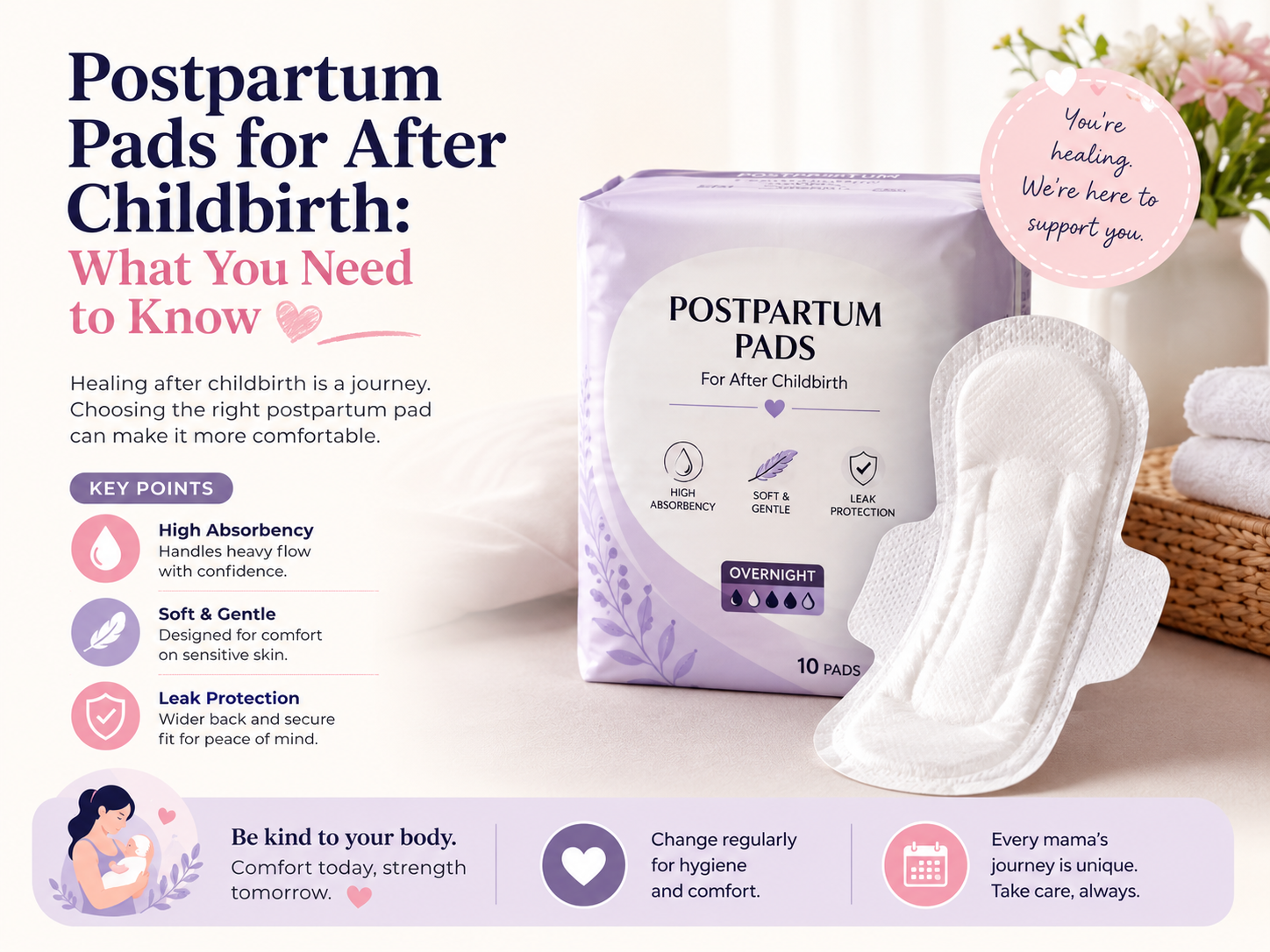
Postpartum bleeding — called lochia — is completely normal. It's your body shedding the uterine lining built up during pregnancy, and it can last anywhere from 4 to 6 weeks. It is heavier than a typical period, especially in the first few days, and it requires pads specifically designed for the volume and sensitivity of postpartum recovery.
Regular period pads are not enough. Tampons and menstrual cups are not safe during postpartum recovery (they introduce infection risk while your cervix is still open and healing). You need postpartum pads — and you need more of them than you probably expect.
This guide covers everything: how postpartum bleeding works, what to look for in a postpartum pad, how many to buy, and how to care for yourself during recovery. Browse our Mom & Baby Care collection at AllCare Store for postpartum care supplies.
Understanding Postpartum Bleeding (Lochia)
Lochia progresses through three distinct phases. Understanding them helps you know what's normal and when to call your doctor.
| Phase | Timing | Color | What to Expect |
|---|---|---|---|
| Lochia Rubra | Days 1–4 | Bright red | Heaviest flow, possible clots up to a quarter size, strong odor |
| Lochia Serosa | Days 4–10 | Pink to brown | Lighter flow, may continue for up to 2 weeks |
| Lochia Alba | Day 10 through week 6 | Yellow-white to creamy | Very light, gradually tapering; mucus-like discharge |
When to call your doctor immediately:
- Soaking more than one pad per hour for two or more consecutive hours (postpartum hemorrhage)
- Blood clots larger than a golf ball
- Bright red bleeding that restarts after turning pink/white (possible retained placenta or overexertion)
- Foul-smelling discharge with fever (possible infection)
- Feeling dizzy, faint, or extremely weak alongside heavy bleeding
Why Regular Pads Aren't Enough
Standard menstrual pads are designed for the typical 1–2 oz of blood lost during an average period. The first few days of postpartum bleeding can involve significantly more. Beyond volume, postpartum pads differ from period pads in several important ways:
- Size: Postpartum pads are longer (often 16–18") to provide full front-to-back coverage while you're recovering and may be wearing mesh underwear or moving gingerly
- Thickness: More absorbent core to handle heavy flow without leaking
- Softness: Your perineum is tender after vaginal delivery — possibly including stitches from tearing or episiotomy. Postpartum pads use softer top layers that don't abrade healing tissue
- No fragrances: Scented pads can irritate healing tissue and disrupt the vaginal environment during recovery — look for unscented only
- Wide wings: Better adhesion to mesh or postpartum underwear
Types of Postpartum Pads
Hospital Mesh Pads / Maxi Pads
The hospital will provide large, thick maxi-style pads for your first days. These aren't pretty, but they're functional. Stock up on similar pads at home for the first week — maximum absorbency, maximum coverage.
Best for: Days 1–5, especially nights
Maternity / Postpartum Maxi Pads
Purpose-built postpartum pads (sold as "maternity pads" by brands like Frida Mom, Always, and others) are the standard recommendation. They're longer, softer, and more absorbent than regular period pads, designed specifically for lochia management.
Best for: Days 1–10, ongoing daytime use
Overnight / Heavy-Flow Pads
Standard overnight pads (the longest, most absorbent period pads from brands like Always Overnight or Stayfree) can serve as postpartum pads, especially as flow lightens after day 5. They're widely available and often more affordable than specialty maternity pads.
Best for: Days 5–14, overnight use throughout postpartum period
Cooling / Soothing Pads
Some postpartum pads include a cooling gel layer or are designed to be chilled in the freezer for perineal pain relief. This serves a dual function — absorbency and comfort — and is especially valuable for the first 3–5 days after vaginal delivery with perineal trauma.
Best for: Perineal pain, stitches, swelling after vaginal delivery
Disposable Postpartum Underwear
Disposable underwear with built-in absorbency (similar to adult incontinence underwear) offer an alternative to pads for the first few days, especially for mothers who find pad placement uncomfortable. They're bulkier than pads but eliminate any concern about leaking onto mesh underwear.
Best for: First 1–3 days, mothers recovering from C-section (no waistband pressure on incision site — look for high-waist styles specifically designed for post-C-section), mothers who prefer all-in-one coverage
How Many Postpartum Pads to Buy
Most mothers underestimate how many pads they'll go through. Here's a practical estimate:
| Week | Changes Per Day | Pads Needed | Type |
|---|---|---|---|
| Days 1–3 (hospital) | 8–10 | Hospital provides | Hospital maxi |
| Days 4–7 at home | 6–8 | ~48 pads | Postpartum maxi |
| Week 2 | 4–6 | ~35–42 pads | Overnight / heavy |
| Weeks 3–4 | 2–4 | ~28–56 pads | Regular overnight |
| Weeks 5–6 | 1–2 | ~14–28 pads | Regular or light |
Recommended stockpile before delivery:
- 2 packs of postpartum/maternity maxi pads (24–36 count each)
- 2–3 packs of overnight heavy-flow pads
- 1 pack of regular pads for the tapering phase
Better to have too many than too few — unused pads can always be kept for your next period when it returns (typically 6–8 weeks postpartum if not breastfeeding; 6–12+ months if breastfeeding exclusively).
C-Section Recovery: Special Considerations
Mothers recovering from cesarean section still experience lochia — the bleeding comes from the uterus, not the delivery site. However, C-section recovery involves additional considerations for pad selection:
- Incision sensitivity: The bikini-line incision is tender. Standard underwear waistbands can press painfully on the incision. High-waist postpartum underwear or mesh panties that sit above the incision are strongly recommended
- Disposable underwear: All-in-one disposable postpartum underwear eliminates the need to manage a pad in the early days when moving is painful and bending is difficult
- Same bleeding timeline: Don't assume C-section means lighter or shorter postpartum bleeding — the lochia timeline is typically the same as vaginal delivery
- No lifting / straining: Follow your surgeon's instructions strictly — physical strain can increase bleeding and complicate incision healing
The Padsicle: DIY Pain Relief
A "padsicle" is a frozen pad used for perineal cold therapy — one of the most highly recommended comfort measures after vaginal delivery. To make one:
- Open a postpartum maxi pad without removing the backing
- Drizzle or spray witch hazel (alcohol-free, unscented) onto the pad surface
- Optionally add a few drops of aloe vera gel
- Re-fold the pad loosely and place in a zip-top bag
- Freeze lying flat
- Apply as a regular pad — the cold provides immediate relief for swelling, pain, and stitches
Make 10–15 padsicles before your due date and keep them in a dedicated freezer bag. Most new mothers use them heavily for the first 3–5 days.
The Postpartum Care Kit: Everything You Need
Postpartum pads are the foundation, but a complete postpartum care kit also includes:
- Peri bottle: A squeeze bottle for rinsing the perineum instead of wiping — essential for comfort and hygiene after vaginal delivery. The hospital will provide one; have a spare at home
- Witch hazel pads: Tucks pads or similar — soothing for hemorrhoids (extremely common postpartum) and perineal discomfort
- Sitz bath basin: Fits over the toilet seat for warm-water soaks that reduce swelling and pain
- Disposable mesh underwear: The hospital provides some; buy extras — they're comfortable, sanitary, and you won't care if they're thrown away
- Stool softener: Constipation after delivery (due to pain medications, iron supplements, and reduced mobility) is extremely common and extremely painful with perineal stitches — start a stool softener on discharge day
- Pain relief: Ibuprofen and acetaminophen as directed by your provider — the combination is highly effective for postpartum pain and both are compatible with breastfeeding
Browse our full Mom & Baby Care collection at AllCare Store for postpartum supplies, nursing pads, and newborn care essentials.
Postpartum Incontinence: What to Know
Many new mothers experience some degree of urinary incontinence — leaking urine when coughing, sneezing, or laughing — in the weeks after delivery. This is caused by weakening of the pelvic floor muscles during pregnancy and delivery and is extremely common (affecting an estimated 30–40% of postpartum women).
Postpartum pads do double duty here — they manage both lochia and any light incontinence. As incontinence persists past the first few weeks, dedicated light incontinence pads (thinner and designed specifically for urine rather than menstrual flow) may be more comfortable. Browse incontinence care products at AllCare Store.
Kegel exercises — pelvic floor contractions — can significantly improve postpartum urinary incontinence. Ask your provider when it's appropriate to start based on your specific delivery and recovery. For persistent incontinence beyond 3–6 months, pelvic floor physical therapy is highly effective and increasingly covered by insurance.
When to Switch Back to Regular Products
You can transition to regular period pads when:
- Flow has lightened significantly (no longer requiring maxi-level absorption)
- Perineal soreness has resolved enough that thinner pad materials are comfortable
- Typically around week 2–3 for most women
You should continue avoiding tampons and menstrual cups until you receive clearance from your OB-GYN or midwife — typically at your 6-week postpartum appointment.
Frequently Asked Questions
Q: How long will postpartum bleeding last?
A: For most women, 4–6 weeks. Some women experience light spotting for up to 8 weeks. If you're still having heavy bright-red bleeding beyond 2 weeks, contact your provider.
Q: Is it normal to pass clots?
A: Small clots (up to quarter-size) are normal in the first few days. Clots larger than a golf ball, or any clots accompanied by heavy soaking (more than one pad per hour), warrant an immediate call to your healthcare provider.
Q: Can I use a menstrual cup or tampon?
A: No — not until cleared by your OB-GYN or midwife (typically at 6 weeks). Internal products introduce infection risk while the cervix is still open and tissues are healing.
Q: Why does my bleeding get heavier when I stand up or breastfeed?
A: Gravity causes pooled blood to release when you move from lying to standing — this is completely normal. Breastfeeding causes the uterus to contract (oxytocin release), which can temporarily increase flow. Both are expected and not a cause for concern.
Q: The hospital sent me home with pads — do I need to buy more?
A: Yes. Most hospitals send you home with enough pads for 1–2 days. You'll need significantly more, especially in the first week. Buy your postpartum pads before your due date so they're ready when you arrive home.
Q: I had a C-section — do I still need postpartum pads?
A: Yes. Lochia occurs regardless of delivery method. You will bleed for the same duration as after vaginal delivery. Focus on postpartum underwear or disposable underwear that doesn't press on your incision.
Shop Postpartum Care Supplies at AllCare Store
AllCare Store carries postpartum care supplies, nursing essentials, and newborn care products with free shipping on all orders.
- Mom & Baby Care — Postpartum supplies, nursing pads, newborn essentials
- Incontinence & Toileting — Light incontinence pads, peri bottles, sitz bath supplies
- Adult Diapers & Protective Underwear — Disposable underwear options for postpartum use
Why Shop AllCare Store:
- ✅ Trusted postpartum care brands
- ✅ Free shipping — All orders, no minimum
- ✅ Discreet packaging — Plain boxes
- ✅ Expert guidance — Call 1-888-889-6260
- ✅ 30-day returns — Risk-free shopping
Questions about postpartum care products? Our specialists are ready to help. Call 1-888-889-6260 or browse our Mom & Baby Care collection.
Medical Disclaimer: This article is for informational purposes only and does not constitute medical advice. Individuals at high risk for pressure injuries should consult a physician, occupational therapist, or certified rehabilitation engineer before selecting a wheelchair cushion.