MEDICAL DISCLAIMER: This article is for informational and educational purposes only. It does not constitute medical advice, diagnosis, or treatment. Always consult a qualified healthcare provider before using any medication on broken or infected skin, on children under 2, or if your symptoms are severe, spreading, or not improving. Do not use hydrocortisone or prescription-strength products without appropriate medical guidance.
Why Itching Happens — and Why the Right Cream Matters
Itching (pruritus) is one of the most common skin complaints in the United States, affecting tens of millions of people at any given time. It can range from a mild, passing nuisance — a bug bite or a brush against poison ivy — to a relentless, sleep-disrupting condition that significantly impacts quality of life. Understanding why your skin itches is the first step toward choosing the right anti-itch cream.
Different causes of itch respond to different treatments. A cream that works brilliantly for an insect bite may do nothing for a fungal rash. A product designed for contact dermatitis may not help eczema. Using the wrong cream doesn't just waste money — it can sometimes delay healing or worsen the underlying condition.
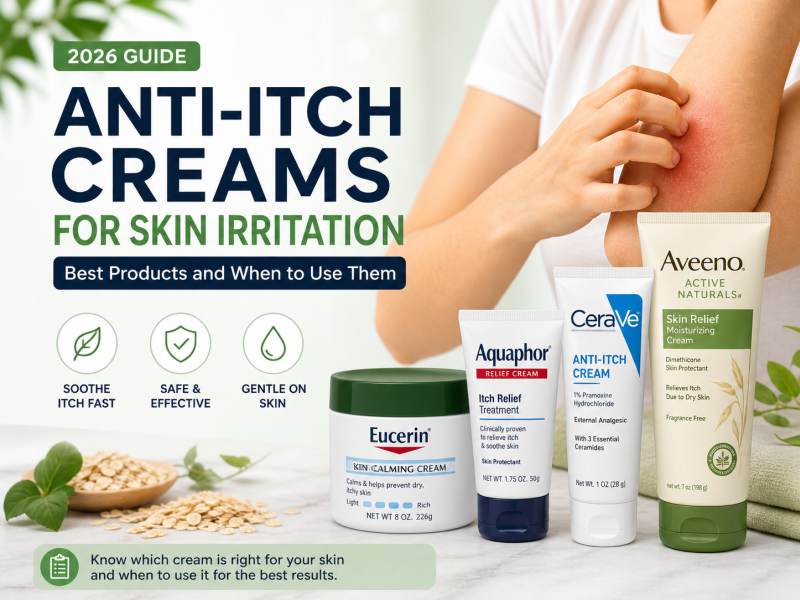
This guide covers every major category of OTC anti-itch cream available in 2026 — hydrocortisone, calamine, antihistamines, lidocaine, and beyond — so you can match the right product to your specific itch.
The 6 Main Types of Anti-Itch Creams (and How They Work)
1. Hydrocortisone Cream (Corticosteroids)
Hydrocortisone is the most widely used and broadly effective OTC anti-itch ingredient. It belongs to the corticosteroid class of drugs — compounds that work by suppressing the local inflammatory response in the skin. When the immune system overreacts (as it does in allergic reactions, contact dermatitis, eczema, and insect bites), it releases histamine and other inflammatory chemicals that trigger redness, swelling, and itching. Hydrocortisone tells the skin's immune cells to calm down, reducing all three symptoms.
OTC hydrocortisone is available in 0.5% and 1% concentrations. Prescription formulations go up to 2.5% and beyond (into other corticosteroid classes like triamcinolone and betamethasone). For most OTC uses, 1% hydrocortisone is the appropriate starting point — it's stronger than 0.5% and still safe for short-term use on most areas of the body.
Best for: Contact dermatitis (poison ivy, poison oak, nickel allergy), eczema flares, insect bites, minor allergic rashes, seborrheic dermatitis, and inflammatory skin reactions.
Key limitations: Hydrocortisone should not be used on the face, groin, or underarms without medical guidance (thinner skin absorbs more medication). It should not be used continuously for more than 7 days without doctor oversight. It does not treat the underlying cause — it suppresses inflammation while the skin heals. It is ineffective for itch caused by fungal infections and can make them worse by suppressing the local immune response that fights fungi.
Popular OTC brands: Cortizone-10, Aveeno 1% Hydrocortisone Anti-Itch Cream, CeraVe Hydrocortisone Anti-Itch Cream, generic store brands.
2. Calamine Lotion
Calamine is a time-tested topical containing zinc oxide and ferric oxide (which gives it its distinctive pink color). It works through several mechanisms: it has mild astringent and antiseptic properties, and when it dries on the skin, the evaporation produces a mild cooling sensation that competes with the itch signal. It also forms a thin protective barrier on the skin surface.
Calamine is particularly valued for weeping, oozing rashes because it dries the skin and reduces discharge — something hydrocortisone cream doesn't do. It's one of the classic remedies for chicken pox, poison ivy, and similar conditions with both itching and weeping.
Best for: Chicken pox, poison ivy or oak with weeping blisters, heat rash (prickly heat), minor sunburn itch, insect bites with mild oozing.
Key limitations: Calamine provides temporary comfort but doesn't treat inflammation at the immune level like hydrocortisone does. It can be drying with extended use and leaves a visible pink residue on the skin. It's less convenient for daytime use in visible areas.
3. Topical Antihistamines (Diphenhydramine)
Oral antihistamines like diphenhydramine (Benadryl) work by blocking histamine receptors systemically, reducing itching from allergic reactions throughout the body. Topical diphenhydramine (available in creams and gels) attempts to do the same locally.
However, most dermatologists and pharmacists caution against topical diphenhydramine for several reasons. First, it is a known sensitizer — with repeated use, some people develop a contact allergy to diphenhydramine itself, creating a new itch on top of the original one. Second, it can be significantly absorbed through the skin, especially on large areas or irritated skin, potentially causing systemic drowsiness and anticholinergic effects. Third, evidence for its topical efficacy is weaker than for hydrocortisone.
Best used: As a short-term option for insect bites or mild itching in small areas when hydrocortisone isn't available. Avoid on large areas of skin or for extended use.
Avoid if: You have previously reacted to diphenhydramine, are applying to a large surface area, or are taking oral diphenhydramine simultaneously (risk of double-dosing).
4. Topical Anesthetics (Pramoxine, Lidocaine)
Topical anesthetics block nerve signals in the skin — including both pain and itch signals. They work faster than anti-inflammatory agents and don't depend on treating inflammation. Pramoxine is the most common OTC topical anesthetic for itch; lidocaine is available in higher concentrations OTC for specific indications (hemorrhoids, minor cuts).
Pramoxine (found in products like Sarna Sensitive, Gold Bond Medicated, and many combination anti-itch products) provides fast-acting relief — often within minutes — for itch from any cause, because it temporarily numbs the nerves that transmit the itch signal regardless of what's causing the itch.
Best for: Dry skin itch (xerosis), sunburn itch, minor burns, insect bites, post-surgical or wound-healing itch, itch from skin conditions where inflammation isn't the primary driver.
Key advantage: Works on itch regardless of cause. Pramoxine is generally well-tolerated and has low sensitization potential compared to diphenhydramine.
5. Menthol and Camphor (Counterirritants)
Menthol and camphor work through counterirritant mechanisms — they activate cooling receptors (TRPM8) and create a cooling sensation that competes with and overrides the itch signal. They don't treat the underlying cause but provide rapid, temporary relief. Many combination anti-itch products include menthol alongside hydrocortisone or pramoxine for faster onset of comfort.
Best for: Mild to moderate itch where immediate temporary relief is needed. Mosquito bites, minor rashes, dry skin.
Caution: Menthol should not be used on broken skin or near mucous membranes. In infants, camphor can be toxic — never use camphor-containing products on children under 2.
6. Zinc-Based and Barrier Creams
Zinc oxide and similar barrier creams work by protecting irritated skin from further insults — moisture, friction, irritants, and microbes — while the skin heals. They don't directly block itch signals, but by restoring the skin barrier and reducing ongoing irritation, they help itch resolve over time. These are particularly valuable for diaper rash and incontinence-associated dermatitis.
Products like Desitin, A&D ointment, and Aquaphor serve this function. For ongoing barrier maintenance and itch prevention in dry or eczema-prone skin, ceramide-rich moisturizers (CeraVe, Cetaphil) are especially helpful because they replenish the lipid components of the skin barrier that are depleted in eczema and very dry skin.
Matching the Cream to the Cause: A Practical Guide
| Cause of Itch | First-Choice Treatment | Avoid |
|---|---|---|
| Insect bites (mosquito, bee, flea) | 1% Hydrocortisone cream + cold compress | Topical diphenhydramine (sensitization risk) |
| Contact dermatitis (poison ivy, nickel, latex) | 1% Hydrocortisone cream; oral antihistamine for systemic symptoms | Scratching — it worsens the rash spread |
| Eczema (atopic dermatitis) | Moisturize first (ceramide cream), then 1% hydrocortisone for flares; pramoxine for mild itch | Fragranced products, hot water |
| Dry skin itch (xerosis) | Rich moisturizer + pramoxine-containing lotion (Sarna Sensitive) | Hydrocortisone long-term (not treating the cause) |
| Sunburn itch | Aloe vera gel, pramoxine lotion, cooling compresses | Petroleum-based products while actively burning |
| Chicken pox | Calamine lotion for weeping; oral antihistamine at night for sleep | Aspirin in children (Reye's syndrome risk) |
| Heat rash (prickly heat) | Calamine lotion, cool environment, loose clothing; 1% hydrocortisone if inflamed | Heavy occlusive creams that block sweat glands |
| Fungal rash (ringworm, jock itch, athlete's foot) | Antifungal cream (clotrimazole, miconazole) — NOT hydrocortisone alone | Hydrocortisone alone (suppresses immune response to fungus) |
| Minor sunburn, wound-healing itch | Pramoxine lotion, aloe, silicone gel for healing scars | Hydrocortisone on open wounds |
| Diaper rash / incontinence dermatitis | Zinc oxide barrier cream (Desitin), frequent changing, moisture management | Hydrocortisone for prolonged use in skin folds |
Hydrocortisone: Getting the Most From the Most Common Product
Because hydrocortisone is by far the most commonly purchased anti-itch cream, it's worth spending extra time on how to use it effectively and safely.
Apply Correctly
Apply a thin layer to the affected area 2–4 times daily. "Thin layer" is key — more product does not mean more relief, and over-application increases systemic absorption risk and side effects. You should be able to see the skin through the cream after rubbing it in gently.
Don't Use It on Infected Skin
If a rash is infected — signs include increasing redness, warmth, pus or yellow crusting, fever, or spreading red streaks — hydrocortisone can worsen the infection by suppressing the immune response the body is using to fight it. See a doctor if you suspect skin infection.
Duration Limits Matter
OTC hydrocortisone labels specify a 7-day maximum for most uses. Extended use can cause skin thinning (atrophy), striae (stretch marks), telangiectasias (broken blood vessels), and rebound flaring when stopped. For chronic conditions like eczema, a dermatologist can prescribe a safe maintenance plan — usually involving steroid-free moisturizers as the backbone with hydrocortisone reserved for flares.
Face and Sensitive Areas Require Extra Care
The skin on the face, especially around the eyes, and in body folds (groin, underarms, between skin rolls) is significantly thinner and absorbs corticosteroids much more readily. These are the areas most vulnerable to steroid-induced side effects. Short-term use under medical guidance can be appropriate, but daily or prolonged use is not recommended without a doctor's involvement.
Children Under 2
Children under 2 should not use OTC hydrocortisone without a doctor's recommendation. Their skin surface area relative to body weight is larger, meaning proportionally more medication is absorbed systemically. A doctor can evaluate the rash and recommend appropriate treatment.
Combination Products: When One Ingredient Isn't Enough
Many leading anti-itch products combine ingredients to address multiple mechanisms simultaneously — anti-inflammatory action, anesthetic relief, and barrier restoration. Some popular and well-regarded combination approaches include:
Hydrocortisone + aloe: Adds soothing and mild anti-inflammatory benefit from aloe alongside the corticosteroid action. Good for sunburn-related rashes.
Hydrocortisone + pramoxine: Hydrocortisone addresses the inflammatory cause; pramoxine gives immediate numbing relief while the hydrocortisone takes effect (which takes 30–60 minutes). Products like Cortizone-10 Plus offer this combination.
Pramoxine + menthol: Non-steroidal combination for generalized dry skin itch. Sarna Original Lotion uses this approach. Suitable for longer-term use than hydrocortisone because it doesn't involve a corticosteroid.
Zinc oxide + calamine: Classic barrier plus drying agent for weeping, blistering rashes. Standard calamine preparations use this combination.
Natural and Alternative Anti-Itch Ingredients
Many people prefer to try natural options before or alongside conventional OTC products. Several have genuine evidence behind them:
Colloidal oatmeal is one of the best-studied natural anti-itch ingredients, and the only natural ingredient with an FDA-approved skin protectant monograph. It contains avenanthramides and beta-glucan, which have anti-inflammatory and barrier-strengthening properties. Aveeno's line of oatmeal-based products uses this. It's safe for all ages, including infants, and can be used as a bath additive (colloidal oatmeal bath) for widespread itch from chicken pox, eczema, or hives.
Aloe vera gel from the Aloe barbadensis plant has mild anti-inflammatory and cooling properties. It's most beneficial for sunburn itch and minor heat-related skin irritation. Pure aloe gel (without alcohol or added fragrances) is the safest form. It does not have the same anti-inflammatory potency as hydrocortisone for true inflammatory conditions.
Tea tree oil has antimicrobial and mild anti-inflammatory properties but should always be diluted before skin application (1–3% in a carrier oil or cream) and is not appropriate for infants or young children. It can be a sensitizer with repeated use.
Witch hazel has astringent properties similar to calamine and is useful for minor rashes, bug bites, and post-shaving irritation. Use alcohol-free witch hazel for sensitive skin.
Special Populations: Seniors and Children
Seniors
Aging skin is thinner, drier, and more permeable than younger skin — meaning topical medications are absorbed more readily. Seniors are more likely to experience side effects from hydrocortisone and more likely to have chronic dry skin itch (xerosis) that doesn't require a corticosteroid at all. For many older adults, an aggressive moisturization regimen — applying a ceramide-rich or petroleum-based moisturizer immediately after bathing while skin is still slightly damp — resolves itch without any medicated cream. When medicated treatment is needed, pramoxine-based products like Sarna Sensitive are a good first step before reaching for hydrocortisone.
Children
For children over 2, OTC 1% hydrocortisone can be used for short periods under appropriate indications (insect bites, contact dermatitis, eczema flares) with the same 7-day limitation. Colloidal oatmeal baths and moisturizers are excellent first-line measures for eczema in children and can reduce the need for topical steroids. For chicken pox, calamine lotion and oral antihistamines at night (for sleep) are the standard approach.
When Anti-Itch Cream Is Not Enough — See a Doctor
Most cases of mild skin itch from known causes resolve with appropriate OTC treatment. However, seek medical evaluation if:
- The itch is severe and covers a large area of the body
- No rash is visible but itching is widespread (may indicate systemic cause — liver disease, kidney disease, thyroid disorders, certain cancers)
- The rash is spreading rapidly, is warm, painful, or shows signs of infection
- You have hives (urticaria) that are widespread, come with facial swelling, difficulty breathing, or dizziness (possible anaphylaxis — call 911 immediately)
- Itch persists beyond 2 weeks despite appropriate OTC treatment
- The rash appears on the eyelids or around the eyes
- You have a rash you cannot identify, especially after travel
- A child under 2 has significant skin irritation
How to Shop for Anti-Itch Products at AllCare Store
AllCare Store carries a comprehensive selection of anti-itch creams, hydrocortisone products, calamine lotions, and skin care items to address a full range of skin irritation needs. Browse our first aid and wound care collection for anti-itch products, bandages, and skin treatment essentials, or explore our personal care collection for moisturizers, barrier creams, and skin comfort products.
Shop at AllCare Store with free shipping on qualifying orders, or call our team at 1-888-889-6260, Monday–Friday, 7:00 AM–4:00 PM CST.
Frequently Asked Questions: Anti-Itch Creams
What is the strongest OTC anti-itch cream?
Among OTC anti-itch creams, 1% hydrocortisone cream is the most potent for inflammatory itch — it addresses the immune-system activity driving redness, swelling, and itching from conditions like contact dermatitis, insect bites, and eczema flares. For immediate itch relief regardless of cause, pramoxine (a topical anesthetic in products like Sarna Sensitive) works quickly by numbing the itch-sensing nerve endings. The "strongest" cream depends on your specific itch type: hydrocortisone is strongest for inflammation-driven itch; pramoxine is fastest for nerve-mediated itch.
Can I use hydrocortisone cream every day?
OTC hydrocortisone cream should not be used continuously for more than 7 days without consulting a doctor. Extended daily use can thin the skin (atrophy), cause striae (stretch marks), and create rebound flaring when stopped. For chronic conditions like eczema, a dermatologist can create a safe management plan — typically using corticosteroids only for active flares, with moisturizers as daily maintenance between flares. Daily corticosteroid use on the face, groin, or underarms is particularly concerning and should only occur under medical supervision.
What anti-itch cream is safe for children?
For children over 2, OTC 1% hydrocortisone cream can be used short-term (up to 7 days) for insect bites, contact dermatitis, and eczema flares — but consult a pediatrician first for young children or widespread rashes. Colloidal oatmeal products (Aveeno Baby, colloidal oatmeal baths) are safe for all ages including infants and are an excellent first-line treatment for eczema and chicken pox itch. Calamine lotion is also safe for children. Avoid topical diphenhydramine in children and never use camphor-containing products on children under 2.
Does hydrocortisone cream work for bug bites?
Yes — 1% hydrocortisone cream is one of the most effective OTC treatments for mosquito bites and other insect bites because it reduces the local allergic inflammatory response (histamine release) that causes redness, swelling, and itching. Apply a thin layer 2–3 times daily for up to 7 days. For faster initial relief alongside the hydrocortisone, a cold compress or ice pack for 5–10 minutes can provide additional comfort. Over-the-counter oral antihistamines (loratadine, cetirizine) can also help if you have multiple bites or are particularly reactive.
What's the difference between anti-itch cream and antifungal cream?
Anti-itch creams (like hydrocortisone) suppress inflammation and reduce itching, but they do not kill fungal organisms. Antifungal creams (like clotrimazole or miconazole) kill or stop the growth of fungi like the dermatophytes that cause ringworm, jock itch, and athlete's foot. Using hydrocortisone alone on a fungal rash can actually worsen the infection by suppressing the immune response your body uses to fight it — and can cause a condition called "tinea incognito" where the rash spreads and becomes harder to diagnose. If you have a rash in a warm, moist body fold (groin, between toes, under the breasts) that isn't responding to hydrocortisone, consider an antifungal cream instead, and consult a pharmacist or doctor if unsure.
For anti-itch creams, hydrocortisone products, calamine lotion, and skin care essentials, visit AllCare Store. Browse our first aid and wound care collection. Free shipping on qualifying orders. Call 1-888-889-6260 for personalized assistance, Monday–Friday 7 AM–4 PM CST.