MEDICAL DISCLAIMER: This article is for informational purposes only and is not a substitute for professional medical advice. Always consult with your healthcare provider or orthopedic specialist before using a knee brace, especially following injury or surgery. If you experience sudden severe pain, significant swelling, or an inability to bear weight, seek immediate medical attention.
Best Knee Braces for Pain Relief 2026: Your Complete Guide
Robert's Story: Getting His Life Back One Step at a Time
Robert had been a weekend hiker for thirty years. Every Saturday morning, he laced up his boots and hit the trails near his home in Colorado, feeling the stress of the workweek fall away with each step. At 61, hiking wasn't just exercise — it was his sanity, his connection to nature, his time to breathe.
Then came the morning he stepped off a trail ledge and felt something go wrong in his right knee. It wasn't a dramatic fall. There was no snap, no immediate collapse. Just a dull, deep ache that settled in and refused to leave. Over the following weeks, walking downstairs became a carefully negotiated event. Getting out of the car required a ritual of slow movements and quiet wincing. And the trails? They waited, silent and patient, while Robert wondered if he'd ever feel the crunch of gravel under his boots again.
His orthopedic doctor diagnosed him with moderate osteoarthritis and prescribed physical therapy. But for day-to-day function — the grocery runs, the dog walks, the office hours on his feet — she also recommended a quality knee brace. "Think of it as a conversation between your body and the world," she told him. "The brace gives your knee the stability it needs to do its job while the rest heals."
Three months later, Robert was back on the trail. Not at the pace he'd once kept, but moving — and grateful. He found that choosing the right knee support wasn't complicated once he understood what his knee actually needed. If you're in Robert's situation — managing knee pain from arthritis, an old injury, or the simple wear that comes with an active life — this guide will help you navigate the options and find the brace that can bring you back to the activities you love.
Why Knee Braces Work: The Science Behind the Support
Before diving into specific products, it's worth understanding why knee braces are so effective for so many people. A well-fitted knee brace doesn't just mask pain — it addresses the underlying mechanical factors that cause discomfort.
Stability and Alignment
Many knee conditions involve some degree of joint instability — the knee moves in ways it shouldn't, putting stress on cartilage, ligaments, and surrounding tissue. A knee brace provides an external structure that keeps the joint aligned and moving as it should. This is especially important for people with ligament injuries (like ACL or MCL sprains), where the natural stabilizers of the knee have been compromised.
Offloading and Pressure Redistribution
For arthritis patients, pain often comes from uneven distribution of pressure across the knee joint. Braces — especially unloader or hinged types — can shift weight away from the damaged compartment of the knee, dramatically reducing pain during movement. Studies have shown that the right brace can reduce pain scores in knee osteoarthritis patients by 40-60%.
Proprioception and Confidence
Here's something many people don't expect: knee braces improve proprioception — your body's sense of where the joint is in space. This enhanced body awareness helps prevent the small missteps and overcorrections that often cause secondary injuries. Many patients report that wearing a brace gives them the confidence to move more naturally, which actually accelerates healing.
Compression and Circulation
Compression sleeves and wraps increase blood flow to the knee area, which helps reduce swelling and supports the body's natural healing processes. The warmth generated by compression also helps loosen stiff joints, particularly beneficial for arthritis sufferers on cold mornings.
Types of Knee Braces: Which Category Is Right for You?
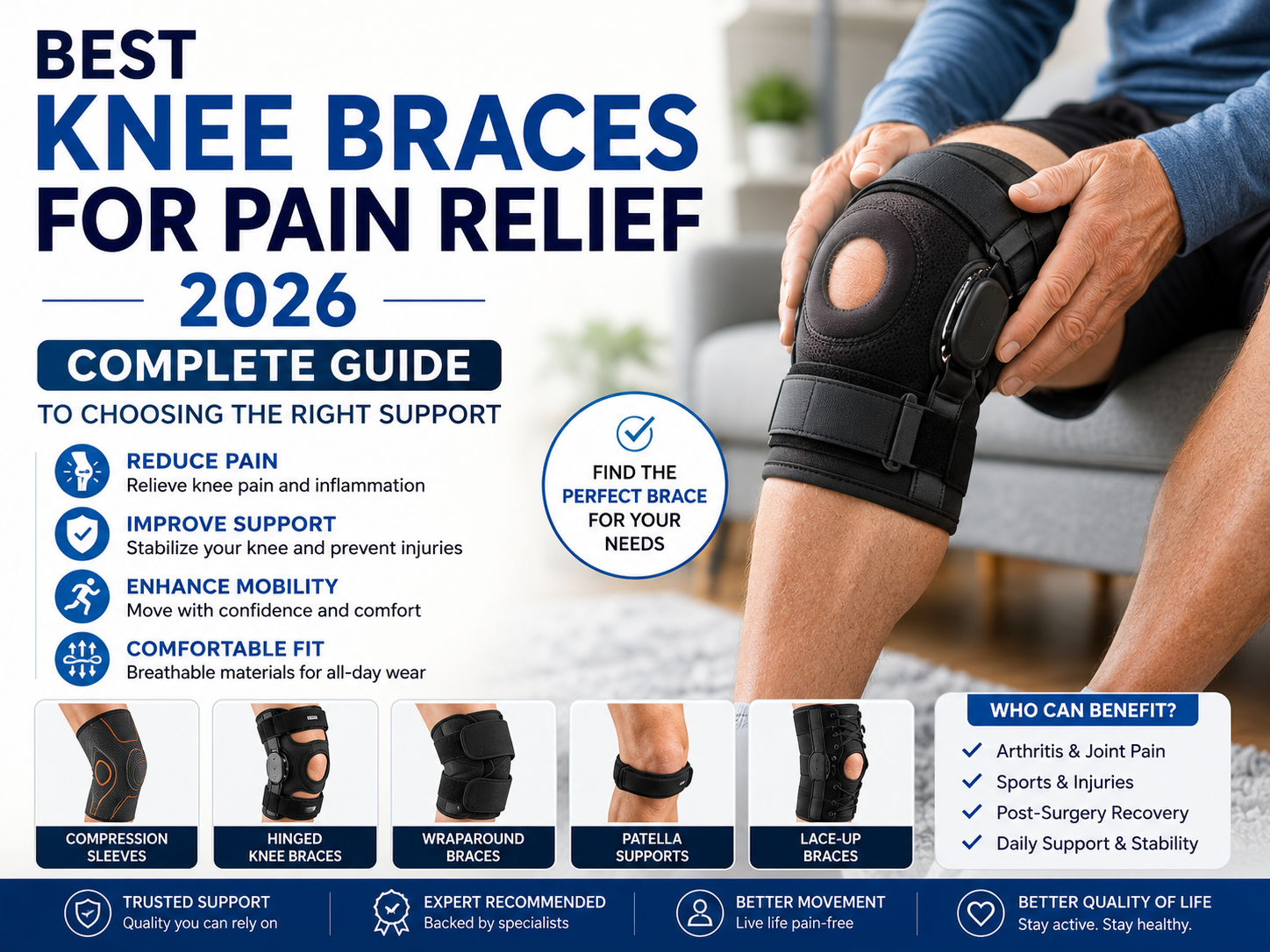
The knee brace market can feel overwhelming, but products fall into a few clear categories based on their purpose and design. Understanding these categories is the first step to finding your ideal solution.
Compression Sleeves
Compression sleeves are the lightest and most flexible option. They slip over the knee and provide gentle, consistent compression around the entire joint. They're ideal for mild pain, inflammation management, and everyday support during low-impact activities.
Best for: Early-stage arthritis, mild tendinitis, general soreness, post-workout recovery, low-impact activities like walking or light gardening.
Patella Stabilizer Braces
These braces focus on the kneecap (patella), keeping it tracking correctly during movement. They typically feature a reinforced ring or buttress around the patella opening. They're particularly effective for conditions like patellar tendinitis (jumper's knee), chondromalacia, and general patella tracking problems.
Best for: Kneecap pain, runner's knee, jumper's knee, patella instability.
Hinged Knee Braces
Hinged braces feature rigid side supports with hinged joints that mirror the knee's natural movement while preventing dangerous side-to-side or hyperextension motion. They provide maximum stability and are often recommended following injury or surgery.
Best for: Ligament injuries (ACL, MCL, LCL sprains), post-surgical recovery, moderate-to-severe instability, high-activity support during recovery.
Unloader/Offloader Braces
Designed specifically for osteoarthritis, unloader braces use a three-point leverage system to shift weight away from the damaged portion of the knee joint. They're often prescribed by orthopedic surgeons as an alternative or complement to medication.
Best for: Medial or lateral compartment osteoarthritis, significant arthritis-related knee pain.
Wraparound Braces
Wraparound braces are adjustable, featuring straps that wrap around the knee rather than a sleeve design. They're easier to put on for people with limited mobility and allow for fine-tuned compression adjustment.
Best for: Seniors or people with limited flexibility who find sleeve-type braces difficult to put on, adjustable support needs throughout the day.
The Five Best Knee Braces for Pain Relief in 2026
AllCare Store carries a carefully selected range of knee support products from trusted brands. Here are five outstanding options that address the most common knee pain needs.
1. DonJoy Advantage Deluxe Elastic Knee Sleeve
The DonJoy Advantage Deluxe Elastic Knee Sleeve is the go-to choice for everyday knee support. DonJoy is one of the most trusted names in orthopedic bracing, with decades of use in both clinical and athletic settings. This sleeve combines effective compression with breathable construction for all-day comfort.
Key Features:
- Medical-grade elastic construction for therapeutic compression
- Open patella design to reduce pressure on the kneecap
- Breathable fabric suitable for extended daily wear
- Available in multiple sizes for the right fit
- Slim enough to wear under clothing without bulk
- Washable and durable for long-term use
If you're just beginning to manage knee pain, or if your needs are for general daily support rather than injury stabilization, this sleeve is an excellent starting point. It's the kind of product that goes on in the morning and stays comfortable throughout a full day.
2. Rolyan Hinged Knee Brace with Condyle Pads
For those who need meaningful structural support, the Rolyan Hinged Knee Brace with Condyle Pads steps up to the task. Hinged braces are widely recommended by orthopedic specialists for patients recovering from ligament injuries or managing moderate-to-severe knee instability.
Key Features:
- Polycentric hinges that mimic the knee's natural range of motion
- Adjustable condyle pads for customized fit and pressure distribution
- Padded uprights reduce skin irritation during extended wear
- Easy-to-adjust straps for fine-tuned fit
- Lightweight aluminum frame balances support with mobility
- Can be adjusted to limit extension and flexion as needed during recovery
Robert, from our opening story, eventually graduated to this style of brace for his more demanding trail hikes. The hinged design gave him the confidence to navigate uneven terrain without fear of the knee buckling or giving way.
3. Ossur Form Fit Knee Sleeve
Ossur is one of the most respected names in orthopedic bracing worldwide, and the Ossur Form Fit Knee Sleeve demonstrates why. This sleeve uses advanced textile technology to deliver precise, graduated compression while conforming to the unique shape of your knee.
Key Features:
- Anatomically contoured design fits the knee's natural curves
- Silicone grip strips keep the sleeve in place without rolling or bunching
- Graduated compression promotes circulation and reduces swelling
- Ultra-breathable materials wick moisture away from skin
- Low-profile design fits under athletic pants or work trousers
- Suitable for both acute pain management and long-term arthritis support
This brace is particularly popular with active adults who need support that stays in position throughout dynamic activities. If you've struggled with compression sleeves that slide down during exercise or walking, the Ossur Form Fit's silicone grip system makes an immediate difference.
4. McDavid Knee Brace with Bilateral Hinges
McDavid has been a staple in sports medicine for decades, trusted by athletes and rehabilitation specialists alike. The McDavid Knee Brace with Bilateral Hinges delivers a middle ground between the flexibility of a sleeve and the rigidity of a full hinged brace — perfect for active recovery.
Key Features:
- Bilateral polycentric hinges support natural knee movement while preventing lateral instability
- Four-way stretch neoprene provides warmth and compression
- Open patella design reduces kneecap pressure
- Secure wraparound straps above and below the knee
- Suitable for sports, recreational activities, and daily use
- Fits both left and right knees (universal design)
This brace is the preferred choice for people who want to stay active during recovery — whether that means returning to golf, cycling, or simply walking without pain. The hinges provide meaningful protection without the bulk of a more rigid orthotic device.
5. Breg Freestyle OA Knee Brace
For patients managing osteoarthritis pain specifically, the Breg Freestyle OA Knee Brace is in a category of its own. Breg is a clinical-grade orthopedic company, and this brace incorporates the offloading technology that orthopedic surgeons rely on for their patients.
Key Features:
- Three-point leverage system offloads the affected compartment of the knee
- Adjustable valgus/varus correction reduces pressure on damaged cartilage
- Lightweight frame with padded uprights for all-day comfort
- Custom-fit strapping system accommodates different leg shapes
- Designed for both medial and lateral compartment OA
- Clinically validated for pain reduction in knee osteoarthritis
If your doctor has mentioned that you're a candidate for knee replacement but you're not ready for surgery, or if you want to reduce your reliance on pain medications, this type of brace can offer significant, measurable relief.
Knee Brace Comparison Table
| Brace | Type | Best For | Support Level | Activity Level |
|---|---|---|---|---|
| DonJoy Advantage Deluxe Elastic Sleeve | Compression Sleeve | General daily support, mild pain | Light | Daily use, walking |
| Rolyan Hinged Knee Brace | Hinged Brace | Ligament injuries, instability | Maximum | Recovery, moderate activity |
| Ossur Form Fit Sleeve | Compression Sleeve | Arthritis, swelling, active use | Moderate | Athletic & daily use |
| McDavid Bilateral Hinged Brace | Hinged Sleeve | Active recovery, sports | Moderate-High | Sports, recreational |
| Breg Freestyle OA Brace | Unloader Brace | Osteoarthritis, compartment pain | Maximum (Offloading) | Daily use, all levels |
How to Choose the Right Knee Brace: A Decision Framework
Choosing the right knee support doesn't have to be overwhelming. Answer these key questions to narrow your options:
What Is Your Diagnosis?
- Osteoarthritis: Consider an OA unloader brace or a supportive hinged brace
- ACL/MCL sprain: A hinged brace provides the stability your ligaments need
- Patellar tendinitis or runner's knee: A patella stabilizer sleeve or neoprene sleeve with patella ring
- General soreness or mild arthritis: A quality compression sleeve is often enough
- Post-surgical recovery: Follow your surgeon's specific recommendation — they may prescribe a specific model
What Activities Do You Need to Support?
- Daily living (walking, stairs, driving): Compression sleeve or lightweight hinged brace
- Sports and recreation: Hinged sleeve or stabilizing brace depending on sport
- Demanding outdoor activities (hiking, cycling): Hinged brace with good upright support
- Sleep/night support: Lightweight sleeve only — avoid rigid braces at night
What Is Your Comfort Priority?
- Maximum support over comfort: Hinged or unloader brace
- Balance of support and comfort: Hinged sleeve or reinforced compression sleeve
- Comfort above all else: Soft compression sleeve (DonJoy, Ossur Form Fit)
Getting the Right Fit: Sizing Your Knee Brace
The most technically advanced knee brace is useless if it doesn't fit correctly. Here's how to measure for a proper fit:
For Compression Sleeves
Measure the circumference of your thigh approximately 6 inches above the center of your kneecap. Use this measurement to select your size from the brand's size chart. Most brands offer Small through XXL, and some offer extended sizing for larger legs.
For Hinged Braces
You'll typically need two measurements: the circumference of your thigh 6 inches above the knee center, and the circumference of your calf 6 inches below the knee center. For wraparound and adjustable braces, these measurements help you choose the right frame size.
Signs of Poor Fit
- Sleeve rolls or bunches: Wrong size — try sizing up or look for a style with grip strips
- Numbness or tingling: Too tight — size up immediately
- Brace slips down during activity: May be too large, or you may need a style with suspension straps
- Skin irritation or chafing: Wrong material for your skin type, or incorrect positioning
- Pain increases while wearing: Wrong type of brace for your condition — consult your doctor
Knee Brace Care and Maintenance
A quality knee brace is an investment in your mobility. Proper care extends the life of your brace and maintains its therapeutic effectiveness:
- Hand wash compression sleeves in cool water with mild detergent after each use. Machine washing on gentle with a mesh laundry bag is acceptable for most fabric braces.
- Air dry only — heat from dryers and radiators degrades elastic materials and can warp plastic components.
- Inspect hinges and closures monthly for signs of wear, cracking, or loosening.
- Replace compression sleeves when they lose their elasticity, typically every 6-12 months depending on frequency of use.
- Clean metal components of hinged braces with a damp cloth and dry thoroughly to prevent corrosion.
- Store flat or rolled — never fold fabric braces sharply along the same crease repeatedly, as this degrades the material over time.
Frequently Asked Questions About Knee Braces
Can a knee brace make knee pain worse?
Yes, a poorly fitted or incorrect type of brace can exacerbate knee pain. If a sleeve is too tight, it can restrict circulation and increase discomfort. If you're using a compression sleeve when you actually need a hinged brace (for example, with an ACL injury), the lack of structural support can allow harmful movements that worsen your condition. Always consult your healthcare provider about which brace type is appropriate for your diagnosis before purchasing.
Should I wear a knee brace all day?
Most people benefit from wearing a knee brace during activities that stress the knee, and removing it during rest. Wearing a brace continuously 24/7 can cause skin issues and may prevent your muscles from doing the stabilizing work they need to maintain strength. A common approach is to wear the brace during activity and while on your feet, then remove it when sitting for long periods or sleeping. Follow your healthcare provider's specific guidance for your condition.
Do knee braces weaken the knee muscles over time?
This is a common concern, and the evidence suggests that appropriately used knee braces do not significantly weaken the muscles when combined with physical therapy or regular exercise. The key is to use the brace as a support tool while also working to strengthen the muscles around the knee. Abandoning all physical therapy in favor of a brace alone is not recommended — the brace should complement, not replace, your strengthening program.
How do I know if I need a hinged brace or a simple sleeve?
Generally, compression sleeves are appropriate for mild-to-moderate pain, mild arthritis, and general daily support. Hinged braces are recommended when there is ligament instability, a history of the knee "giving way," moderate-to-severe arthritis, or during recovery from injury or surgery. If your knee has ever felt like it was going to buckle during activity, a hinged brace is likely more appropriate than a sleeve. When in doubt, consult with your orthopedic specialist or physical therapist.
Are there different knee braces for left and right knees?
Many compression sleeves are universal (fit either knee). However, more structured braces — particularly hinged braces and OA braces — are often designed specifically for either the left or right knee, as the hinge mechanics are mirrored. Always check the product listing to confirm whether you need a left, right, or universal style before purchasing.
Complementary Products for Knee Pain Relief
A knee brace is often most effective as part of a broader approach to knee pain management. Consider pairing your brace with these supportive products from AllCare Store:
- Heating pads: Warmth before activity helps loosen stiff joints and prepares the knee for movement
- Ice packs and cold therapy wraps: Cold therapy after activity reduces post-exercise swelling and inflammation
- Compression socks: Support the entire lower leg, which affects knee alignment and load distribution
- Foam rollers and massage balls: Releasing tension in the quadriceps, IT band, and calves reduces the load transferred to the knee
Browse our full Physical Therapy & Recovery collection for a complete range of knee care products, from braces and sleeves to hot/cold therapy and exercise equipment.
Take the First Step Toward a Pain-Free Life
Robert is back on his trails. Not because his arthritis disappeared, but because he found the right support — and that support gave him the stability to keep moving, keep healing, and keep living the life he loves.
Whether you're managing chronic knee arthritis, recovering from an injury, or simply trying to keep up with a busy, active life without being slowed down by knee pain, the right knee brace can make a meaningful difference in your daily comfort and mobility.
Our team at AllCare Store is here to help you find the perfect knee support for your needs. Call us at 1-888-889-6260 to speak with a knowledgeable representative, or browse our full range of knee braces and supports online today.
The path back to pain-free movement starts with the right support. Let's take that first step together.