Medical Disclaimer: This article is for informational purposes only and does not constitute medical advice. Persistent neck pain may indicate an underlying medical condition. Consult a physician, physical therapist, or chiropractor before changing your sleep setup if you have chronic neck pain, a history of cervical spine injury, or neurological symptoms such as numbness or tingling in the arms or hands.
Neck pain is one of the most common musculoskeletal complaints in the United States, affecting approximately 30% of adults at any given time. While causes vary — poor posture, muscle strain, arthritis, disc problems — one factor that's almost always within your control is the pillow you sleep on. At AllCare Store, we carry a comprehensive selection of cervical and orthopedic pillows designed to reduce neck pain and improve sleep quality.
This guide will help you understand how cervical pillows differ from standard pillows, which type suits different sleep positions and pain patterns, and what to look for when shopping.
Why Your Pillow Matters for Neck Pain
During sleep, your neck and spine should maintain their natural alignment — the same neutral position you'd have standing with good posture. When your pillow is too high, too low, too firm, or too soft, it forces your cervical spine out of that neutral position for hours at a time. Night after night, this misalignment places sustained stress on the muscles, ligaments, and discs of the neck, contributing to or worsening neck pain.
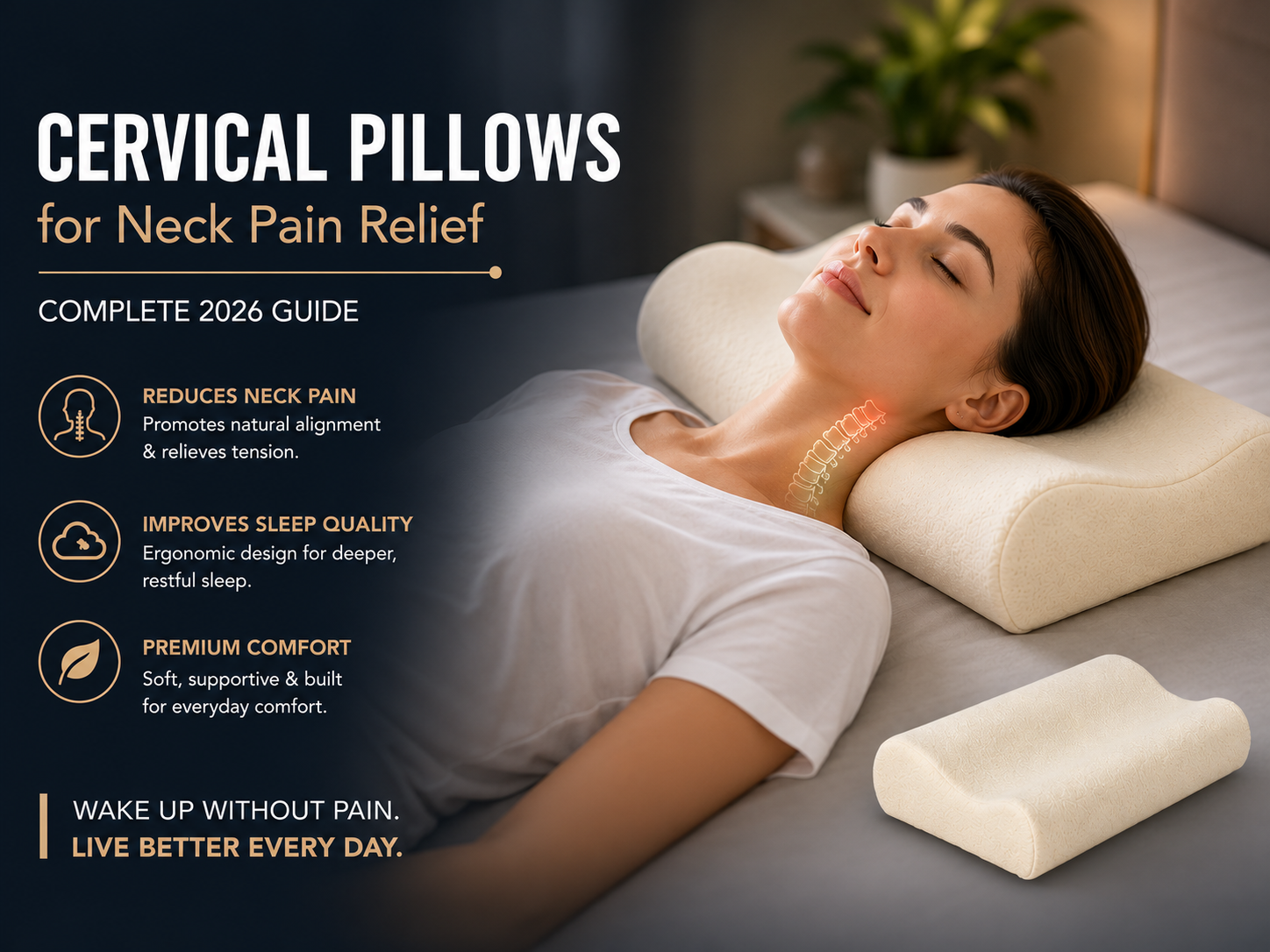
A cervical pillow — sometimes called an orthopedic pillow or contour pillow — is specifically designed to support the natural curvature of the cervical spine (the seven vertebrae of the neck) rather than simply elevating the head. The right cervical pillow:
- Keeps the head in neutral alignment with the spine during sleep
- Supports the natural inward curve (lordosis) of the cervical spine
- Reduces muscle tension and strain in the neck and upper shoulders
- May reduce headaches caused by cervical muscle tension
- Improves sleep quality by reducing positional discomfort
Types of Cervical Pillows
Contour (Butterfly) Cervical Pillows
The most recognizable cervical pillow design, contour pillows have a distinctive hourglass or butterfly shape with a lower center depression for the head and raised side lobes that support the neck. They are most effective for back sleepers, whose necks need to be supported from below while their head rests in the center depression.
Best for: Back sleepers, tension headaches, cervical lordosis support.
Roll Cervical Pillows (Cervical Rolls)
A cylindrical or semi-cylindrical roll that is placed under the neck — either alone or inside the pillowcase of a regular pillow — to provide direct support to the cervical curve. Often recommended by physical therapists and chiropractors as part of a treatment program.
Best for: Back sleepers, adding cervical support to an existing comfortable pillow, travel.
Memory Foam Cervical Pillows
Memory foam (viscoelastic polyurethane foam) conforms to the shape of the head and neck under body heat and pressure, providing customized support. Many memory foam cervical pillows use the contour shape. The advantage of memory foam is its pressure-distributing properties; the disadvantage is heat retention, which some sleepers find uncomfortable.
Best for: Back and side sleepers who want contouring support; people with pressure sensitivity.
Water-Filled Cervical Pillows
Pillows like the Mediflow Water Base pillow use a water chamber beneath a fiber fill top layer. The water level is user-adjustable — add water to increase firmness and height, drain some to decrease it. Research has shown water-base cervical pillows to be among the most effective pillow types for reducing neck pain, according to clinical studies.
Best for: People who have trouble finding the right pillow height; couples with different needs (since height is adjustable).
Buckwheat Cervical Pillows
Filled with buckwheat hulls that shift and conform to the sleeper's position. Buckwheat pillows are adjustable (add or remove hulls to change height and firmness), breathable, and extremely durable. They are heavier than other pillow types and produce some noise when the sleeper moves.
Best for: Hot sleepers, back and side sleepers, those who prefer natural fill materials.
Traction Cervical Pillows
Designed to provide gentle cervical traction — a slight elongation of the neck — during sleep. These may be recommended by physical therapists for specific conditions including cervical disc herniation or stenosis. They should be used under professional guidance rather than self-selected.
Best for: Use only when specifically recommended by a healthcare provider.
Choosing by Sleep Position
| Sleep Position | Ideal Pillow Type | Height Recommendation | Notes |
|---|---|---|---|
| Back sleeper | Contour, cervical roll, water-base | Low to medium (4–5 inches) | Neck needs support; head should not be too elevated |
| Side sleeper | Firm memory foam, buckwheat, adjustable | Medium to high (5–7 inches) | Must fill the space between head and mattress; shoulder width matters |
| Stomach sleeper | Very thin or no pillow | Very low (1–3 inches) | Stomach sleeping strains the neck regardless of pillow; transitioning to side or back is recommended |
| Combination sleeper | Adjustable (water, buckwheat) or medium contour | Medium (5 inches) | Compromise between back and side needs; adjustable pillows work best |
Key Features to Evaluate
Pillow Height (Loft)
Pillow height is arguably the most important variable. The correct height keeps your spine neutral — neither bent toward the mattress nor arched away from it. Side sleepers with broad shoulders generally need more height than those with narrow shoulders. Back sleepers typically need less height than side sleepers. If you're unsure, start with an adjustable pillow.
Firmness
Firmness affects how much the pillow compresses under the weight of your head. A pillow that starts at the right height but compresses too much ends up too low; one that's too firm may hold the neck at an uncomfortable angle. Memory foam provides a middle ground — firm enough to maintain shape but with some give. Water and buckwheat pillows allow precise firmness adjustment.
Fill Material and Heat Retention
Memory foam retains heat, which may disturb sleep in warm climates or for naturally warm sleepers. Alternatives that sleep cooler include buckwheat, water-base, and latex. Some manufacturers address this with gel-infused memory foam or ventilated designs — look for these features if heat is a concern.
Pillow Cover
Cervical pillows are most effective when used with a breathable, washable cover. Look for covers made from organic cotton, bamboo-derived rayon, or moisture-wicking materials. Avoid waterproof covers that add crinkle noise or retain heat unless they are medically necessary.
Durability
Memory foam typically maintains its shape for 2–3 years before gradually losing support. Water and buckwheat pillows can last significantly longer since the fill doesn't break down. Plan to replace memory foam cervical pillows every 2–3 years or when you notice reduced support.
Top-Rated Cervical Pillows in 2026
Mediflow Original Water Base Pillow
Consistently among the highest-rated cervical pillows in clinical and consumer research. The adjustable water level accommodates different sleepers, and the soft fiber-fill top layer is comfortable. A landmark clinical trial published in Arthritis Care & Research found it significantly reduced neck pain and improved sleep quality compared to regular pillows. Available in standard and queen sizes.
Core Products Tri-Core Cervical Pillow
A fiber-filled contour pillow that comes in multiple firmness levels (Gentle Support, Mid-Core, Full Core) and sizes. Recommended by many physical therapists and available in some clinical settings. The center trapezoidal recess accommodates side sleepers better than traditional butterfly contour designs.
TEMPUR-Neck Pillow by Tempur-Pedic
Premium memory foam contour pillow from the brand most associated with pressure-relieving foam. Available in three sizes (Small, Medium, Large) to fit different body frames. Very durable and maintains its shape well. Expensive compared to alternatives, but longevity and quality are high.
Coop Home Goods Original Loft Pillow
An adjustable shredded memory foam pillow with a removable, washable cover. While not a traditional cervical contour shape, its adjustability makes it a strong choice for side sleepers or combination sleepers who struggle with fixed-shape pillows. Add or remove fill to find your ideal height and firmness.
Tips for Getting Used to a Cervical Pillow
Switching from a standard pillow to a cervical pillow requires an adjustment period. Many people experience temporary discomfort in the first 1–2 weeks as their neck muscles adapt to proper alignment.
- Give it 2–4 weeks: Most people need 2–4 weeks to fully adjust to a cervical pillow. Discontinuing after one or two nights is premature.
- Start with naps: Use the new pillow for naps first before committing to overnight use, to give your body time to adapt gradually.
- Check your mattress too: A cervical pillow can only do so much on a mattress that sags or is otherwise unsupportive. If your mattress is more than 8–10 years old, consider whether it may be contributing to your neck pain.
- Pillow positioning matters: The pillow should support your head and neck, not just your head. Ensure the pillow extends down to contact the tops of your shoulders.
- Consult a professional: If neck pain worsens after 4 weeks with a new cervical pillow, consult a physical therapist or chiropractor. They can assess your alignment and recommend a specific pillow type or height.
Shop Cervical Pillows at AllCare Store
AllCare Store carries a complete selection of cervical pillows, orthopedic support pillows, and sleep positioning aids. We also carry back support and posture aids to address neck and spine alignment throughout the day, not just at night.
Browse our Pillows & Cushions collection at AllCare Store. Free shipping on every order. Questions? Call 1-888-889-6260.