Note: This article is for general information. People with diabetes, peripheral neuropathy, or foot wounds should consult a podiatrist or physician before selecting footwear. Proper fit is especially important when sensation is reduced.
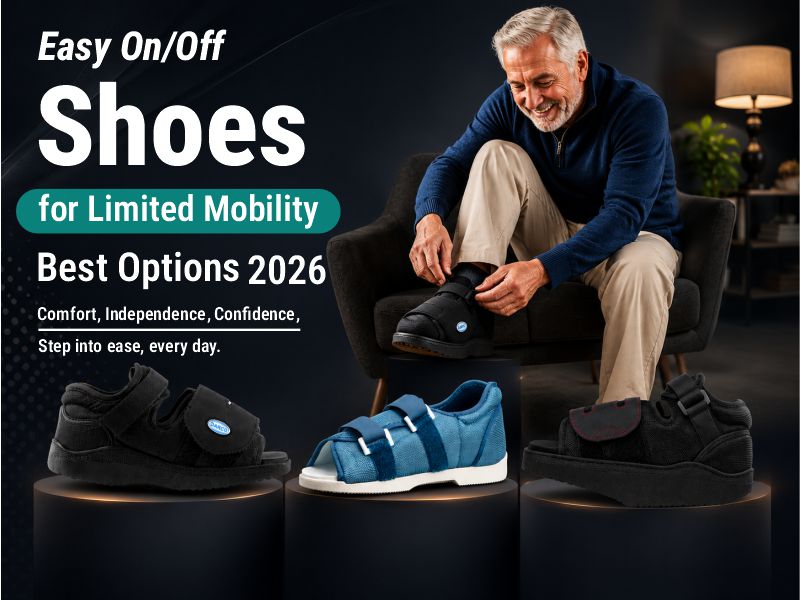
Putting on and taking off shoes is a task most people perform without thought — but for seniors, people with arthritis, Parkinson's disease, stroke survivors, or anyone with reduced hand strength or bending ability, standard lace-up shoes can be genuinely difficult or even dangerous. Adaptive footwear designed for easy donning and doffing addresses this problem through thoughtful closures, wider openings, and flexible materials that require minimal manipulation. Explore our range of adaptive clothing and footwear at AllCare Store.
Why Standard Shoes Are Problematic for Limited Mobility
Conventional lace-up shoes require fine motor coordination to tie, reasonable balance to bend forward while standing, and enough grip strength to manage knots. Many people with limited mobility lack one or more of these. Struggling with shoe closures creates real risks: falls from bending too far, skin breakdown from ill-fitting shoes forced on without proper adjustment, and the indignity of needing assistance with a basic daily task.
Beyond closures, standard shoes often have narrow openings, rigid heel counters, and close-fitting toe boxes — all of which make insertion difficult when hands or feet are compromised. Adaptive footwear addresses both the closure mechanism and the structural design of the shoe to make the entire process easier.
Closure Types for Easy On/Off Shoes
Hook-and-Loop (Velcro) Closures
Hook-and-loop fasteners remain the most popular adaptive shoe closure for good reason. They require no fine motor precision — a sweeping press closes the strap — and they adjust to accommodate foot swelling that changes throughout the day. Wide velcro straps across the instep and sometimes the ankle allow the shoe opening to widen significantly for foot insertion, then tighten securely for walking. Look for shoes with at least two strap points (instep and toe or ankle) for secure fit. Single-strap designs are simpler but may not hold as well for active walkers.
Elastic Slip-On Designs
Slip-on shoes with elastic goring panels (stretchy inserts in the upper) require no fasteners at all — the shoe stretches open for insertion and returns to shape around the foot. These are the fastest to put on and take off, but they provide less adjustability for swollen feet and less ankle support than strapped designs. They work best for people with mild to moderate foot size variation and who do not require mediolateral ankle stability.
Zipper Closures
Side or rear zippers allow the shoe to open wide for foot insertion, then close smoothly along the foot's profile. They are particularly useful for people with foot drop (who need to dorsiflex the ankle to slide the foot in from above) and for those who have difficulty bending at the waist but can manage a zipper pull at the side. Look for large zipper pulls or loop attachments that can be grasped without pinching. Waterproof zipper designs add weather resistance.
Magnetic Closures
Magnetic shoe closures replace traditional laces with a magnetic mechanism that snaps shut with minimal hand pressure and releases easily. They look similar to laced shoes cosmetically but require no tying. They are a good option for people who want the appearance of a conventional shoe without the dexterity requirement. Check the holding strength rating — magnetic closures vary in how securely they hold under walking forces.
BOA Dial Systems
The BOA dial system uses a small rotating dial to tighten and release a wire lace with one hand. A push of the dial releases the shoe completely; turning it tightens incrementally. It provides a more precise fit than velcro or elastic, is usable with one hand, and is available on athletic shoes, hiking boots, and medical footwear. It requires enough grip to turn a dial but no finger pinching or knot tying.
Key Design Features for Limited Mobility
Wide Opening / Collapsible Heel
The heel counter — the stiff back of the shoe that holds the heel in position — is often the biggest obstacle for limited-mobility users. Shoes with a flexible or collapsible heel counter can be stepped into from above or the heel can be compressed for insertion, then flipped up. Long-handled shoe horns accomplish the same thing with a standard shoe, but a collapsible heel eliminates the need for the tool entirely.
Wide and Extra-Wide Widths
Swollen feet, diabetic foot changes, bunions, and edema from circulatory or cardiac conditions all increase foot volume. Standard width shoes (D for men, B for women) become impossible to wear comfortably as foot width increases. Wide (2E for men, D for women) and extra-wide (4E for men, 2E for women) sizing is essential for many adaptive footwear users. Some brands offer even wider fittings for severe edema. Depth shoes — which have a removable insole to create space for custom orthotics or accommodative padding — are a related option often prescribed for diabetic foot care.
Non-Slip Outsoles
Fall prevention is a primary concern for the population that needs adaptive footwear. Rubber outsoles with multidirectional tread patterns provide the best grip on smooth indoor floors, wet surfaces, and transitions between floor types. Avoid flat leather or smooth synthetic outsoles. The heel should be flat or have a very low, broad heel (under 1 inch) for stability. Rocker-bottom soles reduce the need to push off the toe but take getting used to and are not appropriate for everyone.
Lightweight Construction
Heavy shoes increase fatigue and make foot clearance during the swing phase of walking more difficult — a particular concern for people with hip weakness, foot drop, or energy-limiting conditions. Look for EVA foam midsoles, mesh uppers, and minimized hardware. Lightweight shoes are not the same as unsupportive shoes — many well-cushioned, supportive adaptive shoes weigh under 300g per shoe.
Seamless or Padded Interiors
Reduced sensation from diabetic neuropathy or stroke means that pressure sores and blisters can develop without the person noticing. Seamless interior lining (or flat, padded seams) eliminates stitch lines that create friction points. Moisture-wicking linings help prevent maceration. For diabetic footwear specifically, look for shoes certified to HCPCS code A5500 (therapeutic shoes for diabetics), which must meet specific depth, width, and interior seam standards.
Shoes for Specific Conditions
Arthritis
Rheumatoid and osteoarthritis commonly affect the feet, causing joint deformity, swelling, and reduced flexibility. Shoes with wide, deep toe boxes accommodate forefoot deformities like bunions and hammertoes. Extra-depth designs accommodate custom orthotics. Velcro closures are preferable to any fastener requiring grip. Soft leather or knit uppers reduce pressure on tender joints. Rocker soles reduce the range of motion required at the metatarsophalangeal joints during walking, often reducing pain.
Swollen Feet and Edema
Foot swelling from heart failure, lymphedema, venous insufficiency, or medication side effects can make feet dramatically larger in the evening than in the morning. Adjustable closures (velcro or BOA) allow the same shoe to accommodate this variation. Some brands offer shoes designed specifically for significant edema, with very wide openings, stretch uppers, and closures that adjust across a wide range.
Parkinson's Disease
Parkinson's affects gait, balance, and fine motor control. Shoes for Parkinson's patients should avoid heavy soles that increase shuffling (a thin, flexible sole encourages heel strike), have secure closures that do not come undone (velcro over elastic), and must have excellent grip — falls are a major Parkinson's complication. Avoid raised heels, which shift weight backward and worsen postural instability.
Post-Stroke and Foot Drop
Foot drop (inability to lift the front of the foot) often occurs after stroke or from peroneal nerve damage. Standard shoes are difficult because the foot cannot clear the floor during the swing phase. Ankle-foot orthoses (AFOs) are often prescribed, and shoes need to accommodate both the AFO and the attached foot. Look for shoes with removable insoles (to create depth for the AFO), wide closures that go over the AFO, and firm heel counters that keep the AFO in position.
Using Adaptive Tools Alongside Easy-On Shoes
Even the best adaptive shoe is easier with the right tools. A long-handled shoe horn (18–24 inches) eliminates bending and guides the heel into the shoe without collapsing the heel counter. Sock aids (a flexible frame you load a sock onto, drop to the floor, and step into) solve the problem of putting on socks without bending. Elastic shoelace converters transform lace-up shoes into slip-ons without replacing the shoes. These tools work as a system with adaptive footwear to maximize independence during the morning dressing routine.
Shop Adaptive Footwear and Dressing Aids at AllCare Store
AllCare Store carries adaptive footwear, long-handled shoe horns, sock aids, and dressing tools to support independent living, with free shipping on every order. Call 1-888-889-6260 for assistance finding the right fit.
Adaptive Clothing & Footwear | Fall Prevention | Daily Living Aids | AllCare Store
Frequently Asked Questions: Easy On/Off Shoes for Limited Mobility
What is the easiest type of shoe to put on for someone with limited mobility?
Slip-on shoes with elastic goring panels are the absolute easiest to put on — no closures to manage at all. However, for people who need more support or adjustability (for swollen feet, ankle instability, or AFO accommodation), velcro strap shoes offer the best combination of ease and secure fit. Wide-opening designs with a collapsible heel counter make insertion significantly easier regardless of closure type. A long-handled shoe horn alongside any style also greatly reduces the bending and grip effort required.
Are velcro shoes as secure as lace-up shoes for walking?
Yes — quality velcro shoe closures provide secure hold for everyday walking, light hiking, and most daily activities. Look for shoes with at least two strap points across the foot and industrial-grade hook-and-loop material that resists loosening with repeated steps. The main limitation of velcro is that the hooks can collect lint and debris over time, reducing holding strength — periodic cleaning with a stiff brush restores grip. For high-activity use like running, velcro may not hold as firmly as tied laces, but for the mobility-limited population, velcro is fully adequate and far safer.
What shoes are recommended for people with very swollen feet?
For significant foot edema, look for shoes in extra-wide (4E or wider for men, 2E or wider for women) sizing with a stretch knit or adjustable upper and velcro closures that open very wide. Some brands specifically design for edema with soft, expandable uppers, deep openings, and closures that span the full width of the shoe. These shoes accommodate substantial volume change between morning and evening. If swelling is severe or sudden, consult a physician — it may indicate a cardiac, renal, or vascular condition requiring medical attention.
Can I wear adaptive shoes with orthotics or ankle braces?
Yes — look specifically for "depth shoes" or "extra-depth shoes," which have removable insoles that create 3/8 to 1/2 inch of extra interior depth. This space accommodates custom orthotics, AFO straps, or accommodative diabetic insoles without compressing the foot. Diabetic depth shoes certified to HCPCS A5500 meet specific standards for orthotic accommodation. If you are wearing a solid ankle AFO, look for shoes sized one width wider than normal to accommodate the brace, with a wide Velcro closure that can fasten over the brace.