Medical Disclaimer: This article is for educational purposes only and does not constitute medical advice. Always consult your physician or respiratory therapist before starting, stopping, or changing any respiratory treatment. If you experience severe shortness of breath, chest tightness, or symptoms that do not respond to your usual treatment, seek emergency care immediately.

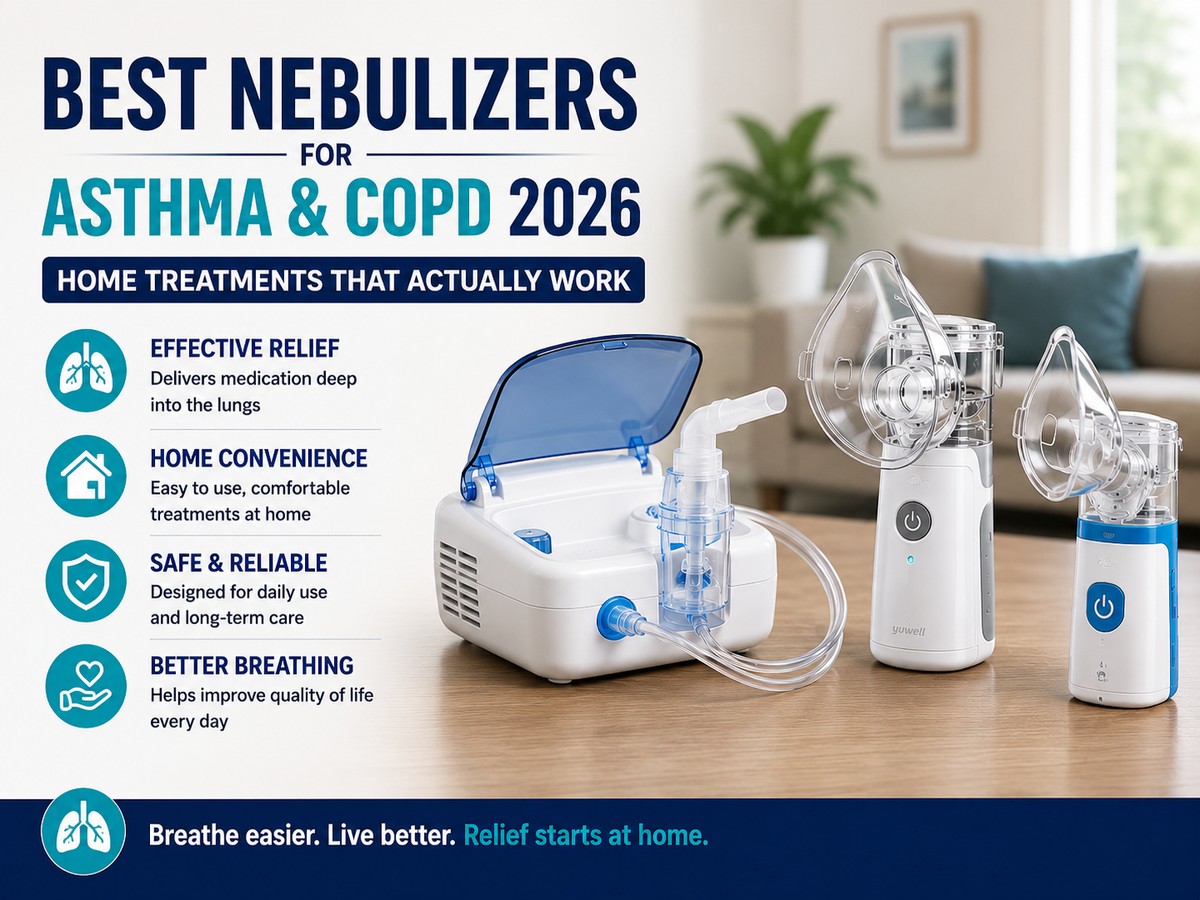
Best Nebulizers for Asthma and COPD 2026: Home Treatments That Actually Work

The Night Margaret Finally Slept Through

Margaret, a 71-year-old retired schoolteacher, had lived with COPD for six years. Most nights were fine. But on bad nights — when humidity spiked, or she caught a cold, or the air quality dipped — she'd lie awake in the small hours, chest tight, every breath an effort. Her rescue inhaler helped, but it never seemed to clear the deep tightness the way a full breathing treatment did at her doctor's office.

Her pulmonologist suggested she look into a home nebulizer. She'd assumed those were only for hospitals. But a tabletop compressor nebulizer arrived within a few days, and her first at-home breathing treatment changed the equation entirely. The medication delivered by the nebulizer reached deeper into her airways than her handheld inhaler had. On the next bad night, instead of watching the clock until morning, she did a 10-minute treatment and slept soundly by 2 a.m.

"I don't know why I waited this long," she told her doctor at her next visit. "It's like having a piece of the clinic right on my nightstand."

For millions of people managing asthma, COPD, bronchiectasis, cystic fibrosis, or severe allergies, a home nebulizer can be a meaningful quality-of-life tool. This guide walks you through what nebulizers do, how to choose the right type, and how to use them effectively and safely.

What a Nebulizer Does

A nebulizer converts liquid medication into a fine mist that you breathe in through a mask or mouthpiece. This delivers the medication directly to the airways and lungs, which can be more effective than swallowing pills for respiratory conditions — the medication goes where it's needed without being processed by the digestive system first.

Nebulizers are used to deliver several types of medications:

  • Bronchodilators (albuterol, levalbuterol, ipratropium) — open airways during acute breathing difficulties
  • Corticosteroids (budesonide) — reduce airway inflammation
  • Antibiotics (tobramycin, aztreonam) — treat lung infections, often used in cystic fibrosis
  • Mucolytics (hypertonic saline, dornase alfa) — thin mucus to make it easier to clear
  • Combination treatments — multiple medications in one session

Your physician prescribes the medication; the nebulizer is the delivery device. The two work together — neither replaces the other.

Types of Nebulizers

Compressor (Jet) Nebulizers

Compressor nebulizers — sometimes called jet nebulizers — use an air pump to force air through liquid medication, breaking it into aerosol droplets. They are the most common home nebulizer type and the standard used in hospitals and clinics for decades.

Advantages:

  • Widely compatible with essentially all nebulized medications, including thick medications and those that can't be used in mesh nebulizers
  • Durable and long-lasting — many units run reliably for 5–10 years
  • Generally less expensive to purchase and maintain
  • Replacement nebulizer cups are inexpensive and widely available

Disadvantages:

  • Louder than mesh nebulizers — the compressor produces a noticeable hum
  • Heavier and larger — less portable than mesh options
  • Slightly longer treatment times (typically 10–15 minutes vs. 5–8 minutes for mesh)
  • Must be plugged in (though some have battery backup options)

Best for: Primary home use, people who prioritize medication compatibility over portability, seniors who do most treatments at home, anyone using thick or viscous medications.

Mesh Nebulizers

Mesh nebulizers use a vibrating mesh plate with thousands of tiny holes to aerosolize medication. They're significantly quieter and more portable than compressor nebulizers.

Advantages:

  • Very quiet — nearly silent during operation
  • Compact and lightweight — often pocket-sized
  • Battery-operated, so truly portable for travel and on-the-go use
  • Faster treatment times (5–8 minutes typically)
  • More efficient medication delivery — less medication lost to the environment

Disadvantages:

  • Not compatible with all medications — some viscous or suspension medications can clog the mesh
  • More expensive than compressor nebulizers
  • The mesh plate requires careful cleaning and can be damaged if handled roughly
  • Replacement parts more expensive

Best for: Active adults, travelers, people who need quiet operation (children during sleep, office users), those who primarily use standard bronchodilators compatible with mesh delivery.

Ultrasonic Nebulizers

Ultrasonic nebulizers use high-frequency vibrations to create aerosol. They're quiet and fast but are not appropriate for many medications — the vibration can degrade some drugs, including inhaled corticosteroids and certain proteins. They are rarely recommended for home respiratory treatment today and have largely been replaced by mesh nebulizers for portable use.

Compressor vs. Mesh: At a Glance

Feature Compressor Mesh
Noise level Moderate hum Near-silent
Portability Tabletop, requires outlet Pocket-sized, battery-powered
Treatment time 10–15 minutes 5–8 minutes
Medication compatibility Virtually all medications Most; check for thick medications
Cost $30–$80 $50–$150+
Durability Very durable, long life Good; mesh plate needs care
Best use Home base unit Travel, on-the-go, nighttime

Who Benefits Most from a Home Nebulizer

Adults with Moderate to Severe Asthma

For people with asthma whose attacks don't fully respond to metered-dose inhalers (MDIs), nebulizers can deliver higher medication doses over a longer period, which can be more effective during an exacerbation. Home nebulizers also help adults who have difficulty coordinating the breath-hold required for proper inhaler technique — a surprisingly common issue, especially during an acute episode when breathing is already strained.

People with COPD

COPD management often involves multiple inhaled medications, and some patients find nebulized delivery more comfortable and effective than inhalers — particularly for ipratropium (Atrovent) and combination bronchodilators. Nebulizers are also helpful for patients with arthritis or limited hand strength who struggle with inhaler actuation or breath coordination.

Children with Respiratory Conditions

Young children can't reliably use standard MDIs, and even spacers require coordination they often lack. Nebulizers with pediatric masks deliver medication while children breathe normally — even during sleep in some cases. This makes them a standard treatment tool for pediatric asthma and croup.

People with Bronchiectasis or Cystic Fibrosis

These conditions involve chronic mucus buildup and recurrent infections. Nebulized hypertonic saline and antibiotics are core management tools — and require regular, often twice-daily treatments at home. A reliable compressor nebulizer is essential equipment for these patients.

Post-COVID Respiratory Recovery

Some people recovering from COVID-19 experience persistent airway irritability, bronchospasm, or increased mucus. Nebulized saline and bronchodilators (when prescribed) can help manage these symptoms during recovery.

What to Look For When Buying a Nebulizer

Particle Size (MMAD)

The most important technical spec for effective lung delivery is particle size, measured in micrometers (μm) as the mass median aerodynamic diameter (MMAD). Particles in the 1–5 μm range deposit in the lower airways and lungs; larger particles land in the mouth and throat and are swallowed. Look for a nebulizer with an MMAD in the 2–4 μm range for optimal lower airway delivery.

Medication Compatibility

Before purchasing a mesh nebulizer, confirm your specific medications are compatible. Compressor nebulizers are universally compatible. If you use suspension medications (like budesonide inhalation suspension) or thick medications, a compressor nebulizer is the safer choice.

Ease of Cleaning

Nebulizer cups and accessories must be cleaned after every use and sterilized regularly to prevent bacterial or fungal contamination. Look for units with dishwasher-safe components, simple disassembly, and cups that can be replaced inexpensively.

Mask vs. Mouthpiece

Adults and older children use mouthpieces, which deliver medication more efficiently than masks (less lost to skin and environment). Masks are necessary for infants, toddlers, and adults who can't maintain a seal on a mouthpiece. Many nebulizer kits include both.

Portability and Power

If you travel frequently or want to use your nebulizer away from home, a battery-powered mesh nebulizer is the clear choice. For a home base unit used only at your nightstand or kitchen table, a corded compressor nebulizer is perfectly sufficient and more cost-effective.

Replacement Part Availability

Nebulizer cups (medication chambers) should be replaced every 6 months with regular use. Make sure replacement cups for your model are readily available and affordable before you buy the unit.

How to Use a Nebulizer

Step-by-Step for Compressor Nebulizers

  1. Wash hands thoroughly with soap and water before assembling.
  2. Measure medication into the nebulizer cup as prescribed. Most solutions are pre-measured unit-dose vials for convenience.
  3. Assemble the cup and connect the tubing to the compressor.
  4. Attach the mouthpiece or mask to the cup.
  5. Turn on the compressor. You should see mist begin to flow within a few seconds.
  6. Breathe slowly and deeply through the mouthpiece, inhaling for 2–3 seconds, holding briefly, then exhaling. Do not hold your breath — normal tidal breathing is fine and often more sustainable during a treatment.
  7. Continue until the cup is empty or sputtering sounds indicate it's nearly done (typically 10–15 minutes).
  8. Turn off the compressor and disassemble for cleaning.

Cleaning Protocol

Proper cleaning prevents respiratory infections from contaminated equipment — a real risk if neglected:

  • After every treatment: Disassemble the cup, rinse with warm water, shake dry, and allow to air dry on a clean cloth or paper towel.
  • Daily (or as directed): Wash all parts in warm soapy water, rinse thoroughly, and air dry.
  • Weekly disinfection: Soak nebulizer cup components in a 1:50 white vinegar/water solution (3 minutes), or follow manufacturer instructions for disinfection. Rinse thoroughly and allow to dry completely before next use. Do not put the compressor machine in water.
  • Tubing: Replace tubing every 3–6 months, or if you see moisture inside. Do not attempt to clean the inside of the tubing — it's a contamination risk if moisture lingers.
  • Nebulizer cup: Replace every 6 months with regular use.

Common Mistakes to Avoid

Using a dirty nebulizer: Skipping cleaning allows bacteria and mold to grow in the cup and tubing, which you then inhale directly into your airways. Always clean after use.

Breathing too fast: Rapid breathing deposits medication in the upper airways instead of the lungs. Slow, relaxed breaths maximize lower airway delivery.

Stopping treatment early: Most of the medication is delivered in the first two-thirds of the treatment, but finishing the cup ensures you receive the complete dose.

Not sitting upright: Sitting upright with good posture opens the airways and optimizes delivery. Lying down reduces effectiveness.

Using expired medication: Check unit-dose vials before each use. Discard any discolored, cloudy, or expired medication.

Not consulting your physician: Never add medications to your nebulizer that haven't been prescribed or approved by your doctor. Mixing medications incorrectly can cause serious harm or reduce effectiveness of both.

Traveling with Your Nebulizer

Mesh nebulizers are ideal for travel. TSA allows nebulizers through airport security — they count as medical equipment and may go through X-ray separately from your carry-on. Bring your prescription documentation if traveling internationally. Ensure your nebulizer supports dual voltage (100–240V) for international outlets, or bring an appropriate adapter. Battery-powered mesh nebulizers eliminate outlet concerns entirely.

Always travel with spare medication, an extra nebulizer cup, and the manufacturer's contact information in case you need replacement parts on the road.

Nebulizers and Insurance

Many insurance plans, including Medicare Part B, cover home nebulizers when prescribed by a physician for a qualifying respiratory condition (asthma, COPD, bronchiectasis, cystic fibrosis). The equipment is typically classified as durable medical equipment (DME). You will likely need a written prescription, documentation of your diagnosis, and possibly proof of medical necessity. Contact your insurer before purchasing to understand your coverage and whether you need a specific supplier.

AllCare Store: Respiratory and Home Health Equipment

At AllCare Store, we carry respiratory care products and daily-living essentials to help you manage health conditions comfortably at home. From home medical equipment to personal care supplies, we're here to support your independence and wellbeing.

  • Free Shipping on every order — no minimum required
  • Discreet Packaging — all orders arrive in plain, unmarked packaging
  • 30-Day Returns — shop with full confidence
  • Expert Help — reach our team at 1-888-889-6260

Browse our Respiratory Care collection and Home Health Equipment at AllCare Store — your trusted partner in home health and wellness.

Frequently Asked Questions: Home Nebulizers

Is a nebulizer better than an inhaler for asthma?

Neither is universally better — they're different delivery methods suited to different situations. Inhalers (MDIs or DPIs) are portable, discreet, and when used with proper technique, deliver medication just as effectively as nebulizers for most people. Nebulizers are useful when proper inhaler technique is difficult (young children, people with arthritis or hand weakness, severe exacerbations), when high doses are needed, or when multiple medications must be delivered together. Your physician can help determine which method is most appropriate for your specific situation.

How often can I use a nebulizer?

Frequency depends entirely on your prescription. Some people use bronchodilators as needed only during exacerbations; others with COPD or bronchiectasis may have scheduled treatments twice daily. Never use your nebulizer more frequently or with higher doses than prescribed — overuse of bronchodilators can cause heart palpitations, tremors, and other side effects. If your symptoms require more frequent treatment than prescribed, contact your physician.

Can I use saline solution in a nebulizer?

Sterile normal saline (0.9%) and hypertonic saline (3% or 7%) can be nebulized when prescribed, and are used to thin secretions and aid airway clearance in conditions like cystic fibrosis and bronchiectasis. Only use pharmaceutical-grade sterile saline designed for inhalation — never homemade saline, tap water, or distilled water, which can cause serious lung damage. Hypertonic saline in particular should be used only under physician guidance as it can cause bronchospasm in sensitive individuals.

How long does a home nebulizer last?

Quality compressor nebulizers typically last 5–10 years with proper care. The compressor itself is durable; the nebulizer cup (medication chamber) should be replaced every 6 months with regular use, and tubing every 3–6 months. Mesh nebulizers generally have a shorter lifespan (2–5 years), and the mesh plate is the most common failure point — replacement meshes are available for most models. Always follow the manufacturer's maintenance guidelines.

Do I need a prescription for a nebulizer?

In the United States, the nebulizer machine itself does not require a prescription to purchase — you can buy one over the counter. However, the medications used in a nebulizer (albuterol, budesonide, ipratropium, etc.) do require a physician's prescription. If you want insurance coverage for your nebulizer, you will need a prescription and documentation of medical necessity. If you're managing a respiratory condition at home, always do so under your physician's supervision.

Newsletter

A short sentence describing what someone will receive by subscribing