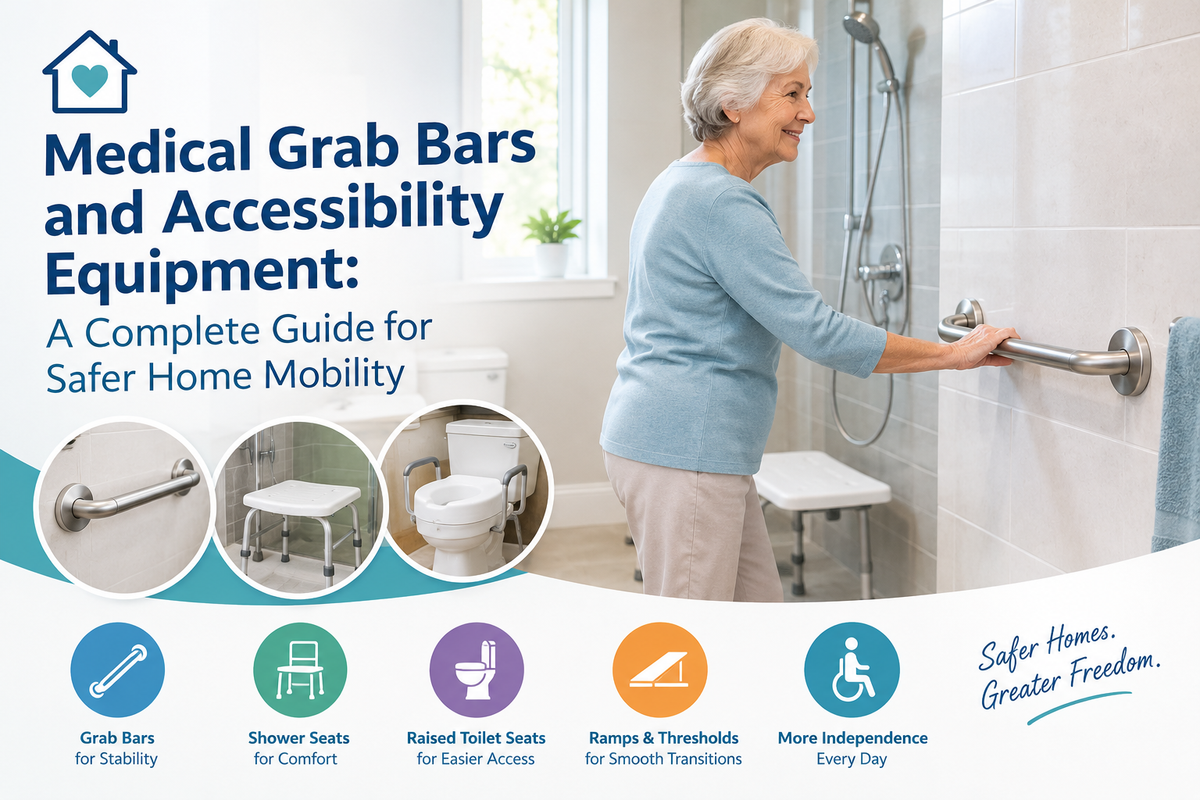
Medical grab bars and accessibility equipment can make bathrooms, bedrooms, hallways, and other areas of the home easier to navigate. The right equipment can provide additional support during standing, sitting, transfers, and everyday movement while helping create a more accessible living environment.
Whether you're setting up a home for an older adult, improving bathroom accessibility, or choosing equipment for someone with limited mobility, understanding the different types of medical grab bars and accessibility equipment can help you select products that fit the space and intended use.
What Are Medical Grab Bars?
Medical grab bars are support bars designed to provide a stable handhold in areas where additional support may be useful. They are commonly used in bathrooms near toilets, showers, and tubs, but they can also be installed in other locations where users need assistance with balance or transfers.
Common types include:
- Straight grab bars
- Angled grab bars
- Wall-mounted grab bars
- Folding grab bars
- Suction grab bars for appropriate temporary applications
- Tub and shower grab bars
- Toilet safety rails
- Floor-to-ceiling support poles
The appropriate type depends on the user's needs, the installation location, and the construction of the surrounding surface.
Why Are Grab Bars Important for Home Accessibility?
Bathrooms can present several accessibility challenges. Wet surfaces, transitions between sitting and standing, and limited space can make everyday activities more difficult.
Properly installed grab bars can provide a secure handhold for activities such as:
- Getting into or out of a shower
- Entering or exiting a bathtub
- Sitting down or standing up from a toilet
- Moving between a wheelchair and another surface
- Navigating certain areas of the bathroom
- Maintaining stability while changing position
A grab bar should be viewed as support equipment, not simply a bathroom accessory. Its placement and installation are therefore important considerations.
Types of Medical Grab Bars
1. Straight Grab Bars
Straight grab bars are among the most common options for accessible bathrooms. They are available in different lengths and can be installed horizontally or vertically depending on the location and intended use.
They can be useful beside:
- Showers
- Bathtubs
- Toilets
- Bathroom walls
When choosing a straight grab bar, consider its length, diameter, mounting surface, and available installation space.
2. Angled Grab Bars
Angled grab bars provide multiple hand positions along a bar that changes direction.
They can be useful when a user needs different hand positions while transitioning between sitting and standing or changing position within a bathroom.
The correct orientation depends on the user's movement pattern and the location where the bar will be installed.
3. Folding Grab Bars
Folding or swing-away grab bars are commonly used near toilets. They can be moved out of the way when not needed and positioned beside the user when additional support is required.
These may be particularly useful where bathroom space is limited or where the area needs to accommodate transfers.
4. Tub and Shower Grab Bars
Tub and shower areas require careful consideration because water can make surfaces slippery.
Grab bars designed for these areas can provide a stable handhold when entering, exiting, or repositioning within the shower or tub area.
However, installation should account for the wall construction and the location of structural support.
5. Toilet Safety Rails
Toilet safety rails are another type of accessibility equipment. Instead of mounting directly to the wall, many toilet safety rails attach around or near the toilet.
They provide hand support while sitting down or standing up.
For people who need additional bathroom support but cannot make permanent wall modifications, toilet safety equipment may offer another option.
Other Accessibility Equipment for the Home
Grab bars are only one part of an accessible home. Depending on the user's mobility needs, additional equipment may improve accessibility throughout different areas of the house.
Shower Chairs and Shower Benches
A shower chair or bench provides a seated option during bathing.
Features to consider include:
- Adjustable height
- Non-slip feet
- Back support
- Armrests
- Weight capacity
- Seat width
- Drainage openings
A shower chair can be particularly useful when standing for extended periods is difficult.
Raised Toilet Seats
A raised toilet seat increases the height of the toilet, which can reduce the distance required when sitting down or standing up.
Some models include:
- Armrests
- Locking mechanisms
- Adjustable height
- Padded surfaces
Choose a model that is compatible with the existing toilet and appropriate for the user's requirements.
Toilet Safety Frames
A toilet safety frame provides support around the toilet without requiring the user to rely entirely on a wall-mounted grab bar.
These frames can be helpful for users who need hand support on both sides while transferring.
Transfer Benches
A transfer bench can make getting into and out of a bathtub easier for some users.
Instead of stepping directly over the bathtub wall, the user can sit on the bench and gradually move across the tub.
This can be particularly relevant for wheelchair users or people who have difficulty stepping over raised surfaces.
Wheelchair Ramps
For homes with steps or raised entrances, wheelchair ramps can improve access between different levels.
When evaluating a ramp, consider:
- Ramp length
- Incline
- Available space
- Surface traction
- Weight capacity
- Threshold height
- Indoor or outdoor use
Ramp selection should be based on the mobility device being used and the physical layout of the entrance.
Doorway and Threshold Ramps
Small thresholds can create obstacles for wheelchairs, walkers, and rollators.
A threshold ramp can help bridge a small height difference between surfaces.
These ramps are available for locations such as:
- Doorways
- Sliding doors
- Garage entrances
- Small steps
- Raised thresholds
How to Choose the Right Medical Grab Bar
Choosing a grab bar involves more than selecting the correct length.
1. Consider the Location
First determine where the grab bar will be used.
For example:
Near a toilet:
A horizontal or folding support may be appropriate depending on the bathroom layout.
Inside a shower:
Choose a grab bar designed for the intended installation environment.
Beside a bathtub:
Consider where the user needs support when entering and exiting.
2. Measure the Available Space
Measure the wall and surrounding area before purchasing.
Consider:
- Wall width
- Available mounting area
- Door and cabinet clearance
- Shower or tub dimensions
- Toilet location
- User's reach
3. Consider the User's Mobility Needs
Different users may require different forms of support.
Someone who primarily needs balance support may have different requirements from someone who needs substantial assistance during transfers.
4. Check Weight Capacity
Always check the manufacturer's stated weight capacity and installation requirements.
Do not assume that a grab bar can safely support a user's full body weight simply because it looks sturdy.
5. Consider the Grip
Grab bars are available with different surface textures and diameters.
A comfortable, secure grip can make the equipment easier to use.
6. Consider Permanent vs. Temporary Installation
Some equipment requires permanent installation into appropriate structural support, while other products are designed for temporary or non-permanent applications.
For primary weight-bearing support, follow the manufacturer's installation instructions carefully.
Where Should Grab Bars Be Installed?
Common locations include:
Bathroom
Bathrooms are one of the most common areas for accessibility improvements.
Potential locations include:
- Beside the toilet
- Inside the shower
- Beside the bathtub
- Near the bathroom entrance
Bedroom
Support equipment can also be useful around the bed or along a route between the bedroom and bathroom.
Hallways
Long hallways may benefit from strategically placed support equipment where additional stability is needed.
Entryways
Ramps, threshold ramps, handrails, and other accessibility equipment can help address steps and uneven transitions.
Grab Bars vs. Other Accessibility Equipment
| Equipment | Primary Purpose | Common Location |
|---|---|---|
| Grab Bar | Provides hand support | Bathroom |
| Toilet Safety Rail | Supports sitting and standing | Bathroom |
| Raised Toilet Seat | Increases toilet height | Bathroom |
| Shower Chair | Provides seated bathing | Shower |
| Transfer Bench | Helps with tub transfers | Bathroom |
| Threshold Ramp | Bridges small height differences | Doorways |
| Wheelchair Ramp | Provides access over steps | Entrances |
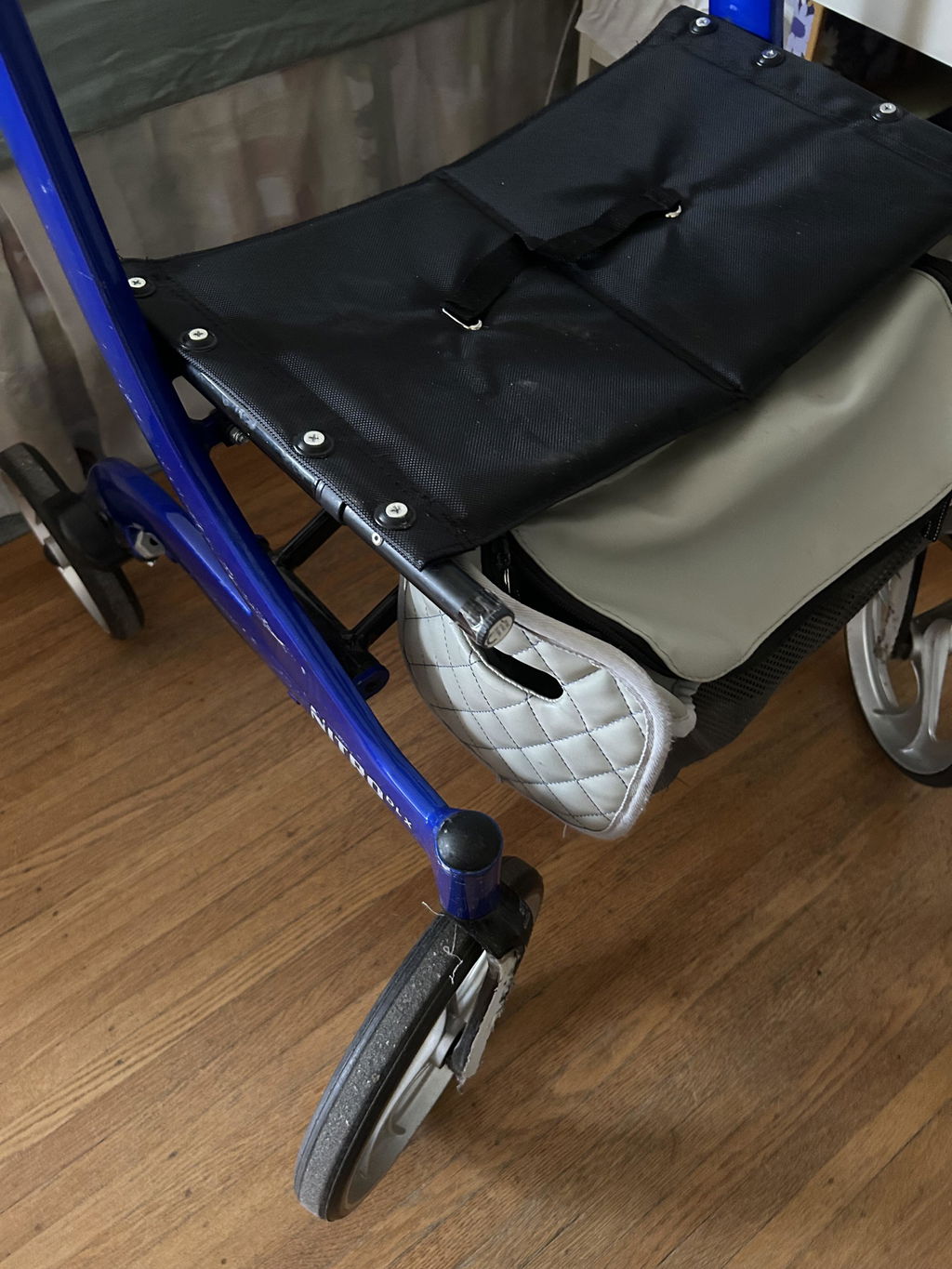
| Walker | Provides mobility support | Home/Outdoor |
| Rollator | Walking support with seat | Home/Outdoor |
| Wheelchair | Seated mobility | Indoor/Outdoor |
The right combination depends on the user's mobility requirements and the home's layout.
Medical Grab Bars for Different Bathroom Areas
For the Shower
Consider a properly installed grab bar positioned where the user can comfortably reach it while entering, exiting, and using the shower.
A shower chair can provide an additional seated option.
For the Bathtub
A combination of grab bars and a transfer bench may help users who have difficulty stepping over the tub wall.
Around the Toilet
A wall-mounted grab bar, folding grab bar, or toilet safety frame may provide additional support during transfers.
Near the Bathroom Sink
A support bar may be useful in some layouts, but it should not be treated as a substitute for a properly installed structural support system.
Common Mistakes When Choosing Accessibility Equipment
Choosing Based Only on Price
The least expensive product may not provide the features, dimensions, or installation requirements needed for the intended application.
Installing Grab Bars Without Checking the Wall
A grab bar needs appropriate mounting support. Simply attaching it to unsuitable wall material can compromise its intended function.
Choosing the Wrong Length
A grab bar should fit the available space while allowing the user to reach it comfortably.
Ignoring Bathroom Layout
Consider the complete bathroom rather than one piece of equipment. A shower chair, toilet frame, grab bar, and transfer equipment should work together without creating obstacles.
Forgetting Clearance
Make sure doors, cabinets, shower doors, wheelchairs, walkers, and other equipment can move freely after installation.
Creating a More Accessible Bathroom
A more accessible bathroom does not necessarily require replacing everything. Start by identifying the activities that are most difficult.
For example:
Difficulty entering the shower → Consider a grab bar and shower chair.
Difficulty standing from the toilet → Consider a raised toilet seat, toilet safety frame, or appropriately positioned grab bar.
Difficulty stepping over a bathtub → Consider a transfer bench and suitable grab bars.
Wheelchair cannot cross a threshold → Consider a threshold ramp.
This approach helps focus accessibility improvements on the user's actual needs.
Medical Grab Bars and Accessibility Equipment Checklist
Before purchasing accessibility equipment, consider the following:
- Identify areas where additional support is needed
- Measure the available space
- Check product dimensions
- Check weight capacity
- Review installation requirements
- Check mounting surfaces
- Consider the user's reach and mobility
- Check clearance around the equipment
- Consider whether permanent installation is appropriate
- Follow the manufacturer's instructions
- Inspect installed equipment periodically
Final Thoughts
Medical grab bars and accessibility equipment can help create a more functional and accessible home environment. Grab bars can provide hand support in bathrooms, while equipment such as shower chairs, transfer benches, raised toilet seats, ramps, walkers, and rollators can address other mobility challenges.
The best approach is to evaluate the entire environment, identify specific areas where support is needed, measure the available space, and select equipment according to manufacturer specifications.
Explore medical grab bars, bathroom safety equipment, mobility products, and accessibility solutions at AllCareStore to find products designed for different home mobility needs.