Note: This guide provides general information about postpartum support garments. Every postpartum recovery is different. Always follow your healthcare provider's specific instructions about when and how to use compression or support garments after birth, especially after cesarean delivery or if you experienced complications. When in doubt, check with your OB, midwife, or physical therapist before using a belly wrap or binder.
After nine months of your body expanding and reshaping to accommodate a growing baby, the postpartum period is when everything starts — slowly — shifting back. That process takes time, and many women find that postpartum support garments help them feel more comfortable and supported during recovery. But with belly wraps, binders, girdles, and compression shorts all marketed to new moms, it can be hard to know what actually helps, what's hype, and what to look for.
This guide covers what postpartum support garments can and cannot do, the main types available, how to use them safely, and what features matter most. Find postpartum care products at Mom & Baby Care at AllCare Store.
What Do Postpartum Support Garments Actually Do?
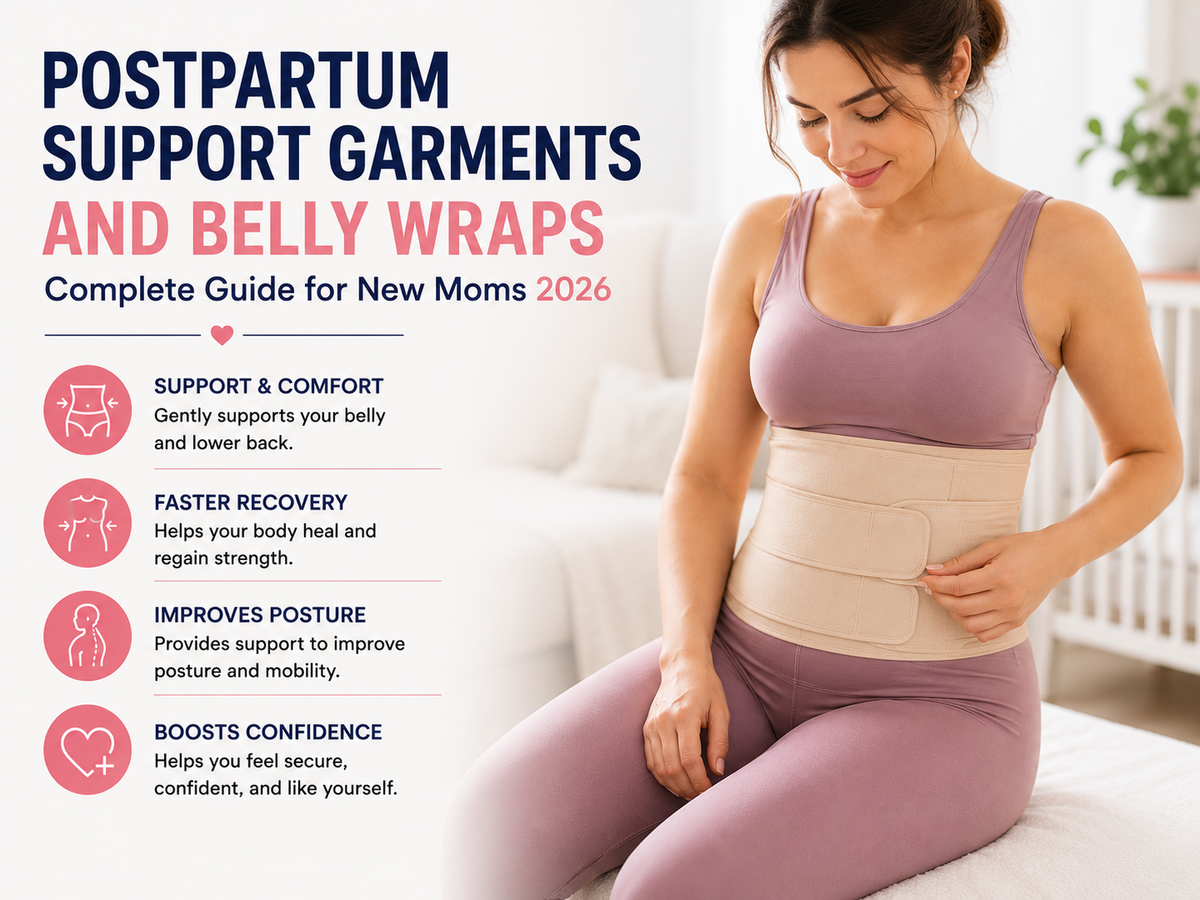
Postpartum support garments — whether called belly wraps, abdominal binders, postpartum girdles, or compression bands — provide external compression and support to the abdomen and pelvis during the recovery period after birth. Here's what they can realistically do:
Provide comfort and reduce pain: After delivery, abdominal muscles that have been stretched for months can feel weak, loose, and uncomfortable — particularly when standing, walking, or transitioning between positions. Gentle compression can reduce that feeling of unsupported looseness and help new moms move more comfortably in the early days postpartum.
Support the core after cesarean section: After a C-section, the abdominal muscles and underlying tissue have been cut and repaired. A postpartum binder can reduce tension on the incision site during movement, which many women find significantly reduces discomfort. Many hospitals provide basic abdominal binders to C-section patients before discharge.
Provide proprioceptive support: Compression garments help the body sense where it is in space (proprioception), which can improve posture and reduce the characteristic forward-leaning, rounded-shoulder posture that often develops from carrying and feeding a newborn.
Offer psychological comfort: This is underrated. Many women report that wearing a supportive garment makes them feel more "held together" and confident during a period when their body feels unfamiliar. That psychological comfort is real and valid.
What they cannot do: Postpartum support garments cannot force diastasis recti (the separation of the abdominal muscles that occurs during pregnancy) to heal on its own, cannot replace pelvic floor physical therapy for real recovery, cannot "shrink" the uterus faster than its natural involution process, and cannot permanently reduce the size of the postpartum belly. Claims about permanent reshaping or "bouncing back faster" are marketing, not medicine.
Types of Postpartum Support Garments
Belly Wraps
Belly wraps are wide, flexible bands of fabric — often similar to compression bandaging or stretchy wrap material — worn around the midsection. They are typically adjustable with hook-and-eye closures, hook-and-loop (Velcro-style) fasteners, or wrap-and-tuck systems. They come in one or multiple pieces and can be positioned to cover just the lower abdomen, the full abdomen, or the abdomen and hips.
Belly wraps are generally the most adjustable option and can accommodate the dramatic size changes that happen in the first few weeks postpartum. A good quality belly wrap can adjust as swelling resolves and the uterus involutes — typically from week 1 through week 6–8 postpartum.
Best for: The early postpartum period (first 2–4 weeks), when the body is still changing rapidly and a rigid garment would quickly become ill-fitting.
Abdominal Binders
Abdominal binders are firmer, more structured compression panels — often a wide band of inelastic or semi-elastic material worn around the abdomen. They provide more rigid support than a stretchy wrap. Hospitals commonly use these immediately after C-sections because they provide firm incision support during movement.
Abdominal binders are typically recommended by healthcare providers for specific clinical purposes (post-surgical support, significant diastasis recti) rather than as general comfort garments. They should generally be used under medical guidance for specific indications.
Best for: Post-cesarean recovery (first 6 weeks), especially for women with abdominal muscle separation, on healthcare provider recommendation.
Postpartum Girdles and High-Waisted Compression Shorts
Postpartum girdles and compression shorts extend lower than belly wraps, providing compression to the hips, thighs, and pelvic area in addition to the abdomen. This is useful for women who want pelvic support, those experiencing symphysis pubis dysfunction (SPD), or those who find that lower-body support helps with hip and back discomfort postpartum.
These garments are also generally more wearable under everyday clothing and can transition more smoothly into daily life once the most acute recovery period has passed. Many women continue wearing compression shorts for weeks or months postpartum as they return to activity.
Best for: 3–12 weeks postpartum, returning to activity, women with pelvic girdle pain or hip discomfort.
Traditional Bengkung Belly Binding
Long before modern compression garments, many cultures practiced forms of postpartum belly binding using long lengths of cloth wrapped methodically around the abdomen. Bengkung binding — a traditional Malaysian practice — has seen a revival in popularity through trained practitioners. When done correctly by someone knowledgeable in the technique, traditional binding can provide gentle, even compression throughout the midsection. This is a practice to explore through trained postpartum doulas and specialists rather than DIY without guidance.
After Vaginal Birth: What to Expect and When to Start
After an uncomplicated vaginal birth, most healthcare providers consider belly wraps and light compression garments safe to start within the first few days postpartum, as soon as the mother is comfortable. There is no specific clinical contraindication for most healthy women who delivered vaginally without complications.
Start with lighter compression and work up to firmer support as tolerated. The uterus will involute (shrink back to its pre-pregnancy size) over the first 6 weeks postpartum — this process happens regardless of whether you wear a belly wrap. Don't wear so tight that it's uncomfortable, restricts breathing, or increases pelvic pressure (which can worsen prolapse risk).
After Cesarean Section: Special Considerations
After a C-section, support garments serve a more specific therapeutic purpose: reducing tension across the incision during movement. However, timing and fit are especially important:
Timing: Most OBs recommend waiting until the incision has closed and is not actively draining or at risk of opening before using any compression garment that sits against the incision. Many recommend starting with the hospital-provided binder immediately after surgery and transitioning to a more fitted garment around week 2, once initial healing has occurred — but follow your surgeon's specific guidance.
Positioning: Garments worn after C-section should sit at the incision level without creating pressure points on the scar that cause pain or skin breakdown. Look for garments with smooth seams or panels at the lower edge. Some C-section recovery garments are specifically designed with a lower panel that positions below the incision.
Signs to stop: If any garment increases incision pain, causes skin irritation, redness, or discharge at the incision site, or if it's simply uncomfortable, remove it and contact your healthcare provider.
Diastasis Recti and Belly Wraps: An Important Nuance
Diastasis recti — the separation of the rectus abdominis muscles at the midline — is extremely common in pregnancy. Studies suggest the majority of women have some degree of separation by the third trimester. Many women are told belly wraps will help diastasis recti heal.
The reality is more nuanced. Compression garments can make diastasis recti more comfortable by providing external support to the separated muscles, and they may prevent worsening separation during high-strain activities. However, they do not actively heal the gap — they cannot pull the muscles back together. True rehabilitation of diastasis recti requires specific exercises (typically directed by a pelvic floor physical therapist) that strengthen the transverse abdominis and restore functional midline tension.
If you have significant diastasis recti, a pelvic floor PT evaluation should be your first priority. A belly wrap can be a useful adjunct tool, but it's not a substitute for proper rehabilitation.
What to Look for When Buying a Postpartum Belly Wrap
Adjustability: Your body changes rapidly in the first weeks postpartum. A garment that fits on day 3 may be too loose by week 3. Look for wrap designs with multiple rows of closures or wide adjustment ranges.
Breathable fabric: Postpartum bodies are often warmer than usual due to hormonal shifts and sweating as the body sheds fluid. Breathable, moisture-wicking fabric makes wearing a wrap much more comfortable, particularly in warmer months.
Smooth edges and seams: Seams that sit against tender postpartum skin — especially near a C-section incision — can cause irritation. Look for flat-seam construction or garments designed specifically for postoperative use.
Width: Wider wraps (that extend from below the bust to the hips) provide more full support and help with posture. Narrower wraps focused only on the lower abdomen are less versatile but may be more comfortable in hot weather or for shorter wear periods.
Ease of use: You'll be putting this on and taking it off multiple times a day, often while sleep-deprived and recovering from birth. Hook-and-eye systems, Velcro, or simple wrap-and-tuck designs are easier to manage than complicated boning or zipper systems.
Washability: Machine washable is a must. Postpartum garments will need to be laundered frequently.
How to Wear a Postpartum Belly Wrap Safely
- Snug, not tight: You should feel supported, not squeezed. If you feel pressure moving downward into your pelvis, or feel the urge to hold your breath, it's too tight. Excessive intra-abdominal pressure can worsen pelvic floor dysfunction and prolapse risk.
- Wear sitting and standing, remove lying down: Many practitioners recommend removing abdominal compression when lying down, as the abdominal contents naturally settle and don't require the same external support in a horizontal position.
- Take breaks: Wearing any compression garment continuously without breaks can cause skin irritation and reduce circulation. Most recommendations suggest wearing for no more than 8–12 hours per day.
- Listen to your body: If anything feels wrong — increased pain, difficulty breathing, increased pelvic pressure, incision discomfort, skin issues — remove the garment and discuss with your provider.
- Don't wear during exercise (in early postpartum): During the first 6–8 weeks when exercise is generally limited anyway, a belly wrap used during walking or light activity is fine. But as you return to more active movement, a wrap can mask important body signals — eventually you want to do that work without the crutch of external compression.
How Long Should You Wear a Postpartum Belly Wrap?
Most recommendations suggest the greatest benefit is in the first 6–8 weeks postpartum — the period of most acute recovery when abdominal and pelvic support has the most functional benefit. After that, the focus typically shifts to building internal strength through appropriate exercise and pelvic floor rehabilitation.
Many women continue wearing compression shorts or light postpartum garments well beyond 8 weeks, particularly when returning to exercise, doing heavy lifting, or during prolonged standing. This is generally fine as long as it remains a support tool and not a substitute for building real functional strength.
Shop Postpartum Care at AllCare Store
AllCare Store carries postpartum care products including belly wraps, support garments, and recovery supplies for new moms. Free shipping on every order. Our team is available to help — call 1-888-889-6260.
Postpartum Care | Mom & Baby Care | AllCare Store
Frequently Asked Questions: Postpartum Support Garments
When can I start wearing a belly wrap after giving birth?
After an uncomplicated vaginal birth, most healthcare providers consider a belly wrap safe to start within the first few days — once you're comfortable and moving around. After a cesarean section, timing depends on incision healing; most OBs suggest transitioning from the hospital-provided binder to a fitted garment around week 2, once initial healing has occurred, but follow your surgeon's specific guidance. If you have any complications or specific medical conditions postpartum, check with your healthcare provider before starting any compression garment.
Will a belly wrap help my stomach go back to normal after pregnancy?
A belly wrap can provide comfort and support during recovery, but it does not cause the abdomen to permanently shrink or "return to normal" faster than it would otherwise. The postpartum belly changes primarily through the uterus involuting (a process that takes 6 weeks regardless of what you wear), the body shedding retained fluid, gradual fat redistribution, and — over months — the return of abdominal muscle tone through appropriate exercise. A belly wrap can support the comfort of this process and help manage diastasis recti symptoms, but it is a support tool, not a reshaping device. Sustainable physical changes come from time, appropriate nutrition, and progressive exercise.
Can wearing a postpartum belly wrap too tight cause problems?
Yes. Wearing a postpartum support garment too tightly can increase intra-abdominal pressure and push that pressure downward into the pelvic floor, potentially worsening pelvic floor weakness, increasing prolapse risk, or aggravating existing pelvic floor dysfunction. It can also cause skin irritation, restrict breathing, and reduce circulation. A postpartum wrap should feel supportive and snug — not tight. You should be able to breathe normally, and you should not feel any increase in pelvic pressure or a feeling that pressure is being pushed downward. If the garment causes any discomfort, remove it and discuss with your healthcare provider.
Do I need a postpartum belly wrap or a pelvic floor physical therapist?
Ideally, both — but if you have to prioritize, a pelvic floor physical therapist is the more impactful investment. A pelvic floor PT can assess the actual state of your pelvic floor muscles, identify diastasis recti and its severity, evaluate for prolapse, and create a rehabilitation plan tailored to your specific postpartum condition. A belly wrap is a comfort and support tool, not a rehabilitation tool. Many pelvic floor PTs will also advise on whether a belly wrap is appropriate for you and how to use it correctly. In many countries, postpartum pelvic floor physiotherapy is a standard part of postnatal care; in the US, you typically need to request and seek it out.