Medical Disclaimer: This article is for informational purposes only and does not constitute medical advice. Heat therapy is contraindicated for acute injuries with active swelling, open wounds, infections, and certain vascular or neurological conditions. Always consult a licensed healthcare provider before using heat therapy for shoulder or neck pain, especially if pain is severe, persistent, or accompanied by numbness, tingling, or weakness. Never apply heat while sleeping or to areas with reduced sensation.
David's Morning Routine
David is 61, a former carpenter who spent decades using his arms overhead. His shoulders paid the price — by his late fifties, he'd been diagnosed with rotator cuff tendinopathy and chronic cervical muscle tension that crept from his neck down into his shoulder blades every morning.
For a long time, David's routine was ibuprofen and a good wince. Then his occupational therapist recommended a shoulder heating wrap. "I thought it was a gimmick," he admitted. "But she showed me how to position it so the heat got into the supraspinatus, which is where my tendon pain was concentrated. Within a week, my mornings were completely different. I could lift my arms without that grinding stiffness."
David now starts every morning with 20 minutes of moist heat from a microwavable shoulder wrap before his stretching routine. "It's like defrosting the joint," he says. "Everything moves better afterward."
Shoulder and neck pain are among the most common musculoskeletal complaints in adults — affecting an estimated 67% of people at some point in their lives. Heat therapy, delivered through a well-designed shoulder or neck wrap, is one of the most effective and accessible tools for managing this pain. This guide explains how it works, who benefits most, and which products from AllCare Store will deliver the best results.
Why the Shoulder and Neck Are Prone to Chronic Pain
The shoulder is the most mobile joint in the human body — capable of movement in nearly every direction. That mobility comes at a cost: relative instability and a complex arrangement of muscles, tendons, and bursae that must work in precise coordination. Common sources of shoulder pain include:
- Rotator cuff tendinopathy: Degeneration or micro-tears in the four rotator cuff tendons (supraspinatus, infraspinatus, teres minor, and subscapularis). The most common cause of shoulder pain in adults over 40.
- Shoulder bursitis: Inflammation of the subacromial bursa, the fluid-filled sac that cushions the rotator cuff tendons. Causes a deep aching pain with overhead movements.
- Frozen shoulder (adhesive capsulitis): Thickening and contraction of the shoulder joint capsule, causing severe stiffness and restricted range of motion. Notoriously difficult to treat.
- Osteoarthritis: Cartilage degeneration in the glenohumeral (ball-and-socket) or acromioclavicular (AC) joint, leading to stiffness and grinding with movement.
- Muscle tension: Chronic tightening of the trapezius, levator scapulae, and rhomboid muscles — particularly common in desk workers and people with forward head posture.
The cervical spine (neck) is closely connected to shoulder function. The nerves that control shoulder movement and sensation originate in the cervical spine, meaning neck problems frequently manifest as shoulder pain. A heating wrap that covers both the shoulder and neck simultaneously addresses this anatomical overlap effectively.
How Heat Therapy Relieves Shoulder and Neck Pain
Heat therapy works through several mechanisms that are particularly well-suited to the chronic stiffness and tension that characterize most shoulder and neck pain:
- Vasodilation: Heat causes blood vessels to dilate, increasing blood flow to muscles and soft tissues. Better circulation delivers more oxygen and nutrients to the area while removing metabolic waste products that contribute to muscle fatigue and soreness.
- Reduced muscle tone: Heat decreases the sensitivity of muscle spindles — the sensory receptors that trigger muscle contraction. The result is reduced resting muscle tension and relief of spasm. This is why a shoulder wrap feels immediately relaxing.
- Increased tissue elasticity: Tendons, ligaments, and the joint capsule become more extensible when warmed. Applying heat before shoulder stretches or range-of-motion exercises significantly improves the effectiveness and comfort of the exercises.
- Gate control pain relief: Heat activates thermoreceptors that compete with pain signals for transmission to the brain — the same mechanism that makes a warm shower feel so relieving after a hard day.
- Reduced joint stiffness: Synovial fluid in joints becomes less viscous when warmed, reducing the grinding friction and stiffness that makes morning movement difficult for people with arthritis or tendinopathy.
For shoulder and neck pain specifically, the goal of heat therapy is not to treat inflammation (ice does that better) but to prepare tight, stiff structures for movement, reduce protective muscle guarding, and provide sustained pain relief during daily activities.
Moist Heat vs. Dry Heat: Which Is Better for Shoulders?
This is one of the most important distinctions in shoulder heat therapy. Most physical therapists recommend moist heat (also called hydrocollator therapy in clinical settings) over dry heat for musculoskeletal pain:
- Moist heat penetrates more deeply: Water conducts heat more efficiently than air, allowing moist heat to reach deeper tissues — including the subacromial space where the rotator cuff tendons live — without requiring the surface to be uncomfortably hot.
- Moist heat feels more comfortable: The same therapeutic temperature feels less harsh with moist heat than dry heat, which means longer, more effective treatment sessions with less risk of skin irritation.
- Moist heat doesn't dehydrate skin: Standard electric heating pads (dry heat) can cause skin dryness and irritation with repeated use. Moist heat products maintain skin hydration during therapy.
For consumers, moist heat is delivered through:
- Microwavable shoulder wraps filled with grains, clay beads, or gel that absorb water before heating
- Moist heat electric pads with a water reservoir or moisture-wicking cover
- Hydrogel packs heated in a microwave or hot water bath
Standard electric heating pads (dry heat) are convenient and effective for general use, but for the shoulder and rotator cuff specifically, moist heat products consistently perform better in clinical and patient-reported outcomes.
Types of Shoulder Heating Wraps and Neck Pads
1. Microwavable Shoulder Wraps
Microwavable shoulder wraps are filled with natural materials — typically flaxseed, clay beads, buckwheat hulls, or herbal blends — that absorb and retain heat when microwaved. They're often infused with aromatherapy herbs like lavender or eucalyptus. Advantages:
- Provide moist, penetrating heat without cords or electricity during use
- Conform naturally to the shoulder and neck contour
- Safe and portable — use anywhere
- Soothing aromatherapy combined with heat for enhanced relaxation
- Stay warm 20–40 minutes depending on fill material and ambient temperature
Best for: daily maintenance, relaxation, morning stiffness, and travel. The limitation is that they cool over time and can't be adjusted during the session.
2. Electric Shoulder Heating Wraps
Electric shoulder wraps plug into a wall outlet or USB port and maintain a set temperature for as long as needed. The best models feature:
- Multiple heat settings (typically 3) so you control intensity
- Auto-shutoff after 30–120 minutes for safety
- Moist heat option via a dampened inner cover
- Wrap-around design with straps or magnets that hold the pad in position without hands
- Machine-washable covers
Electric wraps are ideal for longer therapy sessions — 30–60 minutes — and for users who want consistent temperature maintenance throughout. The cord can limit mobility but is generally manageable during a rest or relaxation period.
3. Infrared Heating Wraps
Far-infrared (FIR) heating wraps use infrared light to generate heat that penetrates 2–3 inches into soft tissue — significantly deeper than surface conductive heat. Clinical evidence suggests infrared heat is particularly effective for:
- Chronic rotator cuff pain and tendinopathy
- Frozen shoulder (where deep capsular warming is needed)
- Arthritis of the acromioclavicular joint
- Chronic cervical muscle tension with deep trigger points
Infrared shoulder wraps are more expensive than standard electric models but may justify the cost for people with persistent, deep shoulder pain that has been unresponsive to standard heat therapy.
4. Neck and Shoulder Combination Wraps
Combination wraps are designed to drape over the shoulders and neck simultaneously, providing full coverage of the upper trapezius, levator scapulae, and posterior cervical muscles as well as the shoulder joints. These are the most popular style for:
- Computer workers with tension headaches and neck pain that radiates into the shoulders
- People with whiplash or cervical strain
- Individuals with myofascial pain syndrome affecting the neck-shoulder region
- Morning stiffness in the entire upper back and neck
5. Cervical (Neck) Heating Wraps
Neck-specific wraps are narrower and contoured to conform to the cervical spine — either as a scarf-style wrap or a stiffened cervical collar with heating elements. These target the posterior neck muscles and cervical facet joints, making them excellent for:
- Cervical arthritis (spondylosis) morning stiffness
- Cervicogenic headaches (headaches originating in the neck)
- Post-whiplash cervical strain
- Tension in the levator scapulae and semispinalis muscles
Choosing the Right Shoulder or Neck Heating Wrap: Key Features
| Feature | Why It Matters | What to Look For |
|---|---|---|
| Coverage area | Larger pads treat more tissue simultaneously | Full shoulder + neck coverage for most users; single-shoulder for targeted therapy |
| Heat type | Moist heat penetrates more deeply than dry | Moist heat option (built-in or via dampened cover) |
| Heat settings | Different conditions require different intensities | Minimum 3 settings; higher for chronic pain, lower for sensitive skin |
| Auto-shutoff | Critical safety feature | 30–120 minute auto-shutoff; essential for any electric wrap |
| Securing mechanism | Wrap must stay in position during use | Adjustable straps, velcro, or magnetic closures |
| Washability | Daily use requires easy cleaning | Machine-washable cover; detachable heating element |
| Cord length (electric) | Short cords limit positioning options | 6+ foot cord for flexibility of positioning |
| Material softness | Comfort against sensitive skin | Plush or fleece inner layer; avoid stiff synthetic materials against skin |
Featured Shoulder Heating Products at AllCare Store
AllCare Store carries a comprehensive range of shoulder and neck heat therapy products for daily pain management, post-injury rehabilitation, and chronic condition support.
Electric Moist Heat Shoulder Wrap
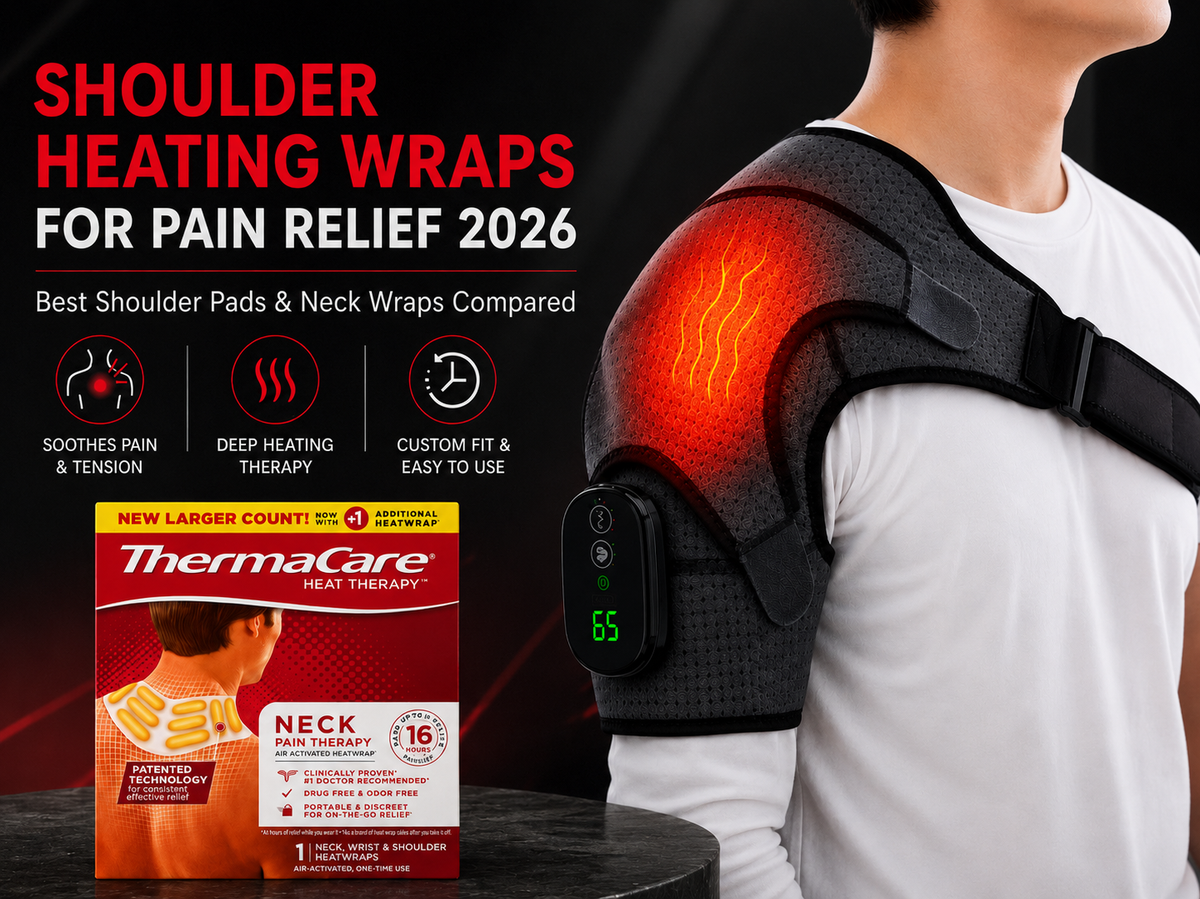
Our flagship shoulder heating wrap features a wide-coverage pad that drapes over both the shoulder joint and the upper back, with adjustable straps that hold the pad in position without hands. Three heat settings provide gentle, moderate, and therapeutic warmth, with the moist heat setting delivering superior penetration for rotator cuff and trapezius therapy. The auto-shutoff engages at 90 minutes. Machine-washable plush cover included.
Microwavable Neck and Shoulder Wrap — Aromatherapy
This over-the-shoulder microwavable wrap drapes across both shoulders and the neck, providing simultaneous moist heat therapy to the upper trapezius, posterior cervical muscles, and both shoulder joints. Filled with a blend of whole flaxseed and dried herbs (lavender, eucalyptus), which release a gentle aromatherapy fragrance when heated. Stays therapeutic for 25–35 minutes per heating. An excellent choice for relaxation, tension headaches, and daily morning stiffness.
Infrared Shoulder Heating Pad with Timer
For deeper tissue penetration, this far-infrared shoulder pad delivers heat 2–3 inches below the skin surface — reaching rotator cuff tendons, the subacromial bursa, and deep cervical muscles that surface heat cannot access effectively. Features four infrared intensity settings, a 60-minute programmable timer, and a soft carbonized fiber heating surface. Recommended for chronic rotator cuff tendinopathy, persistent frozen shoulder, and arthritis of the shoulder joint.
Cervical Neck Heating Wrap with Adjustable Closure
Designed specifically for the neck, this wrap contours to the cervical spine from the base of the skull to the upper thoracic region. The adjustable velcro closure fits necks of all sizes and keeps the wrap snug during use. Three heat settings and a 60-minute auto-shutoff. Inner surface is fleece-lined for comfort. Excellent for cervical arthritis, tension headaches, whiplash recovery, and nighttime neck stiffness.
USB Shoulder and Neck Heating Pad (Cordless Option)
For users who want the convenience of an electric wrap without being tethered to a wall outlet, this USB-powered shoulder pad connects to a power bank for cordless use. Ideal for desk workers who want heat therapy while working, travelers, or anyone who finds corded wraps inconvenient. Provides two heat settings and covers the full neck-to-shoulder span.
Browse our complete heating pads and wraps collection to see all available models and current pricing.
How to Use a Shoulder or Neck Heating Wrap Effectively
Proper technique maximizes the benefit of shoulder heat therapy and ensures safety:
- Choose the right timing. Heat therapy works best as a preparation for movement (before stretching, exercise, or physical therapy exercises) or during rest periods. Avoid applying heat immediately after acute injury or when swelling is present — use cold therapy first.
- Position the wrap correctly. For a shoulder-specific wrap, center it over the painful joint with coverage extending to the front of the shoulder (where the biceps tendon sits) and the back (where the infraspinatus and supraspinatus are located). For neck pain, position the wrap over the posterior cervical muscles with coverage extending from the occiput (base of skull) down to the upper trapezius.
- Start with a lower heat setting. Allow 5 minutes on a lower setting before increasing to therapeutic temperature. This prevents thermal shock to sensitive skin and gives tissue time to warm gradually.
- Apply for 15–30 minutes. Clinical heat therapy sessions typically run 20–30 minutes for optimal tissue temperature change. Longer sessions on high heat settings may cause skin irritation (mottling) or burns — do not exceed manufacturer recommendations.
- Do not apply heat over clothing. Thick fabric insulates the heat away from the skin, reducing therapeutic effect. Thin, dry clothing is acceptable; avoid bulky sweatshirts or fleece between the wrap and your skin.
- Use before stretching, not after. Apply heat 15–20 minutes before shoulder stretches or physical therapy exercises. The warmed, more elastic tissues will respond better to stretching, and you'll achieve greater range of motion gains.
- Combine with gentle movement during heating. For frozen shoulder or severe stiffness, gentle pendulum exercises or shoulder circles while the wrap is in place can accelerate range of motion improvements. Ask your physical therapist about appropriate exercises for your specific condition.
Shoulder Heat Therapy for Specific Conditions
Rotator Cuff Tendinopathy
Rotator cuff tendinopathy involves degeneration of tendon fibers — not active inflammation — in most chronic cases. Heat therapy is generally more appropriate than cold for this condition, as increasing blood flow and tissue extensibility supports the collagen remodeling process. Apply moist heat for 20–30 minutes before eccentric strengthening exercises (the primary evidence-based treatment for tendinopathy). Avoid heat immediately after exercise sessions that provoke significant soreness.
Frozen Shoulder (Adhesive Capsulitis)
Frozen shoulder involves fibrotic thickening of the shoulder joint capsule. Heat therapy is valuable for increasing the extensibility of the capsule before mobilization exercises, but it is rarely sufficient alone — physical therapy and, in some cases, corticosteroid injection or hydrodilatation are typically required. Use a shoulder heating wrap for 20–30 minutes immediately before your PT exercises to maximize the benefit of each session.
Shoulder Bursitis
Shoulder bursitis involves inflammation of the subacromial bursa. In the acute stage (active inflammation, recent onset), cold therapy is preferred. Once the acute phase resolves (typically 1–3 days), transitioning to heat helps relax the surrounding muscles that may be in protective spasm. If your shoulder is hot to the touch or was recently injured, hold off on heat until swelling subsides.
Cervical Muscle Tension and Tension Headaches
Chronic tension in the upper trapezius and posterior neck muscles is the most common shoulder-adjacent complaint. A neck and shoulder combination wrap applied for 20–30 minutes directly addresses the tight muscle bands that refer pain into the head, temples, and behind the eyes. Regular daily heat therapy combined with postural correction and gentle cervical stretches is among the most effective approaches for this extremely common problem.
Cervical Osteoarthritis (Spondylosis)
Morning cervical stiffness from arthritis responds very well to heat therapy applied before getting up or before the morning shower. A cervical neck wrap used for 15–20 minutes while still in bed or seated allows the facet joints and surrounding muscles to warm up, significantly reducing the pain and restricted movement that characterize the first 30–60 minutes of the day for people with spondylosis.
Whiplash and Cervical Strain
For the acute phase of whiplash (first 48–72 hours), cold therapy is preferred. After that, transitioning to gentle heat helps the cervical muscles relax from protective spasm and allows earlier, more comfortable range-of-motion exercises. A supportive neck wrap that also provides warmth can be particularly useful during the recovery phase.
Safety Guidelines for Shoulder and Neck Heat Therapy
Heat therapy is safe for most people when used correctly. Follow these safety principles:
- Never use heat while sleeping. Without conscious awareness, you cannot recognize signs of overheating or skin burns. All quality electric wraps include auto-shutoff for this reason — but no heat therapy product should be used as a sleep aid.
- Avoid heat over areas with reduced sensation. If you have diabetic neuropathy, post-stroke sensory changes, or other conditions affecting skin sensation in the shoulder or neck, cold and heat perception may be impaired. Consult your physician before using any thermal therapy.
- Don't apply heat over active inflammation or swelling. Heat dilates blood vessels and can worsen swelling in acutely injured tissue. If the area is warm, red, or swollen, use cold therapy first.
- Monitor for skin mottling. Prolonged heat can cause erythema ab igne — a pattern of mottled, reddish-brown skin discoloration. This typically resolves when heat therapy is reduced. Rotate the position of the heating pad or use a lower setting if mottling appears.
- Avoid heat during pregnancy without physician clearance. Heat applied over the abdomen or lower back during pregnancy is generally contraindicated; shoulder and neck heat is usually acceptable, but always confirm with your OB/GYN.
AllCare Store: Supporting Your Shoulder and Neck Recovery
At AllCare Store, we understand that shoulder and neck pain affects not just your body — it affects your ability to work, sleep, and enjoy the activities you love. Our selection of shoulder heating wraps and cervical heat therapy products is chosen for comfort, clinical effectiveness, and durability for daily use.
- Free shipping on all heating wrap orders
- Expert product selection — products recommended by physical therapists and occupational therapy professionals
- Full size range — wraps sized for every body type, from petite to plus size
- 30-day return policy — if a wrap doesn't meet your needs, we'll make it right
Browse our complete heating pads and wraps collection or call us at 1-888-889-6260 to speak with a team member who can help match you with the right product for your specific shoulder or neck condition.
Frequently Asked Questions About Shoulder and Neck Heating Wraps
How long should I use a shoulder heating wrap?
Clinical heat therapy sessions for musculoskeletal shoulder pain typically run 20–30 minutes. This is long enough to raise tissue temperature in the muscles and superficial tendons, without causing skin irritation from prolonged heat exposure. Most people use their shoulder heating wrap once or twice daily — before morning stretches or exercise, and/or in the evening for pain relief and relaxation. Always follow the manufacturer's guidelines for the specific product and do not exceed recommended session lengths. Allow at least 1–2 hours between heat therapy sessions to allow tissues to return to baseline temperature.
Is moist heat better than dry heat for shoulder pain?
Yes — for shoulder pain specifically, moist heat is generally preferred. Moist heat penetrates more deeply into soft tissue than dry heat at the same surface temperature, making it more effective for reaching the rotator cuff tendons, joint capsule, and deeper muscle layers. Moist heat also feels more comfortable and causes less skin dryness with repeated use. You can achieve moist heat with a microwavable wrap (which naturally produces steam from the fill material), by dampening the cover of an electric heating pad, or by using a product specifically designed to deliver moist heat.
Can heat therapy make shoulder pain worse?
Yes, in certain situations. Heat can worsen shoulder pain if: (1) the shoulder has an acute injury with active swelling (heat dilates blood vessels and can increase fluid accumulation); (2) there is an active infection or inflammatory flare in the joint such as septic arthritis or acute gout (both rare but serious); (3) heat is applied too soon after vigorous exercise, potentially increasing exercise-induced inflammation. If your shoulder pain is new, severe, or accompanied by fever, redness, or significant swelling, consult your physician before applying heat. For established chronic shoulder conditions like tendinopathy or osteoarthritis, heat is typically well-tolerated and beneficial.
What's the difference between a shoulder heating pad and a shoulder heating wrap?
A shoulder heating pad is a flat or mildly contoured pad that is placed against the shoulder and typically held in place by hand or by the user's position. A shoulder heating wrap is designed to conform to and wrap around the shoulder (and often the neck), securing in place with straps, velcro, or a draping design that leaves the hands free. Wraps are generally preferred for shoulder pain because they maintain full contact with the joint surface without requiring constant repositioning, and they can be worn during light activity or gentle stretching exercises. For the shoulder specifically, a wrap-style product almost always provides a better therapeutic experience than a flat pad.
Can I use a shoulder heating wrap for rotator cuff injury?
Yes — heat therapy is appropriate for most chronic rotator cuff conditions, including tendinopathy, partial tears, and post-surgical rehabilitation (after the acute phase). Heat increases blood flow to the tendons, reduces surrounding muscle spasm, and improves the extensibility of tissue before rehabilitation exercises. However, for an acute rotator cuff tear or immediately after rotator cuff surgery (first 24–72 hours), cold therapy is preferred to manage initial swelling. Always follow your orthopedic surgeon's or physical therapist's guidance on when to transition from cold to heat after rotator cuff injury or surgery.
How do I clean a shoulder heating wrap?
Cleaning instructions vary by product type. For electric shoulder wraps: most feature a removable, machine-washable cover that can be laundered on a gentle cycle and air-dried. The heating element itself should never be submerged in water — wipe it with a barely damp cloth if needed and allow to dry completely before use. For microwavable wraps: follow the manufacturer's specific instructions, as many fill materials (flaxseed, clay beads, herbs) must not be wetted. Most microwavable wrap covers can be spot-cleaned or hand-washed. Never put a microwavable wrap in a washing machine unless explicitly stated as safe by the manufacturer. Check the care label on your specific product for precise instructions.