Medical Disclaimer: This article is for informational purposes only and does not constitute medical advice. Cold therapy can be contraindicated for certain conditions including Raynaud's disease, cold urticaria, peripheral vascular disease, and open wounds. Always consult a licensed healthcare provider before beginning any cold therapy regimen, especially following surgery or for serious injuries. If you experience numbness, increased pain, or skin color changes during cold therapy, discontinue immediately and seek medical attention.
Maria's Knee: A Story of Recovery
Maria was 54 when she tore her ACL during a weekend hiking trip. The surgery went well, but the week afterward was brutal. Her knee swelled to nearly twice its normal size, and the throbbing kept her up at night. Her physical therapist gave her a simple instruction: "Ice, elevation, and patience."
What Maria didn't expect was how much the type of cold therapy would matter. Her first ice pack — a bag of frozen peas — worked fine for ten minutes but then turned into a soggy mess. The plastic cold pack from the hospital was too rigid to contour around her joint. When her therapist lent her a flexible gel wrap with compression straps, everything changed. The cold stayed consistent, covered the entire knee, and she could keep it in place while elevating her leg on pillows.
"That gel wrap was the difference between tolerable and manageable," Maria said three months later, fully recovered and back on the trails. "I had no idea there were so many options — and that the right one would matter so much."
Cold therapy is one of the oldest and most clinically validated tools in pain and inflammation management. But not all cold therapy products are created equal. This guide breaks down how cold therapy works, when to use it, and which products from AllCare Store will serve you best.
How Cold Therapy Reduces Swelling and Inflammation
Cold therapy — also called cryotherapy — works through several physiological mechanisms that reduce swelling, numb pain, and support tissue recovery:
- Vasoconstriction: Cold causes blood vessels to narrow, reducing blood flow to the injured area. Less blood flow means less fluid leaking into tissues — directly limiting swelling.
- Reduced metabolic rate: Cold slows cellular metabolism, reducing the production of inflammatory chemicals (cytokines, prostaglandins) that cause pain and swelling.
- Pain gate mechanism: Cold activates cold-sensitive nerve fibers that compete with pain signals traveling to the brain, producing a numbing effect.
- Reduced nerve conduction velocity: Cold slows pain signal transmission along nerves, amplifying the analgesic effect.
- Decreased muscle spasm: Cold reduces the excitability of muscle spindles, helping relieve involuntary contractions that accompany many injuries.
These effects make cold therapy most valuable in the first 24–72 hours after an acute injury — the inflammatory phase — when swelling and pain are at their peak. Cold therapy also has important applications for chronic inflammation, post-exercise recovery, and post-surgical rehabilitation.
Cold Therapy vs. Heat Therapy: Which Should You Use?
| Use Cold Therapy When... | Use Heat Therapy When... |
|---|---|
| Acute injury (first 48–72 hours) | Chronic muscle tension or stiffness |
| Swelling is present | Warming up before exercise |
| Area feels hot and inflamed | Muscle cramps or spasms |
| Post-surgery (first few days) | Arthritis stiffness (morning or before activity) |
| After intense exercise (muscle soreness) | Chronic back or joint pain without active swelling |
| Headaches (applied to the neck or forehead) | Menstrual cramps |
A common clinical approach for chronic conditions like arthritis is contrast therapy — alternating cold and heat. Heat loosens stiff tissues; cold reduces reactive inflammation afterward. Ask your physical therapist whether contrast therapy is appropriate for your condition.
Types of Cold Therapy Products: A Complete Comparison
1. Reusable Gel Ice Packs
Reusable gel packs are the most versatile and widely used cold therapy products. They contain a non-toxic gel that freezes solid or remains semi-flexible depending on formulation. Key advantages include staying colder longer than ice bags (30–45 minutes of therapeutic cold), conforming to body contours, reusability, and no melting mess. Look for packs that remain flexible when frozen for the best contact with irregular body surfaces.
2. Instant Cold Packs (Single-Use)
Instant cold packs work through an endothermic chemical reaction — squeezing the pack breaks an inner pouch, mixing chemicals that rapidly cool the outer shell. They reach cold temperatures in seconds without refrigeration, making them ideal for emergency first aid kits, sports sidelines, and situations where no freezer is available. Limitations: single-use only, stay cold for just 15–20 minutes, and cannot be refrozen.
3. Cold Compression Wraps
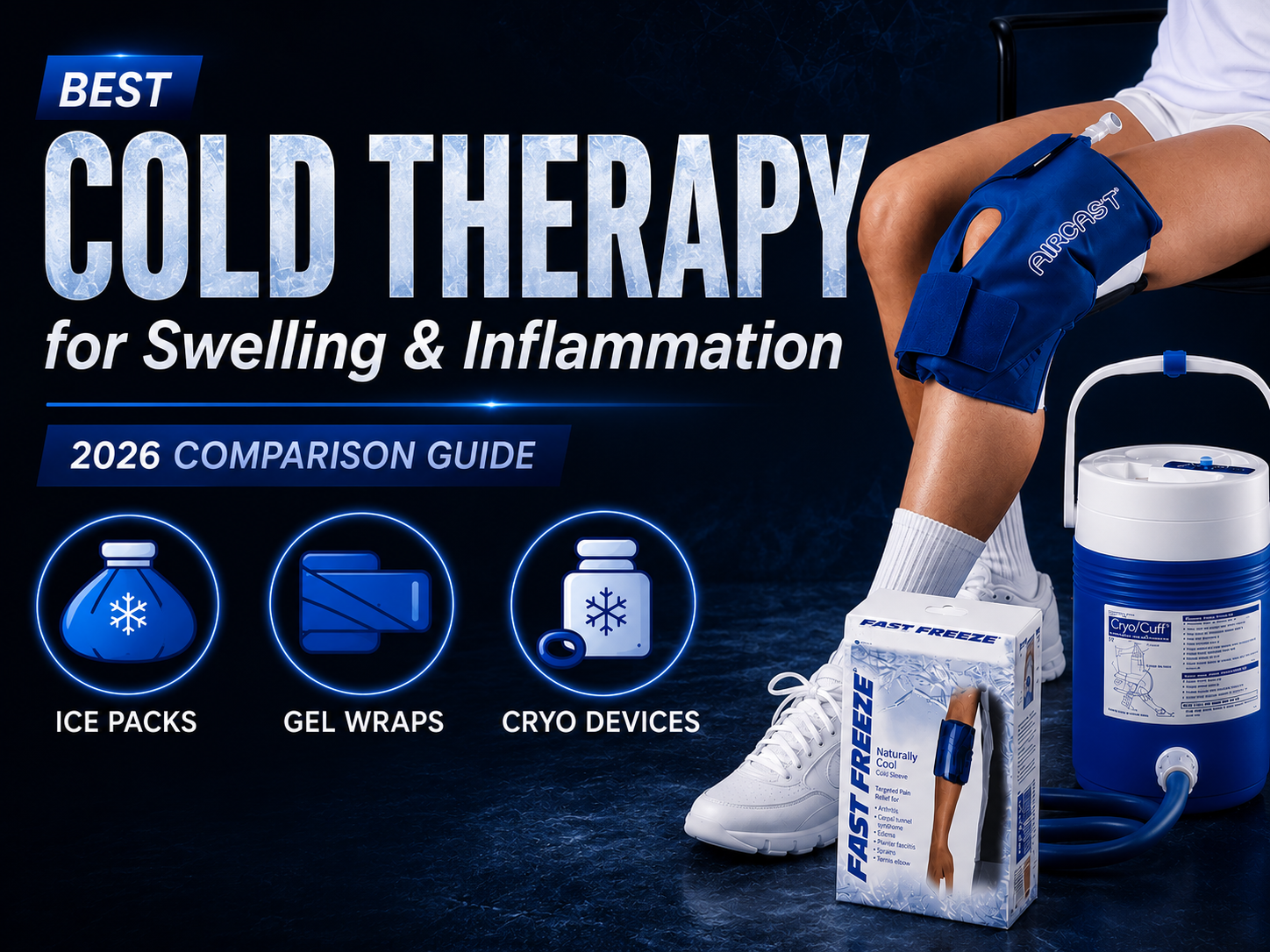
Cold compression wraps combine cold therapy with graduated compression — the RICE protocol (Rest, Ice, Compression, Elevation) in a single device. They feature a gel insert or ice compartment, an elastic or neoprene outer wrap, and a hands-free design that stays in place during elevation. Physical therapists consider these the gold standard for acute injury management at home. Particularly effective for post-surgical swelling, sprained ankles, knee injuries, and shoulder injuries.
4. Cryo Cuffs and Motorized Cold Therapy Systems
Motorized systems circulate ice water through an insulated pad at a controlled temperature. They provide consistent temperature (unlike ice packs that warm unevenly), longer treatment sessions without re-icing, and even cold distribution. These systems are used routinely in hospitals after orthopedic surgery. The trade-off is cost and setup complexity — significantly more expensive but provide measurably better temperature consistency for serious rehabilitation.
5. Cooling Towels and Gel Sheets
Cooling towels provide mild, superficial cooling best suited for fever management, hot flashes, minor muscle soreness, and post-workout cool-down. They don't provide the deep tissue temperature drop needed for significant swelling reduction.
| Product Type | Best For | Duration | Cost |
|---|---|---|---|
| Reusable gel packs | Daily home use, most injuries | 30–45 min | $10–$30 |
| Instant cold packs | First aid, travel, emergencies | 15–20 min | $1–$5 each |
| Cold compression wraps | Post-surgery, sprains, swelling | 20–40 min | $20–$60 |
| Motorized cryo systems | Post-surgical rehab, clinical use | Continuous | $80–$300+ |
| Cooling towels/gel sheets | Mild relief, fever, overheating | Variable | $5–$20 |
Cold Therapy by Body Part: What Works Best Where
Knee Cold Therapy
Because of the knee's complex shape — the patella, joint line on both sides, and tissues behind the knee — a flat ice pack rarely provides full coverage. Choose a flexible gel wrap or knee-specific cold compression wrap that contours to the joint. Ensure coverage on both sides of the joint line and the patella. Elevation (pillow under the calf) combined with cold provides better fluid drainage. For post-ACL or meniscus surgery, a cold compression wrap with adjustable straps allows secure placement during recovery.
Ankle and Foot Cold Therapy
Ankle sprains are among the most common sports injuries. The ankle's irregular shape benefits from a wrap-style or stirrup-shaped cold pack. Look for ankle wraps that secure around the foot and up the leg, small malleable packs that tuck around the ankle bones, and cold compression socks for diffuse foot swelling.
Shoulder Cold Therapy
The shoulder is difficult to ice because of its curved, three-dimensional geometry. Best options are large flexible gel packs and shoulder-specific cold compression wraps with over-the-shoulder straps. Sit upright with the pack against the front or back of the shoulder rather than lying on it, which can restrict circulation.
Back Cold Therapy
For lower back injuries, a large rectangular gel pack or a cold wrap with adjustable straps works best. Always use a thin cloth barrier. Lying on a firm surface with the pack underneath lets body weight hold it in place. Use large packs (9"×14" or bigger) for adequate lumbar coverage.
Featured Cold Therapy Products at AllCare Store
AllCare Store carries a curated selection of cold therapy products for home use, sports recovery, and post-surgical rehabilitation.
Reusable Flexible Gel Ice Packs — Multi-Pack
Designed to remain pliable even when frozen solid so they conform to body curves rather than sitting flat on top of the injury. Constructed with durable, puncture-resistant outer material and a non-toxic gel fill, these packs provide 30–45 minutes of consistent cold per session. Multi-packs allow rotating between packs for continuous therapy without interruption.
Cold Compression Knee Wrap with Gel Insert
Designed specifically for knee injuries and post-surgical recovery, this wrap combines adjustable compression with a removable gel insert that wraps around the entire knee joint — including the back of the knee where flat packs cannot reach. Velcro straps allow customized fit across a wide range of knee sizes.
Universal Cold Compression Wrap
A versatile option for larger body areas — thigh, lower back, hip, and shoulder. Secures with dual straps and accommodates a large gel insert. Ideal for post-surgical hip or shoulder procedures, or for athletes managing multiple recovery sites at once.
Instant Cold Packs — Box of 16
For training rooms, first-aid kits, or on-the-go use, these single-use packs provide immediate cold at the moment of injury with no freezer needed. Squeeze to activate; cold reaches therapeutic temperature within seconds and is maintained for 15–20 minutes. A box of 16 keeps an emergency supply stocked for multiple events.
Ankle Cold Compression Wrap
Purpose-built for ankle sprains, Achilles tendon injuries, and plantar fasciitis. Features a contoured gel pouch that cups both the medial and lateral ankle simultaneously with a foot stirrup strap for secure positioning during elevation. An excellent choice for runners and anyone recovering from ankle surgery.
Browse our complete hot and cold therapy collection to view all available products, sizes, and current pricing.
How to Apply Cold Therapy Correctly
- Always use a cloth barrier. Never apply ice or a gel pack directly to bare skin. Use a thin towel, pillowcase, or the cloth cover that comes with most gel packs. Direct contact can cause frostbite or contact burns.
- Apply for 15–20 minutes at a time. This is the clinical sweet spot — enough time to achieve vasoconstriction and pain relief without risking tissue damage. The skin should feel cold, then achy, then numb. Remove if numbness sets in before 15 minutes.
- Wait 45–60 minutes between sessions. Tissue needs time to rewarm before the next application. Applying cold continuously provides no additional benefit and increases frostbite risk.
- Check your skin every 5 minutes. Look for unusual color changes — deep red, purple, or white patches indicate excessive cold exposure. Remove the pack immediately if these appear.
- Elevate when possible. Elevation works with cold to reduce swelling by draining fluid away from the injury site. For leg injuries, elevate above heart level when icing.
- Apply within 48–72 hours of injury. Cold therapy is most effective during the inflammatory phase. After 3 days, if swelling has subsided, transitioning to heat therapy may be more beneficial.
Cold Therapy for Specific Conditions
Post-Surgical Swelling
Cold therapy is standard in post-surgical recovery protocols for orthopedic procedures — knee replacements, ACL reconstruction, shoulder repairs, and foot surgeries. Most orthopedic surgeons recommend 3–5 sessions per day in the first 72 hours post-op, combined with elevation. Important: do not apply cold therapy directly over surgical incisions or staples without physician clearance.
Arthritis Inflammation
For rheumatoid arthritis and inflammatory arthritis flares, cold therapy reduces local inflammation and joint swelling. Apply a flexible gel pack to hot, swollen joints for 15 minutes several times daily during active flares. Avoid cold on joints that are primarily stiff without active swelling — heat is typically more beneficial there.
Sports and Exercise Recovery
Post-exercise cold therapy reduces delayed-onset muscle soreness (DOMS) and helps manage minor muscle strains. Optimal application is within 30 minutes of exercise completion, for 15–20 minutes per site. Gel packs are an effective and accessible alternative to ice baths for targeted muscle recovery.
Tendinitis and Bursitis
Common affected areas include the Achilles tendon, patellar tendon, rotator cuff tendons, and hip bursae. Apply cold after activity that aggravates symptoms — not before, as icing before activity can mask pain and reduce the protective reflex that prevents re-injury.
Headaches and Migraines
Cold therapy applied to the neck, forehead, or temples helps manage tension headaches and migraines through vasoconstriction of scalp blood vessels and the pain gate mechanism. Refrigerate (don't freeze) the pack for gentler application appropriate for head and face use.
Cold Therapy Safety: Who Should Avoid It
Consult your healthcare provider before using cold therapy if you have: Raynaud's disease or syndrome, cold urticaria (cold-triggered hives), peripheral vascular disease, peripheral neuropathy, open wounds or infections, or known hypersensitivity to cold.
AllCare Store: Your Cold Therapy Resource
Whether you're recovering from surgery, managing a sports injury, or dealing with chronic inflammation, AllCare Store has the cold therapy products to support your recovery. We stock gel packs, compression wraps, instant cold packs, and specialty accessories — all from trusted manufacturers, with free shipping on every order.
Explore our full cold and hot therapy collection or call us at 1-888-889-6260 to get help choosing the right product for your specific injury or condition.
Frequently Asked Questions About Cold Therapy
How long should I apply an ice pack for swelling?
The standard recommendation is 15–20 minutes per session, with at least 45–60 minutes between sessions. This duration achieves meaningful vasoconstriction and pain relief without risking frostbite. Always use a cloth barrier between the pack and your skin. Most people do well with 3–5 cold therapy sessions per day in the first 48–72 hours after an acute injury.
Is a gel ice pack better than a bag of ice?
For most home uses, a reusable gel pack is preferable to a bag of ice. Gel packs stay flexible when frozen, conforming better to body contours for more even cold distribution. They don't melt into water, so there's no moisture mess, and they maintain therapeutic cold for 30–45 minutes. A bag of crushed ice can get colder than a gel pack (closer to 32°F vs. approximately 15–20°F for a frozen gel pack), which can be useful for acute injuries — but the colder temperature means a cloth barrier is even more critical to prevent skin injury.
Can I sleep with an ice pack on a swollen area?
No — sleeping with an ice pack is not recommended and can be dangerous. During sleep, you cannot monitor your skin for signs of cold injury, and the same area may be continuously compressed by body weight against the pack. Cold therapy sessions should always be supervised — apply for 15–20 minutes while awake, then remove the pack completely. For overnight swelling management, elevation with pillows is a safe alternative.
When should I switch from cold to heat therapy?
Use cold therapy for the first 48–72 hours after an acute injury while active swelling and inflammation are present. After swelling has meaningfully decreased and the area is no longer hot to the touch, transitioning to heat therapy can help relax stiff muscles, improve blood flow, and promote tissue healing. Some chronic conditions benefit from alternating cold and heat (contrast therapy). Consult your physical therapist or physician if you're unsure.
What is the RICE method and how does cold therapy fit into it?
RICE stands for Rest, Ice, Compression, and Elevation — the standard first-response protocol for acute soft tissue injuries. Cold therapy (the "Ice" component) is most effective when combined with the other three elements: rest prevents further damage, compression limits fluid accumulation, and elevation drains fluid away from the injury. A cold compression wrap combines Ice and Compression into a single product. Discuss the best protocol for your specific injury with your healthcare provider.
Can cold therapy help with chronic pain conditions?
Yes — cold therapy has applications beyond acute injury management. For conditions like rheumatoid arthritis, gout, and inflammatory bursitis, applying cold during active flares reduces joint inflammation, numbs pain, and decreases swelling. For chronic lower back pain, some patients find cold therapy more effective than heat for pain with a burning, inflammatory quality. Work with your physician to identify which modalities are most appropriate for your specific condition.