What Getting Dressed Taught Dorothy About Dignity
Dorothy, 79, had always been meticulous about her appearance. Even after retiring from her job as a librarian, she wore pressed blouses, slacks with a neat crease, and earrings every day. Then a series of small strokes left her right side weaker than the left, and what had been a five-minute morning routine became a thirty-minute struggle that sometimes left her in tears before her daughter arrived to help.
The buttons on her blouses — which she'd never given a second thought — had become impossible with one reliable hand. Pulling pants up over stiff hips was exhausting. Shoes with laces were out of the question. She began wearing shapeless knit tops and elastic-waist pants, which worked, but felt like giving something up. "I don't feel like myself," she told her occupational therapist.
The therapist introduced her to adaptive clothing. Within a week, Dorothy was wearing a wrap-style blouse with magnetic closures that looked identical to her regular button-front shirts from the front. Her slacks had velcro fasteners hidden behind a traditional-looking button fly. She put them on herself, in six minutes, without help. "It's a small thing," she said. "But it doesn't feel small at all."
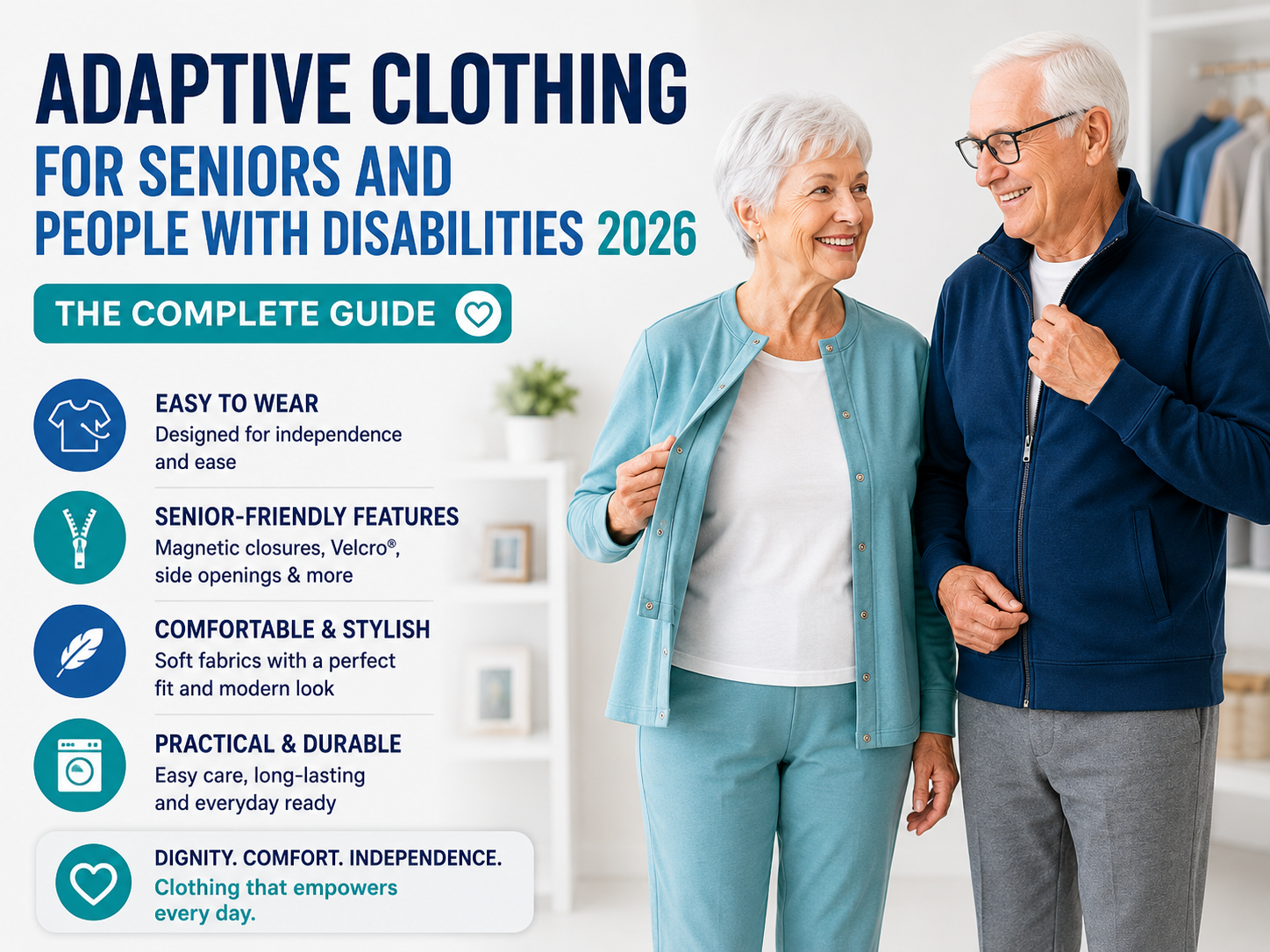
Adaptive clothing exists precisely for this — to restore independence and dignity for people whose mobility, dexterity, or daily routine has changed. This guide covers everything you need to know about choosing and using adaptive garments effectively.
What Is Adaptive Clothing?
Adaptive clothing is designed or modified to make dressing easier for people who have physical limitations that make standard clothing difficult to put on, fasten, or remove. This includes people with:
- Arthritis or limited hand dexterity
- Stroke or hemiplegia (one-sided weakness)
- Parkinson's disease or essential tremor
- Spinal cord injury or paralysis
- Dementia
- Hip or knee replacement recovery
- Amputations
- Multiple sclerosis
- General age-related stiffness and reduced range of motion
Adaptive clothing uses design changes — different closures, altered seam placement, modified openings, and specialized cuts — to solve specific dressing challenges without sacrificing appearance. Most adaptive garments are designed to look like conventional clothing from the outside.
Key Features of Adaptive Clothing
Magnetic Closures
Magnetic closures replace buttons and snaps with magnets hidden behind the fabric. They click into place with light pressure — no pinching, threading, or fine motor coordination required. From the outside, the garment looks exactly like a standard button-front shirt or pants. Magnetic closures are ideal for people with arthritis, hand tremors, stroke, or Parkinson's. They work with one hand and don't require any particular grip strength.
Velcro (Hook-and-Loop) Fasteners
Velcro allows wide, forgiving closure across a large surface area and can be managed with very limited hand strength. It's commonly used in adaptive shoes, pants fly closures, and bra straps. The main limitation is that velcro can snag on fabrics in the wash — turning garments inside out before laundering solves most of this problem.
Open-Back Designs
Open-back or back-opening garments — shirts, dresses, and hospital-style gowns that open from behind — are designed for people who dress with caregiver assistance or who spend extended time in bed. The garment is slipped on from the front, eliminating the need to raise arms over the head or maneuver into sleeves independently. Modern open-back adaptive clothing avoids the institutional look of traditional hospital gowns, with attractive fabrics, patterns, and designs that close discreetly with ties, snaps, or velcro at the back.
Side-Opening and Side-Seam Designs
Side-opening pants and skirts allow dressing and undressing without standing — essential for wheelchair users or anyone who transfers between sitting and standing with difficulty. Side seams with snaps or velcro provide full-length openings that make catheter care and leg bracing much easier as well.
Elastic Waistbands and Pull-On Designs
A simple but effective adaptation — elastic waistbands and pull-on pants eliminate buttons, zippers, and belts entirely. Modern adaptive versions are designed to look tailored rather than casual, with mock fly panels that give the appearance of traditional slacks.
Seated Fit Cuts
Standard clothing is designed for standing figures — when someone sits in a wheelchair all day, waistbands dig in, fabric pulls at the back, and excess fabric bunches at the front. Seated fit adaptive clothing addresses this with higher backs, lower front rises, and reduced bulk at the seat. The result is clothing that fits, looks good, and is comfortable throughout a day spent in a chair.
Easy-Access for Medical Equipment
Adaptive garments for people with catheters, colostomy bags, or G-tubes include strategically placed openings, flaps, or side panels that allow access without removing the garment. This maintains modesty and simplifies care significantly.
Adaptive Clothing by Mobility Challenge
| Challenge | Best Adaptive Features |
|---|---|
| Arthritis / limited grip | Magnetic closures, large-ring zippers, elastic waists, velcro shoes |
| One-handed dressing (stroke, amputation) | Magnetic closures, front-wrap designs, elastic waists, slip-on footwear |
| Wheelchair users | Seated-fit cut, side-opening pants, anti-ride-up backs, easy-access for catheters |
| Caregiver-assisted dressing | Open-back designs, full side-seam openings, snap or velcro closures |
| Hip / knee replacement recovery | High-waisted pull-ons, loose-leg designs, adaptive socks, long-handled dressing aids |
| Parkinson's / tremor | Magnetic closures, pull-on pants, slip-on shoes, no-tie laces |
| Dementia | Simple designs, limited number of closures, pull-on styles, soft fabrics |
| Limited shoulder/arm mobility | Wrap or front-opening tops, raglan sleeve designs, no overhead pulling required |
Adaptive Footwear
Footwear is often the biggest dressing challenge for seniors and people with disabilities. Traditional lace-up shoes require bending, fine motor control, and balanced coordination that arthritis, stroke, or poor balance make very difficult.
Velcro-Closure Athletic and Casual Shoes
Available in styles nearly identical to standard athletic shoes, velcro-closure footwear eliminates laces without sacrificing the support and cushioning of a proper shoe. Many adaptive shoe brands offer wide and extra-wide widths to accommodate orthotics or foot swelling.
Slip-On Shoes and Elastic Laces
Slip-on shoes require no fastening at all. For those who prefer the security of a closed shoe, elastic no-tie laces convert any lace-up shoe to a slip-on — the shoes can be tightened and loosened by pulling on the laces without tying. Both solutions work well for people with arthritis, Parkinson's, or one-sided weakness.
Adaptive Socks
Standard socks require bending forward and pulling up — impossible for anyone with limited hip flexibility or low back pain. Sock aids use a plastic or fabric frame to help the user slide a sock onto the foot with minimal bending. Wide, non-binding socks with loose tops prevent the circulation restriction that standard elastic sock cuffs can cause in people with edema.
Dressing Aids That Complement Adaptive Clothing
Adaptive clothing works best alongside adaptive tools. Several devices make dressing easier even when clothing isn't specially designed:
- Long-handled shoehorn: Allows shoes to be put on without bending. Essential for anyone with hip surgery restrictions or low back pain.
- Button hook: A thin hook that threads through a buttonhole to catch and pull the button through — allows one-handed buttoning of standard shirts.
- Zipper pull: A D-ring or handle extension that clips to any zipper tab, making it easy to pull with limited grip strength or one hand.
- Reacher/grabber: A 24–32 inch reaching tool that helps pick up dropped items and retrieve clothing from drawers or hangers without excessive bending.
- Dressing stick: A dowel with a hook on one end — used to push clothing over legs, arms, and shoulders when range of motion is limited.
Browse our Daily Living Aids collection for dressing aids, reachers, and other tools that help maintain independence at home.
Adaptive Clothing for Incontinence
For people managing incontinence, traditional clothing can make toileting difficult and add to anxiety about accidents. Adaptive options include:
- Wide-leg pants with velcro or magnetic fly: Open and close much faster than buttons — critical for people who need to reach the toilet quickly
- Pants with full-length inner leg snaps: Allow undergarment changes with minimal undressing
- Adaptive skirts and dresses: Eliminate pants entirely, making toileting faster and easier
Pairing adaptive clothing with the right incontinence products makes a meaningful difference in confidence and quality of life. Visit our Incontinence collection for protective underwear, underpads, and skincare designed for daily use.
Shopping for Adaptive Clothing: What to Look For
Appearance Matters
Many people are initially reluctant to try adaptive clothing because they expect it to look institutional or medical. The adaptive clothing market has changed significantly — most modern adaptive garments are indistinguishable from standard clothing from the outside. When shopping, look for brands that show both front and back views so you can see how closures are concealed.
Fabric Quality and Comfort
People who spend time in bed, use wheelchairs, or have reduced sensation are more vulnerable to skin irritation from rough fabrics or prominent seams. Look for soft, breathable fabrics (cotton blends are often best) and flat, minimal seaming in seated or high-friction areas.
Ease of Laundering
Adaptive clothing with velcro should be laundered with care — velcro should be closed (or garments turned inside out) before washing to prevent snagging. Most adaptive garments are machine washable. Check labels carefully for magnetic closure care — high heat can degrade magnets over time.
Fit for Seated vs. Standing
If you spend significant time in a wheelchair, explicitly look for "seated fit" or "wheelchair user" designs. Standard clothing, even with adaptive closures, won't be as comfortable or functional as clothing designed for the way you actually move through your day.
The Role of Occupational Therapists
If dressing difficulty is significant, an occupational therapist (OT) can conduct a home assessment, identify the specific dressing challenges you're facing, and recommend targeted adaptive equipment and clothing strategies. Many OTs have specific training in adaptive dressing and can connect you with specialized resources. Check with your physician about a referral — OT services for dressing adaptations are often covered by Medicare and most insurance plans.
AllCare Store: Daily Living Products for Independence
At AllCare Store, we carry daily-living aids, personal care supplies, and home health products to help seniors and people with disabilities maintain independence and comfort. Getting dressed, moving around the house, managing personal care — these are things that matter deeply, and the right tools make them easier.
- Free Shipping on every order — no minimum required
- Discreet Packaging — plain, unmarked packaging on every order
- 30-Day Returns — shop with confidence
- Expert Help — call us at 1-888-889-6260
Visit Daily Living Aids, Mobility Aids, and Home Safety collections at AllCare Store — your partner in aging well at home.
Frequently Asked Questions: Adaptive Clothing
Does adaptive clothing look different from regular clothing?
Modern adaptive clothing is designed to look like standard garments from the front and outside. Magnetic closures are concealed behind the fabric and look identical to regular button-front shirts. Open-back designs close discreetly. Seated-fit pants look like traditional slacks. The goal of adaptive clothing design is to preserve appearance and dignity while solving practical dressing challenges — most people looking at someone in adaptive clothing would have no idea it's anything other than standard attire.
What is the best adaptive clothing for someone with arthritis?
For arthritis, the most impactful adaptive features are magnetic closures (replacing buttons and snaps that require grip and pinching), elastic waistbands (replacing belt and button closures at the waist), velcro-closure shoes (eliminating laces), and pull-on tops that don't require overhead reaching. The specific combination depends on which joints are most affected. An occupational therapist can do a dressing assessment and recommend the most targeted solutions for your specific arthritis pattern.
Where can I find adaptive clothing for wheelchair users?
Adaptive clothing specifically designed for wheelchair users is available from specialty adaptive clothing brands, some major retailers that have introduced adaptive lines, and medical supply stores. Look for "seated fit" clothing, which has a higher back rise, lower front rise, and reduced seat bulk for comfort in a chair. Several major clothing brands now offer adaptive collections, including Tommy Hilfiger Adaptive, Target's Cat & Jack and A11Y collections, and specialty retailers focused exclusively on adaptive apparel.
How do I dress someone with dementia?
Dressing someone with dementia benefits from simple, consistent routines and clothing that minimizes the number of steps and decisions involved. Choose pull-on or velcro-close garments with few fasteners. Lay out clothes in the order they'll be put on. Use soft, comfortable fabrics that don't irritate. Limit choices to avoid overwhelm — offer two options at most. Open-back garments can help when the person resists raising arms or struggles with overhead dressing. Working with an occupational therapist or a dementia care specialist can help you develop a dressing routine that's predictable and calming.
Is adaptive clothing covered by insurance?
Standard health insurance, including Medicare, generally does not cover adaptive clothing as it's classified as clothing rather than durable medical equipment. However, if dressing difficulty is related to a covered condition, an occupational therapist evaluation and dressing aids (such as button hooks, sock aids, and dressing sticks) may be covered. Some long-term care insurance policies include adaptive clothing as part of daily living assistance benefits. Check your specific policy for details.
Medical Disclaimer: This article is for informational purposes only and does not constitute medical advice. Individuals at high risk for pressure injuries should consult a physician, occupational therapist, or certified rehabilitation engineer before selecting a wheelchair cushion.