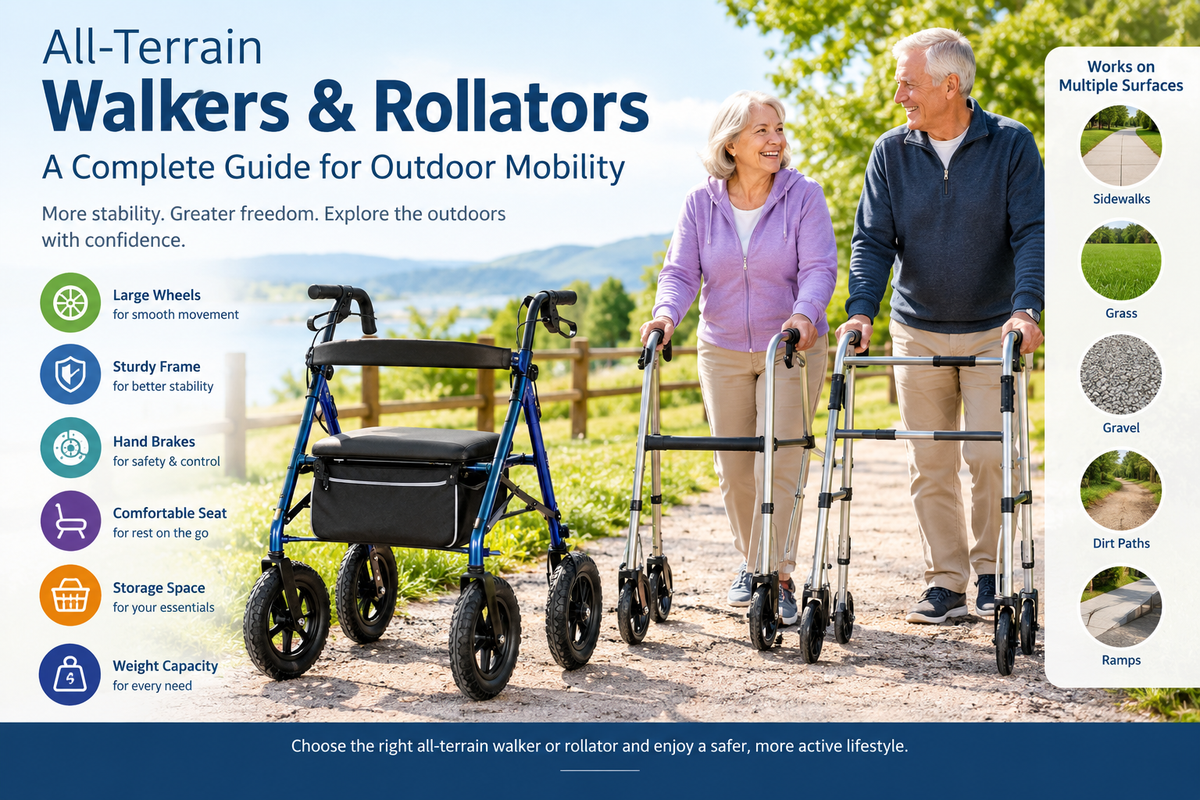
Walking outdoors can be more challenging than moving around on smooth indoor floors. Uneven sidewalks, gravel paths, grass, ramps, pavement cracks, and outdoor surfaces can make a standard walker or rollator harder to use. All-terrain walkers and rollators are designed to provide greater stability, maneuverability, and support across a variety of surfaces.
Whether you need a walker for outdoor use, a rollator for uneven terrain, or a mobility aid for parks, sidewalks, and other outdoor environments, choosing the right design can make everyday mobility more comfortable and convenient.
This guide explains what all-terrain walkers and rollators are, how they work, their key features, and how to choose the right option for your needs.
What Is an All-Terrain Walker or Rollator?
An all-terrain walker is a mobility aid designed to handle different outdoor surfaces more effectively than a basic indoor walker. Depending on the model, it may feature larger wheels, enhanced stability, durable construction, and a wider base.
An all-terrain rollator is a wheeled walker that typically includes four wheels, hand brakes, a supportive frame, and sometimes a built-in seat and storage area.
The larger wheels found on many outdoor rollators can make it easier to navigate surfaces such as:
- Sidewalks
- Pavement
- Grass
- Gravel
- Firm dirt paths
- Outdoor walkways
- Ramps
- Uneven flooring
AEO Answer: An all-terrain rollator is a wheeled mobility aid designed to provide improved maneuverability and stability across a variety of indoor and outdoor surfaces.
All-Terrain Walker vs. Standard Walker
Not every walker is designed for the same environment. A traditional walker with small tips or basic wheels may work well indoors but can be less convenient on uneven outdoor surfaces.
| Feature | Standard Walker | All-Terrain Walker/Rollator |
|---|---|---|
| Indoor use | Excellent | Excellent |
| Outdoor use | Limited to moderate | Excellent |
| Uneven surfaces | May be difficult | Better suited |
| Wheel size | Usually smaller | Often larger |
| Maneuverability | Moderate | High |
| Built-in seat | Usually no | Available on many rollators |
| Storage | Limited | Often includes basket or pouch |
| Braking system | Depends on model | Common on rollators |
For people who regularly travel between indoor and outdoor environments, an all-terrain rollator can provide more flexibility.
Why Choose an All-Terrain Rollator?
An outdoor rollator can offer several advantages for people who want to remain active and mobile.
1. Better Outdoor Maneuverability
Larger wheels can help a rollator move more smoothly over common outdoor surfaces. They can be particularly useful when navigating sidewalks, driveways, parks, and other areas where the ground isn't perfectly smooth.
2. Improved Stability
A sturdy frame and appropriately sized wheels can provide a stable support base. When selecting a walker, consider the overall frame design, wheel placement, and weight capacity.
3. Easier Navigation Over Uneven Surfaces
Small wheels may catch on cracks, transitions, or uneven surfaces. Large-wheel walkers and all-terrain rollators are generally better suited for navigating these conditions.
4. Convenient Seating
Some outdoor rollators with seats allow users to take a break when needed. A padded or contoured seat can be useful during longer outdoor activities.
5. Storage for Personal Items
Many rollators include baskets, pouches, or under-seat storage. This can provide a convenient place for personal belongings during shopping trips or outdoor activities.
What Features Should You Look for in an All-Terrain Walker?
Choosing an all-terrain mobility aid involves more than simply looking for large wheels. Consider several important features.
Large Wheels
Wheel size is one of the most important considerations for outdoor mobility.
Large-wheel rollators generally provide better clearance over small obstacles and can make outdoor navigation easier.
For frequent outdoor use, look for a model specifically designed for outdoor surfaces rather than simply choosing the largest wheels available.
Durable Frame
The frame should be sturdy enough for the intended user and environment.
Common materials include:
- Aluminum
- Steel
- Reinforced metal alloys
Aluminum frames can provide a useful balance between durability and weight, while heavier-duty frames may be appropriate for users who require higher weight capacities.
Weight Capacity
Always check the manufacturer's stated weight capacity before purchasing a walker or rollator.
A bariatric or heavy-duty rollator may be appropriate when a higher weight capacity is required.
Do not assume that two walkers with similar appearances have the same weight capacity.
Hand Brakes
Rollators commonly use hand-operated brakes. These allow the user to slow or stop the wheels and can also help secure the rollator when parked.
Before using a new rollator outdoors, become familiar with its braking system in a safe area.
Adjustable Handle Height
Adjustable handles can help users achieve a more comfortable position.
Ideally, the handles should allow the user to maintain a natural posture without excessive bending or reaching.
Comfortable Seat
If you plan to use your rollator for extended outdoor activities, consider a model with a supportive seat.
Look for:
- Adequate seat width
- Comfortable seat material
- Appropriate seat height
- A stable frame
- A suitable user weight capacity
Foldable Design
A folding rollator can be convenient for transportation and storage.
If you frequently travel by car, look for a model that folds easily and fits your available storage space.
Storage Basket or Pouch
A basket or storage pouch can be useful when shopping, traveling, or spending time outdoors.
However, avoid overloading the storage compartment beyond the manufacturer's recommendations.
Are All-Terrain Rollators Good for Outdoor Use?
Yes. All-terrain rollators are specifically designed to provide greater maneuverability on outdoor surfaces than many standard indoor-focused walkers.
Their larger wheels, sturdy frames, and braking systems can make them suitable for sidewalks, parks, driveways, and other relatively firm outdoor surfaces.
However, "all-terrain" does not mean that every model is suitable for every surface. Very loose sand, deep mud, steep slopes, or highly irregular terrain may still be challenging.
Best Surfaces for an All-Terrain Rollator
An all-terrain rollator can be useful on many common surfaces, including:
Sidewalks
Sidewalks are one of the most common environments for outdoor rollators. Larger wheels can help navigate pavement joints and minor surface imperfections.
Grass
Firm, relatively level grass can often be easier to navigate with larger wheels than with small indoor walker wheels.
Gravel
Some all-terrain models can handle compact gravel paths, although loose gravel may still affect stability and maneuverability.
Parks and Walking Trails
Firm, maintained walking trails may be appropriate for certain outdoor rollators.
Always check the manufacturer's recommendations before using a mobility device on a particular surface.
All-Terrain Walker vs. Rollator: Which Is Better?
The best option depends on how you plan to use the mobility aid.
A walker may be preferable when you want a simple support frame and do not need to roll continuously.
A rollator may be better when you want easier movement, hand brakes, a seat, and storage.
| If You Need... | Consider |
|---|---|
| Maximum simplicity | Standard walker |
| Frequent outdoor mobility | All-terrain rollator |
| A built-in seat | Rollator |
| Larger wheels | All-terrain walker/rollator |
| Easy folding and transport | Folding rollator |
| Higher weight capacity | Heavy-duty/bariatric rollator |
| Indoor and outdoor flexibility | Versatile rollator |
How to Choose the Right All-Terrain Rollator
Before purchasing an outdoor rollator, consider these questions.
Where Will You Use It?
Think about your typical environment.
Will you primarily use the rollator:
- Around the house?
- On sidewalks?
- At shopping centers?
- In parks?
- On gravel paths?
- During travel?
The answer can help determine the wheel size and frame design you need.
How Often Will You Transport It?
If you frequently put your rollator into a vehicle, weight and folding dimensions become important considerations.
A lightweight folding rollator can be easier to lift and store.
Do You Need a Seat?
If you expect to stop frequently during walks, a rollator with a seat may provide useful convenience.
If you don't need seating, a lighter design without a seat may be easier to transport.
What Weight Capacity Do You Need?
Choose a model with a manufacturer-rated weight capacity appropriate for the intended user.
For users requiring additional support, explore heavy-duty and bariatric rollators.
Is Handle Height Adjustable?
Adjustability can help accommodate different user heights and promote a more comfortable walking position.
Safety Tips for Using an All-Terrain Rollator
Using the correct technique is just as important as selecting the right mobility aid.
Check the Brakes
Before walking, make sure the brakes operate correctly. When sitting, engage the brakes according to the manufacturer's instructions.
Watch for Slopes
Even a well-designed all-terrain rollator may be difficult to control on steep slopes. Approach slopes carefully and follow the manufacturer's instructions.
Avoid Excessive Loads
Do not overload the basket or storage compartment.
Extra weight can affect maneuverability and stability.
Inspect the Wheels
Regularly check the wheels for:
- Excessive wear
- Damage
- Debris
- Loose components
Use Appropriate Surfaces
"All-terrain" does not mean unlimited terrain capability. Avoid surfaces that exceed the manufacturer's intended use.
Are All-Terrain Walkers Suitable for Seniors?
All-terrain walkers can be useful for seniors who need additional support while walking outdoors. Features such as larger wheels, adjustable handles, hand brakes, seats, and sturdy frames can make outdoor mobility more convenient.
However, the appropriate walker depends on the individual's mobility requirements, strength, balance, height, and intended use.
If someone is unsure which mobility aid is appropriate, consulting a qualified healthcare professional or mobility specialist can help.
Lightweight vs. Heavy-Duty All-Terrain Rollators
Both lightweight and heavy-duty rollators can serve different purposes.
Lightweight Rollators
A lightweight rollator may be easier to:
- Lift
- Fold
- Store
- Transport
- Maneuver
They can be particularly convenient for travel and everyday use.
Heavy-Duty Rollators
A heavy-duty rollator may provide a stronger frame and higher weight capacity.
These models can be useful when the user requires additional structural support.
The best choice depends on the user's requirements rather than simply choosing the heaviest model.
How to Maintain an Outdoor Rollator
Outdoor use can expose mobility equipment to dirt, dust, moisture, and debris.
Regular maintenance can help keep your rollator working properly.
Clean the Frame
Wipe the frame regularly with an appropriate cleaning method recommended by the manufacturer.
Keep Wheels Clear
Check the wheels for stones, dirt, hair, or other debris that could interfere with movement.
Check the Brakes
Test the brakes regularly and inspect cables or mechanisms when applicable.
Inspect Fasteners
Check for loose screws, bolts, or other components according to the manufacturer's maintenance instructions.
Store Properly
When not in use, keep the rollator in a clean, dry location whenever possible.
Final Thoughts
The right all-terrain walker or rollator can provide greater flexibility for people who want to move around both indoors and outdoors. Features such as large wheels, durable frames, adjustable handles, hand brakes, comfortable seating, and convenient storage can make a mobility aid more practical for everyday use.
When choosing an outdoor rollator, focus on your actual environment, transportation needs, required weight capacity, and desired features rather than choosing a model based on appearance alone.
For a wide selection of walkers and rollators, explore AllCareStore's mobility products and compare options based on wheel design, weight capacity, portability, and intended use.