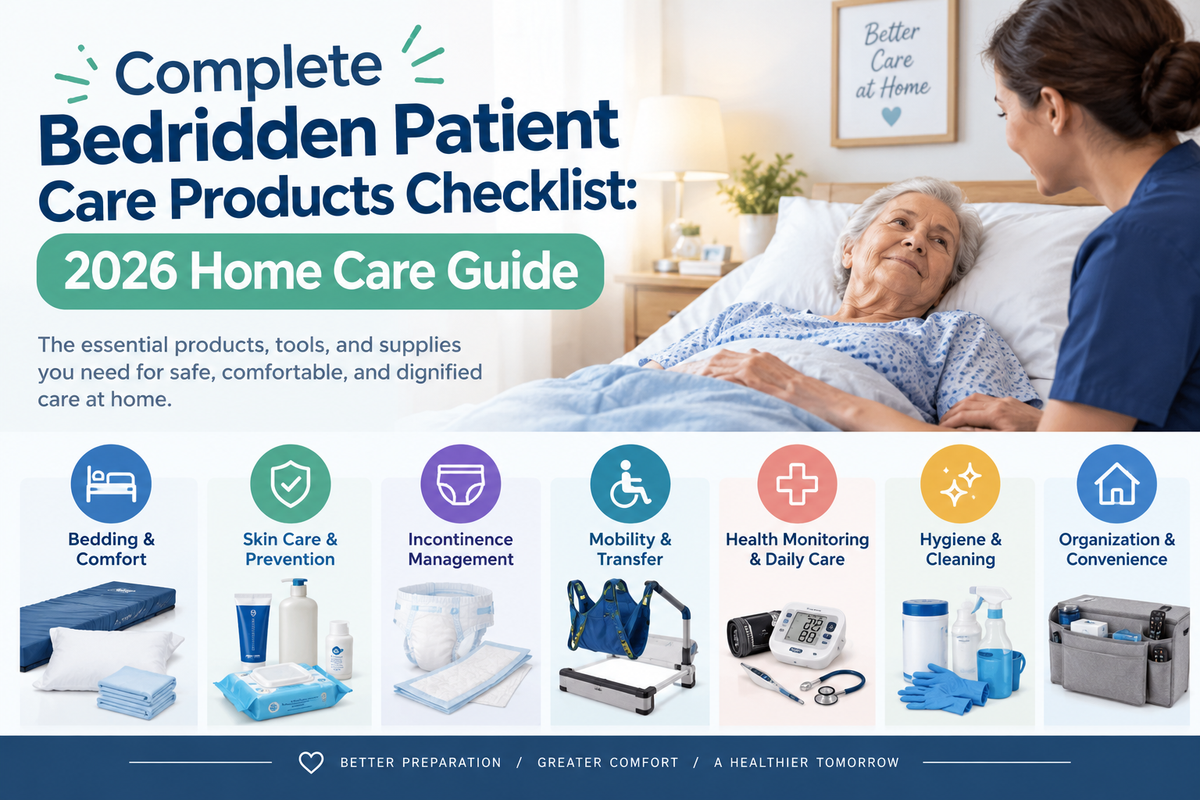
Caring for a bedridden patient at home requires the right combination of medical supplies, personal hygiene products, mobility aids, and comfort essentials. Whether you are caring for an elderly family member, someone recovering from surgery, or an individual with limited mobility, having the right bedridden patient care products can make daily caregiving more manageable and support better hygiene, comfort, and safety.
This complete bedridden patient care checklist covers essential products such as adult diapers, disposable underpads, pressure-relief mattresses, bathing supplies, patient transfer aids, skin protection products, and bedside toileting equipment. It will help caregivers and family members understand what supplies they need for effective bedridden patient care at home in 2026.
What Products Are Essential for Bedridden Patient Care?
The essential products for bedridden patient care include adult diapers, waterproof bed pads, pressure-relief mattresses, skin barrier creams, no-rinse bathing products, patient transfer belts, positioning pillows, bedpans, and disposable gloves.
These products help caregivers manage everyday needs, maintain cleanliness, protect bedding, assist with repositioning, and support patient comfort. The right selection depends on the patient's mobility, incontinence needs, skin condition, and level of assistance required.
1. Complete Bedridden Patient Care Products Checklist
Before purchasing supplies, caregivers should identify the patient's daily requirements. The following checklist covers the most important categories of home care products for bedridden patients.
| Product Category | Essential Products | Primary Purpose |
|---|---|---|
| Incontinence Care | Adult diapers, pull-ups, disposable underpads | Manage urinary and bowel incontinence |
| Bed Protection | Waterproof mattress protectors, reusable bed pads | Protect mattresses and bedding |
| Pressure Relief | Pressure-relief mattresses, positioning pillows | Help reduce prolonged pressure |
| Personal Hygiene | No-rinse body wash, cleansing wipes, washcloths | Maintain daily cleanliness |
| Skin Protection | Barrier creams, moisturizing lotions | Protect skin from moisture and friction |
| Patient Mobility | Transfer belts, slide sheets, transfer boards | Assist with appropriate repositioning and transfers |
| Toileting Supplies | Bedpans, urinals, commode accessories | Support bedside toileting |
| Caregiver Protection | Disposable gloves, protective aprons | Support hygienic caregiving |
| Feeding Assistance | Adaptive cups, feeding utensils, bibs | Support assisted feeding when needed |
Let's explore each product category and understand how to choose the right supplies.
2. Incontinence Care Products for Bedridden Patients
Managing incontinence is one of the most important aspects of caring for a bedridden patient. Limited mobility can make reaching the bathroom difficult, increasing the need for dependable incontinence products for bedridden patients.
The right products help manage moisture, protect bedding, and make personal care routines more convenient.
Essential Incontinence Products
Adult Diapers and Adult Briefs
Adult diapers for bedridden patients are designed to manage urinary and bowel incontinence. Tab-style adult briefs are particularly useful for individuals who require caregiver assistance with changing.
Look for:
-
Adjustable fastening tabs.
-
Appropriate waist and hip sizing.
-
Absorbency suitable for the patient's needs.
-
Soft materials that feel comfortable against the skin.
-
Leakage barriers where appropriate.
Disposable Underpads and Bed Pads
Disposable underpads for bedridden patients provide an additional layer of protection between the patient and the mattress. They are useful during diaper changes, personal hygiene routines, and overnight care.
Consider:
-
Absorbency level.
-
Pad dimensions.
-
Waterproof backing.
-
Surface softness.
-
Whether adhesive strips are needed to keep the pad in place.
Reusable Incontinence Bed Pads
Reusable bed pads offer a washable alternative for routine bedding protection. They can be used under the patient to help protect mattresses and sheets from moisture.
Internal Linking Opportunity: Explore Incontinence Pads and Bed Protection Products for additional bedding protection options.
You can also browse Adult Diapers and Protective Underwear to compare different incontinence care options.
3. Pressure Relief Products to Help Prevent Bedsores
Patients who remain in bed for extended periods may develop pressure injuries, commonly known as bedsores or pressure ulcers. These injuries can occur when prolonged pressure affects the skin and underlying tissue.
Using appropriate pressure relief products for bedridden patients can help reduce pressure exposure. However, products should be combined with regular skin assessment and an individualized repositioning plan recommended by a healthcare professional.
Essential Pressure Relief Products
Pressure-Relief Mattresses
A pressure-relief mattress is designed to redistribute pressure across the body. Depending on the patient's needs, options may include:
-
Alternating pressure air mattresses.
-
Foam pressure redistribution mattresses.
-
Specialized support surfaces.
When choosing a mattress, consider the patient's weight, mobility, skin condition, and clinical requirements.
Positioning Pillows and Wedges
Positioning pillows help caregivers support different body areas during repositioning. They can be used to support the back, legs, knees, and other areas according to an appropriate positioning plan.
Heel Protectors
Heel protectors help reduce direct pressure and friction around the heel area. Proper positioning and regular skin checks remain important.
Important: No mattress or cushion completely eliminates the risk of pressure injuries. Follow a healthcare professional's recommendations for repositioning, skin inspections, and pressure management.
4. Personal Hygiene and Bathing Products for Bedridden Patients
Maintaining personal hygiene can be challenging when a patient cannot independently use a bathroom or shower. Bathing products for bedridden patients allow caregivers to maintain cleanliness while reducing the need for unnecessary movement.
Recommended Hygiene Supplies
No-Rinse Body Wash
No-rinse body wash products allow caregivers to clean the patient's body without requiring a traditional shower or bath.
Disposable Cleansing Wipes
Disposable cleansing wipes are useful for everyday hygiene, especially during diaper changes and after incontinence episodes. Choose products appropriate for the intended skin area.
Shampoo Caps
No-rinse shampoo caps can help caregivers clean a patient's hair while the individual remains in bed.
Washcloths and Soft Towels
Soft washcloths and towels are useful for gentle cleaning and drying. Pay particular attention to skin folds and areas exposed to moisture.
Disposable Gloves
Disposable gloves help caregivers maintain hygiene during personal care and incontinence management. Change gloves between different care activities and wash hands appropriately.
Daily Hygiene Checklist
-
Clean the skin after incontinence episodes.
-
Gently clean skin folds.
-
Dry the skin carefully without rubbing.
-
Change wet or soiled clothing and bedding.
-
Use appropriate skin moisturizers.
-
Check for redness, irritation, or skin breakdown.
5. Skin Protection Products for Bedridden Patients
Constant exposure to moisture, friction, and bodily fluids can contribute to skin irritation. Therefore, skin care products for bedridden patients are important components of a daily care routine.
Products to Consider
Barrier Creams
Barrier creams help protect skin from prolonged exposure to moisture and irritants. They are particularly useful in areas exposed to urine or stool.
Moisturizing Lotions
Suitable moisturizers help maintain skin hydration, especially when skin becomes dry.
Gentle Cleansers
Mild, skin-compatible cleansers can help remove dirt and residue without unnecessary irritation.
Skin Inspection Supplies
Good lighting and a consistent skin-check routine can help caregivers notice changes early.
Look for persistent redness, discoloration, swelling, blisters, or open areas. Report concerning changes to a healthcare professional rather than attempting to treat pressure injuries independently.
6. Patient Transfer and Mobility Products
Moving a bedridden patient requires appropriate techniques and equipment. Caregivers should never rely on pulling a patient's arms or shoulders to reposition or transfer them.
Patient transfer aids for bedridden patients can support safer movement when selected according to the patient's physical abilities and caregiver training.
Essential Patient Mobility Products
Transfer Belts and Gait Belts
Transfer belts provide handholds for trained caregivers assisting patients who can participate in standing or walking movements.
They are not lifting devices and should not be used to lift a patient who cannot support their own weight.
Slide Sheets
Slide sheets help reduce friction during repositioning in bed. Caregivers should receive training in their correct use.
Transfer Boards
Transfer boards can help suitable patients move between surfaces, such as a bed and wheelchair, when they have adequate upper-body strength and can follow instructions.
Patient Lifts
Mechanical patient lifts may be appropriate for individuals who cannot safely participate in manual transfers. The correct sling, equipment, and caregiver training are essential.
7. Bedside Toileting Products
Bedridden patients may not be able to reach a conventional bathroom independently. Bedside toileting products for bedridden patients provide alternative ways to manage toileting needs.
Common Toileting Supplies
Bedpans
Bedpans are designed for patients who need to use the toilet while remaining in bed. Select an appropriate design based on patient mobility and comfort.
Urinals
Bedside urinals can provide a convenient option for individuals who can use them safely with or without assistance.
Bedside Commodes
A bedside commode may be suitable for patients who can transfer safely with assistance.
Toileting Accessories
Additional supplies include disposable liners, cleaning products, gloves, and protective underpads.
Caregivers should follow appropriate hygiene practices when handling and cleaning toileting equipment.
8. Feeding and Daily Comfort Products
Nutrition, hydration, and everyday comfort are also important parts of home care for bedridden patients.
Depending on the patient's abilities, caregivers may need the following products:
-
Adaptive drinking cups: Help individuals who need assistance drinking.
-
Feeding utensils: Specially designed utensils may support individuals with limited hand control.
-
Clothing protectors and bibs: Help protect clothing and bedding during meals.
-
Overbed tables: Provide a convenient surface for meals and everyday activities.
-
Support pillows: Help position the patient comfortably during approved activities.
-
Bedside organizers: Keep frequently used supplies accessible to caregivers.
Patients with swallowing difficulties should receive guidance from a qualified healthcare professional before changing food or liquid consistency or selecting feeding equipment.
9. How to Choose the Right Bedridden Patient Care Products
Not every patient requires the same supplies. Choosing appropriate products depends on mobility, personal care requirements, skin condition, and the level of caregiver assistance needed.
Consider these important factors before purchasing bedridden patient care supplies.
| Selection Factor | What to Consider |
|---|---|
| Patient Mobility | Can the patient turn, sit, stand, or transfer independently? |
| Incontinence Needs | Is urinary or bowel incontinence present? |
| Skin Condition | Is the skin sensitive, irritated, or at risk of pressure injuries? |
| Product Size | Does the product fit the patient's body and bed dimensions? |
| Absorbency | Is the product suitable for the patient's level of incontinence? |
| Ease of Use | Can caregivers use the product without complicated procedures? |
| Cleaning Requirements | Is the product disposable or washable? |
| Safety | Does the product have suitable weight limits and manufacturer instructions? |
Disposable vs. Reusable Care Products
One common question among caregivers is whether to purchase disposable or reusable products.
| Feature | Disposable Products | Reusable Products |
|---|---|---|
| Usage | Single-use | Multiple uses |
| Cleaning | Usually not required | Requires washing |
| Convenience | Easy to replace | Requires laundry management |
| Examples | Disposable underpads, cleansing wipes | Washable bed pads, reusable mattress protectors |
| Best Consideration | Convenience and hygiene routines | Repeated use and laundry capacity |
Many caregivers use a combination of disposable and reusable supplies depending on the patient's daily requirements.
10. Daily Bedridden Patient Care Routine
Having the right products is only one part of effective caregiving. Following a consistent routine helps caregivers organize daily activities and monitor changes in the patient's condition.
Morning Care
-
Check the patient's comfort and general condition.
-
Assist with personal hygiene.
-
Change adult diapers and soiled underpads as needed.
-
Inspect the skin for concerning changes.
-
Provide prescribed medications according to the care plan.
-
Assist with meals and hydration as appropriate.
Afternoon Care
-
Check bedding and replace damp materials.
-
Follow the recommended repositioning schedule.
-
Assist with approved movement and exercises.
-
Maintain personal hygiene as needed.
-
Check the patient's comfort and positioning.
Evening Care
-
Complete the daily hygiene routine.
-
Replace soiled clothing and bedding.
-
Apply recommended skin care products.
-
Ensure necessary supplies are within reach.
-
Follow the prescribed nighttime positioning and monitoring plan.
Note: Repositioning frequency, hydration, nutrition, medication, and mobility routines should be individualized according to the patient's medical condition and healthcare professional's instructions.
11. Bedridden Patient Care Supplies: Monthly Shopping Checklist
Maintaining a supply inventory helps caregivers avoid running out of essential products.
Use this checklist when planning purchases:
-
Adult diapers or tab-style briefs.
-
Disposable underpads.
-
Reusable bed pads.
-
Waterproof mattress protector.
-
Pressure-relief mattress, if recommended.
-
Positioning pillows and wedges.
-
No-rinse body wash.
-
Disposable cleansing wipes.
-
Shampoo caps.
-
Moisturizing lotion.
-
Skin barrier cream.
-
Disposable gloves.
-
Transfer belt or appropriate mobility aid.
-
Bedpan or bedside urinal.
-
Disposable bags and cleaning supplies.
-
Feeding and drinking assistance products, if required.
The quantity of each product will depend on the patient's care needs, frequency of use, and caregiver routine.
12. Where to Buy Bedridden Patient Care Products?
Finding dependable bedridden patient care products is important for families, caregivers, and home healthcare providers.
When shopping online, compare product specifications, sizing, materials, absorbency, weight limits, and manufacturer instructions before making a purchase.
At AllCareStore, shoppers can explore medical supplies and everyday care essentials across different healthcare categories. Choosing suitable products can help organize daily caregiving routines and support patient comfort at home.
Explore relevant product categories:
Choose products based on individual care requirements and consult a healthcare professional when specialized medical equipment is needed.
Conclusion
Providing effective care for a bedridden patient involves more than meeting basic daily needs. It requires suitable bedridden patient care products, a consistent hygiene routine, appropriate pressure management, and safe patient handling practices.
From adult diapers and disposable underpads to pressure-relief mattresses, bathing supplies, transfer aids, and skin protection products, each category plays a role in organizing everyday home care.
Use this 2026 bedridden patient care checklist as a starting point to identify essential supplies, compare suitable options, and create a more organized caregiving environment.
The right combination of products, professional guidance, and attentive daily care can help support patient dignity, comfort, and safety.
FAQ
1. What are the most important products needed to care for a bedridden patient at home?
The most important products include adult diapers, disposable underpads, waterproof mattress protectors, pressure-relief mattresses, positioning pillows, no-rinse bathing products, skin barrier creams, disposable gloves, and appropriate patient transfer aids. The exact supplies depend on the patient's mobility, hygiene, and medical care requirements.
2. Which adult diapers are best for bedridden patients?
Tab-style adult briefs are often a practical option for bedridden patients who require caregiver assistance with changing. Look for adjustable fastening tabs, suitable absorbency, correct sizing, soft materials, and leakage barriers to support comfort and proper fit.
3. How can caregivers prevent bedsores in bedridden patients?
Caregivers can help reduce pressure injury risks by following an individualized repositioning schedule, using appropriate pressure-redistribution mattresses, keeping skin clean and dry, inspecting pressure-prone areas, and following professional skin care recommendations.
4. What hygiene products are needed for bedridden patients?
Essential hygiene products include no-rinse body wash, disposable cleansing wipes, shampoo caps, soft washcloths, towels, disposable gloves, moisturizers, and skin barrier creams. These supplies help caregivers maintain personal hygiene without requiring the patient to take a conventional bath or shower.
5. What equipment helps caregivers move bedridden patients safely?
Depending on the patient's mobility, suitable equipment may include transfer belts, slide sheets, transfer boards, and mechanical patient lifts. Equipment should be selected according to the patient's weight, mobility, and ability to participate, with appropriate caregiver training.