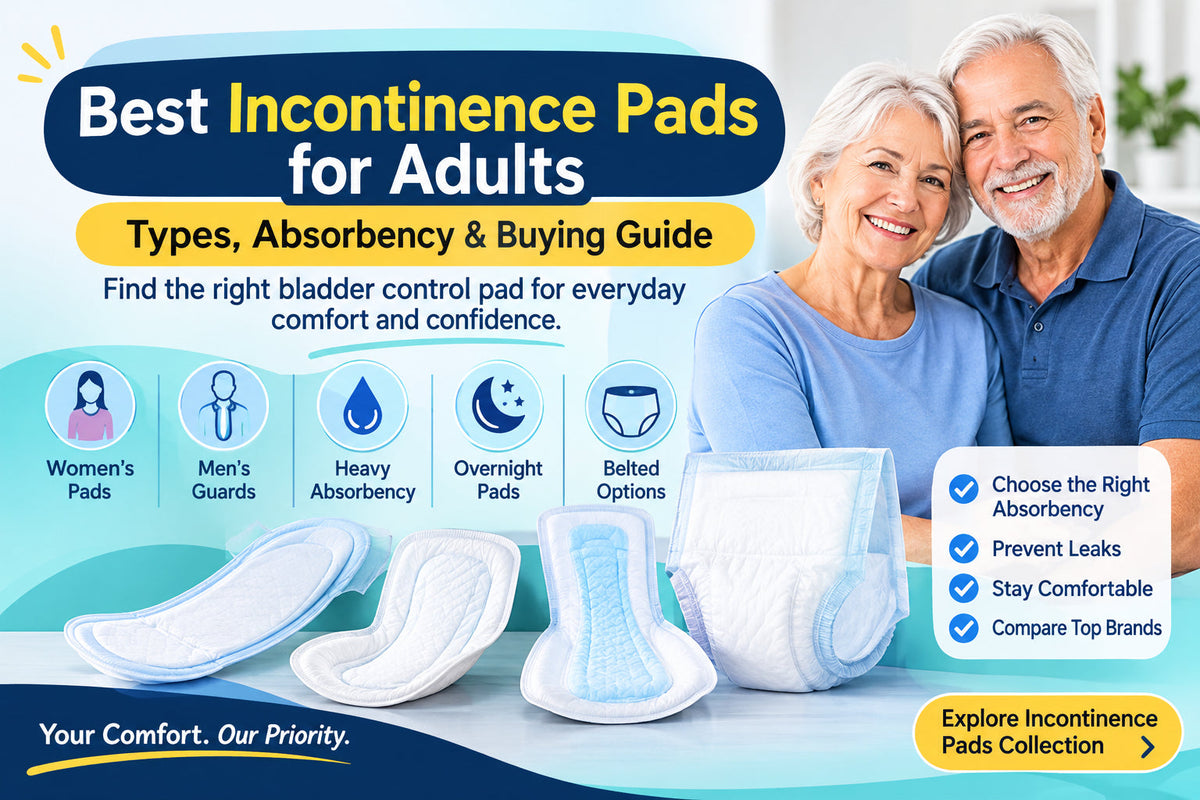
Choosing the best incontinence pads for adults can make everyday bladder leakage easier to manage. Whether you experience occasional drips, moderate urinary leakage, or heavier overnight needs, selecting the right absorbency and pad design is important for comfort, convenience, and confidence.
Adult incontinence pads are available in different shapes, sizes, and absorbency levels for men and women. Some are designed for light bladder leakage, while others offer more coverage for heavier urinary or bowel leakage. Understanding these differences can help you find a product that fits your daily routine.
In this guide, we'll explore the different types of incontinence pads, how to choose the right absorbency, what features to consider, and how to compare options from brands such as Poise, TENA, Prevail, Attends, and McKesson.
What Are Incontinence Pads and How Do They Work?
Incontinence pads are absorbent products designed to manage accidental urine or bowel leakage. They typically contain multiple layers that help absorb moisture, distribute fluid, and keep the surface feeling drier.
Most disposable incontinence pads feature an absorbent core, a moisture-resistant backing, and a soft top layer. Depending on the product, additional features may include odor-control technology, adhesive strips, or leak barriers.
Unlike regular sanitary pads, bladder control pads are specifically designed for urinary leakage. Their absorbent materials and product shapes are developed to manage different amounts and patterns of fluid.
Adult incontinence pads can be useful for people who experience occasional bladder leakage, have mobility limitations, or need additional protection during everyday activities.
Different Types of Incontinence Pads for Adults
Not every incontinence pad is designed for the same purpose. Choosing the right type depends on the amount of leakage, body shape, activity level, and personal preference.
1. Bladder Control Pads
Bladder control pads are designed for people experiencing occasional or regular urinary leakage. They are available in different absorbency levels and are commonly used during daily activities.
Many options include adhesive backing to help keep the pad positioned inside compatible underwear.
2. Incontinence Pads for Women
Incontinence pads for women are designed to fit the body's contours and help manage urinary leakage. They are available in thin, discreet styles as well as longer and more absorbent designs.
Some options are suitable for light bladder leakage, while others provide additional coverage for moderate or heavier needs.
3. Male Incontinence Guards
Male incontinence guards are shaped differently from traditional bladder control pads. Their contoured design is intended to fit male anatomy and provide targeted coverage.
They are available in different absorbency levels, making them an option for men who experience occasional drips or more frequent urinary leakage.
4. Bowel Incontinence Pads
Bowel incontinence pads are designed to help manage accidental bowel leakage. They differ from standard bladder control pads in their intended use, shape, and coverage.
People experiencing bowel leakage should select products specifically designed for that purpose rather than assuming a urinary pad will provide suitable protection.
5. Belted Incontinence Pads
Belted incontinence pads use an adjustable belt or fastening system to help hold the absorbent product in position.
They can be useful for people who need a different wearing style from conventional adhesive-backed pads, including individuals receiving assistance with personal care.
6. Pant Liners for Light Leakage
Light absorbency liners are generally thinner and more discreet than heavier incontinence products. They may suit people who experience occasional small leaks during activities such as exercise, coughing, sneezing, or laughing.
However, regular panty liners are not necessarily designed for urinary leakage. Choose products specifically labeled for bladder control when additional absorbency is needed.
How to Choose the Right Incontinence Pad Absorbency
Absorbency is one of the most important factors when selecting incontinence pads. A product that works for occasional drips may not provide enough coverage for heavier leakage.
Consider the following general comparison when shopping for adult bladder control pads.
| Absorbency level | Suitable considerations |
|---|---|
| Very light | Occasional small drips |
| Light | Minor leakage during everyday activities |
| Moderate | More frequent urinary leakage |
| Heavy | Larger amounts of leakage |
| Maximum | Products designed for higher absorbency needs |
These are general shopping categories. Actual absorbency varies by manufacturer and product, so always check the packaging and product specifications.
When comparing incontinence pads for heavy bladder leakage, look beyond the absorbency label. Consider the pad's dimensions, absorbent capacity, leak barriers, and how well its shape fits your body.
Best Incontinence Pads for Different Needs
The best incontinence pads for adults depend on individual leakage patterns, comfort preferences, and daily routines. Here are some product considerations for different situations.
Best Incontinence Pads for Light Bladder Leakage
For occasional drips, thin bladder control pads or light absorbency liners may be suitable. Look for discreet designs that fit comfortably inside underwear without excessive bulk.
Adhesive backing can also help reduce movement during normal daily activities.
Best Incontinence Pads for Heavy Bladder Leakage
People experiencing heavy bladder leakage may prefer products with larger absorbent cores and wider coverage.
Look for heavy or maximum absorbency incontinence pads, extended pad lengths, and leak barriers. A higher absorbency label does not guarantee a leak-free experience, so proper fit and timely changing remain important.
Best Overnight Incontinence Pads for Adults
Overnight incontinence pads for adults are designed for people who want additional coverage during extended periods of rest.
When comparing overnight incontinence pads, consider:
-
Longer pad designs for additional coverage.
-
Absorbent cores suited to your leakage needs.
-
Leak barriers around the edges.
-
A comfortable fit with suitable underwear.
-
Product instructions for overnight use.
If leakage regularly exceeds what a pad can manage, a higher-coverage product such as protective underwear or an adult brief may be more appropriate.
Best Incontinence Pads for Elderly Adults
Incontinence pads for elderly adults may have different product requirements depending on their mobility, dexterity, and personal care routine.
Easy-to-position pads, comfortable materials, and suitable absorbency can make product changes more manageable. For individuals who need assistance, belted products or other appropriate protective options may be worth considering.
Best Incontinence Pads for Active Daily Use
People who remain active throughout the day may prefer thinner pads with a contoured shape and secure positioning.
Consider incontinence pads for everyday use that fit comfortably inside underwear and are appropriate for the amount of leakage experienced during normal activities.
Incontinence Pads for Men vs. Women: What's the Difference?
Although both men and women can use general incontinence products, some pads are designed specifically for different body shapes.
Incontinence pads for women:
-
Often feature an elongated or contoured shape.
-
Are designed for placement inside compatible underwear.
-
Come in different lengths and absorbency levels.
-
Include discreet options for everyday use.
Male incontinence guards:
-
Usually feature a contoured pouch-like shape.
-
Are designed for male anatomy.
-
May include adhesive strips to help position the product.
-
Are available in different absorbency options.
The right choice depends on personal fit, leakage patterns, and product design rather than gender alone.
Incontinence Pads vs. Adult Diapers vs. Pull-Ups
Incontinence pads, adult diapers, and pull-ups are different product formats. Understanding their differences can help you choose the right option.
| Product type | Main design | Common consideration |
|---|---|---|
| Incontinence pads | Insert placed inside underwear | Occasional to heavier leakage, depending on product |
| Adult diapers | Full-coverage garment with fastening tabs | Higher coverage and assisted changes |
| Pull-ups | Absorbent underwear-style garment | Familiar underwear-like wearing style |
Incontinence pads may be suitable when additional absorbency is needed without wearing a full protective garment. Adult diapers and pull-ups may be more practical for people who require greater coverage or have difficulty managing separate pads.
The best option depends on mobility, changing assistance, leakage volume, and personal preference.
Features to Look for When Buying Incontinence Pads
Before purchasing disposable incontinence pads, compare the following features:
1. Absorbency
Select an absorbency level that matches your leakage needs. Review the manufacturer's product description rather than relying only on terms such as regular, heavy, or overnight.
2. Odor Control
Some incontinence pads include materials or technologies designed to help control unwanted odors. Check individual product specifications for details.
3. Leak Barriers
Raised edges or leak guards may help contain moisture and reduce leakage around the sides.
4. Adhesive Backing
Adhesive strips help hold compatible pads in place inside underwear. Check that the product is suitable for the underwear you normally wear.
5. Breathable Materials
Soft top sheets and breathable backing materials may contribute to wearing comfort, particularly during extended daily use.
6. Size and Coverage
Longer or wider incontinence pads may provide additional coverage for certain leakage patterns. Choose a design that fits comfortably without bunching or shifting.
7. Skin-Friendly Materials
People with sensitive skin may prefer soft materials and products with fewer potential irritants. Change pads when needed and keep the skin clean and dry.
How to Prevent Incontinence Pad Leaks
Even highly absorbent incontinence pads may leak if they do not fit correctly or are not suitable for the amount of leakage.
Use these practical tips to improve product performance:
-
Choose the right absorbency: Match the product to your usual leakage amount.
-
Position the pad correctly: Follow the manufacturer's instructions for placement.
-
Use compatible underwear: Choose underwear that provides enough support to hold the pad in position.
-
Change pads regularly: Replace the pad when it becomes wet, soiled, or reaches its recommended capacity.
-
Check for shifting: Make sure the pad is not folded, bunched, or displaced.
-
Select the right coverage: Consider longer or wider products if leakage occurs around the edges.
If leaks continue despite selecting an appropriate product, consider a different size, shape, or product format.
How Often Should You Change Incontinence Pads?
There is no single changing schedule that works for everyone. The frequency depends on the absorbency of the product, the amount of leakage, and the manufacturer's recommendations.
Consider changing an incontinence pad:
-
When it becomes wet or soiled.
-
When it approaches its absorbent capacity.
-
After bowel leakage.
-
When it becomes uncomfortable or shifts out of position.
-
According to the product's recommended usage instructions.
For overnight use, select a product specifically suited to your needs and follow the manufacturer's guidance. Check the skin regularly, particularly for people who need assistance with personal care.
Keeping the skin clean and dry can help reduce moisture-related irritation.
Frequently Asked Questions About Incontinence Pads
1. What are the best incontinence pads for adults?
The best incontinence pads for adults depend on the amount of leakage, body shape, and preferred wearing style. Compare absorbency, pad dimensions, leak barriers, and comfort features before choosing.
2. What are the best overnight incontinence pads for adults?
Look for overnight incontinence pads with suitable absorbency, extended coverage, and leak barriers. If a pad does not provide enough coverage overnight, consider a higher-coverage protective product.
3. Are incontinence pads better than regular sanitary pads?
Incontinence pads are specifically designed for urinary leakage and generally use absorbent materials suited to bladder control needs. Regular sanitary pads are designed for menstrual fluid and may not perform in the same way.
4. What incontinence pads are best for men?
Male incontinence guards are designed to fit male anatomy and provide targeted coverage. Choose an absorbency level based on the amount of urinary leakage.
5. How often should you change incontinence pads?
Change incontinence pads when they become wet, soiled, or approach their recommended capacity. Follow the manufacturer's instructions and maintain regular personal hygiene.
6. Can you wear incontinence pads overnight?
Yes, some incontinence pads are designed for overnight use. Choose an appropriate absorbency and coverage level based on your needs, and follow the manufacturer's usage guidance.
7. How do you keep incontinence pads from moving?
Use compatible, supportive underwear and position the pad according to the manufacturer's instructions. Adhesive-backed designs may also help keep products in place.
8. What is the difference between light and heavy absorbency incontinence pads?
Light absorbency incontinence pads are intended for smaller amounts of leakage, while heavy absorbency incontinence pads are designed to manage larger amounts. Actual capacity varies by brand and product.
9. Are incontinence pads suitable for elderly adults?
Yes. Different incontinence pad styles and absorbency levels are available for older adults. The best choice depends on mobility, leakage needs, comfort, and whether assistance is required during changes.
10. Can incontinence pads be used for bowel leakage?
Some incontinence pads are specifically designed for bowel leakage. Choose products labeled for this purpose because standard urinary pads may not provide the appropriate coverage or containment.
Find the Right Incontinence Pads at All Care Store
Choosing the right adult incontinence pad starts with understanding your absorbency needs, preferred fit, and daily routine. From discreet bladder control pads and male guards to heavier absorbency and belted options, comparing different product designs can help you find a suitable solution.
Explore the Incontinence Pads Collection at All Care Store to compare products from trusted brands, including Poise, TENA, Prevail, Attends, McKesson, and more.
Find an option that fits your personal care needs and everyday routine.