Note: This article is for informational and educational purposes only. Heavy menstrual bleeding (menorrhagia) can have medical causes including fibroids, endometriosis, hormonal imbalances, and bleeding disorders. If you consistently soak through a pad or tampon every hour for several consecutive hours, experience bleeding between periods, or have clots larger than a quarter, consult your healthcare provider.
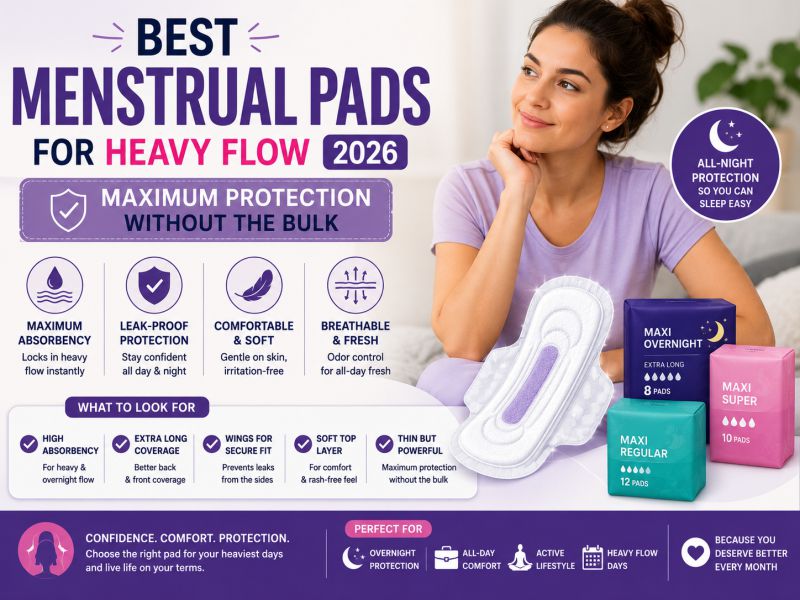
Best Menstrual Pads for Heavy Flow 2026: Maximum Protection Without the Bulk
Heavy Flow Is More Common Than You Think
Approximately one in five women experiences menorrhagia — clinically heavy menstrual bleeding, defined as soaking through a pad or tampon every hour for multiple hours, passing large clots, or bleeding for more than seven days. Yet heavy flow is systematically underreported and underdiagnosed, partly because many women assume their experience is simply their normal.
Whether your heaviest days involve going through pads every two hours or you're managing a medically heavy cycle, the right pad makes a genuine difference in confidence, comfort, and the mental load of managing protection through a full day. The wrong pad — under-absorbed, prone to leaking, or so bulky it feels like wearing a diaper — turns heavy period days into a source of anxiety rather than something manageable.
This guide covers everything about choosing pads for heavy flow in 2026: how to read absorbency claims, which pad features actually prevent leaks, and how to build a pad lineup that covers day, night, and everything in between.
Understanding Absorbency: What the Labels Actually Mean
Pad absorbency labeling in the US is not standardized the way tampon absorbency is (tampons use a regulated range in grams). Pad labels like "heavy," "overnight," "maxi," and "ultra" are marketing terms with no universal definition — a "heavy" pad from one brand may absorb significantly more or less than a "heavy" pad from another.
The most useful indicators of actual absorbency are:
Length: A longer pad has more surface area for fluid distribution and a larger backing area to prevent leaking at the front or back. Regular pads are typically 9–10 inches. Maxi and heavy pads run 11–13 inches. Overnight and extra-heavy pads often extend to 14–17 inches, with extended back coverage for leak protection when lying down.
Core thickness and material: Pad cores are typically made from fluff pulp (traditional), superabsorbent polymer (SAP) crystals, or a combination. SAP cores can absorb and lock away many times their weight in fluid and are now standard in premium pads. Thicker fluff cores absorb well but may feel bulkier; thin-core pads with SAP can absorb equivalent amounts with a much lower profile.
Wing design: Pads with wings — the adhesive flaps that fold under the underwear crotch — dramatically reduce side leaking. For heavy flow, wings are not optional; they are essential. Look for wider wings (approximately 2–3 inches on each side) that provide a secure wrap, especially during movement.
Multi-layer construction: Higher-end heavy flow pads use multiple functional layers: a moisture-wicking top sheet that pulls fluid away from the skin, a distribution layer that spreads fluid across the core before it can pool, a superabsorbent core, and a leak-barrier bottom. The quality of each layer contributes independently to performance.
Types of Pads for Heavy Flow
Maxi Pads (Daytime Heavy Protection)
The workhorse of heavy period management. Modern maxi pads have improved dramatically from earlier generations — current options are thinner, more absorbent, and better fitted than the thick rectangular pads of previous decades. Premium maxi pads offer body-contoured shapes that flex with movement, wider coverage zones toward the back (where leaks most commonly occur during forward bending), and dry-weave top sheets that keep skin dryer longer.
Best for: Heavy daytime flow, active lifestyles during heavy days, managing periods 2–4 hours between changes.
What to look for: Body-contoured or hourglass shape (rather than straight rectangular), SAP core for thin-and-absorbent combination, wide wings that hold securely, soft top sheet to minimize irritation during extended wear.
Overnight Pads
Overnight pads are longer and often wider at the back than daytime pads, designed for leak protection during the full range of sleep positions. Most overnight pads extend 13–16 inches, with coverage that extends further behind the waist than standard day pads.
The primary engineering challenge for overnight pads is back leaking — when lying flat or on one's side, flow gravity-shifts toward the back of the pad. Wider, longer rear coverage and a higher leak-guard barrier along the back edge are the features that determine whether an overnight pad genuinely works for heavy sleepers or heavy flow.
Best for: Overnight protection, heavy flow periods where daytime pads can't last 4+ hours, postpartum bleeding management, heavy medical periods.
What to look for: Rear-extended length (15+ inches is preferred for very heavy flow), raised side leak guards in addition to wings, flexible backing that moves with the body during sleep, moisture-wicking top sheet for overnight comfort.
Extra-Heavy / Ultra-Absorbent Pads
For the heaviest flow days — when even standard overnight pads don't last — extra-heavy pads offer maximum possible absorbency in a single pad. These are typically thick-core designs that prioritize capacity over profile. Some brands offer pads in this category specifically marketed for heavy menorrhagia or for postpartum use.
Best for: The first 1–2 days of a very heavy period, postpartum lochia management, breakthrough heavy days during perimenopause, nights when waking to change isn't acceptable.
What to look for: SAP core with maximum listed capacity, full-length back coverage, high leak guards, secure adhesive that holds through full saturation.
Thin / Slim Heavy-Absorbency Pads
Modern superabsorbent technology has made it possible to deliver heavy flow protection in pads that are significantly thinner than traditional maxi pads. Thin pads with SAP cores are less visible under clothing, more comfortable for active wear, and more discreet — while providing comparable or superior absorbency to thicker older designs. For many heavy flow users who previously avoided pads due to bulk, thin-core heavy pads represent a meaningful quality-of-life improvement.
Best for: Active lifestyle during heavy periods, preference for low-profile protection, office wear, exercise during moderate-heavy days.
What to look for: SAP core specifically noted (not just fluff pulp), length of 12+ inches for heavy protection in a thin format, wings.
Organic and Natural-Material Pads
A growing category for those who prefer to minimize exposure to synthetic materials, fragrances, or chlorine bleaching. Organic cotton pads use GOTS-certified organic cotton for the top sheet and sometimes the core. They are free from fragrances, dyes, and chemical treatments that can irritate sensitive skin. For heavy flow users who experience vulvar or skin irritation from conventional pads, organic cotton options are worth trying.
Note on absorbency: Organic pads vary widely in absorbency. Some organic brands have invested in SAP core technology; others rely on thicker cotton cores that are highly absorbent but bulkier. Check specific product descriptions carefully.
Comparing Key Features for Heavy Flow
| Feature | Why It Matters for Heavy Flow | What to Look For |
|---|---|---|
| Length | More surface area, front and back coverage | 12"+ for daytime; 15"+ for overnight |
| Core type | SAP absorbs and locks; prevents re-wet and leaking | SAP or SAP+fluff blend for heavy flow |
| Wings | Prevents side leaking during movement | Wide wings (2"+ each side); strong adhesive |
| Leak guards | Raised barriers that contain flow within the pad | Present on both sides; firm enough to channel flow |
| Top sheet | Affects skin dryness and comfort during extended wear | Dry-weave or moisture-wicking; not rough-textured |
| Shape | Contoured fit reduces bunching and shifting | Hourglass or body-contoured; not straight rectangular |
| Fragrance-free | Fragrances can cause irritation during extended heavy-period wear | Unscented is preferred for sensitive skin |
Building a Heavy Flow Pad Lineup
One pad size rarely covers all needs throughout a period. Heavy flow cycles typically benefit from a three-tier approach:
Tier 1 — Heaviest days (days 1–2): Use your maximum-absorbency option during the day, changing every 2–3 hours, and an extra-heavy overnight pad for sleep. Keep spare pads accessible and consider period underwear as a backup layer for particularly heavy days.
Tier 2 — Moderate-heavy days (days 3–4): Transition to a standard maxi or heavy pad for daytime, changing every 3–4 hours. Continue overnight pads for sleep.
Tier 3 — Lighter days (days 5–7): Regular or moderate-absorbency pads as flow decreases. Some heavy-flow users find they prefer to continue using a longer pad into lighter days for security, which is perfectly fine.
Having the right inventory means you're not caught in a position of using an under-absorbent pad on a heavy day or an over-engineered pad on a light day. Stocking 2–3 pad sizes ensures you have the right protection for every stage of your cycle.
Postpartum and Lochia: A Special Case
Postpartum bleeding (lochia) follows delivery and can be significantly heavier than any menstrual period, particularly in the first 3–5 days. Hospital-grade maternity pads are specifically designed for postpartum use — they are wider, longer, and made with soft materials appropriate for perineal soreness. Standard heavy menstrual pads can be used once the heaviest postpartum flow subsides (typically after day 4–5), but maternity pads are recommended for the immediate postpartum period.
After cesarean or vaginal delivery, avoid tampons and menstrual cups until cleared by your OB (typically 6 weeks postpartum). Pads are the appropriate product for the entire lochia period.
Skin Sensitivity and Irritation
Extended pad wear during heavy periods increases the risk of skin irritation, contact dermatitis, and heat rash in the vulvar area. To minimize irritation:
- Change pads frequently: Even if a pad isn't fully saturated, extended contact between moist pad materials and skin increases irritation risk. Change at least every 4 hours during the day, regardless of saturation.
- Choose fragrance-free: Fragrances are among the most common causes of vulvar contact dermatitis from pad use. If you experience itching, burning, or redness, switch to unscented pads immediately.
- Try organic cotton: If conventional pad materials cause consistent irritation, organic cotton top sheets eliminate several potential irritants simultaneously.
- Allow airflow when possible: When at home and not requiring pad protection, allowing the vulvar area to air out reduces heat and moisture accumulation.
- Barrier protection: A thin layer of petroleum jelly or barrier cream on the outer labia can reduce friction and moisture irritation during extended heavy-period wear.
Period Underwear as a Complement to Pads
Period underwear — underwear with built-in absorbent layers — has matured significantly as a product category and can serve as either a standalone solution for lighter days or a backup layer for heavy flow days when used alongside a pad. For heavy flow, period underwear alone is typically not sufficient for the heaviest hours, but wearing period underwear underneath a pad provides an extra layer of leak protection that many heavy-flow users find gives them the confidence to go about their day without constant anxiety about leaking.
When Heavy Periods Warrant Medical Attention
Heavy menstrual bleeding is a legitimate medical symptom with identifiable, treatable causes. Seeking evaluation is appropriate if you:
- Consistently soak through a pad or tampon every hour for two or more consecutive hours
- Pass clots larger than a quarter regularly
- Bleed for more than 7 days per cycle
- Experience significant fatigue, pallor, or shortness of breath during your period (signs of anemia from blood loss)
- Have new-onset heavy bleeding after a period of lighter cycles
- Have heavy bleeding accompanied by significant pelvic pain beyond normal cramping
Causes of heavy menstrual bleeding include uterine fibroids, polyps, adenomyosis, endometriosis, thyroid disorders, bleeding disorders (such as von Willebrand disease), and hormonal imbalances. Many of these are highly treatable. Managing heavy periods entirely through pad selection when an underlying cause is present delays treatment that could improve your quality of life significantly.
Shop Feminine Hygiene and Personal Care at AllCare Store
AllCare Store carries a wide range of feminine hygiene and personal care products, including pads, liners, and related care items. Browse our personal care collection for the full selection, or explore everything we carry at allcarestore.com.
- Free Shipping on every order — no minimum required
- Discreet Packaging — all orders arrive in plain, unmarked packaging
- 30-Day Returns — shop with confidence
- Expert Help — reach our team at 1-888-889-6260, Monday–Friday 7 AM–4 PM CST
Frequently Asked Questions: Pads for Heavy Flow
What is the most absorbent menstrual pad available?
The highest-absorbency consumer pads are typically overnight or extra-heavy pads in the 15–17 inch range with superabsorbent polymer (SAP) cores. Products in this category can absorb 30–40+ mL of fluid — well above the 10–35 mL that constitutes a typical period. For postpartum use or very heavy medical periods, hospital-grade maternity pads provide maximum coverage and absorbency specifically designed for high-volume bleeding. When shopping for maximum absorbency, look for specific length (15"+ overnight) and SAP core construction rather than relying on marketing terms like "ultra" or "extreme" which are not standardized.
How often should I change my pad with a heavy period?
During heavy flow, change your pad at least every 2–4 hours during the day, regardless of whether it appears full. Changing frequently reduces the risk of skin irritation, odor, and the discomfort of wearing a saturated pad. For health and hygiene, pads should never be worn for more than 8 hours continuously even if not fully saturated. During your heaviest hours (often the first 1–2 days), you may need to change every 1–2 hours. If you are soaking through a fully fresh heavy pad in under an hour consistently, that warrants a conversation with your healthcare provider, as that level of flow can cause anemia.
Why do pads leak even when not full?
Pads most often leak not because they're saturated but because of positioning or flow channeling issues. The most common causes of leaking before saturation: the pad has shifted out of position (a wings issue — make sure wings are folded securely under the underwear); the flow is rapid and pools faster than the pad can distribute it (the fluid hits one spot and overflows before spreading); the pad is too short for your body's geometry or sleep position; or the underwear fit is allowing the pad to move. Solutions include ensuring wings are firmly placed, choosing a longer pad with a wider coverage area, and selecting pads with raised leak guards that channel flow inward rather than over the sides.
Are overnight pads safe to use during the day for heavy flow?
Yes — using overnight pads during the day is completely safe and a practical strategy for very heavy flow days. The only practical consideration is comfort and discretion: overnight pads are longer and may be slightly more visible under fitted clothing than daytime options. For very heavy day-one or day-two flow, many women find overnight pads more comfortable and reliable than even "heavy daytime" pads because of the extended coverage and higher absorbency capacity. There's no medical reason to restrict overnight pads to nighttime use.
What pads are best for heavy flow with sensitive skin?
For heavy flow with sensitive skin, look for: fragrance-free (no scented versions), organic cotton top sheet if possible, no dyes or bleaching agents (unbleached or chlorine-free bleached), and a soft rather than mesh-textured top layer. Brands offering organic cotton heavy pads combine good absorbency with skin-gentler materials. Additionally, change pads more frequently during your heaviest days to minimize the time moisture is in contact with skin, and consider a thin barrier cream on the outer labia to reduce friction during extended wear. If you consistently experience itching or burning with conventional pads, switching to an organic cotton option is the most impactful first change to make.