Medical Disclaimer: This article is for informational and educational purposes only. Nebulizers are medical devices typically used with prescription medications. Always use a nebulizer under the guidance of your physician, and follow your prescribed treatment plan. If you are experiencing a severe asthma attack or respiratory emergency, call 911 or go to the nearest emergency room immediately.
Best Nebulizers for Home Use 2026: The Complete Buyer's Guide
Linda's First Winter Without an ER Visit
Linda, 58, has had moderate persistent asthma since her mid-40s. For years, her winters followed a predictable and exhausting pattern: a respiratory infection would hit in November or December, her asthma would spiral out of control, and somewhere around day four she'd find herself in the emergency room getting back-to-back breathing treatments. It happened in 2019, 2020, and 2022. In 2023, her pulmonologist made a single change to her home management plan: he prescribed a home nebulizer with a short-acting bronchodilator, with instructions to use it at the first sign of significant symptom worsening instead of relying solely on her rescue inhaler.
That winter, she had a respiratory infection in December. Symptoms worsened on day two. She used the nebulizer four times over two days as instructed, rested aggressively, called her doctor's office for guidance — and never ended up in the ER. "It felt like having a safety net at home," she said. "Instead of waiting until things were bad enough to drive myself to the hospital, I could actually do something."
For millions of Americans with asthma, COPD, bronchiectasis, cystic fibrosis, and other respiratory conditions, a home nebulizer is exactly that: a safety net and a management tool that can reduce exacerbations, ER visits, and hospitalizations when used correctly. This guide explains how to choose the right one. When you're ready to shop, AllCare Store carries a curated selection of home and portable nebulizers from leading brands with free shipping on qualifying orders.
How Nebulizers Work
A nebulizer converts a liquid medication — bronchodilators like albuterol, anticholinergics like ipratropium, corticosteroids, hypertonic saline, or antibiotics — into a fine aerosol mist that can be inhaled directly into the airways and lungs. This method of delivery is particularly valuable when:
- The patient has difficulty coordinating inhaler use (young children, elderly patients, or those with severe breathlessness)
- Higher doses of medication are needed than a standard inhaler can deliver
- Continuous medication delivery over several minutes is therapeutically beneficial
- The patient is too breathless to use an inhaler effectively
The key advantage over inhalers isn't necessarily efficacy (studies show inhalers with spacers are equally effective for many patients in stable conditions) — it's that nebulizers require only normal tidal breathing, not forceful inhalation or breath-holding coordination, making them more practical during active exacerbations.
Types of Nebulizers: Jet vs. Ultrasonic vs. Mesh
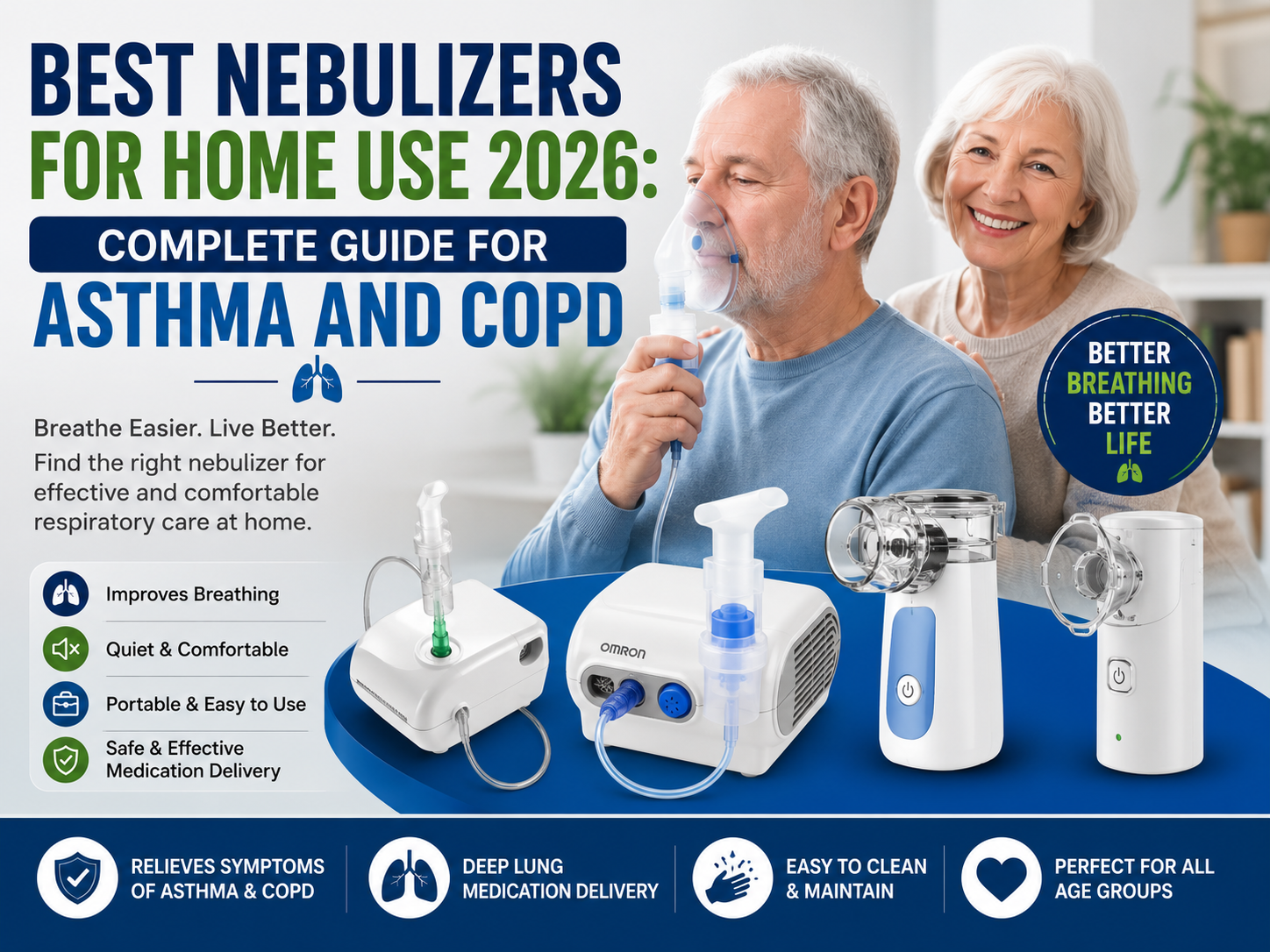
There are three main technologies, each with distinct trade-offs:
1. Jet (Compressor) Nebulizers
Jet nebulizers use compressed air forced through a narrow tube to create a high-velocity airstream that breaks liquid medication into fine droplets. They are the most widely used, most affordable, and most thoroughly tested type — the standard in hospitals and the type most physicians are familiar with prescribing for.
Pros: Low cost (often $30–$80); works with virtually all nebulizable medications including viscous solutions; durable and reliable; replacement parts widely available; extensive clinical data supporting use.
Cons: Loud (the compressor generates 45–65 dB — noticeable in a quiet room); larger and less portable; treatment times of 10–15 minutes; requires AC power (some models have battery or car adapter options); residual medication in the cup after treatment.
Best for: Home use, adults and children, cost-conscious buyers, standard asthma and COPD management, patients who need to nebulize a wide variety of medications.
2. Ultrasonic Nebulizers
Ultrasonic nebulizers use high-frequency sound waves (piezoelectric transducer) to vibrate liquid into a mist. They are quieter than jet nebulizers and produce no heat from a compressor.
Pros: Quieter operation; faster treatment times; no compressor motor.
Cons: Not compatible with suspension medications (such as budesonide); the vibration generates some heat which can degrade certain medications; generally more expensive than jet nebulizers; less commonly used in clinical practice.
Best for: Patients using saline solutions or specific compatible medications; situations where noise is a significant concern.
3. Vibrating Mesh Nebulizers
Mesh nebulizers use a plate with thousands of tiny apertures that vibrate to produce an extremely fine, consistent aerosol. They represent the current technological high point in nebulizer design.
Pros: Nearly silent operation; very fast treatment times (5–8 minutes vs. 10–15 for jet); highly portable (battery-operated, often palm-sized); efficient medication delivery with minimal residual waste; compatible with most medications including suspensions.
Cons: Significantly more expensive ($80–$300+); mesh requires careful cleaning to prevent clogging; more sensitive to medication viscosity; replacement mesh plates needed over time.
Best for: Active patients who need portability; travel; pediatric use where treatment time and noise are concerns; patients who can invest in a premium device.
How to Compare Nebulizer Specifications
| Specification | What It Means | What to Look For |
|---|---|---|
| Particle size (MMAD) | Mass median aerodynamic diameter — average size of aerosol droplets | 1–5 microns for lower airway (asthma/COPD); 1–3 microns for deepest penetration |
| Output rate | How much medication is aerosolized per minute (mL/min) | 0.2–0.5 mL/min for portable; 0.3–0.8 mL/min for tabletop |
| Treatment time | Time to nebulize a standard 3 mL dose | 5–8 min (mesh); 10–15 min (jet) |
| Residual volume | Medication remaining in cup at end of treatment | Lower is better; <0.5 mL for mesh nebulizers |
| Noise level | Decibels generated during operation | <45 dB for quiet use; mesh nebulizers typically <35 dB |
| Cup capacity | Maximum medication volume the nebulizer cup holds | 6–8 mL capacity is standard for flexibility |
| Power source | AC only, battery, or both | Both options ideal for home + travel use |
Top Nebulizer Categories at AllCare Store
Browse AllCare Store's Nebulizers collection for a full range of home and portable nebulizers. Here's a breakdown of what you'll find:
Standard Home Compressor Nebulizers
Reliable tabletop jet nebulizers for daily or as-needed home use. These workhorses are ideal for patients who primarily nebulize at home and need durability and broad medication compatibility above portability. Look for models from PARI, Philips Respironics, and Drive Medical — brands with decades of clinical use data and widely available replacement parts.
Portable Battery-Powered Nebulizers
Compact compressor nebulizers that run on rechargeable batteries or AA cells. Excellent for travel, work use, or any situation where outlet access is unreliable. Quieter than full-sized compressors, though typically with slightly longer treatment times than mesh devices.
Mesh Nebulizers
Handheld, whisper-quiet, and extremely fast. The best choice for active patients, children, frequent travelers, and anyone who finds traditional nebulizer treatment too time-consuming. Higher upfront cost, but the combination of efficiency, portability, and noise reduction is often worth it for the right patient.
Pediatric Nebulizers
Many pediatric nebulizers come with child-friendly design elements — animal shapes, colorful masks, distraction features — that significantly improve compliance in young patients who resist treatments. Pediatric masks (for children ages 0–5) should be properly sized for an effective seal; most nebulizer kits include both adult and pediatric mask sizes.
Choosing the Right Nebulizer for Your Situation
For Home-Based Asthma or COPD Management
A quality jet compressor nebulizer is the most cost-effective starting point. Look for one with a PSI of 35–45 (adequate for most bronchodilators and nebulizable medications), a 6-mL or larger cup, and a manufacturer warranty of at least 2 years. Ensure replacement parts (tubing, cups, filters, masks) are readily available and reasonably priced — ongoing supply costs matter as much as the initial device price.
For Frequent Travelers or Active Patients
Invest in a mesh nebulizer. The ability to use it without a power outlet, the small footprint, and the near-silent operation make it practical in a hotel room, car, or workplace. Many mesh nebulizers are USB-rechargeable and can fit in a coat pocket. The higher upfront cost is offset by the lifestyle flexibility for patients who need treatments outside the home.
For Children
Pediatric-specific nebulizers with appropriate masks and shorter treatment times (mesh nebulizers are ideal here) significantly improve compliance. A child who sits still for 6 minutes is easier to manage than one who must endure a 15-minute treatment. Ensure the mask seals properly — a poor seal dramatically reduces medication delivery. Ask your pediatrician or respiratory therapist to check mask fit at your next visit.
For COPD with Frequent Exacerbations
Patients with COPD who experience frequent exacerbations may benefit from having both a home compressor nebulizer (for daily maintenance treatments) and a portable mesh nebulizer (for use outside the home or during travel). Discuss with your pulmonologist which medications are appropriate for nebulization at home during early-stage exacerbations versus when you need to seek urgent care.
Nebulizer Maintenance: Critical for Safety and Effectiveness
A poorly maintained nebulizer is a liability. Bacterial contamination of nebulizer cups and tubing is a known cause of respiratory infections — the very problem you're using the nebulizer to manage. Follow this maintenance routine rigorously:
After Every Treatment
- Disassemble the nebulizer cup and mouthpiece/mask
- Rinse all parts that contacted medication with warm water
- Allow to air dry completely on a clean cloth — do NOT use paper towels, which can leave fibers
- Reconnect to tubing only when fully dry
Daily Cleaning
- Wash disassembled cup and accessories in warm soapy water (dish soap is fine)
- Rinse thoroughly to remove all soap residue
- Air dry completely
Weekly Disinfection
- Soak cup and accessories in a 1:3 white vinegar/water solution for 30 minutes, OR a diluted bleach solution (1 teaspoon bleach per 2 cups water) for 3 minutes
- Rinse thoroughly and allow to dry completely
- Never disinfect tubing (it is not washable and should be replaced every 6 months or per manufacturer guidance)
- For mesh nebulizers: clean the mesh surface with the cleaning tool provided; never use sharp objects or excessive pressure on the mesh plate
Replacement Schedule
Replace nebulizer cups and masks every 6 months or as directed by the manufacturer. Replace tubing every 3–6 months. Replace filters in compressor nebulizers per the manufacturer schedule (typically every 6 months). Check for cracks or discoloration in any plastic components — replace if damaged.
Find replacement nebulizer supplies — cups, tubing, masks, and filters — in AllCare Store's Respiratory Care collection.
Medication Tips for Home Nebulizer Use
- Only use medications prescribed by your physician for nebulizer use — not all inhaled medications are formulated for nebulization
- Use pre-measured unit-dose vials when available — they reduce contamination risk and dosing errors
- Store medication at the temperature specified on the label; many bronchodilator solutions should be kept at room temperature and used within a specific period after opening
- Do not mix medications in the nebulizer cup unless your physician or pharmacist has confirmed compatibility
- If using hypertonic saline, use nebulizer-grade sterile saline only — not homemade solutions, which carry contamination risk
Frequently Asked Questions: Home Nebulizers
Do I need a prescription for a home nebulizer?
The nebulizer machine itself typically does not require a prescription to purchase. However, the medications used with it — such as albuterol, ipratropium, or budesonide inhalation suspension — are prescription-only. For insurance coverage of both the nebulizer and medications, a physician's prescription (and in some cases, a certificate of medical necessity) is typically required. Medicare Part B covers nebulizers and related supplies as Durable Medical Equipment (DME) when medically necessary and properly documented.
Is a nebulizer better than an inhaler for asthma?
For most patients with stable asthma, studies show that inhalers with spacers are equally effective to nebulizers for delivering bronchodilators. Nebulizers are not inherently superior — they're a different delivery method that offers specific advantages. Nebulizers shine when patients cannot coordinate inhaler use effectively (very young children, elderly patients, severe breathlessness during exacerbations), when continuous delivery is beneficial, or when higher doses are needed. For moderate-to-severe exacerbations and patients who struggle with inhaler technique, nebulizers are often more practical and reliably effective.
How often should I replace my nebulizer machine?
Quality compressor nebulizers typically last 3–5 years with proper maintenance. Performance degrades over time — if treatment times are significantly longer than when the machine was new, or if the compressor sounds different, it may be time for replacement. The nebulizer cups and accessories should be replaced much more frequently (every 6 months). Medicare and most insurance plans typically replace covered nebulizers every 5 years. Check with your insurer about your specific replacement benefit.
Can I use tap water in my nebulizer?
Never use tap water in a nebulizer for cleaning the medication cup or as a diluent for medications. Tap water contains minerals, bacteria, and other contaminants that can cause respiratory infections, particularly dangerous for people with lung disease. Always use sterile saline or distilled water as directed for medication dilution, and use distilled or sterile water for rinsing if your physician advises a water rinse. For cleaning and disinfection of the equipment itself, tap water is acceptable when followed by the proper disinfection steps.
What is the difference between a nebulizer and a CPAP machine?
These are completely different devices serving different purposes. A nebulizer converts liquid medication into an inhalable mist for treating respiratory conditions like asthma or COPD — it delivers medication. A CPAP (Continuous Positive Airway Pressure) machine delivers pressurized air to keep the airway open during sleep, treating obstructive sleep apnea — it does not deliver medication. Some patients with sleep apnea who also have asthma or COPD use both devices, but for entirely separate conditions.
The Bottom Line: Finding Your Fit
Linda's experience illustrates what a home nebulizer can mean for the right patient: not a replacement for proper ongoing management, but a tool that gives you real options during the critical window when respiratory symptoms are worsening but haven't yet become emergencies. The right nebulizer, used correctly with prescribed medication, as part of a written asthma or COPD action plan developed with your physician, can meaningfully change how your condition affects your life.
The key is matching the device to your specific situation — your medications, your lifestyle, your ability to maintain the equipment — rather than simply choosing the cheapest or the most feature-rich option. When in doubt, ask your pulmonologist or respiratory therapist for a recommendation specific to your condition and the medications you use.
Shop AllCare Store's full Nebulizer collection, including tabletop compressors, portable mesh nebulizers, pediatric kits, and replacement supplies. Free shipping on qualifying orders. Questions? Our team is available at 1-888-889-6260 or at AllCareStore.com.
— The AllCare Store Team