Note: This article is for informational purposes only. Night sweats can be a symptom of underlying medical conditions including menopause, infections, medications, hormone disorders, or sleep apnea. If you experience frequent or severe night sweats, consult your healthcare provider to rule out treatable causes. Bedding changes can improve comfort but do not treat the underlying cause.
Best Sheets for Night Sweats 2026: What Actually Works (And What Doesn't)
Why the Right Sheets Change Everything
Carol was waking up three or four times a night. Not from noise, not from pain — from her own sheets. At 52, she was in the thick of perimenopause, and the night sweats that came with it had turned her once-restful bed into something she dreaded. Her standard cotton sheet set — the one she'd had for years — absorbed moisture but never released it, leaving her lying in a damp, clammy layer that cooled rapidly and made her shiver until the next hot flash started the cycle again.
Her sleep specialist suggested two things: keep the bedroom cooler and switch her bedding. She was skeptical. Sheets are sheets, she thought. But three weeks after switching to a bamboo-derived viscose set, she was sleeping through the night more than half the time. The sheets wicked moisture away from her skin quickly enough that even when a sweat episode hit, she wasn't waking up to that soaked, cold sensation. The total cost of the change was less than a single night's worth of lost productivity from sleep deprivation.
Carol's experience is not unusual. The science behind sheet materials and moisture management is real — and the differences between fabrics are meaningful enough to matter on the worst nights.
What Causes Night Sweats — And Why Sheets Matter
Night sweats (clinically: sleep hyperhidrosis) happen when the body's thermoregulation system triggers sweating during sleep — sometimes from hormonal shifts (menopause, andropause, thyroid dysfunction), sometimes from medications (antidepressants, certain blood pressure drugs, steroids), sometimes from infections, sleep apnea, anxiety disorders, or simply from sleeping in an environment that's too warm.
Whatever the cause, the physiology is the same: the body produces sweat to cool itself, and that moisture needs somewhere to go. Standard sheets trap moisture against the skin. The best sheets for night sweats move moisture away from the body and release it quickly into the air — a property called moisture-wicking or moisture transport. This keeps the sleep surface drier and prevents the uncomfortable clammy-cooling cycle that wakes most people up.
Sheet materials also vary significantly in how much heat they trap. Thread count, weave structure, and fiber type all influence whether a sheet breathes or suffocates — and the answers are often counterintuitive.
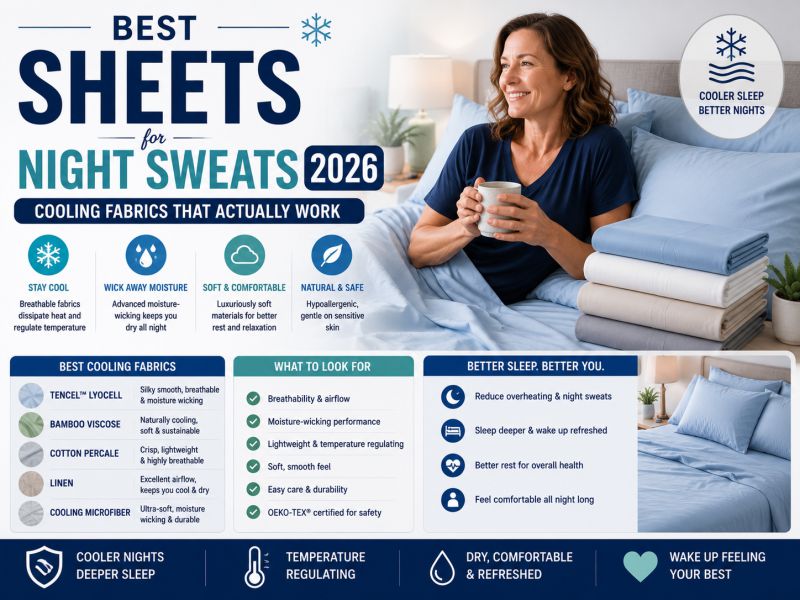
The 5 Best Sheet Materials for Night Sweats (Ranked)
1. Bamboo-Derived Viscose / Bamboo Rayon — Best Overall
Sheets marketed as "bamboo" are almost always made from bamboo-derived viscose (sometimes called bamboo rayon or bamboo lyocell, depending on the manufacturing process). Whatever the specific process, the resulting fiber is soft, breathable, and genuinely excellent at moisture management.
Why it works for night sweats: Bamboo-derived fibers are naturally moisture-wicking, pulling sweat away from the skin and releasing it into the air faster than standard cotton. They are also thermoregulating — they feel cool against hot skin and warm against cool skin, which is particularly helpful during the temperature swings that accompany hormonal night sweats. The fabric is also hypoallergenic and gentle on sensitive skin.
What to look for: Thread counts of 250–350 are ideal (higher is not better in bamboo — excessively high thread counts often indicate multi-ply yarn that reduces breathability). Look for OEKO-TEX certification to ensure the fabric is free from harmful chemicals used in the rayon conversion process.
Limitations: Bamboo-derived sheets require more careful laundering (cool or warm wash, low-heat dry) and can lose softness if washed on hot settings repeatedly. True Lyocell (the Tencel brand being the most recognized) is produced via a closed-loop solvent process that is more environmentally sustainable than standard viscose processing.
2. Tencel Lyocell — Best for Sensitive Skin and Sustainability
Tencel is the trade name for Lyocell fiber produced by Lenzing AG. It's made from wood pulp (typically eucalyptus) using a closed-loop solvent process that recycles nearly all chemicals and water — making it one of the most sustainable textile options available. The fiber itself has properties similar to bamboo-derived viscose but with slightly more consistent quality control due to the standardized production process.
Why it works for night sweats: Tencel Lyocell is exceptionally smooth (reducing skin friction that can worsen heat perception), absorbs moisture readily, and releases it quickly through evaporation. Like bamboo, it has natural thermoregulating properties. It is also naturally resistant to bacterial growth, which helps prevent the odor that can develop in moisture-saturated conventional sheets.
What to look for: Tencel-blend sheets (often Tencel + cotton) can be more durable than 100% Tencel while retaining most of the moisture management benefits. Look for the Tencel brand certification on the label.
3. Percale Weave Cotton — Best Breathable Cotton Option
Not all cotton sheets are equal when it comes to hot sleeping. The weave structure matters as much as the fiber. Percale cotton uses a simple one-over-one-under weave that creates a tight, matte finish with a cool, crisp feel — similar to a high-quality dress shirt. This structure allows significantly more air circulation than sateen weave cotton.
Why it works for night sweats: Percale's looser, more open weave allows airflow through the fabric, preventing heat buildup. It also gets better with washing, softening without pilling over time. The crisp, cool initial feel is a major advantage for people who run hot.
What percale is NOT: Percale is not particularly moisture-wicking — it absorbs sweat (like all cotton) but doesn't transport it away actively. For mild night sweats, it works well. For heavy sweating, it will eventually feel damp, though it won't feel as clammy as sateen or flannel.
Thread count sweet spot: 200–400 thread count in percale is optimal. Above 400, the weave becomes less breathable. Egyptian cotton or long-staple cotton percale (Pima, Supima) will be softer and more durable than standard short-staple cotton percale.
4. Moisture-Wicking Performance Polyester / Microfiber — Best Budget Option
Athletic-inspired moisture-wicking fabric technology has made its way into bedding. Microfiber polyester sheets with moisture-wicking treatments are the most affordable option for night sweat management and perform meaningfully better than untreated cotton for active moisture transport.
Why it works: The synthetic fiber structure and surface treatments pull moisture away from the skin through capillary action, similar to athletic clothing. They dry very quickly and are machine washable on warm with no special care.
Limitations: Polyester does not breathe as well as natural or semi-natural fibers and can feel warmer in hot environments even with moisture-wicking treatments. Some people find synthetic sheets less comfortable against bare skin. They are less sustainable than bamboo or Tencel options. However, they are significantly cheaper and still outperform untreated cotton for moisture management.
5. Linen — Best for Hot Climates and Extreme Hot Sleepers
Linen (woven from flax fiber) is among the most breathable natural fabric options available. It has a distinctive textured feel that some people love and others find scratchy, but its airflow properties are exceptional — better than cotton by a significant margin.
Why it works for hot sleepers: Linen's open weave structure allows maximum airflow, and the fiber itself absorbs up to 20% of its weight in moisture before feeling damp. It also dries very quickly. Linen sheets get progressively softer with each wash.
Limitations: Linen is the most expensive natural fiber option, wrinkles significantly, and the initial feel before break-in can be rough for sensitive skin. It is not actively moisture-wicking in the way bamboo or Tencel are — it absorbs well but doesn't transport moisture away as efficiently.
What NOT to Buy If You Have Night Sweats
| Fabric / Weave | Why to Avoid |
|---|---|
| Flannel / Fleece | Designed to trap heat; excellent in winter for cold sleepers, actively harmful for hot sleepers or night sweaters |
| Sateen weave cotton | Silky finish creates a tight weave that restricts airflow; feels luxurious but runs warm; poor choice for night sweats |
| Very high thread count cotton (600+) | Higher thread counts use multi-ply yarn that is denser and less breathable; marketing often overstates quality |
| Polyester blends without moisture-wicking treatment | Untreated polyester traps heat and moisture against the skin; classic "sweating in plastic" feel |
| Silk | Luxurious but not a good moisture manager; absorbs poorly, difficult to launder, expensive — not worth it for heavy night sweaters |
Thread Count: The Biggest Myth in Sheet Shopping
Thread count has been so thoroughly marketed as a quality indicator that most people instinctively reach for the highest number on the shelf. For night sweats, this is exactly wrong.
Thread count measures the number of threads woven per square inch of fabric. Up to a point (around 400 for single-ply cotton percale), higher thread count correlates with a finer, softer fabric. Above that, manufacturers use multi-ply yarns (two threads twisted together counted as one) to inflate the number on the label — and these denser fabrics actually breathe less and trap more heat.
For hot sleepers: a 200–400 thread count percale cotton, or a 250–350 thread count bamboo or Tencel set, will sleep dramatically cooler than a 1,000 thread count sateen sheet — regardless of what the marketing says.
Night Sweats by Cause: Which Sheets Help Most
Menopause and Perimenopause
Hormonal night sweats during menopause and perimenopause tend to be intense and unpredictable — sometimes producing significant amounts of sweat in a short window. Bamboo-derived viscose or Tencel sheets perform best here because of their active moisture transport (wicking sweat away quickly) combined with thermoregulation (preventing the clammy chill that follows). Pairing cooling sheets with a moisture-wicking mattress protector extends the comfort window significantly.
Medication-Induced Night Sweats
Several common medications — SSRIs, SNRIs, certain blood pressure drugs, and hormone therapies — can trigger night sweats as a side effect. The pattern is often consistent but less intense than menopausal sweating. Percale cotton or moisture-wicking microfiber are both effective options at a lower price point than premium bamboo or Tencel sets.
General Hot Sleeping (Without Medical Cause)
Some people simply run warm in bed. For chronic hot sleepers without episodic sweating, linen or percale cotton (especially with a lower thread count) combined with a cooling mattress topper addresses the problem most completely. Room temperature is also a major factor — the Sleep Foundation notes that a bedroom temperature of 65–68°F is optimal for most adults.
Seniors with Temperature Dysregulation
Older adults often have more difficulty maintaining consistent body temperature during sleep. The alternating hot/cold cycles of night sweats are particularly disruptive in this population. Bamboo or Tencel sheets' thermoregulating properties — helping the body stay neither too hot nor too cold — make them the strongest choice for seniors experiencing temperature regulation difficulties.
Beyond Sheets: A Complete Cooling Sleep System
Sheets are the most accessible and impactful change, but a complete cooling sleep system addresses several layers:
- Mattress protector: A moisture-wicking mattress protector under the fitted sheet adds a waterproof barrier while extending the dryness of the sleep surface. Look for ones with bamboo or Tencel surfaces rather than standard plastic-backed cotton covers.
- Pillow covers: The face and head are major heat-release points during sleep. Cooling pillow covers (bamboo or Tencel) or phase-change material pillows can reduce facial flushing and head sweating significantly.
- Duvet/comforter fill: Down alternative fills and Tencel-covered comforters breathe better than synthetic polyester fills or heavy down. Lightweight warmth — rather than insulating warmth — is the goal for hot sleepers.
- Room temperature: No sheet material fully compensates for a room that's 75°F or above. Target 65–68°F for optimal sleep.
- Fan or air circulation: Moving air promotes evaporation from sheets, amplifying moisture-wicking performance.
Care Instructions to Preserve Cooling Properties
The moisture-wicking and breathability properties of bamboo and Tencel sheets can degrade with improper laundering:
- Wash in cool or warm water (not hot). Hot water breaks down bamboo and Tencel fibers faster.
- Use a gentle, fragrance-free detergent. Heavy detergents and fabric softeners coat fibers and reduce moisture-wicking performance.
- Avoid fabric softeners. They leave a residue on bamboo and Tencel that reduces breathability — the main reason many people notice their "cooling sheets" stop performing after several washes.
- Tumble dry on low or line dry. High heat shrinks bamboo and Tencel and degrades the fiber structure.
- Wash more frequently if night sweats are heavy. Salt and protein deposits from sweat break down fibers faster; weekly washing is appropriate.
What to Look for When Shopping
When evaluating cooling sheet sets, check for these specific indicators:
- Fiber certification: OEKO-TEX Standard 100 certifies that the fabric is free from harmful chemicals — important for bamboo and Tencel, where processing chemicals can be a concern.
- Weave specification: "Percale" for cotton; viscose/rayon percentage for bamboo; Lyocell content for Tencel blends.
- Moisture-wicking claim on performance polyester: Should specify wicking treatment, not just the fiber type.
- Fit: Deep pocket fitted sheets (15–18 inches) accommodate thicker mattresses and stay in place better — a practical consideration when sheets are being changed frequently due to night sweats.
- Set completeness: Some sheet sets include only a fitted and flat sheet; others include pillowcases. Cooling pillowcases are a meaningful addition for those whose night sweats affect their head and neck.
Shop Bedding and Rest Comfort at AllCare Store
At AllCare Store, we carry a selection of rest and comfort products including bedding, mattress protectors, and sleep accessories designed for better overnight comfort. Browse our Rest & Comfort collection for cooling and moisture-management bedding options, or explore our full range at allcarestore.com.
- Free Shipping on every order — no minimum required
- Discreet Packaging — all orders arrive in plain, unmarked packaging
- 30-Day Returns — shop with confidence
- Expert Help — reach our team at 1-888-889-6260, Monday–Friday 7 AM–4 PM CST
Frequently Asked Questions: Sheets for Night Sweats
What is the best fabric for sheets if you have night sweats?
Bamboo-derived viscose (bamboo rayon) and Tencel Lyocell are the top-performing fabrics for night sweats. Both actively wick moisture away from the body and release it into the air quickly, and both have natural thermoregulating properties that help prevent the clammy-cold sensation after a sweat episode. For budget-conscious shoppers, moisture-wicking performance microfiber offers solid results at a lower price point. Percale weave cotton is the best option among traditional cotton sheets. Avoid flannel, high-thread-count sateen weave, and untreated polyester blends.
Are bamboo sheets actually cooler than cotton?
Yes — for hot sleepers and night sweat sufferers, bamboo-derived sheets generally outperform standard cotton. The primary advantage is moisture management: bamboo-derived fibers wick moisture away from skin and evaporate it faster than cotton absorbs and retains it. They also have natural thermoregulating properties. That said, percale weave cotton (low thread count, open weave) is more breathable than sateen or high thread count cotton and performs reasonably well for mild heat issues. For significant night sweats, bamboo or Tencel will provide a noticeably more comfortable experience.
What thread count is best for hot sleepers?
For hot sleepers, lower thread count is generally better — not higher. The ideal range for breathable cotton percale is 200–400 thread count. For bamboo or Tencel, 250–350 is optimal. Above these thresholds, manufacturers typically use multi-ply yarn construction that makes fabric denser, less breathable, and warmer — the opposite of what a night sweat sufferer needs. High thread count sheets (600–1000+) are generally worse for hot sleeping despite their premium marketing.
Do cooling sheets actually work for menopause night sweats?
Cooling sheets won't stop menopausal night sweats from occurring, but they can significantly reduce how disruptive the episodes are. Bamboo and Tencel sheets' moisture-wicking properties pull sweat away from skin fast enough that many women report they no longer wake up — or wake up briefly and fall back asleep quickly rather than lying awake for extended periods. The difference between waking up in a damp, clammy sheet versus a sheet that has already released moisture is meaningful enough to improve sleep quality measurably. Combined with a cooler bedroom temperature (65–68°F) and a moisture-wicking pillow cover, the impact can be significant.
How often should I wash sheets if I have night sweats?
If you experience significant night sweats, washing sheets weekly (rather than every two weeks as often recommended for standard use) is appropriate. Sweat deposits salt and protein into fibers that break them down over time and can reduce moisture-wicking performance. Washing in cool or warm water with a gentle, fragrance-free detergent and avoiding fabric softeners will preserve the cooling properties of bamboo and Tencel sheets longest. Some heavy night sweat sufferers keep two sets of sheets in rotation to make frequent washing practical.
Medical Disclaimer: This article is for informational purposes only and does not constitute medical advice. Individuals at high risk for pressure injuries should consult a physician, occupational therapist, or certified rehabilitation engineer before selecting a wheelchair cushion.