Introduction: Why You Feel Terrible Even When You "Drink Enough Water"
If you're drinking water all day but still feel drained, unfocused, and cramping — the problem isn't the amount of water you're drinking. It's what's missing from it.
Your body doesn't just need fluids. It needs electrolytes — the minerals that control how water moves in and out of your cells, power your muscles, and keep your brain firing. Without them, no amount of plain water will fix how you feel.
An electrolyte drink is the fastest, most effective way to restore that balance. Whether you're an athlete, a desk worker, or someone dealing with heat and stress, this guide will help you understand what to look for, what to avoid, and exactly which product to reach for in 2026.
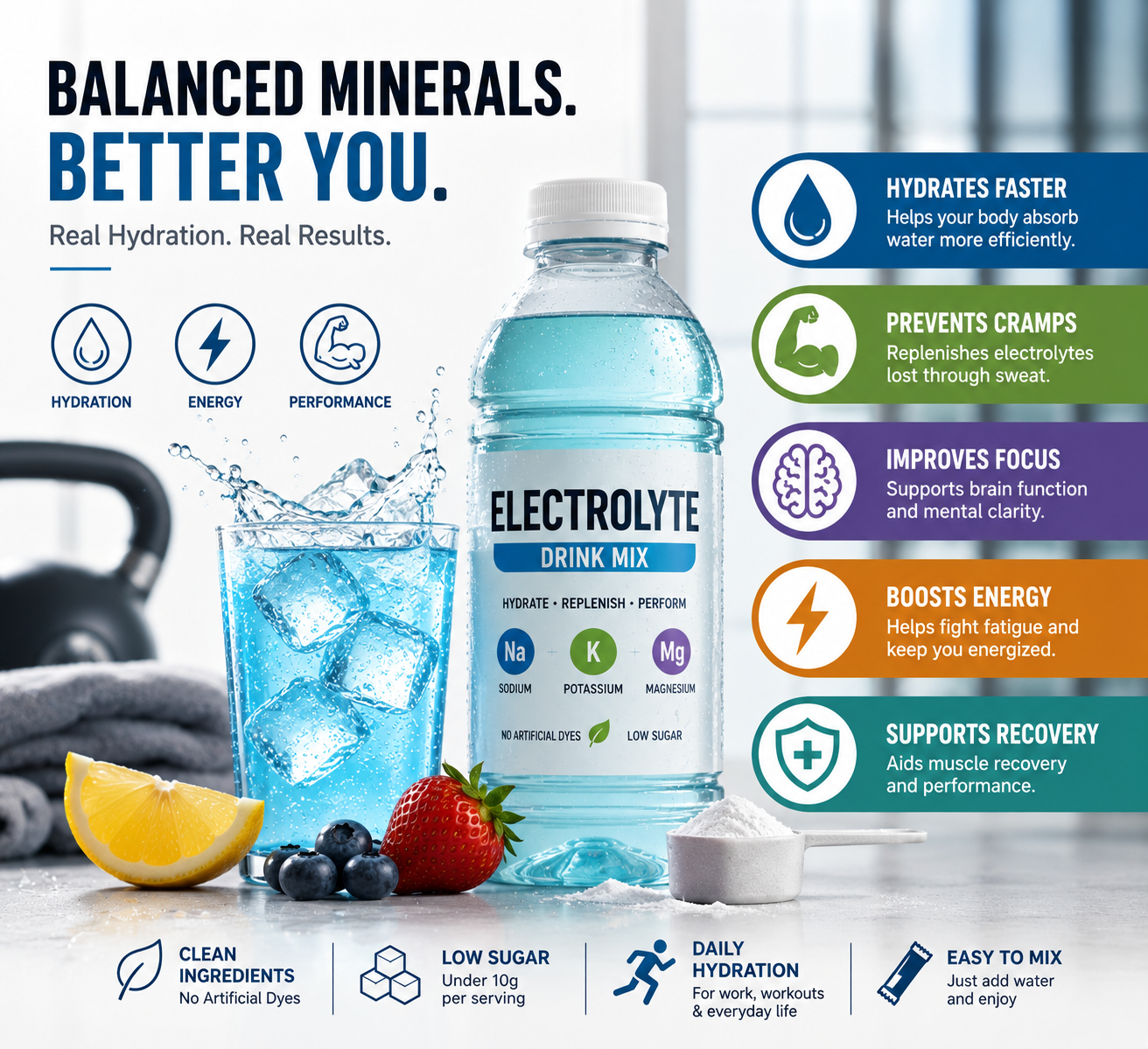
An electrolyte drink replenishes sodium, potassium, and magnesium lost through sweat, stress, and daily activity. It hydrates faster than water, reduces fatigue, eliminates muscle cramps, and improves mental focus — often within 20–30 minutes.
What Is an Electrolyte Drink?
An electrolyte drink is a beverage formulated with key minerals — primarily sodium, potassium, magnesium, and calcium — that your body uses to maintain fluid balance, nerve signaling, and muscle function.
Unlike plain water, electrolytes carry an electrical charge that allows them to pull water into your cells and bloodstream where it's actually needed. Without this mechanism, water you drink may pass through your system without being absorbed efficiently — a condition that leads to what scientists call functional dehydration.
Key Electrolytes and What They Do
|
Electrolyte |
Role in the Body |
Deficiency Symptom |
|
Sodium |
Regulates fluid balance, drives water absorption |
Fatigue, headaches, low energy |
|
Potassium |
Muscle contraction, heart rhythm |
Cramps, weakness, irregular heartbeat |
|
Magnesium |
Nerve function, energy production |
Brain fog, sleep issues, muscle spasms |
|
Calcium |
Bone health, muscle movement |
Numbness, cramps, poor recovery |
|
Chloride |
Acid-base balance, digestion |
Nausea, weakness |
Voice Search Answer: What is an electrolyte drink? It is a beverage containing essential minerals like sodium, potassium, and magnesium that help the body absorb water, support muscle function, and maintain energy levels throughout the day.
Why Your Body Loses Electrolytes (Even Without Exercise)
Most people think electrolyte loss only happens at the gym. That's one of the most common — and costly — myths about hydration.
Your body loses electrolytes through:
-
Sweating — even sitting in air conditioning
-
Urination — especially with high caffeine or alcohol intake
-
Stress — cortisol actively depletes magnesium
-
Heat exposure — summer temperatures accelerate sodium and potassium loss
-
Illness — fever, vomiting, or diarrhea causes rapid electrolyte depletion
-
Certain medications — diuretics and laxatives flush minerals out of the body
A 2025 clinical study published in Nutrients confirmed that even sedentary adults with moderate caffeine intake showed measurable electrolyte deficits by mid-afternoon — explaining that classic "afternoon wall" feeling.
This is why a quality hydration drink has moved from being a gym locker essential to a daily wellness staple for millions in 2026.
Benefits of Electrolyte Drinks: What the Science Says
1. Instant Rehydration — Faster Than Water Alone
Electrolytes — particularly sodium — use a co-transport mechanism in the gut to pull water directly into the bloodstream. This is the same science behind WHO Oral Rehydration Solution (ORS), developed to combat clinical dehydration. The best consumer electrolyte drinks are modeled on these exact ratios.
2. Eliminates Fatigue and Weakness
Low electrolytes = low cellular energy. As an energy drink for weakness, a well-formulated electrolyte product raises energy output at the cellular level — without caffeine, jitters, or crashes.
3. Stops Muscle Cramps in Their Tracks
Cramps are almost always a sign of sodium or potassium imbalance, not just dehydration. Replenishing these minerals — even mid-cramp — can bring relief within minutes.
4. Clears Brain Fog
Magnesium deficiency is directly linked to cognitive impairment, poor focus, and mood swings. Restoring optimal magnesium through an electrolyte drink supports mental clarity, working memory, and stress resilience.
5. Supports Recovery After Exercise
Athletes using electrolyte-balanced hydration energy drinks after training show faster recovery, reduced soreness, and better next-session performance compared to those drinking water alone, per multiple randomized crossover trials from 2025.
6. Daily Wellness — Not Just Sports Recovery
A natural energy juice or clean electrolyte formula consumed daily helps regulate blood pressure, support kidney function, maintain bone density, and improve sleep quality — benefits that extend well beyond the gym.
How to Choose the Best Electrolyte Drink in 2026
With hundreds of products on the market, the difference between a great electrolyte drink and an overpriced sugar water comes down to five non-negotiable factors.
1. Sodium Level (The Most Critical Factor)
Sodium is the gatekeeper of hydration. Look for 500–1,000 mg per serving for active use; 200–400 mg is acceptable for light daily hydration. Products with under 100 mg are effectively flavored water.
2. Potassium-to-Sodium Ratio
The ideal ratio is approximately 2:1 potassium to sodium for everyday use. For high-intensity exercise, lean toward equal ratios.
3. Sugar Content
Some glucose aids absorption — but too much turns your hydration drink into a candy bar. Look for under 10g of sugar per serving, ideally using natural sources like cane juice or fruit.
4. No Artificial Dyes or Sweeteners
Sucralose and acesulfame potassium are common in "zero sugar" formulas. Many users report digestive discomfort and aftertaste. Stevia, monk fruit, and allulose are cleaner alternatives with better tolerability.
5. Magnesium Inclusion
Most mainstream sports drinks skip magnesium entirely. It's the mineral most commonly deficient in adults and the key to preventing brain fog and muscle spasms. Always check the label.
The best electrolyte drink should contain 500–1,000 mg sodium, balanced potassium, under 10g of sugar, no artificial dyes, and include magnesium. Avoid products that are high in sucralose or contain less than 100 mg of sodium per serving.
Best Electrolyte Drinks in 2026: Top Picks Reviewed
1. LMNT Raw Unflavored
Best for: Heavy sweaters, athletes, keto dieters
-
Sodium: 1,000 mg | Potassium: 200 mg | Magnesium: 60 mg
-
Zero sugar, zero artificial ingredients
-
Ideal as a glucose drink alternative for those watching sugar intake
-
Downside: High sodium may not suit light users or those with hypertension
2. Liquid I.V. Hydration Multiplier
Best for: Travel, illness recovery, everyday hydration
-
Uses the Cellular Transport Technology (CTT) model
-
Contains glucose to enhance absorption
-
Good glucose drink benefits in terms of rapid rehydration
-
Downside: Hypertonic formula — absorption is slightly slower than isotonic options
3. Hydrant Hydrate
Best for: Office workers, daily wellness, light exercise
-
WHO-inspired balanced formula
-
Low sugar, real fruit flavors, no sucralose
-
Works well as a daily energy booster without caffeine
-
Downside: Lower sodium than athletic-grade products
Nuun Sport Tablets
Best for: Portability, budget-conscious users
-
Dissolvable tablets — carry anywhere
-
Clean ingredients, light flavor
-
Downside: Lower electrolyte concentration; best for mild activity
Vitalyte Electrolyte Powder
Best for: Adults seeking isotonic formulation
-
Matches body's natural fluid concentration for fastest absorption
-
No artificial colors, sweeteners, or fillers
-
Downside: Limited flavor variety
Electrolyte Drink Comparison Table (2026)
|
Product |
Sodium (mg) |
Sugar (g) |
Magnesium |
Artificial Sweeteners |
Best For |
|
LMNT |
1,000 |
0 |
✅ Yes |
❌ None |
Athletes, keto |
|
Liquid I.V. |
500 |
11 |
❌ No |
❌ None |
Travel, illness |
|
Hydrant |
300 |
3 |
✅ Yes |
❌ None |
Daily wellness |
|
Nuun Sport |
300 |
1 |
✅ Yes |
⚠️ Stevia |
Portability |
|
Vitalyte |
340 |
4 |
✅ Yes |
❌ None |
Isotonic hydration |
|
Gatorade |
270 |
36 |
❌ No |
❌ None |
Legacy/casual |
Electrolyte Drink Buying Guide: Who Needs What
For Athletes & Active People
Choose a high-sodium formula (800–1,000 mg+) with potassium and magnesium. LMNT or Vitalyte are ideal. Consume 20–30 minutes before training and immediately after.
For Office Workers & Desk Users
A moderate formula (300–500 mg sodium) consumed in the mid-morning and mid-afternoon counters the "2 PM slump." Hydrant Hydrate or Nuun are excellent daily companions.
For Heat Exposure & Outdoor Workers
Heat accelerates sweat rates dramatically. Choose high-sodium formulas and drink proactively — don't wait until thirst signals dehydration. By then, you're already significantly depleted.
For Illness Recovery
Vomiting and diarrhea cause rapid electrolyte loss. Use a glucose-containing formula (Liquid I.V. or ORS-modeled products) to maximize absorption during recovery. Patients recovering from medical procedures or those on enteral nutrition — such as those using a feeding tube — are especially vulnerable to electrolyte depletion and often require a clinically guided hydration strategy.
For Older Adults
Magnesium and potassium support heart rhythm, bone density, and cognitive function. Look for clean, low-sugar formulas with full mineral profiles — daily supplementation is highly beneficial.
Common Mistakes to Avoid
Mistake 1: Drinking plain water when dehydrated Plain water actually dilutes remaining electrolytes in your system, potentially worsening the condition. Always reach for an electrolyte drink after heavy sweating or illness.
Mistake 2: Choosing "zero sugar" without checking sodium Many zero-sugar products compensate with heavy artificial sweeteners but skimp on actual electrolytes. The label lies — always check the mineral panel, not just the sugar line.
Mistake 3: Only drinking electrolytes during workouts Stress, caffeine, heat, and even air conditioning deplete electrolytes throughout the day. Make a moderate electrolyte drink part of your morning or afternoon routine.
Mistake 4: Overdoing it More is not always better. Excess sodium can raise blood pressure and cause electrolyte imbalances in the opposite direction. Stick to recommended serving sizes and consult a healthcare provider if you have hypertension or kidney conditions.
Mistake 5: Trusting neon-colored sports drinks Most legacy sports drinks contain 36g+ of sugar and artificial dyes with minimal functional electrolytes. They were designed for mass market taste — not medical-grade hydration.
Conclusion: Your Body Has Been Telling You Something
Fatigue, brain fog, and muscle cramps are not personality traits. They're signals — your body's way of saying it's running low on the minerals it needs to function.
An electrolyte drink is not a trend. It's basic biology. And in 2026, the science, the market, and millions of daily users are all confirming the same thing: plain water is not always enough.
Whether you're pushing through a tough workout, surviving a stressful workday, or just trying to feel human again by 3 PM — the right electrolyte drink can turn things around within 30 minutes.
Choose wisely. Look for real sodium, balanced minerals, low sugar, and clean ingredients. Your performance, clarity, and comfort depend on it.