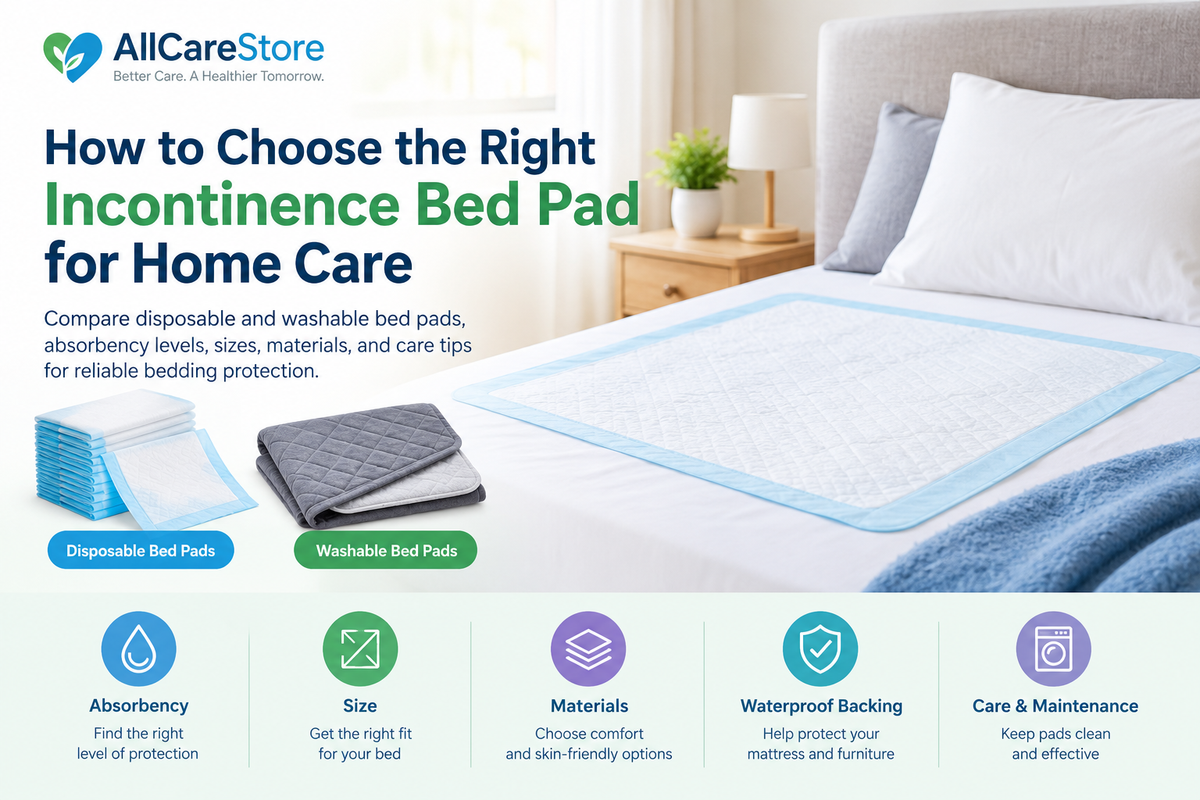
Choosing the right incontinence bed pad for home care can help protect mattresses, keep bedding cleaner, and make everyday caregiving routines more manageable. Whether you are caring for an older adult, assisting someone with limited mobility, or looking for additional bed protection, selecting the right absorbent pad depends on factors such as absorbency, size, material, comfort, and ease of cleaning.
With options ranging from disposable incontinence bed pads to washable reusable bed pads, understanding the differences can help you find a product that suits your household's needs.
This guide explains how to choose the best incontinence bed pads, what features to compare, and how to use and maintain them for home care.
What Is an Incontinence Bed Pad?
An incontinence bed pad is an absorbent protective layer placed on a bed or another suitable surface to help manage moisture from accidental urine leakage. Depending on the design, it may contain an absorbent core and a moisture-resistant backing to help protect the underlying mattress or furniture.
These pads are commonly used in home care, assisted living environments, and caregiving settings. They are available in different sizes, absorbency levels, and materials.
Common options include:
-
Disposable bed pads: Single-use pads designed for convenient cleanup and replacement.
-
Washable bed pads: Reusable pads that can be laundered according to the manufacturer's instructions.
-
Waterproof bed pads: Protective pads featuring a moisture-resistant backing.
-
Reusable underpads: Washable absorbent pads designed for beds, chairs, and other suitable surfaces.
The right choice depends on the intended use, the amount of moisture to manage, and the level of maintenance your household can accommodate.
Disposable vs. Washable Incontinence Bed Pads
One of the first decisions when choosing incontinence bed pads for home care is whether to purchase disposable or reusable products.
| Feature | Disposable Bed Pads | Washable Bed Pads |
|---|---|---|
| Usage | Single use | Multiple uses |
| Cleaning | Dispose of after use | Launder as directed |
| Convenience | Quick replacement | Requires laundry |
| Storage | Keep an adequate supply | Store clean pads for reuse |
| Long-term costs | Repeated purchases | Initial purchase plus laundering |
| Suitable for | Travel, occasional use, convenient cleanup | Regular home use and repeated protection |
Which option is better?
Disposable pads may suit households that prioritize quick changes and minimal laundry. Washable incontinence bed pads may be practical for frequent use when laundering facilities are available.
Some caregivers choose to keep both types at home, using reusable pads for everyday protection and disposable pads for travel or situations where washing is inconvenient.
7 Factors to Consider When Choosing an Incontinence Bed Pad
1. Choose the Right Absorbency Level
Absorbency is one of the most important considerations when purchasing an absorbent bed pad. Different products are designed to handle different amounts of moisture.
When comparing absorbency, consider:
-
How frequently the pad will be used.
-
Whether it is intended for daytime or overnight use.
-
The amount of moisture the product is designed to absorb.
-
Whether the manufacturer provides clear absorbency specifications.
For light, occasional leakage, a lower-absorbency option may be sufficient. More frequent or heavier moisture exposure may require a product with greater stated capacity.
Do not assume that a thicker pad is always more absorbent. Check the manufacturer's product specifications and follow its replacement guidance.
2. Measure the Bed and Select the Appropriate Size
The right bed pad size helps provide suitable coverage and reduces the likelihood of moisture reaching exposed bedding.
Before buying, measure the area where the pad will be placed. Consider whether you need protection for the central sleeping area or a larger portion of the mattress.
Common size options include small, medium, large, and extra-large pads, although actual dimensions vary by manufacturer.
Look for the following features:
-
Sufficient coverage for the intended area.
-
A shape that fits the bed or chair.
-
Secure placement without excessive bunching.
-
Compatibility with the intended sleeping or seating arrangement.
A larger pad is not automatically the best choice. The dimensions should suit the person's needs and the surface being protected.
3. Consider Skin Comfort and Surface Material
Comfort matters when a bed pad is used regularly or for extended periods. Look for a soft, skin-friendly bed pad with a surface that feels comfortable against the skin.
When comparing products, review the surface material, texture, and manufacturer's care guidance.
A suitable pad should help manage moisture while supporting comfortable use. However, an absorbent pad does not replace regular hygiene, prompt changes when needed, or appropriate skin care.
For people who are particularly sensitive to friction or moisture, consult a healthcare professional about suitable products and skin-protection routines.
4. Check the Waterproof Backing
A waterproof incontinence bed pad typically includes a moisture-resistant backing designed to help prevent liquid from passing through to the mattress or furniture.
When comparing backing materials, consider:
-
The manufacturer's moisture-protection claims.
-
Whether the pad is designed for beds, chairs, or both.
-
Whether the backing is suitable for repeated washing.
-
Instructions for drying and maintaining its protective properties.
A moisture-resistant backing can be helpful, but it does not guarantee complete leak prevention in every situation. Proper sizing, placement, absorbency, and timely replacement also matter.
5. Evaluate Washability and Maintenance
If you prefer washable reusable bed pads, review the cleaning instructions before purchasing.
Some products require specific washing temperatures, detergent choices, or drying methods. Following these directions helps maintain the pad's condition and performance.
Consider these practical questions:
-
Can the pad be machine-washed?
-
Is tumble drying permitted?
-
How many washes does the manufacturer specify or support?
-
How many pads will you need while others are being cleaned and dried?
Keeping spare reusable pads available can make daily care easier and reduce pressure to reuse a pad before it is clean and dry.
For disposable products, check the packaging for appropriate disposal instructions.
6. Think About the Person's Mobility and Care Needs
The most appropriate bed pad for elderly people or individuals receiving home care depends on their routines and level of assistance.
For example, a person who moves independently may need a different arrangement from someone who requires assistance with repositioning or transferring.
Consider whether the pad will be used:
-
On a standard bed.
-
On an adjustable bed, if compatible with the product.
-
On a chair or recliner.
-
During overnight rest.
-
As part of a caregiver-assisted hygiene routine.
Choose a product designed for the intended surface and use. Avoid placing a pad in a way that creates folds, bunching, or an unstable surface. Bed pads are not substitutes for properly designed transfer or positioning equipment.
7. Compare Cost and Value Over Time
Price is another important consideration when selecting incontinence bed pads for home care.
Disposable pads require repeat purchases, while reusable pads involve an initial purchase and ongoing laundering costs.
To estimate the cost of disposable pads, multiply the price per pad by the number used each day and the number of days in the period.
For reusable pads, consider the purchase price, expected service life under the manufacturer's guidance, laundering expenses, and the number of pads needed in rotation.
The best-value option is the one that meets your absorbency, comfort, hygiene, and maintenance requirements within your budget.
How to Choose Bed Pads for Overnight Incontinence
Overnight use may require a different approach from occasional daytime use because a pad may remain in place for several hours.
When selecting bed pads for overnight incontinence, consider these factors:
-
Absorbency capacity: Choose a product with specifications appropriate for the expected moisture level.
-
Coverage: Ensure the pad protects the intended sleeping area.
-
Backing: Look for a moisture-resistant layer designed for mattress protection.
-
Comfort: Select a suitable surface material for regular use.
-
Replacement routine: Follow the product instructions and change the pad when needed.
Even a high-absorbency pad may not prevent all leakage if it becomes saturated, shifts out of place, or does not cover the required area.
For ongoing nighttime leakage, a healthcare professional can help identify appropriate continence products and routines.
How to Use an Incontinence Bed Pad Correctly
Correct placement and maintenance can help improve the usefulness of an incontinence bed pad.
Follow these general steps:
-
Prepare the surface: Ensure the bed or chair is clean and dry.
-
Position the pad: Place it according to the manufacturer's instructions, with the intended absorbent surface facing the user.
-
Smooth out wrinkles: Check that the pad lies flat and does not bunch up.
-
Monitor the pad: Check it regularly and replace it when wet, soiled, damaged, or otherwise due for changing under the product instructions.
-
Maintain hygiene: Clean the affected skin gently and dry it appropriately when changing the pad.
-
Clean reusable products: Launder washable pads as directed and allow them to dry completely before reuse.
If the pad is used with an adjustable bed or other equipment, ensure it does not interfere with the equipment's safe operation.
Common Mistakes to Avoid When Buying Bed Pads
Avoid these common purchasing and usage mistakes:
-
Choosing by price alone: A low-cost pad may not offer the absorbency or coverage required.
-
Ignoring dimensions: A pad that is too small may leave parts of the mattress exposed.
-
Assuming all pads are waterproof: Check the backing and protection specifications.
-
Overlooking cleaning instructions: Incorrect washing can affect reusable pad performance.
-
Leaving wet pads in place unnecessarily: Change them as needed to support hygiene and skin care.
-
Using bed pads for the wrong purpose: Absorbent pads are not substitutes for transfer aids, pressure-relieving equipment, or medical treatment.
A little research before buying can help you select a product that better fits your home-care routine.
Essential Checklist Before Purchasing Incontinence Bed Pads
Use this checklist to compare products before placing an order.
- Absorbency level matches the intended use.
- Dimensions provide suitable coverage.
- Surface material is appropriate for regular contact.
- Backing offers the required moisture protection.
- Disposable or reusable format fits the household routine.
- Cleaning and disposal instructions are clear.
- Product specifications match the intended bed or chair.
- Price and ongoing costs fit the budget.
Compare these details across several products instead of relying on product names or appearance alone.
Conclusion
Choosing the right incontinence bed pad for home care involves more than comparing prices. Absorbency, dimensions, surface comfort, moisture-resistant backing, cleaning requirements, and the person's daily routine all influence which product is most suitable.
Disposable incontinence bed pads can offer convenient replacement, while washable reusable bed pads may suit households that prefer repeated use and have access to appropriate laundry facilities.
Review the product specifications carefully, follow the manufacturer's instructions, and select a pad that supports your household's hygiene and mattress-protection needs. With the right product and a consistent care routine, managing incontinence at home can become more organized and convenient.