Choosing the right mobility aid can make everyday movement more manageable and convenient. However, with different options available, it can be difficult to understand whether a walker, rollator, or wheelchair is the right choice.
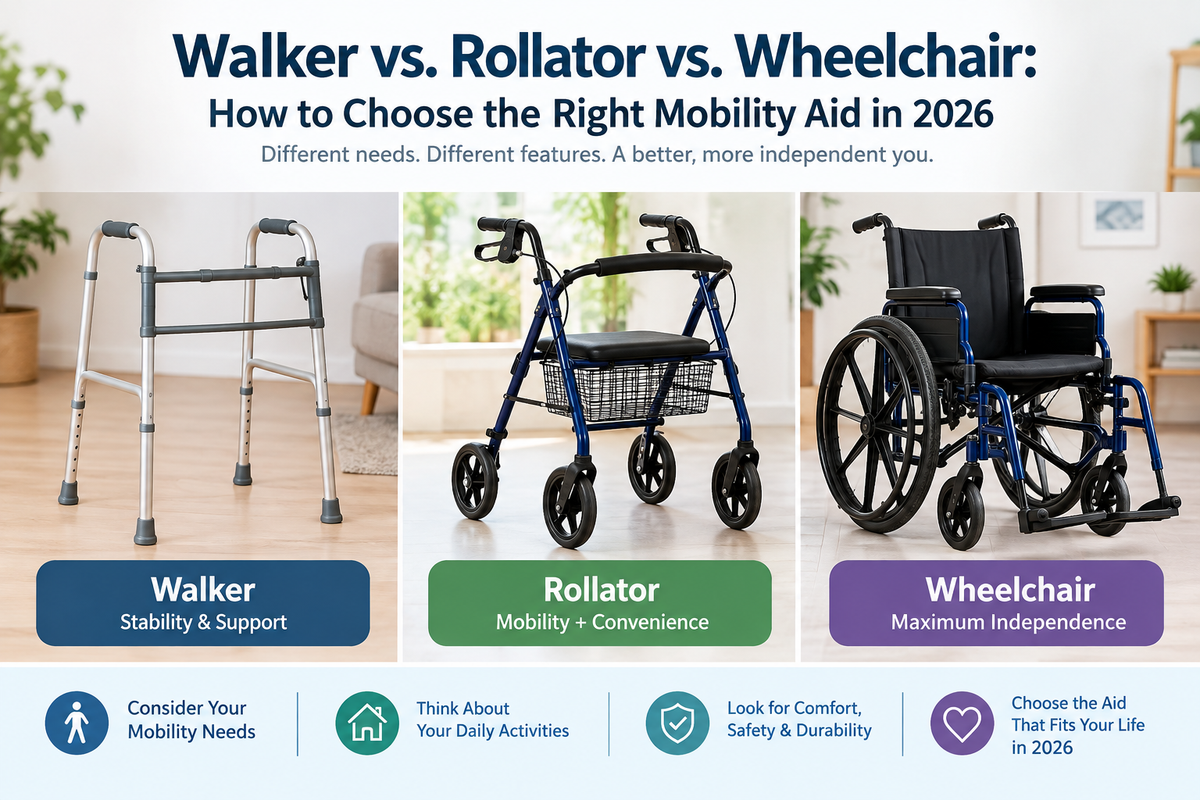
Although all three are designed to support mobility, they serve different purposes. A traditional walker provides a stable frame for supported walking. A rollator walker uses wheels to make movement easier and often includes a seat and storage. A wheelchair provides seated mobility for people who cannot walk safely or comfortably for the distance they need to travel.
Understanding the differences between a walker vs rollator vs wheelchair can help you compare features such as stability, maneuverability, portability, seating, wheel configuration, and weight capacity.
In this guide, we'll explain how these mobility aids differ and what factors to consider before choosing one.
Walker vs Rollator vs Wheelchair: At a Glance
The easiest way to understand the difference is to look at how each mobility aid is designed to support movement.
Walker
A walker is a supportive frame that the user holds while walking. A standard walker typically has four legs with rubber tips and does not roll freely.
Walkers can provide a stable base for people who need additional support while walking short distances.
Rollator
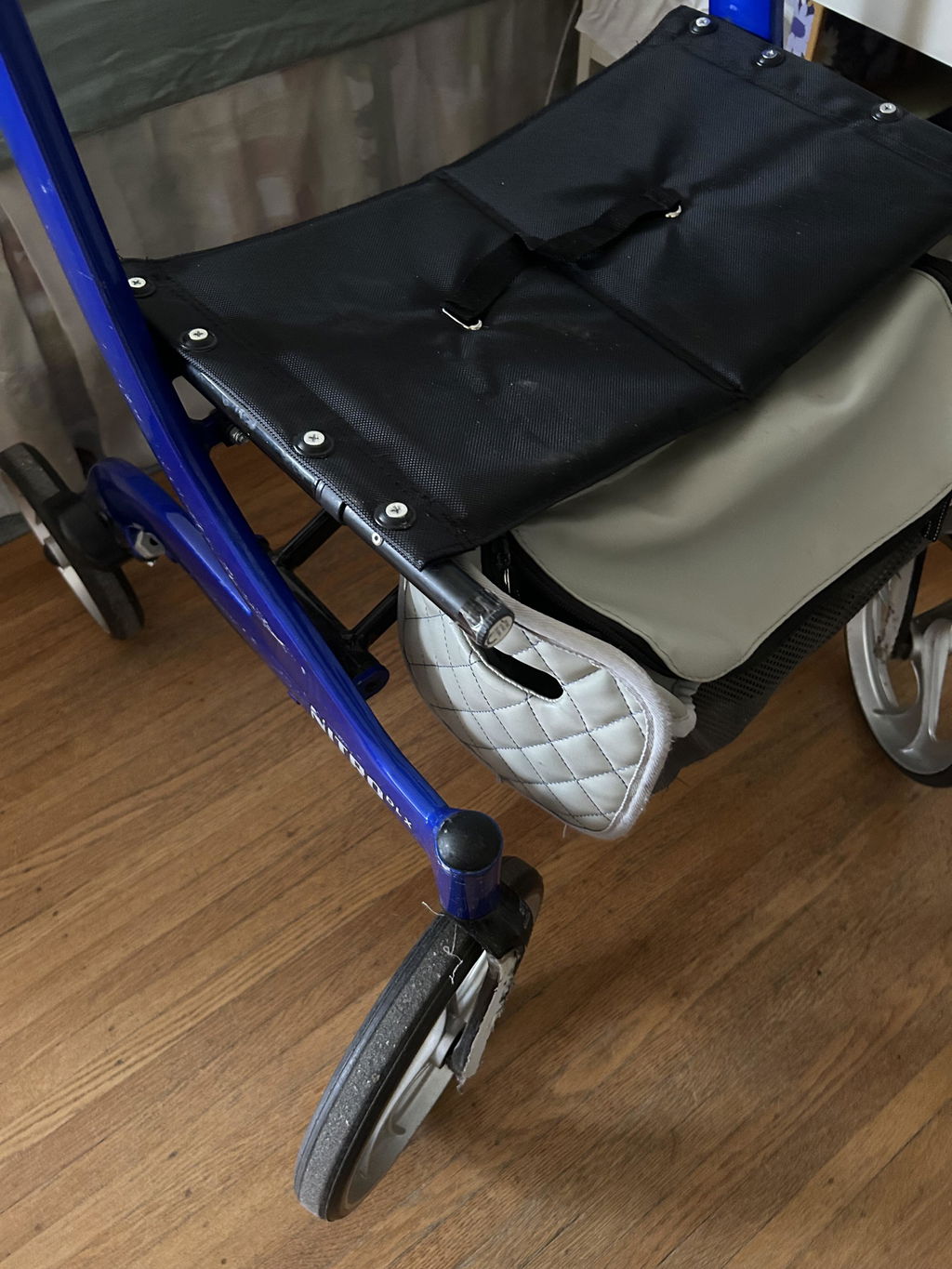
A rollator walker usually has three or four wheels, hand-operated brakes, and adjustable handles. Many models also include a seat and storage basket or pouch.
Unlike a traditional walker, the user generally pushes the rollator forward rather than lifting it with every step.
Wheelchair
A wheelchair provides seated mobility. Depending on the design, it may be self-propelled by the user or pushed by a caregiver.
Manual wheelchairs, transport wheelchairs, bariatric wheelchairs, and specialized wheelchair designs are available for different mobility requirements.
What Is a Walker?
A walker is one of the most commonly used walking aids. Its frame provides support while the user takes steps.
Standard walkers are usually lightweight and have four contact points with the floor. Because they do not have wheels, the user generally lifts or repositions the walker before moving forward.
Some walkers have two front wheels, making them easier to move while retaining the supportive structure of a traditional walker.
Common Types of Walkers
Depending on the user's needs, options may include:
- Standard walkers
- Two-wheel walkers
- Folding walkers
- Lightweight walkers
- Bariatric walkers
- Upright walkers
- Forearm walkers
- Walkers with wheels
If you are comparing different walker styles, explore AllCareStore's Walkers & Rollators collection to find different mobility solutions.
When Might a Walker Be Appropriate?
A walker may be considered when a person:
- Needs a stable frame for walking
- Primarily walks short distances
- Wants a simple mobility aid
- Needs additional support while moving around the home
- Prefers a walker that does not roll freely
- Wants a lightweight or folding design
The correct walker should be selected according to the user's mobility needs, height, weight, environment, and manufacturer's specifications.
What Is a Rollator?
A rollator walker is a wheeled mobility aid designed for people who can walk but want additional support and easier movement.
Most four-wheel rollators include:
- Four wheels
- Hand brakes
- Adjustable handles
- A seat
- A storage basket or pouch
- A folding frame
One of the biggest differences between a rollator and a traditional walker is that a rollator is designed to roll continuously as the user moves.
A rollator with seat can also provide a convenient place to rest during outings.
For example, a person may use a rollator while shopping, walking through a large building, attending appointments, or spending time outdoors.
AllCareStore's Rollator Walkers category provides access to different rollator styles, including folding, lightweight, upright, and heavy-duty options.
Walker vs Rollator: What's the Difference?
The primary difference between a walker and a rollator is how they move.
A traditional walker generally requires the user to lift or reposition the frame. A rollator moves on wheels and is pushed forward.
| Feature | Walker | Rollator |
|---|---|---|
| Wheels | Usually none or two | Usually three or four |
| Brakes | Usually no hand brakes | Usually hand-operated brakes |
| Seat | Usually no | Often included |
| Storage | Limited | Often included |
| Movement | Lift/reposition | Push and roll |
| Stability | Stable stationary frame | Rolling support |
| Portability | Often lightweight | Folding models available |
| Outdoor use | Model dependent | Many models designed for outdoor use |
Neither option is automatically appropriate for everyone. The choice depends on the user's ability to walk, balance, control the equipment, and intended environment.
What Is a Wheelchair?
A wheelchair is a mobility device that allows a person to move while seated.
A wheelchair may be appropriate when walking is not practical for the required distance or when a person needs seated mobility.
Common Wheelchair Types
Some common options include:
- Manual wheelchairs
- Transport wheelchairs
- Lightweight wheelchairs
- Bariatric wheelchairs
- Reclining wheelchairs
- Pediatric wheelchairs
- Specialized positioning wheelchairs
A manual wheelchair may be propelled by the user or caregiver, depending on its design and the user's abilities.
For people who primarily need caregiver-assisted transportation, a transport wheelchair may offer a lightweight and compact solution.
Explore AllCareStore's Transport Wheelchairs & Wheelchairs category to compare different wheelchair options.
Manual Wheelchair vs Transport Wheelchair
A manual wheelchair and transport wheelchair are not exactly the same.
Traditional manual wheelchairs generally have larger rear wheels that can allow the user to self-propel.
A transport wheelchair is usually designed to be pushed by a caregiver. It often has smaller wheels and a lightweight frame that can make transportation and storage easier.
A Manual Wheelchair May Be Considered When:
- The user may self-propel
- Regular wheelchair mobility is needed
- Larger rear wheels are preferred
- The user wants a traditional wheelchair configuration
A Transport Wheelchair May Be Considered When:
- A caregiver will push the chair
- Portability is important
- The wheelchair will be used for appointments or outings
- A lightweight design is preferred
- Vehicle storage is important
Always check the product's specifications before purchasing.
Rollator vs Wheelchair: What's the Difference?
The key difference between a rollator and wheelchair is whether the user primarily walks or remains seated.
A rollator is designed to support walking while providing rolling assistance. A wheelchair provides seated mobility.
A Rollator May Be Considered If:
- The user can walk independently with support
- Walking remains part of daily activities
- The user wants a seat for occasional rest
- The user wants a storage basket
- The user wants a mobility aid for indoor and outdoor walking
A Wheelchair May Be Considered If:
- Walking is not practical for the required distance
- Seated mobility is needed
- A caregiver will assist with transportation
- The user needs to conserve mobility during longer outings
Some people may use both a rollator and wheelchair, depending on the activity and distance involved.
Walker vs Rollator vs Wheelchair: Which One Should You Choose?
There is no single mobility aid that is suitable for every person.
Instead, consider the following factors.
1. Walking Ability
Start by considering how much the user can comfortably and safely walk.
If the user can walk but needs additional stability, a walker or rollator may be considered.
If walking is not practical for the required distance, a wheelchair may provide a more suitable seated mobility option.
2. Balance and Stability
A traditional walker provides a stable frame that does not roll freely.
A rollator requires the user to control a moving wheeled frame and operate its brakes.
Therefore, the user's ability to control the mobility aid should be considered when choosing between a walker and rollator.
3. Distance
Consider where the mobility aid will be used.
For short indoor distances, a walker may be convenient.
For longer walking activities, a rollator with seat may provide additional convenience because it allows the user to stop and rest.
For situations where walking long distances is not practical, a wheelchair may be more appropriate.
4. Indoor vs Outdoor Use
The environment also matters.
A compact walker can be convenient in smaller indoor spaces.
A rollator with appropriately sized wheels may provide easier movement across certain outdoor surfaces.
For outdoor use, check the manufacturer's recommendations regarding terrain and wheel design.
5. Weight Capacity
Always check the manufacturer's stated weight capacity before choosing a mobility aid.
People looking for higher weight capacities may want to compare bariatric walkers, heavy-duty rollators, or bariatric wheelchairs.
Never exceed the manufacturer's recommended weight limit.
6. Portability
If the equipment needs to be transported frequently, consider:
- Product weight
- Folded dimensions
- Vehicle storage
- Folding mechanism
- Carrying requirements
A folding walker, folding rollator, or lightweight transport wheelchair may be easier to store and transport, depending on the model.
Walker With Seat vs Rollator With Seat
The terms walker with seat and rollator with seat can sometimes create confusion.
A standard walker is generally designed primarily for support while walking.
A rollator commonly includes a built-in seat specifically for resting during use.
When comparing a rollator with seat, consider:
- Seat width
- Seat depth
- Seat height
- Weight capacity
- Backrest
- Wheel size
- Handle height
- Brake design
A seat should not be used while the rollator is moving. Follow the manufacturer's instructions regarding engaging the brakes before sitting.
What Is a 4-Wheel Rollator?
A 4-wheel rollator is one of the most common rollator configurations.
It generally includes two front wheels and two rear wheels, along with hand brakes and adjustable handles.
Many four-wheel rollators also include a seat and storage.
A four-wheel design may provide a combination of maneuverability, walking support, and convenience for everyday activities.
Three-wheel rollators are also available and may offer a tighter turning radius, but they generally have different features and stability characteristics.
How to Choose the Right Rollator
If a rollator appears suitable, compare the following features before purchasing:
Weight Capacity
Make sure the manufacturer's weight rating meets the user's requirements.
Wheel Size
Consider whether the rollator will primarily be used indoors or outdoors.
Handle Height
Look for adjustable handles that can be positioned according to the manufacturer's fitting recommendations.
Seat Dimensions
If you want a rollator walker with seat, check the actual seat dimensions rather than relying only on the product name.
Frame Weight
A lightweight rollator may be easier to lift and place in a vehicle.
Folded Size
Check whether the folded rollator fits your vehicle and storage area.
Braking System
The user should be able to comfortably operate the brakes.
Can You Use a Rollator as a Wheelchair?
Not every rollator can be used as a wheelchair.
Some products are specifically designed as rollator transport chairs and can convert between walking and seated transport modes.
A standard rollator should not be used as a wheelchair unless the manufacturer specifically states that it is designed for that purpose.
If seated transport is important, look for a product specifically designed for both functions and carefully review its operating instructions.
Can You Use a Walker and Wheelchair Together?
Yes, depending on the person's mobility needs, different mobility aids may be used for different situations.
For example, someone may use a walker around the house and a wheelchair for longer outings.
Another person may use a rollator for everyday walking and a transport wheelchair when traveling with a caregiver.
Using different mobility aids for different activities can provide flexibility, but users should follow the manufacturer's instructions and seek professional guidance when they are unsure which device is appropriate.
Choosing Mobility Equipment for Everyday Life
The best mobility solution is the one that matches the user's actual needs, environment, and abilities.
Before purchasing a walker, rollator, or wheelchair, consider:
- Walking ability
- Balance
- Required level of support
- Walking distance
- Indoor or outdoor use
- Weight capacity
- Product dimensions
- Portability
- Seating requirements
- Wheel configuration
- Brake operation
- Storage needs
AllCareStore offers different types of mobility equipment for everyday use. You can explore the Walkers & Rollators category for walking aids and rollators or browse the Wheelchairs & Transport Chairs category when seated mobility is needed.
For additional mobility and transfer solutions, explore the Mobility, Transportation & Transferring collection.
Final Thoughts
Understanding walker vs rollator vs wheelchair starts with one simple question: What type of mobility support does the user actually need?
A walker provides a supportive frame for walking. A rollator walker adds wheels, brakes, and often a seat and storage. A wheelchair provides seated mobility when walking is not practical for the required distance.
The right choice depends on factors such as mobility level, balance, distance, environment, weight capacity, portability, and personal requirements.
Before purchasing, carefully review product specifications and follow the manufacturer's instructions for safe use.