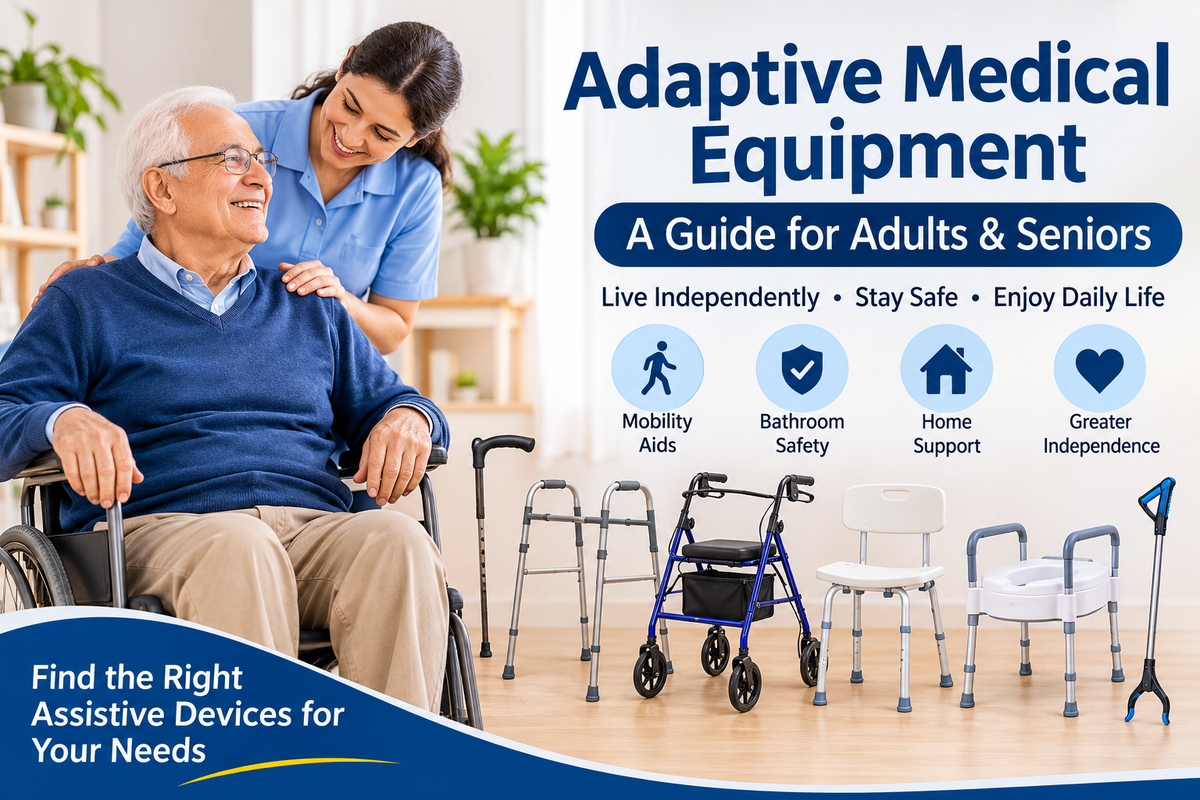
Daily activities can become challenging when mobility or physical abilities change. The right equipment can make everyday tasks more manageable. Adaptive medical equipment helps adults maintain independence and participate in daily routines.
Many seniors and caregivers explore assistive devices to improve everyday convenience. These products support mobility, personal care, bathroom safety, and household activities. They can also help caregivers manage daily assistance more effectively.
This guide explores different types of adaptive equipment for adults. It explains how to choose suitable products for different everyday needs.
What Is Adaptive Medical Equipment?
Adaptive medical equipment includes tools and products that help people complete everyday activities. These products support individuals who experience mobility, coordination, or physical limitations.
People often use these products at home, during rehabilitation, or in care environments. Some devices provide physical support, while others simplify specific household activities.
Common examples of adaptive equipment for adults include:
-
Walking canes and mobility walkers.
-
Manual and transport wheelchairs.
-
Shower chairs and bathroom safety equipment.
-
Patient transfer aids and support accessories.
-
Reachers and other daily living assistance tools.
The World Health Organization recognizes assistive products as tools that support mobility, self-care, communication, and independence. These products can help individuals participate more comfortably in everyday life.
1. Mobility Aids for Adults and Seniors
Mobility challenges can make walking and moving around more difficult. Mobility aids for seniors provide different levels of support during everyday movement.
The appropriate product depends on individual mobility needs, balance, strength, and environment.
Walking Canes
Walking canes provide additional support for individuals who need assistance while walking. They are available in different designs and materials.
Common options include:
-
Standard walking canes for everyday support.
-
Folding canes for convenient storage and travel.
-
Adjustable canes for personalized height settings.
-
Quad canes with wider bases for additional contact points.
-
Lightweight telescopic canes for compact storage.
When choosing a walking cane for seniors, consider handle comfort, height adjustment, weight capacity, and rubber tip stability.
Walkers and Rollators
Walkers and rollators help individuals who need additional support while moving. Their designs serve different mobility requirements.
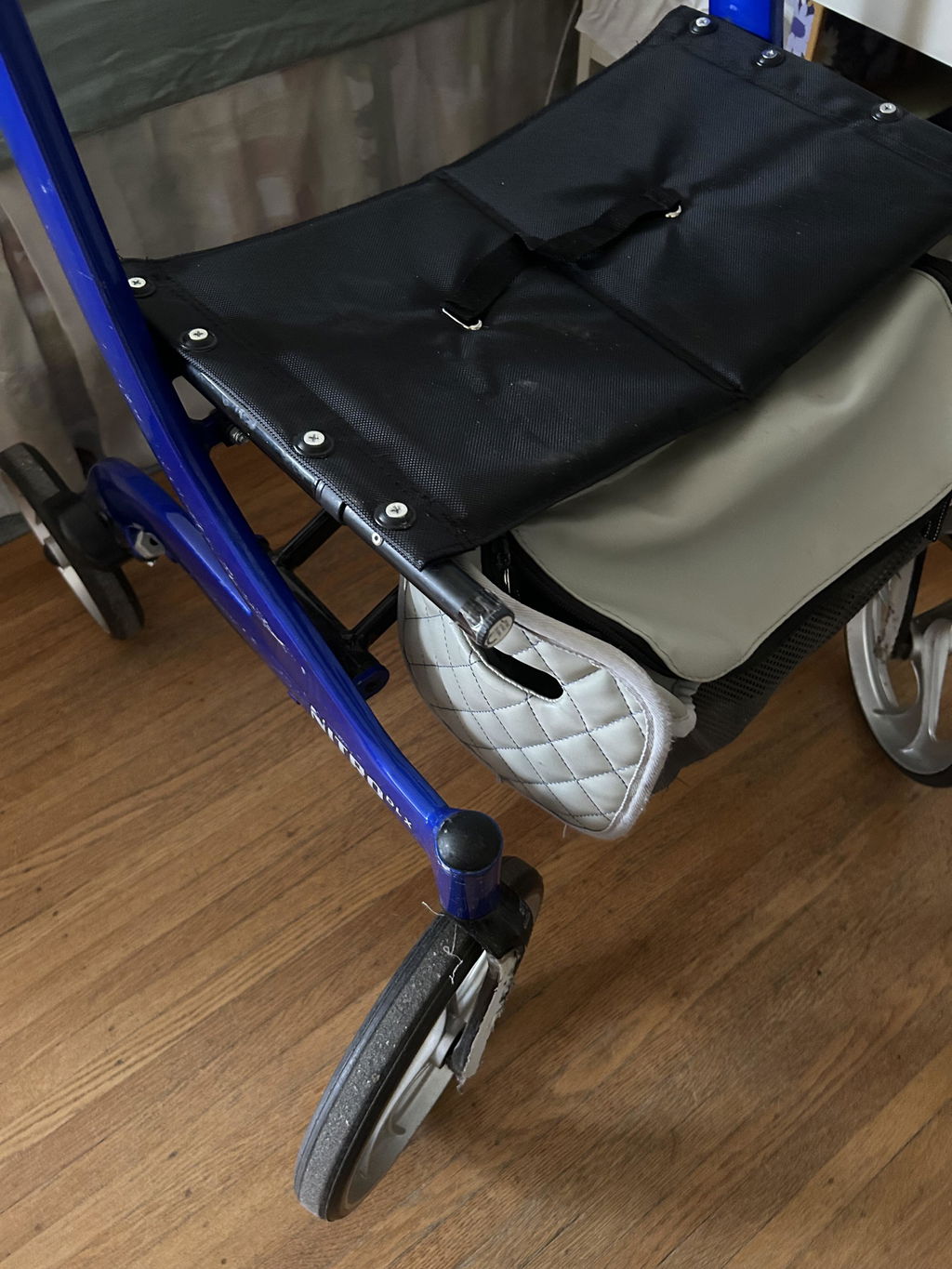
Standard walkers provide a stable frame for users who can lift or reposition the device. Rollators usually feature wheels, hand brakes, and built-in seating.
Consider these differences before selecting a product:
| Feature | Standard Walker | Rollator |
|---|---|---|
| Wheels | Usually none or two | Usually three or four |
| Movement | Lift or reposition | Push while walking |
| Brakes | Usually unavailable | Hand brakes |
| Seating | Generally unavailable | Often includes a seat |
| Best suited for | Users needing substantial frame support | Users needing wheeled mobility support |
Explore walkers and rollators to compare different mobility options.
Wheelchairs and Transport Chairs
Wheelchairs support individuals who cannot walk comfortably or need seated mobility assistance. Different models accommodate different environments and transportation requirements.
Common wheelchair options include:
-
Manual wheelchairs: Users or caregivers propel these chairs manually.
-
Transport wheelchairs: Caregivers push these lightweight chairs using rear handles.
-
Lightweight wheelchairs: These models prioritize easier handling and transportation.
-
Power wheelchairs: Electric motors support movement through powered controls.
When selecting a wheelchair, consider seat width, weight capacity, frame construction, and portability.
2. Bathroom Safety and Adaptive Equipment
Bathrooms require particular attention because wet surfaces can increase slipping risks. Bathroom safety equipment for seniors can make personal care activities more manageable.
These products provide additional support during bathing and toileting routines.
Shower Chairs and Bath Benches
Shower chairs provide seated bathing support for individuals who have difficulty standing. They come in different shapes, sizes, and configurations.
Popular options include:
-
Shower chairs with backrests.
-
Shower stools with compact designs.
-
Transfer benches for bathtub access.
-
Adjustable-height shower seats.
-
Shower chairs with armrests.
Choose a model that fits the bathroom layout and available space. Always check weight capacity and manufacturer installation instructions.
Grab Bars and Bathroom Support Accessories
Bathroom grab bars provide fixed handholds near important bathroom areas. They can support users during transfers and movement.
Consider installing suitable support bars near toilets and bathing areas. A qualified professional should assess placement and secure installation.
Other useful adaptive bathroom equipment includes non-slip bath mats, handheld showerheads, and raised toilet seats.
Bedside Commodes and Raised Toilet Seats
Bedside commodes provide an alternative toileting option near the user's bed. They can help reduce unnecessary trips to distant bathrooms.
Raised toilet seats increase toilet seating height for easier sitting and standing. Some models include armrests for additional hand support.
Consider bathroom dimensions, product stability, cleaning requirements, and user comfort before purchasing.
3. Daily Living Aids for Adults
Everyday household activities involve several movements and physical tasks. Daily living aids help simplify activities such as dressing, reaching, eating, and personal grooming.
These products can support people with limited flexibility or hand coordination.
Reachers and Grabber Tools
Reacher grabbers help users pick up objects without bending or stretching excessively. They often feature a handle-operated gripping mechanism.
Common uses include:
-
Picking up lightweight objects from the floor.
-
Reaching items on higher shelves.
-
Retrieving objects from difficult spaces.
-
Moving small household items within reach.
Choose a reacher with comfortable handles and suitable gripping strength.
Dressing and Grooming Aids
Adaptive dressing equipment helps simplify clothing and personal grooming routines. These products can assist individuals with limited flexibility or hand movement.
Examples include:
-
Long-handled shoehorns.
-
Button hooks and zipper pulls.
-
Sock assistance devices.
-
Long-handled grooming brushes.
-
Easy-grip personal care accessories.
The best choice depends on the user's specific daily activities.
4. Patient Transfer and Caregiver Assistance Equipment
Moving between beds, chairs, and wheelchairs can require additional assistance. Patient transfer equipment helps caregivers manage these movements more effectively.
Different products support different transfer situations.
Transfer Belts
Transfer belts provide caregivers with a secure handhold during assisted movement. They can support certain transfers when users have appropriate standing ability.
Always follow manufacturer instructions and appropriate caregiver training.
Transfer Boards
Transfer boards provide a bridge between two nearby surfaces. Some users can use them to move between wheelchairs and beds.
The user must have suitable strength and movement ability. A healthcare professional should assess whether this transfer method is appropriate.
Patient Lifts
Patient lifts assist caregivers when transferring individuals between surfaces. Different models accommodate different lifting and positioning requirements.
Before selecting equipment, consider the user's mobility, available space, and caregiver requirements.
5. Home Safety Equipment for Seniors
A supportive home environment can make everyday movement more manageable. Home safety equipment for seniors addresses common household accessibility challenges.
Consider these useful additions:
| Equipment | Everyday purpose |
|---|---|
| Grab bars | Provide handholds near selected areas |
| Non-slip mats | Improve traction on suitable surfaces |
| Bed rails | Provide support when repositioning or getting out of bed |
| Reachers | Help retrieve objects from difficult locations |
| Night lights | Improve visibility along nighttime walking routes |
| Ramps | Provide an alternative to certain steps and raised entrances |
Home modifications should reflect the user's abilities and living environment. A professional assessment can help identify suitable improvements.
6. Adaptive Medical Equipment for Different Needs
Different individuals require different types of assistance. Understanding everyday requirements helps narrow down suitable equipment.
| User requirement | Equipment to consider |
|---|---|
| Additional walking support | Canes, walkers, and rollators |
| Seated mobility | Manual and transport wheelchairs |
| Bathing assistance | Shower chairs and transfer benches |
| Toileting assistance | Bedside commodes and raised toilet seats |
| Reaching household objects | Reacher grabbers |
| Assisted transfers | Transfer belts and transfer boards |
| Improved home accessibility | Grab bars, ramps, and support accessories |
These are general examples rather than individual medical recommendations. A healthcare professional can help assess specific equipment requirements.
7. How to Choose the Right Adaptive Equipment
Selecting adaptive medical equipment requires careful consideration. The right product should match the user's daily activities and physical requirements.
Follow these important considerations before purchasing.
1. Identify Everyday Requirements
Start by identifying activities that require additional assistance. Consider walking, bathing, dressing, toileting, and household movement.
2. Check Product Dimensions
Measure available spaces before purchasing equipment. Check doorway widths, bathroom layouts, seat dimensions, and storage requirements.
3. Review Weight Capacity
Every product has specific weight capacity limits. Always compare the manufacturer's specifications with the intended user's requirements.
4. Consider Comfort and Adjustability
Look for comfortable handles, adjustable heights, and suitable seating dimensions. These features can improve everyday product usability.
5. Evaluate Portability and Storage
Some users need equipment for home and travel. Folding designs and lightweight construction may simplify transportation and storage.
6. Follow Safety Instructions
Read product instructions before using new equipment. Seek professional guidance when selecting mobility or patient transfer devices.
8. Why Adaptive Equipment Matters for Independent Living
Assistive devices for adults can help simplify activities that require additional physical effort. They can also support participation in everyday household routines.
Different products address different functional requirements.
For example, a walker may support movement around the home. A shower chair can provide seated bathing assistance. A reacher can help retrieve objects without excessive stretching.
The World Health Organization identifies assistive technology as an important resource for maintaining functioning and independence. Appropriate products can support participation in everyday activities.
Caregivers can also benefit from suitable equipment. It can help organize daily assistance and make certain tasks more manageable.
Frequently Asked Questions
1. What is adaptive medical equipment?
Adaptive medical equipment includes products that help individuals complete everyday activities. Examples include mobility aids, shower chairs, grab bars, and dressing assistance tools.
2. What equipment helps elderly people live independently?
Common options include walking canes, walkers, wheelchairs, shower chairs, and raised toilet seats. The appropriate equipment depends on individual abilities and household requirements.
3. What are the most common assistive devices for adults?
Popular assistive devices for adults include mobility walkers, wheelchairs, canes, reacher grabbers, shower chairs, and bathroom support accessories.
4. What is the difference between adaptive equipment and assistive devices?
These terms often overlap in everyday usage. Adaptive equipment modifies or simplifies specific activities, while assistive devices provide broader functional support.
5. How do I choose the right adaptive equipment?
Start by identifying the activities that require additional support. Compare product dimensions, weight capacity, comfort, adjustability, and manufacturer instructions.
6. What equipment helps seniors with bathroom safety?
Common options include shower chairs, grab bars, transfer benches, raised toilet seats, and non-slip mats. Professional guidance can help determine suitable placement and installation.
7. Can adaptive equipment help caregivers?
Yes. Appropriate equipment can simplify selected caregiving activities and support everyday assistance. Caregivers should receive suitable training before using transfer equipment.
Conclusion
Adaptive medical equipment plays an important role in supporting everyday activities. The right products can help adults manage mobility, personal care, and household routines.
From mobility aids for seniors to bathroom safety accessories, different solutions address different requirements. Understanding product features helps families and caregivers make informed purchasing decisions.
Explore AllCareStore for mobility products and everyday medical equipment. Compare product specifications to identify options that match individual requirements.
-
Choosing the right mobility aid can improve everyday movement and provide additional walking support. Explore our guide on walking canes and sticks: types, benefits, and how to choose the right walking aid to understand different cane designs, features, and selection considerations.
Learn how to select suitable shower stools for bathroom safety with our complete guide to choosing the right shower stool