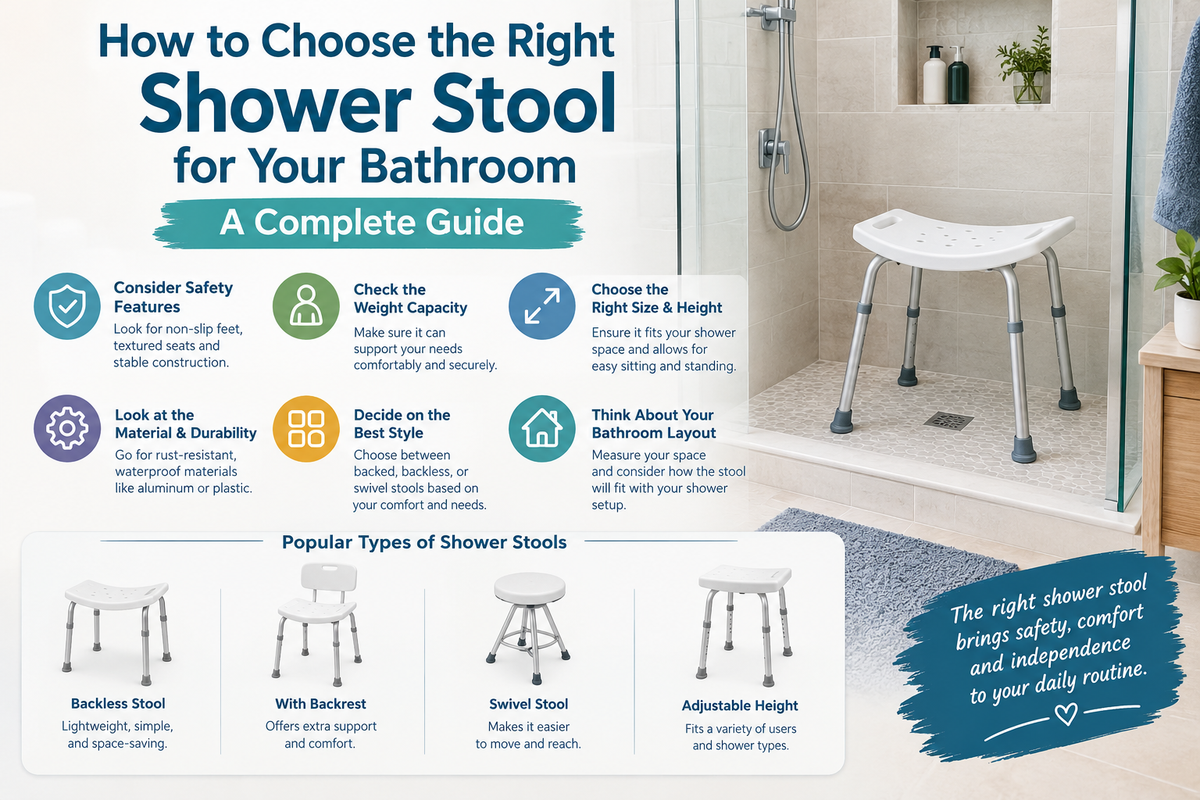
Choosing the right shower stool for your bathroom can make bathing more comfortable and help support a safer bathroom routine. Whether you are shopping for a senior, someone with limited mobility, or anyone who prefers to sit while showering, the right stool should fit your bathroom space, provide appropriate support, and meet the user's needs.
With so many options available, including adjustable shower stools, shower chairs with backrests, non-slip shower stools, and bath benches, it is important to understand the differences before buying.
In this guide, we will explain how to choose the right shower stool, what features to compare, how to measure your bathroom, and which type may work best for your space.
Quick Guide: Which Shower Stool Should You Choose?
Before exploring the details, compare these common bathroom seating options.
| Type | Key Features | Best For |
|---|---|---|
| Shower stool | Compact seat, usually without a backrest | Bathrooms with limited space and users who need basic seating |
| Adjustable shower stool | Height-adjustable legs | Users who need a suitable seat height |
| Shower chair with backrest | Seat with back support | Users who need additional seated support |
| Shower chair with armrests | Side supports for the arms | Users who benefit from additional support when sitting or standing |
| Transfer bench | Extended seat designed to assist bathtub entry and exit | Bathtubs where stepping over the edge is difficult |
| Folding shower stool | Designed to fold for storage | Bathrooms where space is limited between uses |
Quick answer: To choose the right shower stool, measure your available shower space, check the seat height and dimensions, verify the weight capacity, and consider whether you need a backrest, armrests, or adjustable legs.
1. Consider Your Bathroom Size and Layout
The first step in choosing a shower stool for your bathroom is measuring the available space. A stool that fits comfortably in a large walk-in shower may be unsuitable for a narrow shower enclosure.
Before purchasing, measure the shower's width and depth, paying attention to the placement of doors, glass panels, shower controls, and other fixtures.
What should you measure?
-
Available floor space: Ensure the stool fits without blocking the shower entrance.
-
Door clearance: Check whether the shower door can open and close freely.
-
Leg placement: Make sure all stool legs can rest securely on a level, stable surface.
-
Movement space: Leave sufficient room to sit down, stand up, and move safely.
-
Storage space: If the stool will be removed after each shower, consider its dimensions and weight.
For a small bathroom, a compact shower stool may be a practical option. A larger shower enclosure may accommodate a chair with a backrest or armrests, depending on the available space.
Remember that the stool should not obstruct access to shower controls or create an additional tripping hazard.
2. Choose the Correct Shower Stool Height
The correct seat height is one of the most important factors when selecting a height-adjustable shower stool.
A seat that is too low may make sitting down or standing up more difficult. A seat that is too high may leave the feet without proper support.
How high should a shower stool be?
Choose a height that allows the user to sit comfortably with their feet supported on the floor or shower surface. The knees and hips should be positioned comfortably, according to the user's needs and any professional guidance they have received.
Look for an adjustable shower stool if you need flexibility in seat height.
Before buying, check:
-
The minimum and maximum seat height.
-
The adjustment increments.
-
Whether the legs lock securely at the selected height.
-
Whether the adjustment mechanism is easy to use.
-
Whether the seat height suits the intended user.
Do not assume that every adjustable stool will fit every person. Compare the manufacturer's height range with the user's requirements.
3. Check the Weight Capacity and Seat Dimensions
Every shower stool has a manufacturer-specified weight capacity. Checking this specification is essential when comparing shower stools for seniors, heavy-duty models, and standard bathroom seating.
Choose a model with a stated weight capacity that comfortably accommodates the intended user's weight. Never exceed the manufacturer's limit.
Why seat dimensions matter
Weight capacity alone does not determine whether a stool is suitable. The seat should also provide adequate space and comfortable positioning.
Compare the following specifications:
-
Seat width: Ensure there is sufficient room for comfortable sitting.
-
Seat depth: Check that the seat supports the user appropriately.
-
Weight capacity: Confirm that the model meets the user's requirements.
-
Frame construction: Look for durable materials and secure joints.
-
Overall footprint: Make sure the stool fits within the shower area.
For users who need a wider seat or a higher weight capacity, consider a heavy-duty shower stool or an appropriately sized shower chair.
Always follow the manufacturer's instructions for use, assembly, and maintenance.
4. Look for Non-Slip Feet and a Stable Frame
A non-slip shower stool should have features designed to help it remain stable on wet bathroom surfaces.
However, no stool can eliminate every risk of slipping or falling. Correct installation, appropriate positioning, and regular inspection are also important.
Features to check
Rubber or non-slip feet: These can help improve grip on suitable surfaces. Check that all feet are compatible with your shower floor.
Stable frame: Look for a sturdy frame with secure connections and no visible damage.
Even leg contact: All legs should sit firmly on the floor without rocking.
Secure height adjustment: Adjustable legs should lock according to the manufacturer's instructions.
Drainage-friendly seat: Drainage holes can help water flow away from the seating surface.
Avoid using a stool on an uneven surface or where the feet cannot make secure contact with the floor. Regularly inspect the feet for wear, cracks, or loose fittings.
For additional bathroom safety, consider whether suitable grab bars, accessible shower controls, and other safety features are needed. Grab bars should be properly installed for their intended loads; a towel rail is not a substitute.
5. Decide Whether You Need a Backrest or Armrests
Not every user needs the same level of seating support. A basic stool may be suitable for some people, while others may benefit from a shower chair with a backrest or armrests.
Shower stool without a backrest
A standard shower stool usually has a compact seat and no back support.
Potential advantages include:
-
Compact design.
-
Easier storage in some bathrooms.
-
Fewer components to clean.
-
Greater flexibility in smaller shower spaces.
This option may suit users who can sit upright comfortably and do not require additional back support.
Shower chair with a backrest
A shower chair with backrest provides support behind the user's back.
It may be worth considering when seated back support is important or when the user finds an upright seating position more comfortable.
Shower chair with armrests
A shower chair with armrests includes side supports that may help some users position themselves while sitting or standing.
However, armrests do not automatically make transfers safe or easy. The chair must fit the user, and the person should be able to use the armrests appropriately.
If the user has significant balance difficulties or needs physical assistance to transfer, seek advice from a healthcare professional or occupational therapist about the most appropriate equipment.
6. Compare Shower Stool Materials
Bathrooms are regularly exposed to water, humidity, and cleaning products. Choosing suitable materials can help make a shower stool for bathroom use easier to maintain.
Common materials
Aluminum: Often used for shower stool frames because it is lightweight and resistant to corrosion when properly finished and maintained.
Plastic: Commonly used for seats because it is generally easy to clean and suitable for wet environments when designed for that purpose.
Stainless steel: Used in some bathroom seating products for its strength and corrosion resistance, depending on the grade and finish.
Padded seating: Some shower chairs include padded surfaces for comfort. Check that the padding is intended for wet environments and can be cleaned according to the manufacturer's instructions.
When comparing materials, look beyond appearance. Check the product's construction, maximum weight capacity, cleaning requirements, and suitability for regular shower use.
7. Consider Folding and Adjustable Designs
Your bathroom routine and available storage space can influence which design is most practical.
Folding shower stools
A folding shower stool may be useful when a bathroom has limited space or the seat needs to be stored between uses.
Before purchasing, check its folded dimensions, weight, locking mechanism, and whether it is intended for the user's required level of support.
Do not assume that every folding design is suitable for every shower environment.
Adjustable shower stools
An adjustable shower stool allows the seat height to be changed within a specified range.
This feature can be useful when a fixed-height seat does not provide the required fit. Confirm that the adjustment mechanism is secure and easy to operate.
Swivel shower seats
Some bathroom seats feature a swivel mechanism to help with positioning. These products have different space, transfer, and installation requirements, so confirm that the design suits the user's bathroom and support needs.
Choose features based on practical requirements rather than selecting a model simply because it has more functions.
8. Shower Stool vs. Shower Chair vs. Transfer Bench
These products are designed for different situations. Understanding the differences can help you select the appropriate option.
When should you choose a shower stool?
A shower stool may be suitable when the user needs a compact place to sit while bathing and can maintain an appropriate seated position without a backrest.
When is a shower chair better?
A shower chair may be more appropriate when a backrest or armrests are needed. The right design depends on the user's support requirements and the available shower space.
When should you consider a transfer bench?
A shower transfer bench is designed to help a person move into or out of a bathtub by sitting on the extended seat and moving across it, rather than stepping directly over the tub edge.
A transfer bench must be compatible with the bathtub dimensions and installed or positioned according to its instructions.
| Feature | Shower Stool | Shower Chair | Transfer Bench |
|---|---|---|---|
| Compact seating | Usually | Depends on design | Usually requires more space |
| Backrest | Usually absent | Available on many models | Available on many models |
| Armrests | Available on some models | Available on some models | Available on some models |
| Height adjustment | Available on some models | Available on some models | Available on some models |
| Designed to assist bathtub entry | No | Not usually | Yes |
The best option depends on the bathroom layout, the user's mobility, and the level of support required.
9. How to Choose a Shower Stool for Seniors
When selecting a shower stool for seniors, prioritize appropriate fit, stability, comfort, and ease of use.
Consider these factors before making a purchase:
-
Easy access: Check that the stool can be positioned without blocking the shower entrance.
-
Appropriate seat height: Make sure the user's feet can be supported comfortably.
-
Suitable support: Consider a backrest or armrests if additional seated support is needed.
-
Stable construction: Look for a secure frame and suitable non-slip feet.
-
Manageable weight: If the stool needs to be moved regularly, consider whether the user or caregiver can handle it safely.
-
Simple maintenance: Choose a design that can be cleaned and inspected easily.
A shower stool is only one part of bathroom safety. Good lighting, clear access, suitable flooring, and properly installed grab bars may also be important.
If the intended user has difficulty sitting independently, frequent falls, significant balance problems, or requires help transferring, ask a qualified healthcare professional about the appropriate seating and assistance arrangements.
10. Common Mistakes to Avoid When Buying a Shower Stool
Avoid these common mistakes when comparing bathroom shower stools.
Choosing by price alone: A low price does not guarantee that the stool meets the user's requirements.
Ignoring bathroom measurements: A stool that is too large may restrict movement or block the shower entrance.
Overlooking weight capacity: Always check the stated maximum weight limit before buying.
Assuming all non-slip feet are identical: Check the condition and suitability of the feet for your particular shower surface.
Choosing the wrong seat height: Compare the adjustable range or fixed height with the user's needs.
Ignoring backrest and armrest requirements: A basic stool may not offer enough support for every user.
Forgetting maintenance: Loose fittings, worn feet, cracks, and other damage can affect stability. Inspect the stool regularly and stop using it if it becomes damaged.
Using a stool for an unintended purpose: Follow the manufacturer's instructions and do not modify the product in ways that could compromise its stability.
11. How to Maintain Your Shower Stool
Regular maintenance can help keep your shower stool clean and in good working condition.
Follow these practical steps:
-
Clean the seat and frame according to the manufacturer's instructions.
-
Rinse away soap residue when appropriate.
-
Allow the stool to dry as recommended.
-
Inspect rubber feet and other contact points for wear.
-
Check screws, joints, and height-adjustment mechanisms regularly.
-
Confirm that all components remain secure before use.
-
Replace damaged parts only with compatible components approved by the manufacturer.
Avoid harsh cleaning products unless the manufacturer confirms that they are suitable for the materials.
Frequently Asked Questions About Shower Stools
1. How do I choose the right shower stool for my bathroom?
Choose a shower stool by measuring the available space, checking seat height and dimensions, verifying the manufacturer's weight capacity, and assessing whether you need a backrest or armrests. Also consider non-slip feet, frame stability, ease of cleaning, and whether the stool fits your shower layout.
2. What is the difference between a shower stool and a shower chair?
A shower stool typically has a compact seat without a backrest. A shower chair often includes a backrest and may have armrests. The right choice depends on the user's need for seated support, comfort, and available bathroom space.
3. What height should a shower stool be?
The appropriate height depends on the user's body proportions and seating needs. Look for a seat height that allows comfortable positioning with the feet supported. Check the manufacturer's adjustment range and consult a healthcare professional if the correct fit is uncertain.
4. Are adjustable shower stools better than fixed-height stools?
An adjustable shower stool offers flexibility when the user needs a particular seat height. A fixed-height model may work well when its dimensions already provide the correct fit. Compare stability, adjustment mechanisms, and the manufacturer's specifications before choosing.
5. Are shower stools suitable for small bathrooms?
Yes, some compact shower stools are designed for smaller spaces. Measure the shower area, door clearance, and available movement space before purchasing. A folding design may help with storage, provided it meets the user's support requirements.
6. Should I choose a shower stool with a backrest?
A backrest may be useful for someone who needs additional support while sitting. However, it does not guarantee safety or replace appropriate assistance. Consider the user's balance, seating ability, and bathroom layout when selecting a model.
7. What weight capacity should I look for in a shower stool?
Choose a stool whose manufacturer-specified weight capacity meets the intended user's needs. Also check the seat width, depth, frame construction, and any usage restrictions. Never exceed the stated capacity.
8. How can I make showering safer when using a shower stool?
Place the stool on a suitable, level surface and follow the manufacturer's instructions. Check its stability and condition regularly, keep access clear, and consider properly installed grab bars or other suitable bathroom safety equipment. Additional assistance may be needed for users with balance or transfer difficulties.
Final Thoughts: Find the Right Shower Stool for Your Bathroom
Choosing the right shower stool for your bathroom starts with understanding the user's needs and the available space. Seat height, dimensions, weight capacity, stability, materials, and additional support features all play a role in finding a suitable option.
A compact shower stool may work well for some bathrooms, while a shower chair with backrest, an adjustable model, or a shower transfer bench may better suit other situations.
Take time to compare product specifications, measure your shower area, and consider the user's ability to sit and transfer safely.
Explore AllCareStore's bathroom safety and shower seating options to compare available features and find a product that suits your requirements. Choose carefully, follow the manufacturer's instructions, and prioritize a stable, properly fitted setup for your bathroom.