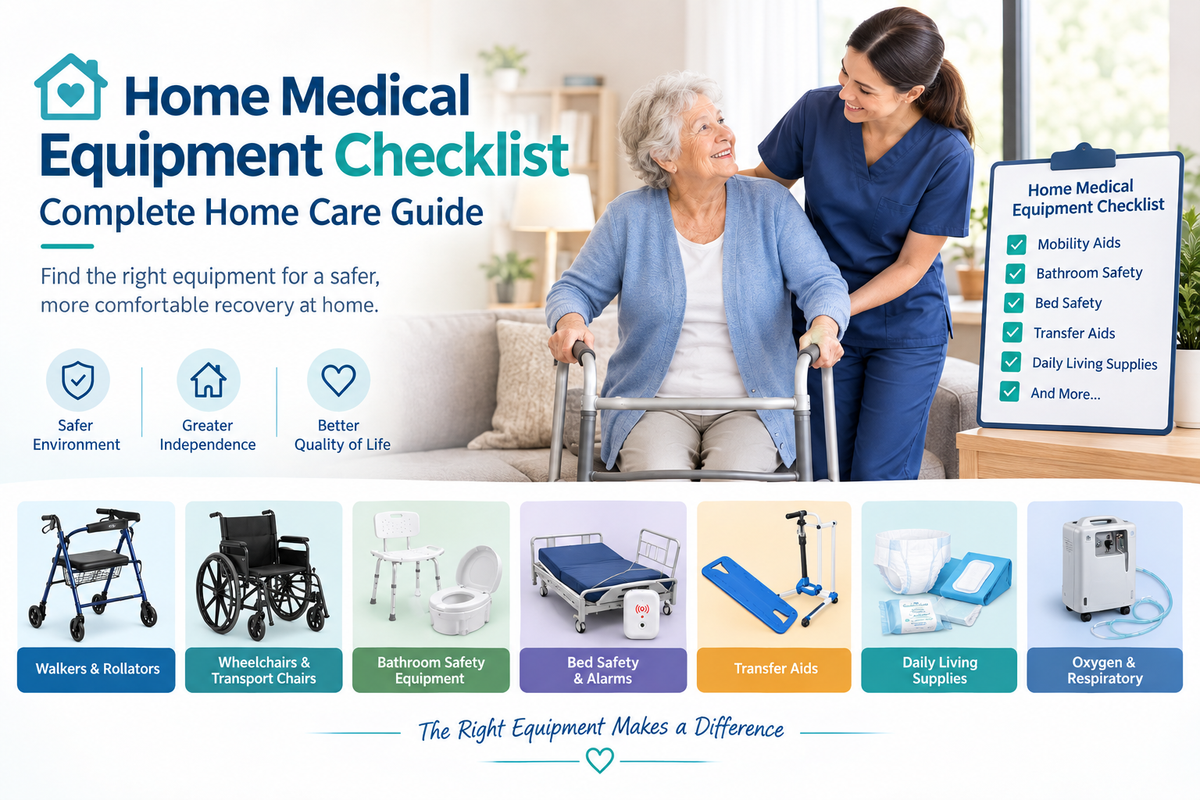
Returning home after a hospital stay can require more preparation than simply arranging transportation. Depending on a person’s recovery needs, mobility level, and daily routine, the right home medical equipment can make everyday activities safer, easier, and more manageable.
A well-planned home medical equipment checklist can help caregivers and families identify essential equipment before or shortly after a patient returns home. From wheelchairs and walkers to bed safety equipment, bathroom aids, and incontinence supplies, the right products can support daily care and mobility.
This guide covers common medical equipment for home use, what each category is designed to do, and what to consider when choosing equipment for a home recovery setup.
What Is Home Medical Equipment?
Home medical equipment (HME) includes products designed to support mobility, personal care, safety, daily activities, and other healthcare needs in a home environment.
The equipment needed varies from person to person. Someone recovering from a procedure may only need a walker, shower chair, and raised toilet seat, while a person with significant mobility limitations may require a wheelchair, transfer equipment, bed safety products, and other supportive devices.
Before purchasing equipment, consider the person's:
- Mobility level
- Weight and height
- Ability to stand or transfer
- Bathroom accessibility
- Bedroom setup
- Level of caregiver assistance
- Recovery or daily-care routine
- Available space in the home
Home Medical Equipment Checklist
Use the following checklist as a starting point when preparing a home for recovery or ongoing care.
1. Walkers and Rollators
A walker can provide additional stability for people who need support while standing or walking.
Common options include:
- Standard walkers
- Folding walkers
- Wheeled walkers
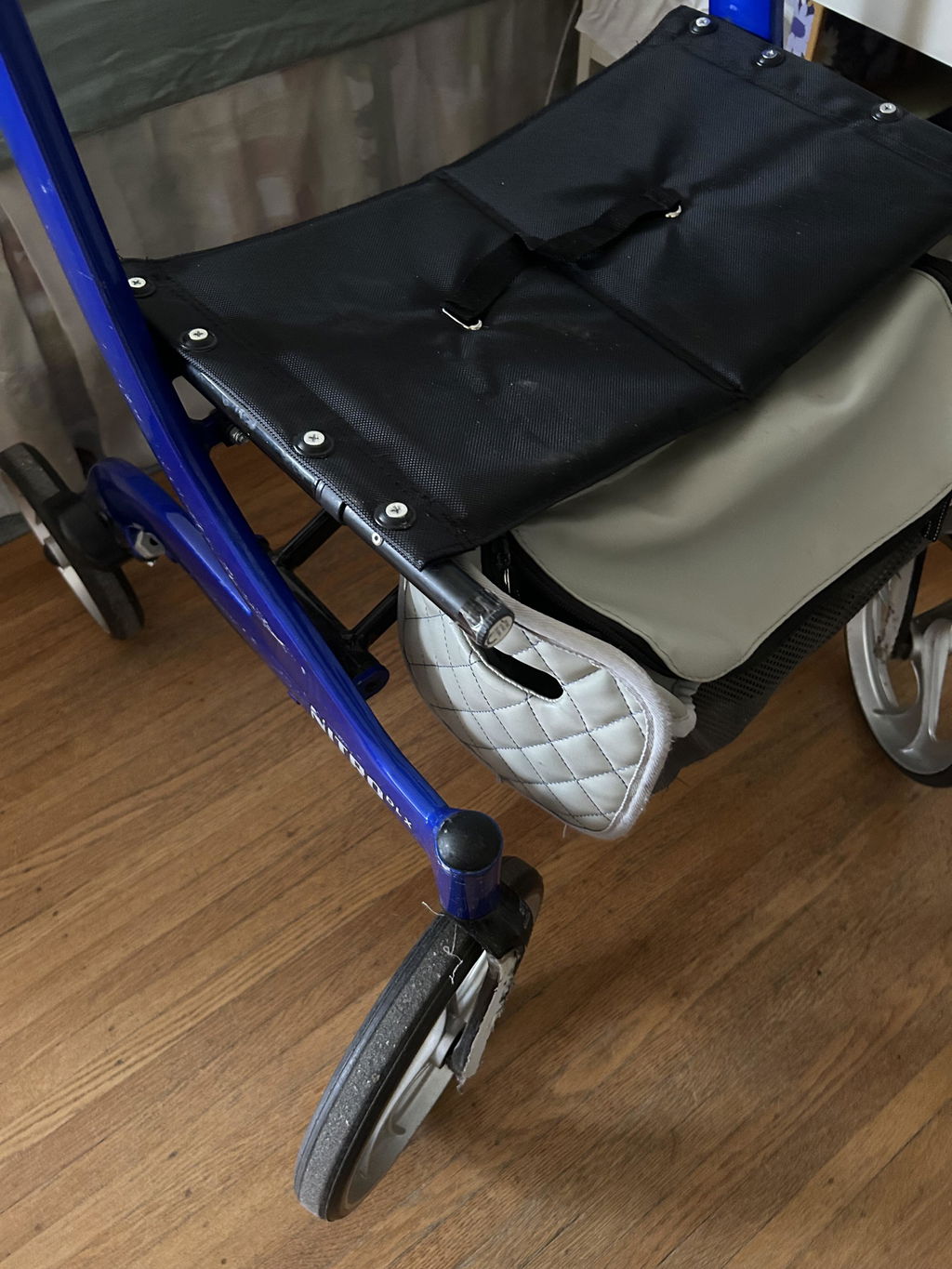
- Rollator walkers with seats
- Bariatric walkers
- Forearm walkers
- All-terrain walkers
A standard walker may be useful when stability and controlled movement are priorities. A rollator walker generally includes wheels and often has a seat for users who need to take periodic rest breaks.
When selecting a walker, consider height adjustment, weight capacity, wheel size, frame width, handle design, and storage or folding requirements.
For people who need more support around the home, explore AllCareStore's Walkers & Rollators collection.
2. Wheelchairs and Transport Chairs
A wheelchair may be appropriate when walking is difficult, limited, or not practical for certain activities.
There are several types of wheelchairs, including:
- Manual wheelchairs
- Lightweight wheelchairs
- Transport wheelchairs
- Reclining wheelchairs
- Bariatric wheelchairs
- Pediatric wheelchairs
- Specialty positioning wheelchairs
A transport wheelchair is typically designed to be pushed by a caregiver, while a standard manual wheelchair may allow the user to propel the chair independently depending on their strength and abilities.
Important wheelchair considerations include seat width, seat depth, weight capacity, overall chair width, armrest style, footrests, wheel configuration, and folding requirements.
3. Transfer Boards and Transfer Aids
Moving safely between a bed, wheelchair, chair, or other surface can be challenging for someone with limited mobility.
Transfer boards and other transfer aids can help facilitate certain transfers when used correctly.
Before selecting a transfer device, consider:
- Transfer distance
- Height difference between surfaces
- User's ability to assist with the transfer
- Caregiver assistance
- Weight capacity
- Available space
A healthcare professional or qualified caregiver can help determine whether a particular transfer method is appropriate.
4. Bathroom Safety Equipment
The bathroom can present additional challenges during recovery because of slippery surfaces, limited space, and the need to transfer between sitting and standing positions.
Common bathroom safety equipment includes:
- Shower chairs
- Shower benches
- Transfer benches
- Raised toilet seats
- Toilet safety frames
- Grab bars
- Bath mats
- Handheld shower accessories
- Bedside commodes
A shower chair can provide a seated bathing option for people who have difficulty standing for extended periods.
A raised toilet seat can increase the height of the toilet surface, which may make sitting down and standing up easier for some users.
Choose bathroom equipment based on the user's size, bathroom layout, weight capacity, and ability to transfer.
5. Bedside Commodes
A bedside commode can be useful when walking to the bathroom is difficult or when a bathroom is not easily accessible from the bedroom.
Depending on the model, a commode may function as:
- A standalone bedside toilet
- A raised toilet seat
- A toilet safety frame
- A shower or bath chair
Check the manufacturer's instructions to understand how the specific model is designed to be used.
6. Bed Rails and Bed Safety Equipment
Getting in and out of bed can be difficult after hospitalization or during periods of limited mobility.
Depending on the individual's needs, bed safety equipment may include:
- Bed rails
- Bed assist handles
- Bed wedges
- Positioning supports
- Fall sensor pads
- Bed alarms
A bed alarm can provide an alert when a person gets up or leaves the bed, depending on the system.
Bed rails should be selected and used carefully because improper placement or use may create additional safety concerns. Always follow the manufacturer's instructions and consider professional guidance when appropriate.
7. Fall Detection and Bed Alarms
Fall prevention at home often involves multiple safety measures rather than one product.
Common monitoring products include:
- Bed-exit alarms
- Chair alarms
- Fall sensor pads
- Bed alarms
- Wearable fall detection devices
These products can help caregivers monitor movement or receive alerts when certain events occur.
However, fall detection devices and bed alarms are monitoring tools, not guarantees against falls. They should be part of a broader home safety plan.
8. Incontinence and Personal Care Supplies
Some people may need additional incontinence supplies after hospitalization or as part of ongoing daily care.
Common products include:
- Adult diapers
- Adult pull-ups
- Men's guards
- Incontinence pads
- Underpads
- Disposable bed pads
- Reusable underpads
- Incontinence wipes
- Disposable washcloths
Underpads for beds and chairs can help protect furniture and bedding from moisture. Choosing between disposable and reusable underpads depends on the care routine, frequency of use, washing requirements, and personal preference.
For caregivers, keeping commonly used supplies organized and easily accessible can make daily care more efficient.
9. Overbed Tables and Daily-Living Accessories
An overbed table can provide a convenient surface for meals, reading, personal items, or other activities when a person spends significant time in bed.
Other useful daily-living products may include:
- Reaching aids
- Dressing aids
- Pill organizers
- Bed trays
- Adjustable tables
- Patient room accessories
The goal is to keep frequently used items within an appropriate and safe reach.
10. Oxygen Management Equipment
Some individuals may require oxygen management equipment as part of their prescribed home-care routine.
Depending on the prescribed setup, equipment may include:
- Oxygen concentrators
- Oxygen cylinders
- Oxygen regulators
- Oxygen tubing
- Nasal cannulas
- Oxygen accessories
- Portable oxygen solutions
Oxygen equipment should only be used according to the instructions provided by the healthcare provider and equipment manufacturer.
Because oxygen supports combustion, it is especially important to follow fire-safety instructions and keep oxygen equipment away from flames, smoking materials, and other ignition sources.
11. Pressure Relief and Positioning Products
People who spend extended periods in bed or seated may need products designed to support positioning and pressure management.
Depending on individual needs, options may include:
- Wheelchair cushions
- Seat cushions
- Mattress overlays
- Bed wedges
- Positioning pillows
- Pressure-relief surfaces
The appropriate product depends on factors such as mobility, positioning ability, time spent sitting or lying down, and individual risk factors.
A healthcare professional can help determine whether specialized pressure-management equipment is appropriate.
Home Medical Equipment Checklist by Room
Organizing equipment by room can make preparing the home easier.
Bedroom
Consider:
- Walker or rollator
- Wheelchair
- Bed rail or assist handle
- Bedside commode
- Bed alarm
- Fall sensor pad
- Overbed table
- Positioning products
- Incontinence supplies
Bathroom
Consider:
- Shower chair
- Shower bench
- Transfer bench
- Raised toilet seat
- Toilet safety frame
- Grab bars
- Non-slip bathroom accessories
Living Room
Consider:
- Walker or rollator
- Wheelchair
- Transfer aids
- Seat cushion
- Chair alarm
- Frequently used daily-living aids
Throughout the Home
Check whether the equipment can safely move through:
- Doorways
- Hallways
- Ramps
- Thresholds
- Bathroom entrances
- Bedroom entrances
A product that works well in one room may not be practical if it cannot fit through the home's doorways or maneuver around furniture.
How to Choose the Right Home Medical Equipment
Choosing medical equipment for home use should start with the person's actual daily needs rather than simply buying the most equipment possible.
Consider Mobility
Can the person walk independently, walk with assistance, or primarily use a wheelchair?
This can help determine whether a walker, rollator, wheelchair, or transfer equipment may be appropriate.
Measure Before Buying
Measurements are especially important for:
- Wheelchairs
- Walkers
- Rollators
- Shower chairs
- Transfer benches
- Raised toilet seats
- Bedside equipment
Measure doorways and available spaces as well as the user.
Check Weight Capacity
Always verify the manufacturer's listed weight capacity before purchasing mobility or bathroom equipment.
Do not assume that a larger-looking product automatically has a higher capacity.
Think About Storage
Folding walkers, rollators, and wheelchairs can be easier to store or transport.
Consider where the equipment will be kept when it is not being used.
Consider Caregiver Needs
If a caregiver will regularly assist with transfers, bathing, mobility, or daily care, the equipment should support that routine as well.
Follow Professional Recommendations
Some equipment should be selected with guidance from a healthcare professional, physical therapist, occupational therapist, respiratory professional, or another qualified provider.
This is particularly important for specialized mobility, transfer, positioning, respiratory, and safety equipment.
What Should You Buy Before Coming Home From the Hospital?
Not every household needs every item on this checklist.
For a person with temporary mobility limitations, a basic setup might include:
Basic Recovery Setup
- Walker or rollator
- Shower chair
- Raised toilet seat
- Grab bars or bathroom safety equipment
- Comfortable seating
- Basic personal-care supplies
For someone with more significant mobility limitations, additional equipment may include:
Expanded Home-Care Setup
- Wheelchair
- Transfer equipment
- Bedside commode
- Bed safety products
- Fall sensor or bed alarm
- Incontinence supplies
- Positioning products
- Overbed table
The right combination depends on the person's individual needs and home environment.
Home Medical Equipment Safety Tips
Before using any equipment, review the manufacturer's instructions and check that the product is appropriate for the intended user.
Keep these basic safety practices in mind:
- Check equipment regularly for damage or loose components.
- Follow weight-capacity guidelines.
- Keep walking paths clear.
- Make sure mobility equipment is adjusted correctly.
- Lock wheelchair brakes when transferring, when applicable.
- Keep frequently used items within a safe reach.
- Follow instructions for cleaning and maintenance.
- Keep medical equipment away from hazards such as water, heat, and open flames when applicable.
- Replace worn or damaged components according to manufacturer recommendations.
For specialized equipment, follow the instructions provided by the healthcare professional and manufacturer.
Frequently Asked Questions
What is the most common home medical equipment after hospital discharge?
Common equipment may include walkers, wheelchairs, shower chairs, raised toilet seats, bedside commodes, transfer aids, and bed safety products. The appropriate equipment depends on the person's mobility and care requirements.
How do I create a home medical equipment checklist?
Start by evaluating the person's mobility, bathroom needs, bedroom setup, transfer ability, daily activities, and caregiver requirements. Then identify equipment that addresses those specific needs.
Do I need a wheelchair after hospital discharge?
Not everyone needs a wheelchair. A wheelchair may be appropriate when walking is significantly limited or when longer distances cannot be managed safely with a walking aid.
What bathroom equipment is useful for home recovery?
Common bathroom safety equipment includes shower chairs, transfer benches, raised toilet seats, toilet safety frames, and grab bars.
Are bed alarms useful at home?
Bed alarms can provide alerts when a person gets out of bed or moves from a monitored area, depending on the product. They are best considered as one part of a broader safety and monitoring plan.
What should caregivers keep at home?
Caregivers may need mobility equipment, bathroom safety products, personal-care supplies, transfer aids, bed safety equipment, and other products based on the individual's daily routine.
How do I know what size wheelchair or walker to buy?
Measurements such as user height, weight, seat width, seat depth, and available space can help determine the appropriate product size. Always check the manufacturer's sizing specifications.
Can one product serve multiple purposes?
Some products are designed for multiple uses. For example, certain bedside commodes may also function as raised toilet seats or shower chairs. Always verify the manufacturer's intended uses before using a product in a different setting.
Final Thoughts
Preparing the home before or after hospital discharge can make daily routines more organized and manageable. A practical home medical equipment checklist helps families focus on the equipment that supports mobility, bathroom safety, transfers, personal care, and everyday activities.
Start with the person's actual needs, measure the home and equipment carefully, check weight capacities, and follow manufacturer instructions. For specialized equipment, work with the appropriate healthcare professional to determine what is suitable.
From walkers and rollators to wheelchairs, bathroom safety equipment, bed alarms, fall sensor pads, transfer aids, and incontinence supplies, AllCareStore provides a range of products that can help families build a more organized home-care environment.