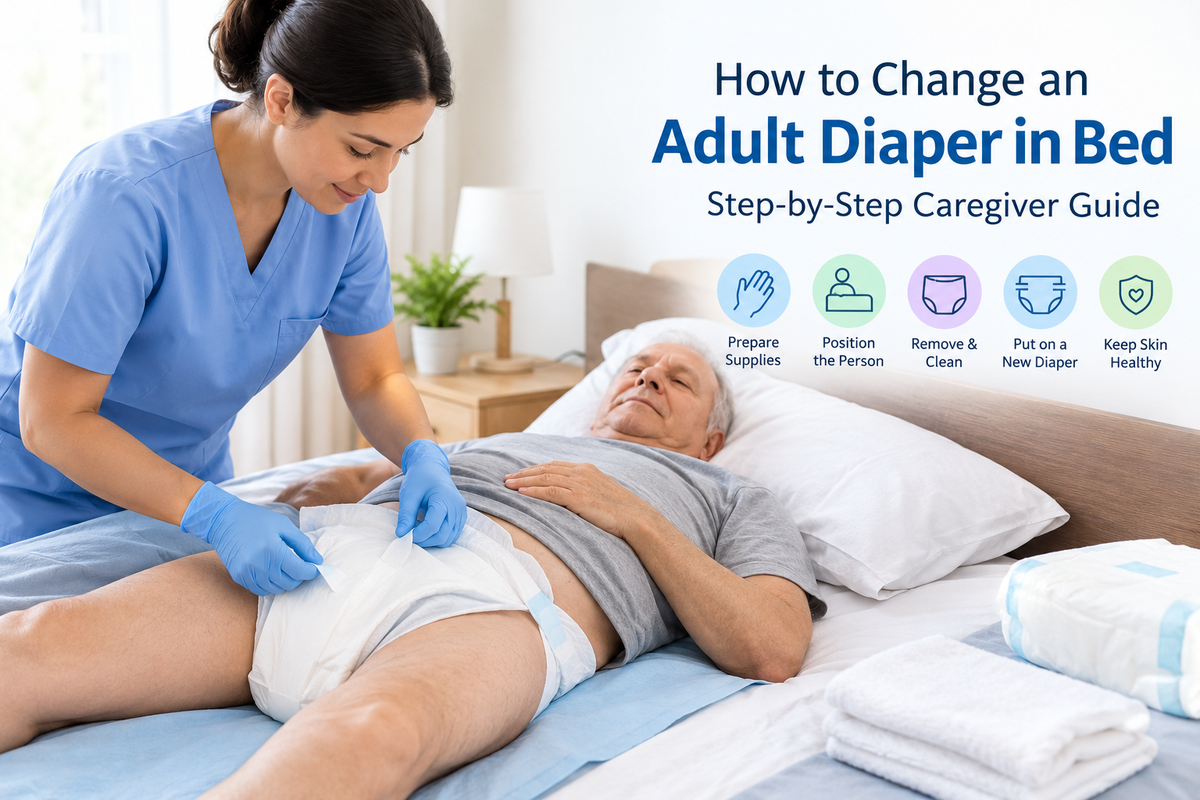
Changing an adult diaper while someone is lying in bed can feel difficult at first, especially when the person has limited mobility. A safe, organized routine can make the process quicker, more comfortable, and more dignified for both the wearer and caregiver.
This guide explains how to change an adult diaper in bed using a tab-style brief, how to position the product correctly, and how to avoid common leakage and skin-care mistakes.
What you need before starting
Gather supplies before beginning so the person is not left exposed while you search for items:
- a clean adult diaper with tabs in the correct size;
- adult wipes or a suitable rinse-free cleanser;
- gloves if used in the person's care routine;
- a clean underpad if the bedding needs protection;
- skin protectant if part of the care plan;
- a disposal bag or lined waste container;
- clean clothing or bedding if needed.
Step 1: explain what you are doing
Tell the person what is about to happen and preserve privacy as much as possible. Even when someone has cognitive impairment, a calm explanation can reduce anxiety.
Step 2: position the person safely
Lower or raise the bed to a comfortable working height if the equipment allows it and you know how to use it safely. Ask the person to bend their knees or assist with rolling only if they can do so safely.
If the person requires substantial help with turning or transfers, use the techniques recommended by their healthcare team. Do not attempt a lift or movement that is beyond your ability. The National Institute on Aging advises caregivers to know their limits when moving another person and to use safe body mechanics.
Step 3: open the soiled brief
Undo the side tabs. Fold the front panel inward to contain moisture or stool and gently clean the front area as needed.
Ask or help the person roll onto one side. Roll the used brief inward toward the person's back so the soiled surface stays contained.
Step 4: cleanse and dry the skin
Clean gently from the cleanest area toward the more soiled area, using fresh sections of the wipe as needed. Avoid aggressive rubbing.
MedlinePlus recommends keeping skin clean and dry because prolonged exposure to urine or stool can contribute to irritation and skin breakdown. If a barrier cream or skin protectant is part of the person's routine, apply it according to the product directions.
Step 5: position the clean brief
With the person still on their side:
- fold the clean tab brief lengthwise with the inside facing the wearer;
- slide or tuck the back half of the brief behind the hips;
- make sure the top edge is positioned at an even height across the lower back;
- place the rear portion flat rather than bunched.
If replacing the underpad, this is also a convenient time to roll the clean pad into position under the person.
Step 6: roll the person back
Help the person roll gently onto their back and then slightly toward the opposite side if needed. Pull the clean brief through so it lies flat beneath the body.
Remove the rolled soiled brief and dispose of it appropriately.
Step 7: bring the front panel into position
Bring the front of the clean brief between the legs. Make sure the absorbent core is centered and the material is not twisted.
Gently pull out the standing leg gathers. If the leak guards remain folded inward, liquid may escape around the thighs even when the brief is absorbent enough.
Step 8: fasten the tabs evenly
Fasten the lower tabs first if that matches the product design, then secure the upper tabs. The brief should be snug but not excessively tight.
Check that:
- there are no large gaps around the legs;
- the waistband sits evenly;
- the brief is centered front to back;
- tabs are secure but not pulling the material sharply;
- the person can move and breathe comfortably.
If repeated leaks occur, see our sizing and leak troubleshooting guide.
Step 9: finish the skin and bedding check
Make sure the skin is dry, clothing and bedding are clean, and no wet material is trapped under the person. Smooth the underpad so it does not bunch beneath pressure points.
How often should an adult diaper be changed?
There is no single schedule that works for every person. Check regularly and change after bowel movements and when the product is wet, soiled, leaking, uncomfortable, or approaching its practical capacity. Some people need more frequent checks because of fragile skin, heavy leakage, limited ability to communicate discomfort, or other medical needs.
Do not rely only on maximum absorbency ratings to extend wear time. Skin condition and comfort matter too.
Common mistakes to avoid
- Using the wrong size: oversized briefs can leave leg gaps; undersized briefs can fit poorly and create pressure.
- Leaving leak guards folded inward: this can cause side leakage.
- Fastening one side much tighter than the other: uneven tension can shift the absorbent core.
- Adding a waterproof-backed pad inside the brief: it can block flow into the main absorbent core. Use a compatible booster pad when extra capacity is needed.
- Ignoring skin redness: persistent redness, broken skin, pain, or drainage should be assessed promptly.
- Attempting unsafe lifting: use assistance or equipment when the person's mobility needs exceed what one caregiver can safely manage.
Frequently asked questions
Are tab briefs better than pull-ups for bedbound patients?
Often, yes. Tab briefs can be opened and positioned without pulling the garment over the legs, which usually makes bed changes easier.
Should I put an underpad beneath the person?
An underpad can protect bedding during changes and provide backup protection in case the primary brief leaks.
Can I use two adult diapers at once for more protection?
Layering complete briefs is generally not a good solution because it can distort fit and prevent the outer garment from absorbing properly. Choose the right absorbency level or use a compatible flow-through booster if the manufacturer permits it.
What if the person cannot roll onto their side?
Ask a healthcare professional, physical therapist, occupational therapist, or home-care clinician to show you a safe changing and repositioning method appropriate to the person's condition and available equipment.
Build a bedside care kit: Shop tab-style adult briefs, adult wipes, underpads, and other incontinence and toileting supplies at AllCareStore.
General information only. Follow the person's care plan and seek professional training when transfers, turning, wounds, or other medical needs make bed care difficult.