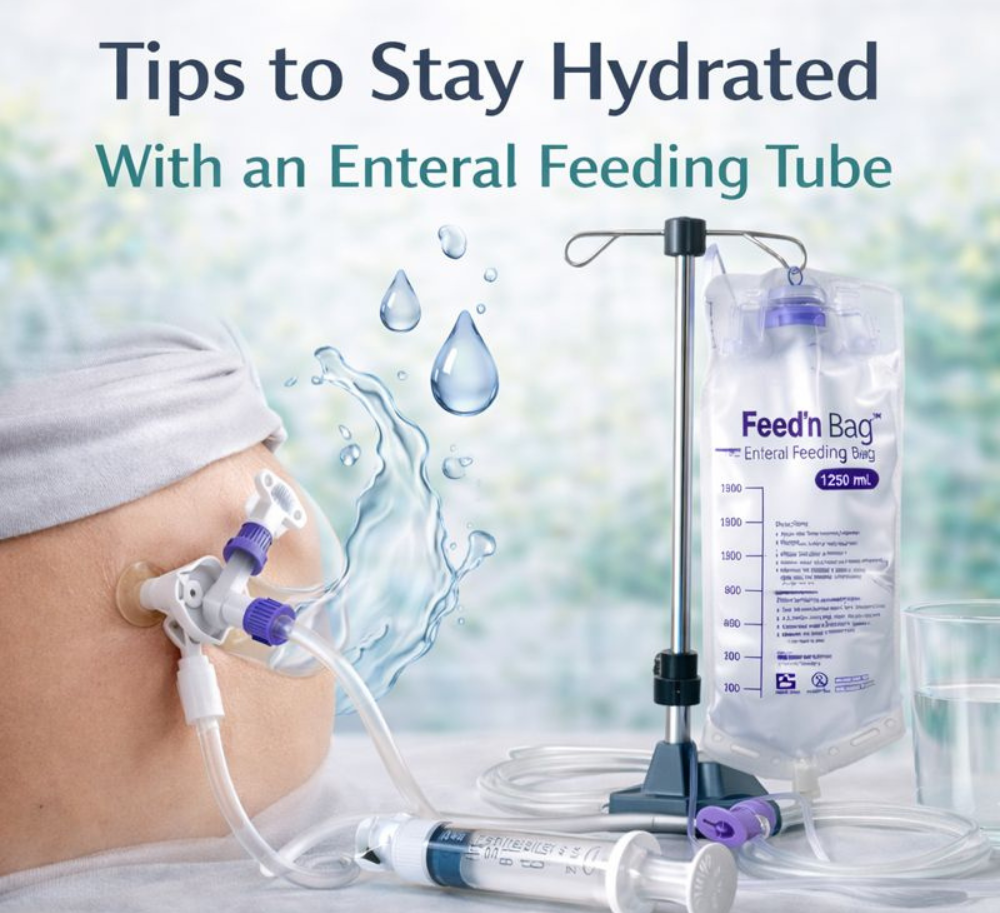
It is equally imperative to stay hydrated and take the right vitamins, particularly if you or someone you love uses a tube to feed themselves. The role of water in digestion, circulation, temperature regulation, and overall comfort is crucial. Without adequate hydration, people can suffer from fatigue, constipation, headaches, and a dry mouth. Tube-related problems can also develop.
A person who receives vitamins orally cannot experience thirst like someone who receives vitamins via a feeding tube. When using tube feeding at home, it's crucial to pay extra attention to hydration.
Patients and caregivers in the United States can use this guide for easy, simple tips on staying hydrated with an enteral feeding tube.
Why Hydration Matters With Tube Feeding

Water is needed for almost every feature in the body. For humans using tube feeding, hydration enables:
- Keep the body functioning well
- Prevent constipation and swollen stools
- Support kidney and bladder fitness
- Reduce fatigue and dizziness
- Prevent feeding tube clogs
- Improve comfort at some stage during and after feedings
Even mild dehydration can make tube feeding uncomfortable and increase the risk.

How Hydration Works With an Enteral Feeding Tube
With oral eating, fluids come from drinks and foods. With tube feeding, fluids are provided through:
- Water mixed into the tube feeding formula
- Water flushes through the feeding tube
- Extra water boluses are given separately
Some formulas include more water than others, but most humans still want additional water flushes to stay absolutely hydrated.
Your healthcare company or dietitian will calculate how much total fluid you want every day, primarily based on:
- Age
- Weight
- Medical condition
- Activity level
- Medications
Staying hydrated with an enteral feeding tube also depends on having the right supplies available at home. Items like syringes, feeding bags, extension sets, and clean water containers play a crucial role in safe and effective hydration.
To understand which supplies are essential and how they support daily tube-feeding care, read our detailed guide, "What You Need to Know About Enteral Feeding Supply Kit Essentials," written for patients and caregivers in the United States.
Signs You May Not Be Getting Enough Fluids

It’s important to watch for signs of dehydration, especially if the patient cannot express thirst clearly.
Common signs include:
- Dark yellow urine
- Urinating less often
- Dry mouth or cracked lips
- Constipation
- Fatigue or weakness
- Dizziness
- Headaches

If these symptoms appear, contact your healthcare provider.
Learn More About Using a Feeding Pump Safely
Staying hydrated with an enteral feeding tube frequently entails regular water flushes use of a feeding pump. Knowing a way to set up and use your pump properly helps ensure water and vitamins are brought adequately and effectively.
For a whole step-by-step rationalisation, along with pump setup, priming, flushing, feeding, and cleansing, read our manual How to Use a Pump With Your Feeding Tube. This manual is especially beneficial for patients and caregivers managing tube feeding at home.

Tip 1: Follow Your Prescribed Water Flush Schedule
Water flushes are the most important part of hydration with tube feeding.
Most care plans recommend:
- Flushing before each feeding
- Flushing after each feeding
- Flushing before and after medications
A common flush amount is 30–60 mL of water, but always follow your provider’s instructions.

Skipping flushes can quickly lead to dehydration and tube clogging.
Tip 2: Do Not Skip Flushes Even If Formula Has Water

Many people assume that tube feeding formula alone provides enough fluids. While the formula does contain water, it is usually not enough to meet full hydration needs.
Flushes help:
- Meet daily fluid goals
- Keep the tube clear
- Improve digestion
Think of flushes as essential hydration, not optional steps.
Tip 3: Spread Water Intake Throughout the Day

Giving too much water at once can cause bloating or discomfort. Instead, spread water intake evenly.
Helpful strategies:
- Flush with every feeding
- Add extra flushes between feedings
- Give small water boluses if prescribed
Slow and steady hydration is easier on the stomach and intestines.
Tip 4: Use the Right Syringe for Water Flushing
By using the right syringe size, flushing can be made easier and safer.
People usually use:
- Flushing syringes of 60 mL
Syringes with larger volumes create less pressure, which protects feeding tubes.

Oral Medication Syringe NeoConnect at home 60 mL Enfit Tip Without Safety
Syringes should be replaced every 24–48 hours to prevent infection.
Tip 5: Use Room-Temperature Water
Water that is too cold causes cramps, and water that is too hot damages the tube.
The best practices are:
- Drink water at room temperature
- Stay out of extreme temperatures

You can flush tap water if it is safe to drink in your area, unless otherwise instructed.
Tip 6: Adjust Hydration During Illness or Hot Weather
Hydration needs can increase when:
- The patient has a fever
- There is diarrhoea or vomiting
- The weather is hot
- Activity level increases

Always speak with your healthcare provider before increasing water amounts, especially for patients with heart or kidney conditions.
Tip 7: Monitor Urine Output Daily

Urine colour and frequency are simple ways to monitor hydration.
Healthy signs:
- Pale yellow urine
- Regular urination
Warning signs:
- Dark urine
- Strong odor
- Very low output

Caregivers should keep a simple daily log if hydration is a concern.
Tip 8: Be Careful With Medications
Some medications can affect hydration by:
- Increasing fluid loss
- Causing diarrhea
- Requiring extra flushes
Always flush the tube before and after each medication to prevent interactions and clogging.

Never mix medications directly into the formula unless instructed.
Tip 9: Watch for signs of fluid overload

In addition to hydration, too much fluid can also be harmful, especially for patients with heart or kidney disease.
Fluid overload can be detected by the following signs:
- Foot, leg, or hand swelling
- Suddenly gaining weight
- Breathing difficulties
- Bloating in the abdomen

Contact your healthcare provider as soon as possible if you do notexperience these signs.
Tip 10: Keep a Daily Hydration Routine
Consistency makes hydration easier and safer.
Helpful habits:
- Follow the same flush schedule daily
- Set reminders for caregivers
- Keep supplies nearby
- Track fluid intake if needed
A routine reduces stress and improves long-term success.

Special Hydration Tips for Long-Term Tube Feeding
For patients using tube feeding long-term:
- Review hydration goals regularly
- Reassess after weight changes
- Adjust for seasonal weather
- Replace supplies on time
Long-term hydration management helps prevent chronic issues like constipation and kidney strain.
When to Call Your Healthcare Provider
Call your provider if you notice:
- Signs of dehydration
- Signs of fluid overload
- Persistent diarrhoea or vomiting
- Tube clogging despite flushing
- Sudden weight changes
Early intervention prevents complications.
Final Thoughts
For comfort, digestion, and overall health, it is crucial to stay hydrated with an enteral feeding tube. Keeping yourself hydrated can prevent constipation, fatigue, tube clogging, and headaches associated with dehydration. At home, hydration can be safely controlled by following your prescribed water flush schedule, monitoring hydration symptoms, and maintaining a consistent daily routine.
For sufferers and caregivers within the USA, getting access to reliable, top-notch substances makes tube feeding easier and less demanding. Trusted online medical suppliers like All Care Store offer a wide range of enteral feeding supplies, including feeding bags, syringes, pumps, and nutrition products, multi function handy place. With the right supplies and guidance from your healthcare provider, staying hydrated with an enteral feeding tube may be accomplished confidently and adequately every day.
FAQs: Hydration With an Enteral Feeding Tube
What is the daily water requirement for tube-feeding patients?
The amount of fluid you need depends on your age, weight, and health condition. For safe hydration, your healthcare provider calculates the right amount.
Does the feeding tube allow me to give extra water?
Only drink extra water if your healthcare provider has approved it, especially if you have heart or kidney issues.
Is tube feeding or formula considered hydration?
To meet their full hydration needs, most patients still require additional water flushes.
What is the best water to use for flushing?
Drinkable water should be at room temperature unless your provider instructs otherwise.
What is the best way to determine whether I am hydrated enough?
Proper hydration is characterised by light-coloured urine, regular output, and comfort during feedings.