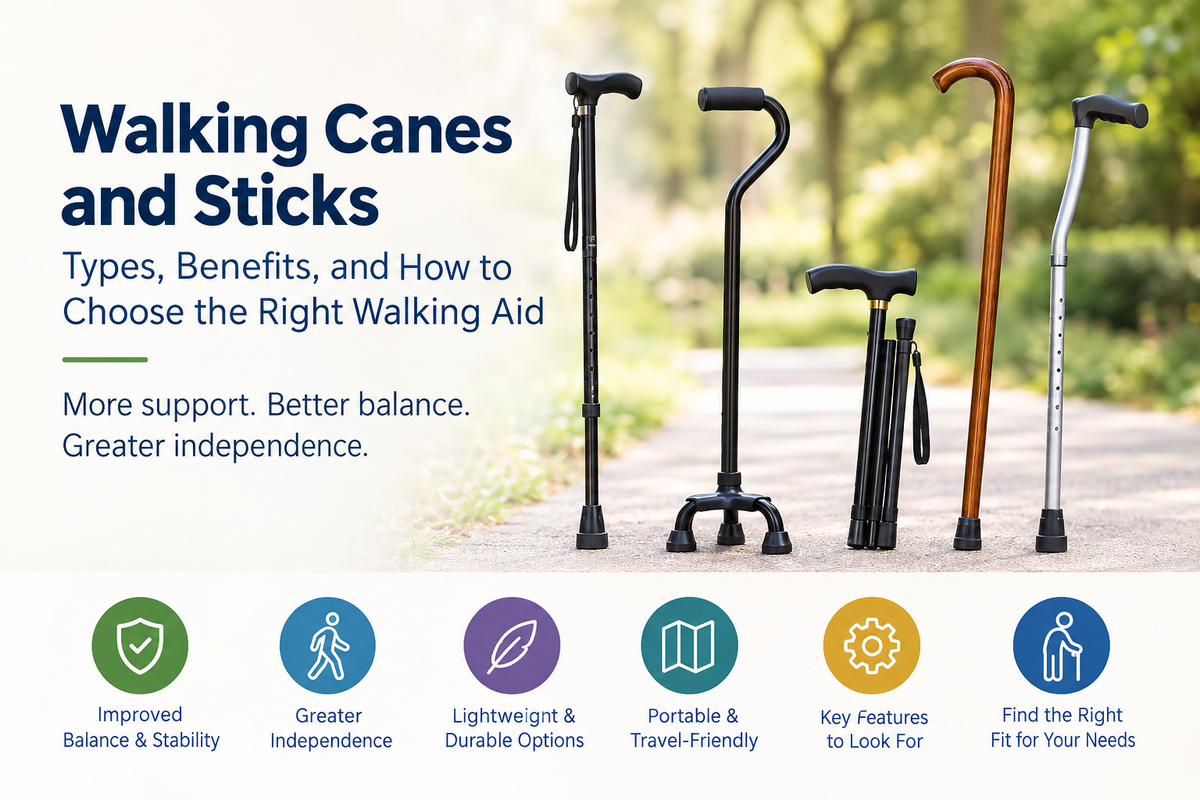
Walking canes and sticks are practical mobility aids that help provide additional support, improve stability, and make everyday walking more manageable. Whether you are looking for a walking cane for seniors, a lightweight walking stick, or an adjustable walking cane for adults, choosing the right option can support greater confidence and independence during daily activities.
From traditional wooden walking sticks to modern folding canes and ergonomic designs, there are several walking aids for seniors and adults to suit different mobility needs. In this guide, we will explore the types of walking canes, their benefits, important features, and how to choose the best walking stick for your needs.
What Are Walking Canes and Sticks?
Walking canes and walking sticks are mobility aids that provide an additional point of contact with the ground while walking. They can help some people maintain balance, improve stability, and reduce the amount of weight placed on one leg.
Although these terms are often used interchangeably, walking canes and sticks can differ in design and intended use.
-
Walking canes: Typically feature curved, T-shaped, or ergonomic handles and are designed for everyday walking support.
-
Walking sticks: Often have a traditional straight design and may be used for light support or recreational walking.
-
Adjustable walking canes: Allow users to change the height for a more comfortable fit.
-
Folding walking sticks: Collapse for convenient storage and travel.
The best choice depends on your balance, strength, walking environment, and level of support required.
Benefits of Walking Canes and Sticks
Using the right mobility cane can make everyday movement more manageable for adults and seniors who need additional walking support.
1. Improved Balance and Stability
A properly fitted walking cane for balance provides an additional point of contact with the ground. This may help users feel more stable while walking and navigating familiar environments.
2. Greater Everyday Independence
Walking aids for seniors can help make everyday activities, such as walking around the home, visiting shops, and taking short outdoor walks, more manageable.
3. Comfortable Walking Support
A cane with an ergonomic handle and suitable height may help users maintain a more natural walking posture and improve grip comfort during regular use.
4. Convenient Portability
Folding walking canes are designed to collapse into a compact shape, making them easier to store in a bag or carry while traveling.
5. Support for Daily Activities
A suitable walking cane for adults may provide additional support during routine activities. However, a cane may not offer enough stability for people with significant balance difficulties or substantial weight-bearing needs.
Types of Walking Canes and Sticks
Understanding the different types of walking canes for adults and seniors can help you choose a design that matches your daily routine.
1. Standard Walking Canes
Standard walking canes usually have a single tip and a curved or T-shaped handle. They are a popular option for people who need light support while walking.
Key features:
-
Simple and lightweight design
-
Suitable for routine indoor and outdoor use
-
Available in adjustable and fixed-height models
-
Easy to carry and store
Best for: Adults who need light balance assistance and limited walking support.
2. Quad Canes and Four-Pronged Walking Canes
A quad cane features a wider base with four contact points. This design can provide a broader support base than a single-tip cane when used correctly.
Key features:
-
Four-point base for additional standing stability
-
Some models can stand upright independently
-
Available in small-base and large-base designs
-
Often features adjustable height
Best for: Users who need more standing stability, provided they can safely manage the cane's base.
3. Folding Walking Canes
A folding walking stick collapses into smaller sections, making it convenient to carry or store when not in use.
Key features:
-
Compact and portable design
-
Convenient for travel and occasional outings
-
Often available with adjustable height
-
Easy to store in suitable bags or compartments
Best for: People who prioritize portability and convenient storage.
4. Adjustable Walking Canes
An adjustable walking cane allows users to change its height to achieve a more suitable fit.
Key features:
-
Customizable height
-
Available in lightweight aluminum
-
Suitable for different user heights
-
Often includes a locking mechanism
Best for: Adults and seniors who need a cane fitted to their height.
5. Traditional Wooden Walking Sticks
Wooden walking sticks offer a classic appearance and may feature straight shafts or curved handles.
Key features:
-
Traditional styling
-
Available in different lengths and finishes
-
Weight and durability vary by construction
-
Suitable for light support when appropriately fitted
Best for: Users who prefer a traditional design and have relatively modest support needs.
6. Ergonomic Walking Canes
Ergonomic walking canes feature specially shaped handles designed to provide a more comfortable grip.
Key features:
-
Shaped handles for comfortable hand positioning
-
Some models include cushioned grips
-
Available in different materials and styles
-
Suitable for regular use when correctly fitted
Best for: Users who prioritize grip comfort during everyday walking.
Walking Cane vs. Walking Stick: What Is the Difference?
Although both terms describe handheld walking aids, their designs and intended uses can vary.
| Feature | Walking Cane | Walking Stick |
|---|---|---|
| Main purpose | Everyday walking support | Light walking support or recreational use |
| Handle | T-shaped, curved, or ergonomic | Often straight or traditionally curved |
| Height options | Many adjustable models | Fixed and adjustable models |
| Base design | Usually one tip or a multi-point base | Often a single tip |
| Common materials | Aluminum, steel, or wood | Wood, aluminum, or composite materials |
| Portability | Folding options widely available | Depends on the design |
Which should you choose? If you need a mobility aid for everyday balance assistance, consider a properly fitted walking cane for seniors or adults. If you prefer a traditional design for light support during walks, a walking stick may be appropriate.
The actual stability depends on the product's design, fit, and correct use rather than its name alone.
How to Choose the Best Walking Cane for Seniors
Selecting the best walking cane for seniors involves more than choosing an attractive design. Consider the following factors before making a purchase.
1. Choose the Correct Cane Height
A correctly fitted cane can help support a more natural walking posture.
To estimate the appropriate height:
-
Stand upright while wearing your usual walking shoes.
-
Let your arms rest naturally at your sides.
-
Position the cane beside you.
-
The handle should generally align with the crease of your wrist.
-
When holding the handle, your elbow should remain slightly bent.
A physical therapist or healthcare professional can help confirm the correct height, especially if you have balance difficulties or specific mobility limitations.
2. Consider the Handle Design
The handle affects how comfortably and securely you can hold your cane.
Common options include:
-
T-shaped handles: Offer a compact, straightforward grip.
-
Offset handles: Position the hand above the cane shaft.
-
Ergonomic handles: Are shaped to support comfortable hand positioning.
-
Cushioned handles: May improve comfort during regular use.
If you have difficulty gripping objects, ask a healthcare professional to help you select an appropriate handle.
3. Look for a Non-Slip Rubber Tip
A walking cane with a rubber tip helps provide traction on suitable walking surfaces. Check the tip regularly for wear, cracks, or looseness, and replace it when necessary.
For outdoor use, consider whether the tip is suitable for the surfaces where you usually walk. Wet floors, ice, uneven ground, and loose gravel can still present slipping risks.
4. Check the Weight Capacity
Always check the manufacturer's stated walking cane weight capacity before buying.
Choose a cane that meets your body weight and support requirements. Do not assume that a heavier-looking cane automatically provides greater support.
5. Choose a Lightweight but Durable Material
Common walking cane materials include:
-
Aluminum: Lightweight and commonly used in adjustable walking canes.
-
Steel: Often heavier and used in some reinforced designs.
-
Wood: Traditional in appearance, with weight and durability varying by construction.
-
Composite materials: Used in selected modern designs.
A lightweight walking cane may be easier to lift and reposition, but strength, stability, and correct fit should remain priorities.
6. Consider Your Daily Environment
Think about where you will use the cane most frequently.
-
Indoor use: Look for a manageable size and a tip suited to smooth floors.
-
Outdoor use: Consider grip, durability, and the terrain you encounter.
-
Travel: A folding walking cane may be convenient for storage.
-
Frequent daily use: A comfortable handle and suitable weight may be especially important.
Walking Canes vs. Walkers and Rollators
A cane may provide enough support for some users, while others may benefit from a different mobility aid.
| Mobility Aid | Main Features | Best Suited For |
|---|---|---|
| Walking cane | Handheld support with a single tip or multi-point base | Light balance assistance |
| Standard walker | Four legs, usually without wheels | Users needing a broader support base |
| Two-wheel walker | Front wheels and rear tips | Users needing more support than a cane provides |
| Rollator walker | Usually three or four wheels; often includes brakes and a seat | Users who can safely manage the brakes and need walking support |
| Transport wheelchair | Caregiver-propelled seating | People who cannot safely or comfortably walk the required distance |
If you are unsure whether a cane is sufficient, a healthcare professional or physical therapist can assess your walking ability and recommend an appropriate device.
Explore related mobility options at AllCareStore:
How to Use a Walking Cane Correctly
Proper technique is important for safe and effective cane use.
-
Hold the cane on the appropriate side. For many people with weakness or an injury affecting one leg, the cane is held on the opposite side. Follow your healthcare professional's instructions.
-
Move the cane and affected leg together. This is a common walking pattern when one leg requires additional support.
-
Step forward with the stronger leg. Move forward as comfortably and safely as possible.
-
Keep the cane close to your body. Avoid reaching too far forward or leaning heavily to one side.
-
Check the walking surface. Take extra care on wet, uneven, or slippery ground.
-
Inspect the cane regularly. Check its height adjustment, locking mechanism, handle, shaft, and rubber tip.
Stair techniques vary according to the user's condition and the type of stairs. Ask a physical therapist to demonstrate a safe technique rather than relying on general instructions alone.
Common Mistakes to Avoid When Buying Walking Canes
Avoid these common mistakes when selecting a walking cane or stick for seniors:
-
Choosing the wrong height: A cane that is too tall or too short can affect posture and walking technique.
-
Ignoring handle comfort: An uncomfortable grip may make regular use difficult.
-
Overlooking the rubber tip: A worn tip can reduce traction.
-
Selecting the wrong support level: A single-tip cane may not provide enough stability for someone with substantial balance difficulties.
-
Ignoring weight capacity: Always follow the manufacturer's specifications.
-
Using a damaged cane: Loose joints, bent shafts, and faulty locking mechanisms should be addressed before use.
-
Assuming a cane prevents every fall: A cane may help with stability, but it does not eliminate fall risk.
If you experience repeated falls, sudden changes in balance, or difficulty bearing weight, seek professional assessment before choosing a walking aid.
Final Thoughts: Find the Right Walking Cane or Stick
The right walking cane or walking stick can support everyday mobility, improve confidence, and help some adults and seniors manage routine activities. Options range from adjustable walking canes and folding walking sticks to quad canes and ergonomic designs.
Before purchasing, consider the cane's height, handle, weight capacity, rubber tip, and intended use. Most importantly, choose a mobility aid that matches your support needs rather than selecting one based on appearance alone.
Explore AllCareStore's mobility and transferring products to discover mobility solutions for different everyday needs.