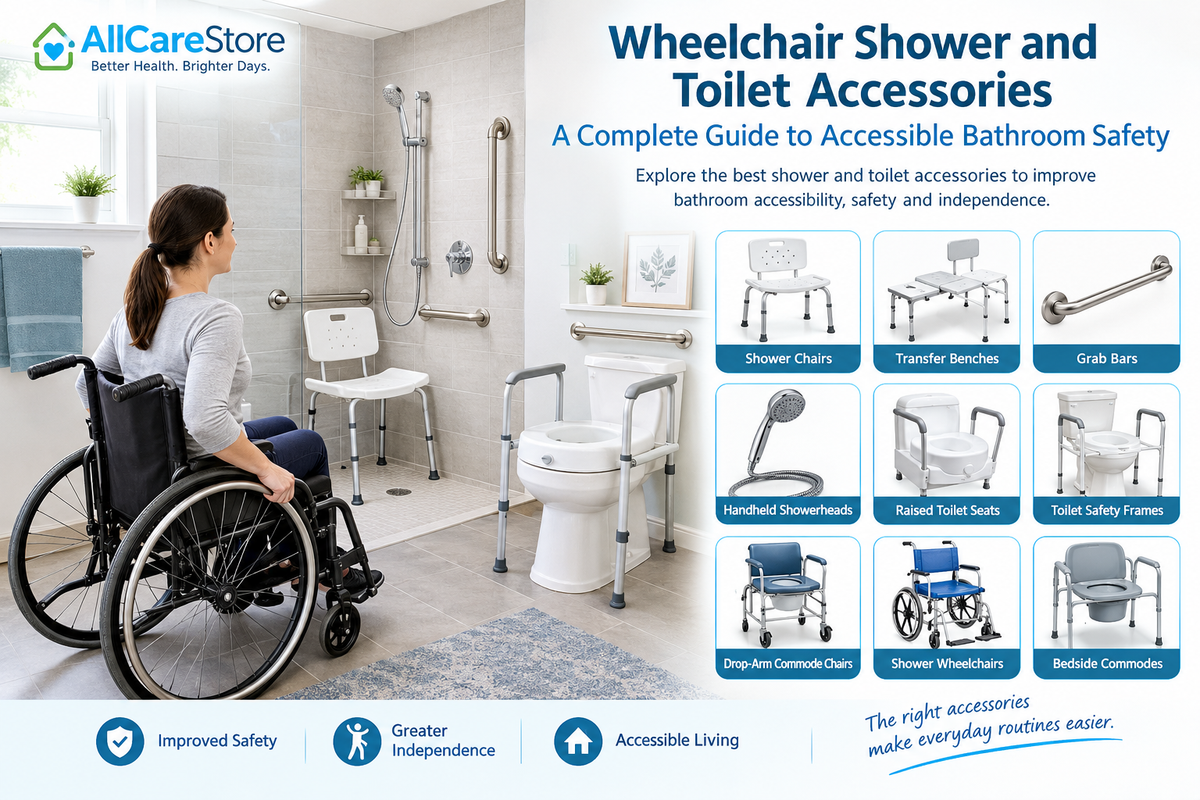
Bathrooms should be safe, comfortable, and accessible for everyone. For wheelchair users and people with limited mobility, the right bathroom equipment can make daily hygiene routines easier and help support greater independence. From wheelchair shower accessories to wheelchair toilet accessories, choosing appropriate products can improve bathroom accessibility, stability, and convenience.
Whether you are adapting a home bathroom, assisting a family member, or selecting equipment for a healthcare facility, understanding the available accessible bathroom equipment is an important first step.
In this guide, we explore the essential shower and toilet accessories for wheelchair users, including grab bars, shower chairs, transfer benches, raised toilet seats, commode chairs, and other bathroom safety products. You will also learn how to compare features, evaluate compatibility, and choose equipment that fits your bathroom layout and mobility needs.
Quick Comparison: Best Wheelchair Shower and Toilet Accessories
| Bathroom accessory | Primary purpose | Best suited for |
|---|---|---|
| Shower chair | Provides a seated bathing option | Users who cannot safely stand throughout a shower |
| Transfer bench | Supports transfers into and out of a bathtub | Wheelchair users with suitable transfer ability or caregiver assistance |
| Grab bars | Provides a secure handhold | Bathrooms requiring additional support |
| Handheld showerhead | Makes seated bathing easier | Wheelchair users and caregivers |
| Raised toilet seat | Increases toilet seat height | Users who find standard toilet heights difficult |
| Toilet safety frame | Provides arm supports near the toilet | People who need assistance sitting down or standing up |
| Drop-arm commode chair | Supports selected lateral transfers | Users who need a removable armrest and appropriate assistance |
| Shower wheelchair | Supports seated movement and bathing | Users needing wheeled bathroom mobility equipment |
Important: Not every accessory is appropriate for every wheelchair user or bathroom. Product dimensions, weight capacity, transfer ability, bathroom space, and caregiver requirements should guide the final selection.
1. What Are Wheelchair Shower and Toilet Accessories?
Wheelchair shower and toilet accessories are products designed to improve bathroom access, support transfers, and make bathing and toileting more manageable for people with mobility limitations.
These products may be used in residential bathrooms, assisted-living communities, rehabilitation settings, and long-term care facilities.
Common categories include:
- Wheelchair-accessible shower equipment, such as shower chairs, rolling shower commodes, and transfer benches.
- Bathroom grab bars and safety rails for additional hand support.
- Accessible toilet accessories, including raised toilet seats and toilet safety frames.
- Handheld showerheads and adjustable shower fixtures.
- Non-slip bathroom products that help manage slipping hazards.
- Wheelchair-accessible bathroom fixtures, including appropriately designed sinks, toilets, and roll-in showers.
The right combination depends on whether the user can stand, how they transfer between surfaces, whether a caregiver provides assistance, and how much space is available.
2. Best Wheelchair Shower Accessories for Safer Bathing
Bathing can present challenges when a person has difficulty standing, maintaining balance, or moving between a wheelchair and a shower. Appropriate shower equipment can provide a more practical bathing arrangement.
A. Shower Chairs and Bathing Seats
A shower chair for wheelchair users provides a seated bathing option and can reduce the need to stand for extended periods.
Common options include:
- Shower chairs with backs: Provide back support while seated.
- Shower stools: Compact seating options for suitable shower spaces.
- Height-adjustable shower chairs: Allow the seat height to be adjusted within the manufacturer's specified range.
- Padded shower chairs: Offer a different seating surface for users who prefer additional cushioning.
- Rolling shower chairs: Allow movement between appropriate areas when the model and bathroom setup support this use.
When choosing a shower chair, check the seat width, seat height, maximum user weight, drainage design, foot stability, and compatibility with the shower floor.
A standard shower chair is not necessarily designed for wheelchair transfers or for rolling directly over a toilet. Select a product specifically rated for the intended use.
B. Bathtub Transfer Benches
A bathtub transfer bench extends across the bathtub edge and provides a seated surface for users who need assistance entering or exiting a bathtub.
One portion sits outside the tub while the other rests inside it. This arrangement may allow a person to sit down before moving their legs over the bathtub edge, depending on their transfer abilities and the product design.
Important features include:
- Adjustable legs for appropriate positioning.
- A stable frame with suitable weight capacity.
- A backrest and armrests, where needed.
- A seat design that supports the intended transfer method.
- Compatibility with the bathtub's width, height, and shape.
Buying tip: Measure the bathtub and surrounding space before purchasing a transfer bench. A transfer bench is not automatically suitable for every wheelchair user, especially when independent transfers are not possible.
C. Rolling Shower Chairs and Shower Commode Wheelchairs
A shower wheelchair or rolling shower commode chair may combine wheeled mobility with a seat designed for bathing. Some models include a commode opening, removable armrests, swing-away footrests, or a frame that can be positioned over a compatible toilet.
These features can be useful when a user needs assistance moving between a bedroom, bathroom, shower, or toilet.
Before purchasing, confirm:
- Whether the chair is designed for wet environments.
- Whether the wheels include appropriate locking mechanisms.
- Whether the frame fits through the bathroom doorway.
- Whether the seat opening and height are compatible with the toilet.
- Whether the product can safely accommodate the user and any necessary accessories.
- Whether a caregiver can maneuver and position the chair safely.
Do not assume every transport wheelchair can be used in the shower. The frame, upholstery, fasteners, and wheels must be designed for the intended environment.
D. Handheld Showerheads
A handheld showerhead for accessible bathrooms allows water to be directed toward the user without requiring the same movements as a fixed overhead shower.
It can make seated bathing more convenient for wheelchair users and caregivers.
Look for:
- A flexible hose with sufficient reach.
- Easy-to-operate controls.
- A suitable mounting bracket or adjustable holder.
- Compatibility with the existing shower connection.
- A spray setting appropriate for the user's preferences.
A handheld showerhead works best when positioned within comfortable reach. Consider the placement of the controls, hose, and showerhead when planning an accessible shower.
E. Grab Bars and Shower Safety Rails
Bathroom grab bars for wheelchair users provide a fixed handhold when correctly installed. Depending on their placement, they may assist with transfers, repositioning, and supported movement.
Grab bars are available in different lengths, finishes, and mounting configurations. Choose a product intended for bathroom safety and install it according to the manufacturer's instructions and applicable building requirements.
Important considerations include:
- Mounting into appropriate structural support.
- Selecting a suitable bar length and diameter.
- Positioning bars to match the user's reach and transfer method.
- Using corrosion-resistant materials suitable for wet environments.
- Ensuring the bar and mounting system are rated for their intended use.
Safety note: A suction-cup bathroom handle should not be treated as a substitute for a properly installed weight-bearing grab bar unless the product is specifically designed and rated for that purpose.
3. Essential Wheelchair Toilet Accessories
Toileting can require repeated sitting, standing, and transferring movements. The right toilet accessories for wheelchair users can help improve access and provide appropriate support.
A. Raised Toilet Seats
A raised toilet seat increases the effective height of a toilet, potentially making sitting down and standing up easier for some users.
Depending on the model, raised seats may attach directly to the toilet or use a separate support frame.
When comparing options, check:
- The added seat height.
- Compatibility with the toilet bowl shape.
- Attachment and stability requirements.
- Whether armrests are included.
- The user's ability to transfer safely.
- The product's maximum weight capacity.
A raised toilet seat is not a complete accessibility solution if the toilet remains difficult to reach from the wheelchair. Doorway clearance, turning space, transfer direction, and support placement also matter.
B. Toilet Safety Frames and Toilet Rails
A toilet safety frame places arm supports on either side of the toilet. It may help a user who needs additional support while sitting or standing.
Some models are freestanding, while others attach to the toilet or use another approved mounting arrangement.
Look for adjustable width, stable feet, comfortable handgrips, suitable weight capacity, and compatibility with the toilet and surrounding space.
The frame should not interfere with wheelchair positioning or obstruct the user's preferred transfer route.
C. Drop-Arm Commode Chairs
A drop-arm commode chair has an armrest that can lower or move out of the way. This feature can provide additional clearance for certain lateral transfers between a wheelchair and the commode.
Some rolling shower commode chairs also have drop-arm designs, allowing the same chair to support multiple bathroom tasks when the product is specifically designed for them.
Before choosing one, verify:
- Seat width and height.
- Armrest operation and locking mechanism.
- Commode opening dimensions.
- Weight capacity.
- Wheel and brake design, if applicable.
- Compatibility with the toilet and bathroom layout.
A drop-arm design does not guarantee that a transfer will be safe. Users who require assistance should follow an appropriate transfer plan and use trained caregiver support where necessary.
D. Bedside Commodes
A bedside commode chair provides a toileting option near the bed when accessing the bathroom is difficult. Many models include a removable bucket, armrests, and a supportive seat.
Some bedside commodes are designed to serve as raised toilet seats or toilet safety frames when configured according to the manufacturer's instructions. Others are standalone products only.
Check the intended configuration, cleaning requirements, stability, and transfer needs before selecting a model.
E. Toilet Positioning and Accessible Fixtures
Accessories are only part of an accessible toilet setup. The surrounding bathroom layout can be equally important.
Consider:
- Enough clear floor space to approach and position the wheelchair.
- A doorway wide enough for the user's wheelchair.
- A suitable route between the shower and toilet.
- Accessible controls and toilet paper placement.
- Appropriate lighting and easy-to-reach fixtures.
- Grab bar placement suited to the user's transfer technique.
For major bathroom modifications, consult applicable accessibility standards and a qualified professional.
4. Wheelchair-Accessible Bathroom Equipment: What Features Matter Most?
Choosing bathroom equipment involves more than comparing prices or appearance. Each product must fit the user and the space where it will be used.
Weight Capacity and Frame Stability
Check the manufacturer's maximum user weight and any additional restrictions. Do not exceed the stated capacity, and consider the stability of the product on the actual bathroom surface.
Seat Height and Width
The seat should accommodate the user comfortably and support the intended transfer method. Compare the product's actual seat dimensions with the wheelchair, toilet, and bathtub.
Non-Slip Feet and Locking Wheels
Non-slip feet can help stabilize suitable fixed equipment. Rolling shower chairs should have brakes or locking mechanisms appropriate to their design. Follow the manufacturer's directions for locking the wheels before transfers and during use.
Corrosion Resistance and Easy Cleaning
Bathroom equipment is exposed to moisture, soap, and cleaning products. Materials and finishes designed for wet environments can simplify maintenance and help the product withstand its intended use.
Review cleaning instructions before using disinfectants or other chemicals.
Adjustability and Ease of Use
Adjustable seat heights, removable armrests, swing-away footrests, and accessible controls can improve usability when they match the user's needs.
However, more features do not always mean a better product. Prioritize safe fit, stability, and practical daily use.
5. How to Choose the Right Wheelchair Shower and Toilet Accessories
Follow these steps to narrow down your options.
Step 1: Identify the user's mobility needs.
Determine whether the user can stand briefly, transfer independently, require a transfer board, or need caregiver assistance. These differences affect which products are appropriate.
Step 2: Measure the bathroom.
Measure the doorway, shower entrance, bathtub, toilet area, and available turning space. Include the wheelchair's width and turning requirements.
Step 3: Choose the correct equipment category.
A seated shower may require a shower chair or shower wheelchair. A difficult bathtub entrance may call for a transfer bench. Toilet transfers may require a raised seat, safety frame, or appropriately designed commode chair.
Step 4: Check product specifications.
Review seat dimensions, adjustment ranges, weight capacity, frame materials, mounting requirements, and intended use.
Step 5: Consider caregiver access.
If a caregiver provides assistance, make sure there is sufficient space to position the equipment and help the user without unnecessary twisting or reaching.
Step 6: Plan installation and maintenance.
Securely install fixed equipment, inspect fasteners and moving parts regularly, and clean products according to the manufacturer's guidance.
For complex transfers or significant mobility limitations, seek advice from an occupational therapist or another qualified rehabilitation professional.
6. Bathroom Accessibility Tips for Wheelchair Users
In addition to selecting the right accessories, several practical changes can improve bathroom usability.
- Keep pathways clear: Remove loose rugs, baskets, and other obstacles from wheelchair routes.
- Improve lighting: Make shower controls, toilet fixtures, and transfer areas easy to see.
- Organize bathing supplies: Keep frequently used items within comfortable reach.
- Consider a roll-in shower: A suitably designed, low-threshold or level-entry shower may improve access for some wheelchair users.
- Use appropriate flooring: Select flooring and mats intended for wet environments and compatible with wheelchair movement. Avoid loose mats that can slide or obstruct wheels.
- Position controls carefully: Faucets, shower controls, and towel holders should be accessible without unsafe leaning.
- Plan for privacy and assistance: Consider door swing, caregiver access, and the ability to call for help.
Accessible design should reflect the user's actual abilities and equipment. A bathroom that works for one wheelchair user may not work for another.
7. Common Mistakes to Avoid When Buying Bathroom Accessories
Avoid these common purchasing errors:
Buying a product without measuring: A shower chair or commode may not fit the shower, toilet, or doorway.
Choosing an accessory based only on price: An inexpensive product may not have the required dimensions, capacity, or intended-use rating.
Assuming all wheelchairs are shower-safe: Standard wheelchairs may have components that are unsuitable for wet environments.
Ignoring transfer requirements: A product that fits the bathroom may still be unsuitable for the user's transfer abilities.
Using poorly secured grab bars: Grab bars require suitable mounting and installation. Improperly attached bars may fail under load.
Overlooking maintenance: Loose fasteners, damaged components, worn feet, or faulty brakes can compromise safe use.
Taking time to verify these details helps ensure the selected equipment matches the user's practical requirements.
8. Where to Find Wheelchair Shower and Toilet Accessories
When shopping for accessible bathroom equipment, compare products based on their intended use, dimensions, weight capacity, installation requirements, and maintenance needs.
At AllCareStore, shoppers can explore medical and mobility equipment suited to different accessibility needs. When building your bathroom equipment checklist, consider whether you need a shower chair, transfer bench, shower commode wheelchair, raised toilet seat, toilet safety frame, or bathroom grab bars.
Before placing an order, review the product specifications carefully and confirm that the item is appropriate for your bathroom layout and intended use.
A well-planned selection of wheelchair shower and toilet accessories can make everyday bathroom routines more manageable while supporting a more accessible home environment.
Frequently Asked Questions (FAQs)
1. What are the best shower accessories for wheelchair users?
The best shower accessories depend on the user's mobility and bathroom layout. Common options include shower chairs, transfer benches, shower commode wheelchairs, handheld showerheads, and properly installed grab bars. Check product dimensions and intended use before purchasing.
2. What toilet accessories help wheelchair users?
Useful toilet accessories may include raised toilet seats, toilet safety frames, grab bars, and drop-arm commode chairs. The right choice depends on the user's transfer ability, toilet height, available space, and need for caregiver assistance.
3. Can a wheelchair be used in the shower?
Only a wheelchair specifically designed for shower or wet-environment use should be used for that purpose. A shower wheelchair or shower commode chair may have suitable materials and features for bathing, while a standard wheelchair may not be appropriate.
4. What is the difference between a shower chair and a shower commode wheelchair?
A shower chair provides a seated surface for bathing, usually without wheels or a commode opening. A shower commode wheelchair combines wheeled mobility with a seat designed for showering and, in some models, toileting over a compatible toilet.
5. Are raised toilet seats suitable for wheelchair users?
Raised toilet seats can help some wheelchair users when the added height makes sitting and standing easier. Compatibility, stability, seat height, and transfer technique must be assessed before selecting a model.
6. Do wheelchair users need grab bars in the bathroom?
Grab bars can provide useful handholds during transfers and supported movement. Whether they are needed, and where they should be installed, depends on the user's abilities and bathroom configuration. They must be securely mounted according to the product instructions.
7. How do I choose a bathroom commode chair?
Compare seat dimensions, weight capacity, armrest design, cleaning requirements, and compatibility with the toilet. For rolling shower commode chairs, also verify wet-environment suitability, wheel locks, doorway clearance, and the user's transfer needs.
8. How can I make a bathroom more accessible for wheelchair users?
Start by evaluating doorway width, turning space, shower entry, toilet access, fixture reach, and transfer space. Appropriate shower seating, grab bars, accessible controls, and a suitable toilet setup may help. Larger modifications should follow applicable accessibility standards.
Final Thoughts
Selecting the right wheelchair shower and toilet accessories involves balancing accessibility, comfort, product compatibility, and safe use. Shower chairs, transfer benches, shower commode wheelchairs, raised toilet seats, toilet safety frames, and grab bars each serve different purposes.
Start with the user's mobility requirements and bathroom measurements, then compare products using their specifications and intended-use guidance. With careful planning, the right wheelchair-accessible bathroom equipment can help create a more practical environment for daily bathing and toileting.
Explore accessible bathroom equipment at AllCareStore to identify products that fit your mobility and bathroom safety requirements.