Medical Disclaimer: This article is for educational purposes only and does not constitute medical advice. If dry skin is accompanied by rash, open sores, severe itching, or does not respond to regular moisturizing, consult a dermatologist or physician. Some skin conditions that resemble simple dryness require medical treatment.
Why My Mother-in-Law Finally Stopped Itching
For three winters running, Patricia — then 81 — scratched her arms and legs through the night. Her skin was so dry it looked like cracked earth in August. Her family had tried lotion after lotion: light body sprays, scented creams from gift sets, store-brand moisturizers. None of them made a lasting difference. The itching would ease briefly after application, then return within hours.
The turning point came during a visit to her dermatologist for something unrelated. Almost as an afterthought, the doctor looked at her arms and asked what she was using on her skin. When Patricia listed the products, the dermatologist gently explained why none of them were adequate: they were primarily water-based with minimal occlusive ingredients, which meant they evaporated before they could meaningfully restore her skin's barrier. She recommended a fragrance-free, ceramide-rich cream — not a lotion — applied immediately after bathing to slightly damp skin.
The itching stopped within two weeks. The skin on her forearms smoothed out over the following month.
Patricia's experience is not unusual. Elderly dry skin — clinically called xerosis cutis — is one of the most common dermatological complaints in older adults, affecting an estimated 50–75% of people over 65. And it's frequently undertreated, not because solutions don't exist, but because most people reach for the wrong type of product.
This guide explains why elderly skin dries out, what moisturizer ingredients actually work, and how to build a practical daily routine. Browse AllCare Store's personal care collection for skin care products suitable for seniors.
Why Elderly Skin Loses Moisture
Aging skin loses moisture for several interconnected reasons that compound over time:
Reduced Sebum Production
Sebaceous glands produce less oil as we age, particularly after menopause in women. Sebum is one of the skin's natural barriers against moisture loss. Without adequate oil production, the outer layer of skin (the stratum corneum) becomes permeable and loses water faster.
Weakened Skin Barrier
The skin barrier depends on a complex mixture of lipids — ceramides, cholesterol, and fatty acids — arranged in a precise structure. As we age, the skin produces fewer of these lipids, and the barrier becomes less organized and effective. This is why ceramide-containing moisturizers are particularly valuable for older skin: they replace a lipid the skin has stopped producing in sufficient quantities.
Reduced Natural Moisturizing Factors
The skin naturally contains substances called natural moisturizing factors (NMFs) — including amino acids and urocanic acid — that attract and hold water in the outer skin layers. Aging skin produces fewer NMFs, which means less intrinsic capacity to retain moisture.
Reduced Sweat Gland Activity
Sweat contains water and compounds that help maintain skin hydration. Aging sweat glands become less active, reducing this secondary source of skin moisture.
Medications
Many medications commonly prescribed to older adults — diuretics, antihistamines, retinoids, and certain blood pressure drugs — have skin dryness as a side effect. If a senior's dry skin developed or worsened after a medication change, it's worth discussing with a prescriber.
Cream vs Lotion vs Ointment: Which Is Best for Elderly Skin?
The format of a moisturizer matters as much as its ingredients. Here's how the main formats compare for elderly dry skin:
| Format | Water Content | Occlusive Power | Best For |
|---|---|---|---|
| Ointment | Very low | Highest | Severely dry, cracked, or compromised skin |
| Cream | Moderate | High | Most elderly dry skin — best balance of effectiveness and comfort |
| Lotion | High | Lower | Mildly dry skin, hot weather, preference for lighter feel |
| Gel | Very high | Minimal | Oily-prone areas, face moisturizing in warm climates |
For most seniors with dry skin, a cream is the best choice. Lotions feel lighter but have a higher water content and less of the occlusive ingredients that actually prevent moisture from escaping. Ointments (like plain petroleum jelly) are the most effective at sealing moisture in, but many people find them too greasy for daily full-body use — though they're excellent for very dry areas like heels and elbows.
Key Ingredients to Look For
Ceramides
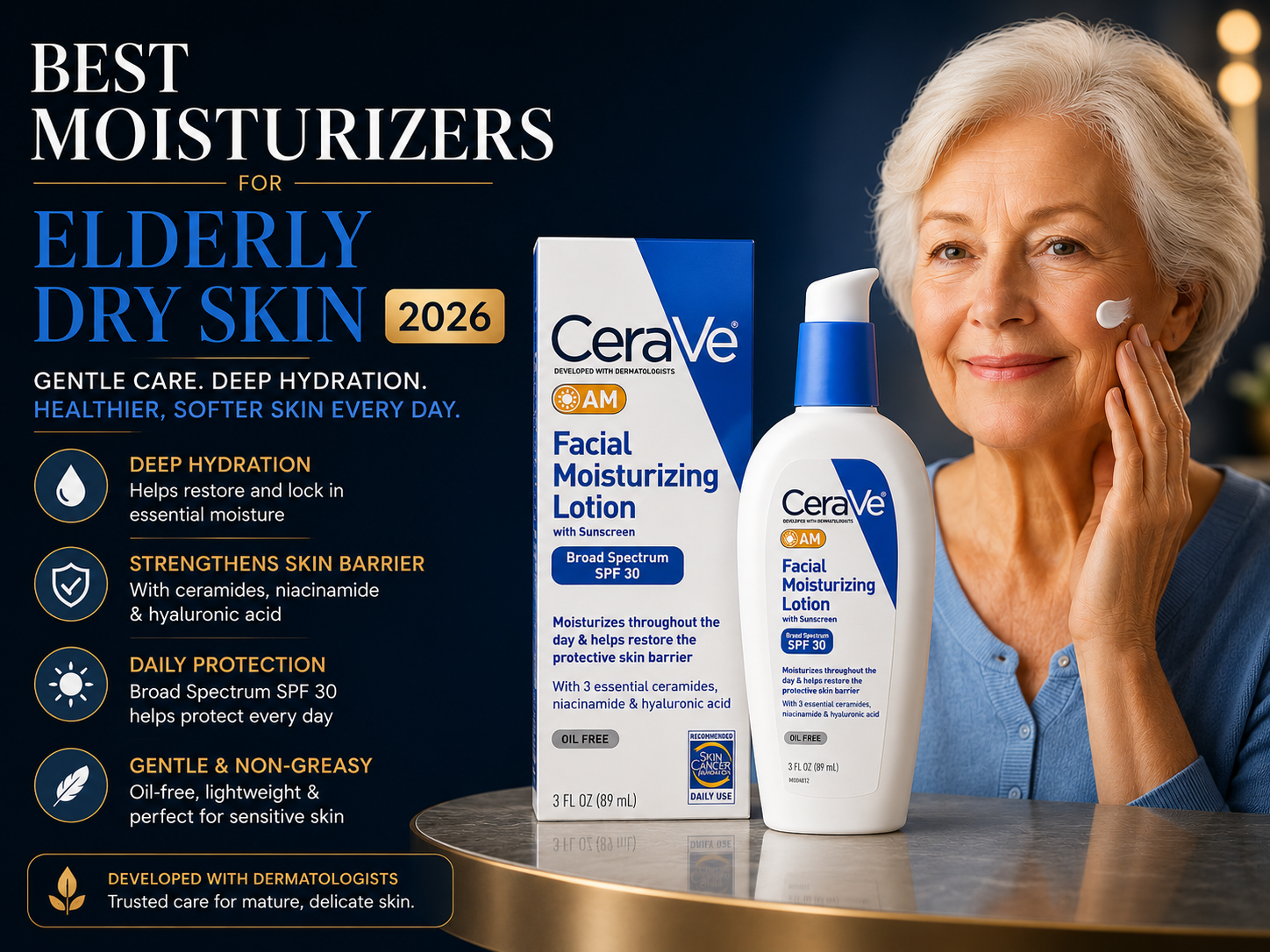
Ceramides are lipids naturally found in the skin's outer layer, where they form roughly 50% of the barrier structure. Aging skin produces fewer ceramides, weakening the barrier. Moisturizers containing ceramides (look for ceramide NP, AP, EOP, or simply "ceramide" on the label) help restore this structure. Ceramide creams have strong clinical evidence for improving dry skin in elderly adults and are recommended by many dermatologists as a first-line choice.
Glycerin
Glycerin is a humectant — a substance that draws water from the air and deeper skin layers into the outer skin. It's one of the most effective and well-tolerated humectants available, and it should be present in any good moisturizer. It works best when paired with an occlusive ingredient to prevent the drawn water from simply evaporating.
Hyaluronic Acid
Hyaluronic acid is a powerful humectant that can bind up to 1,000 times its weight in water. It's particularly effective in humid conditions. In dry climates, however, hyaluronic acid alone can actually draw moisture out of the deeper skin layers if there's insufficient ambient humidity — which is why it's best used as part of a cream containing occlusive ingredients, not as a standalone serum in very dry environments.
Petrolatum (Petroleum Jelly)
Petrolatum is one of the most effective occlusives known — it reduces transepidermal water loss by up to 98%. It's inexpensive, fragrance-free, non-allergenic, and has been used safely for over 150 years. Plain petroleum jelly remains the dermatologist's secret weapon for severely dry or cracked skin, particularly on heels, hands, and elbows. Applied at night under cotton socks or gloves, it produces dramatic results within days.
Shea Butter
Shea butter is a rich plant-derived fat with occlusive and emollient properties. It softens and smooths the skin surface while reducing water loss, and has mild anti-inflammatory properties. It's an excellent ingredient in elderly skin care products, particularly in combination with ceramides or glycerin.
Urea
Urea is a natural component of the skin's natural moisturizing factor. At lower concentrations (5–10%), it functions as a humectant and helps the skin retain moisture. At higher concentrations (20–40%), it becomes keratolytic — meaning it helps soften and shed rough, scaly skin. Urea-containing creams at 10–20% concentration are particularly effective for very dry, rough, or scaly skin on the lower legs and feet. They can cause brief stinging on cracked or broken skin.
What to Avoid
For elderly skin, certain common ingredients do more harm than good:
- Fragrance — the leading cause of contact dermatitis (allergic skin reactions) in moisturizers. Elderly skin is more reactive and less tolerant of fragrance compounds. Choose fragrance-free products whenever possible.
- Alcohol (denatured) — commonly used in lightweight lotions and toners. Drying and irritating on already-dry skin.
- Harsh surfactants — in cleansers and body washes, sodium lauryl sulfate (SLS) strips the skin barrier. Look for gentle, fragrance-free body washes designed for sensitive or dry skin.
How and When to Apply Moisturizer for Best Results
The Three-Minute Rule
The single most important factor in moisturizer effectiveness for elderly skin is timing. Apply moisturizer within three minutes of bathing or washing — while the skin is still slightly damp. This technique seals water into the outer skin layers before it evaporates, significantly amplifying the moisturizer's effect.
Use Lukewarm Water, Not Hot
Hot water strips the skin's natural oils more aggressively than lukewarm water. Showers and baths should be brief (5–10 minutes) and at a comfortable temperature, not hot. This is especially important for seniors who enjoy long hot showers — a common habit that can significantly worsen dry skin.
Pat, Don't Rub
Pat the skin gently dry with a soft towel rather than rubbing. Rubbing removes more moisture and can damage fragile elderly skin.
Apply Generously
A thin smear isn't enough for significantly dry skin. Apply a generous, even layer — especially on high-dry-skin areas like shins, forearms, and the back of the hands. A body-sized application should use a meaningful amount of product, not just a small squeeze.
Twice Daily for Best Results
Once-a-day moisturizing helps, but twice daily — morning and after bathing — produces faster and more lasting improvement. The morning application also helps counteract overnight moisture loss.
Special Considerations for Elderly Patients
Incontinence and Perianal Skin
Seniors managing incontinence face particular skin care challenges. Repeated exposure to urine and moisture breaks down the skin barrier rapidly, leading to incontinence-associated dermatitis (IAD). In addition to absorbent products, applying a zinc oxide barrier cream or dimethicone-based skin protectant to perianal skin at each cleansing helps protect against breakdown. See AllCare Store's incontinence care products for skin-protective options.
Fragile and Thin Skin
Many elderly adults — particularly those on long-term oral corticosteroids — have very thin, fragile skin that tears easily (senile purpura, skin tears). Gentle, fragrance-free moisturizers applied with light pressure help maintain barrier function without trauma. Avoid adhesive bandages or tape on fragile skin — use non-adherent dressings secured with stretch mesh instead.
Pruritus (Itchy Skin) Without a Rash
Itching without visible rash is very common in elderly adults and is frequently caused by xerosis (dry skin). Consistent twice-daily moisturizing with a ceramide-rich cream often resolves this over 2–4 weeks. If itching persists despite good moisturizing, see a dermatologist — other causes include kidney disease, liver disease, thyroid disorders, and medication side effects.
Diabetic Skin
Diabetes accelerates skin aging and dryness, particularly on the lower extremities. People with diabetes should pay particular attention to foot care — daily inspection and moisturizing of the feet (avoiding between the toes) helps prevent cracking that can allow bacteria to enter and create serious infections. See AllCare Store's diabetic care supplies.
A Simple Daily Skin Care Routine for Seniors
A practical routine doesn't need to be complicated:
- Morning: Apply a ceramide-rich cream or body lotion to arms, legs, and hands. A fragrance-free face moisturizer with SPF for daytime sun protection.
- After bathing: Pat skin dry and apply a cream or ointment to the whole body within 3 minutes of getting out of the shower or bath. Pay extra attention to shins, forearms, hands, and heels.
- Before bed: Apply petroleum jelly to severely dry areas — heels, elbows, hands — and cover with socks or gloves if needed for intensive overnight treatment.
- Body wash: Switch to a fragrance-free, gentle body wash designed for sensitive or dry skin. Avoid bar soaps, which are typically more alkaline and drying.
Where to Find Skin Care Products for Seniors
AllCare Store carries a range of skin care and personal hygiene products suited to elderly and sensitive skin. You can browse the personal care collection for moisturizers, barrier creams, gentle cleansers, and incontinence skin protection products.
For comprehensive home care supplies — including wound care products for dry or damaged skin — explore wound care and skin care collections.
Summary
Elderly dry skin is caused by real structural changes — reduced ceramide production, declining sebum output, a weakened skin barrier — not simply insufficient moisturizer use. Addressing it effectively means choosing the right product (a ceramide-rich, fragrance-free cream rather than a light lotion), applying it correctly (immediately after bathing, to slightly damp skin), and doing so consistently.
The improvements are real and often come faster than people expect. Most seniors who make these changes consistently report meaningful reduction in dryness and itching within 2–4 weeks. It's one of the simpler things in elderly care — and one of the more impactful.