If you or a loved one are starting to feel unsteady on your feet, a walker with wheels can be one of the simplest ways to get confidence back. But the moment you start shopping, you run into a fork in the road: should you get a 2-wheel walker or a full 4-wheel rollator walker?
Both are "rolling walkers," but they're built for very different bodies, homes, and activity levels. In this guide, we'll break down exactly how 2-wheel and 4-wheel walkers compare, who each one is best for, and how to pick the right one without wasting money on the wrong mobility aid.
What Is a Walker with Wheels?
A traditional standard walker has four rubber feet and no wheels at all; you have to lift it and set it down with every step. A walker with wheels replaces some or all of those feet with wheels, so the frame glides across the floor instead of needing to be picked up. This small change makes a big difference in how natural and fatigue-free walking feels, especially for people who struggle to lift and reposition a walker repeatedly.
Wheeled walkers generally come in two types:
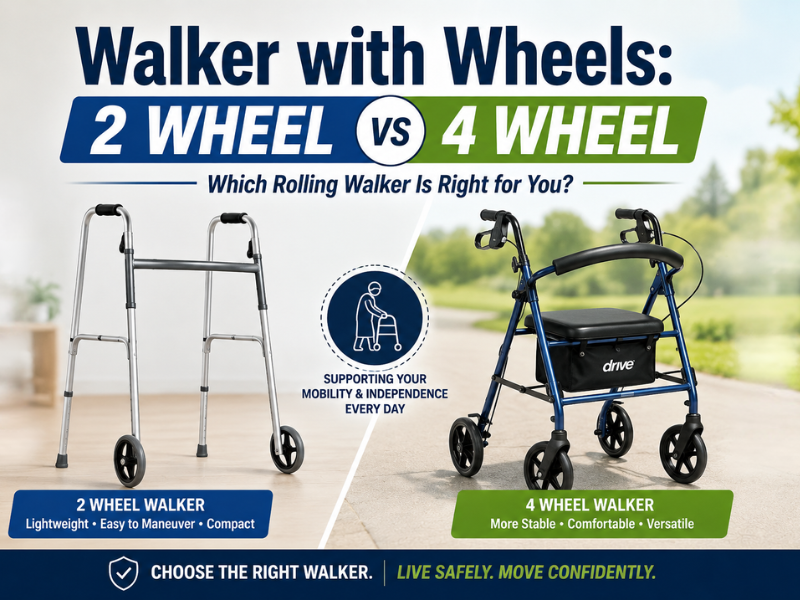
- 2 wheel walkers: wheels on the front two legs only, rubber tips on the back legs
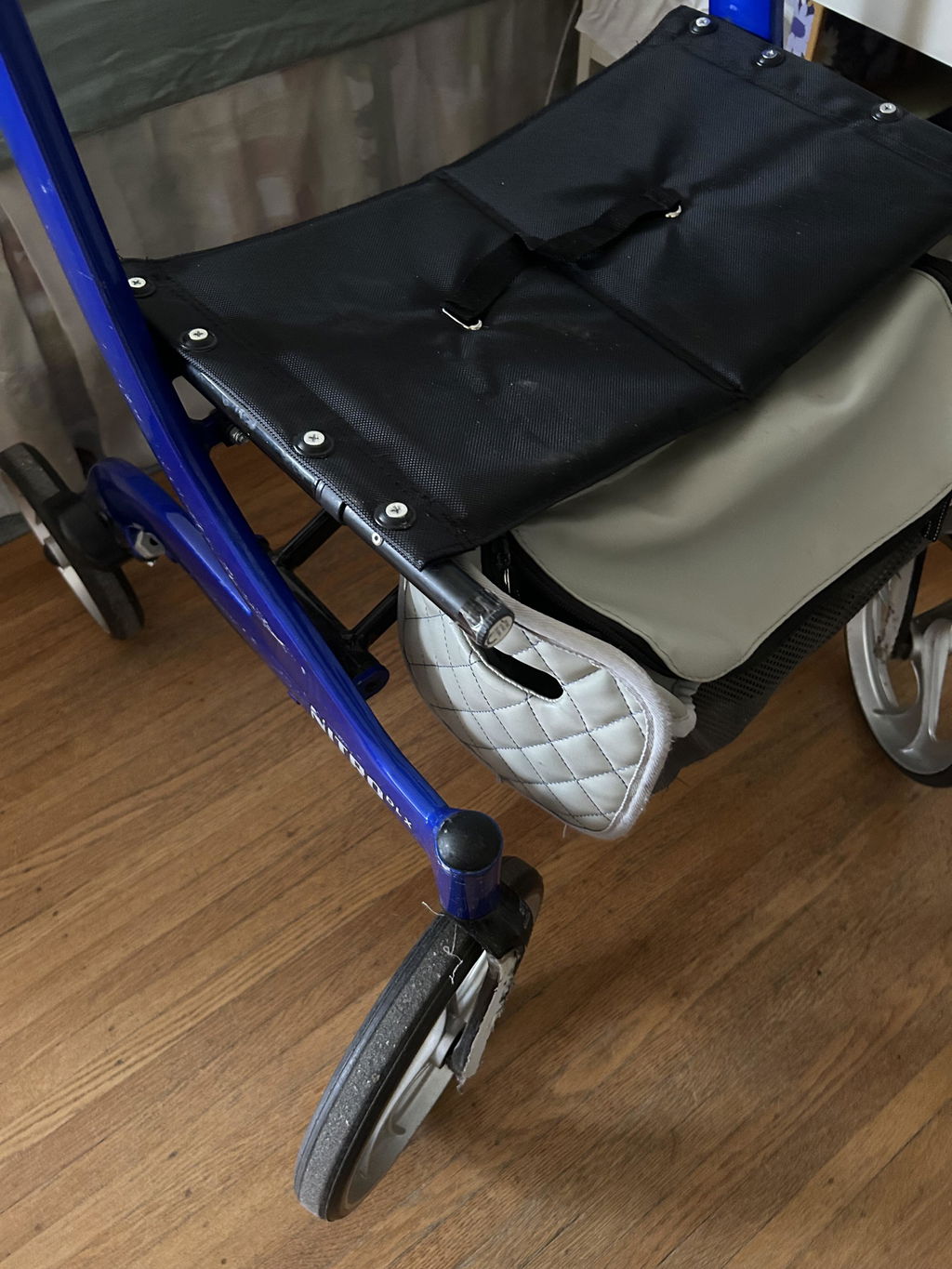
- 4 wheel walkers (rollators): wheels on all four legs, often paired with a seat, basket, and hand brakes
Let's look at each in detail.
2 Wheel Walkers: The Middle Ground Between Stability and Ease
A 2-wheel walker keeps two rear legs planted on rubber glide caps while the front two legs roll freely. To move, you push the walker forward slightly so it glides on its front wheels, then let your weight settle onto the back legs for a stable stop.
Pros of a 2 Wheel Walker
- More stable than a 4-wheel model: the walker won't roll away from you, since the back legs stay grounded
- Reduces the lifting effort of a no-wheel standard walker, easing strain on wrists, shoulders, and lower back
- Simple to use, with no brakes to learn or maintain
- Usually more affordable than a rollator
Cons of a 2 Wheel Walker
- No seat, so you can't sit and rest mid-walk
- The glide motion takes a bit of getting used to and can feel jerky at first
- Not ideal for long-distance walking or outdoor terrain
Who a 2 Wheel Walker Is Best For
This is often the walker recommended right after a hip or knee surgery, a fall, or for someone with balance issues who still needs solid, dependable support. If your doctor or physical therapist has recommended a standard walker but you find lifting it exhausting, a 2-wheel model is usually the natural next step up.
4 Wheel Walkers (Rollators): Built for Independence and Distance
A 4 wheel walker, more commonly called a rollator with seat, rolls freely on all four wheels and is steered rather than lifted. Because it moves continuously, rollators are equipped with hand brakes, similar to a bicycle, so users can slow down or lock the wheels to stop safely.
Pros of a 4 Wheel Walker
- Continuous, natural walking motion with no lifting required
- Almost all models include a built-in seat, letting you rest whenever you need to
- Many come with a walker with a basket for carrying groceries, a purse, or personal items
- Great for longer outings, errands, and outdoor use
- Foldable designs make transport and storage easy
Cons of a 4 Wheel Walker
- Requires hand strength and coordination to operate the brakes safely
- Less stable than a 2-wheel walker for people with significant balance impairment, since it can roll if brakes aren't engaged
- Typically bulkier and heavier than a basic 2-wheel walker
Who a 4 Wheel Walker Is Best For
Rollators suit people who are relatively steady on their feet but need extra support for endurance, balance confidence, or longer walks: think trips to the store, walks around the neighborhood, or getting through a big family gathering. If you're comparing a classic rollator walker to a no-wheel option, the ability to sit down and rest is often the deciding factor for older adults who tire easily.
2 Wheel vs 4 Wheel Walker: Quick Comparison
| Feature | 2 Wheel Walker | 4 Wheel Walker (Rollator) |
|---|---|---|
| Stability | Higher, since back legs stay grounded | Moderate, relies on brakes |
| Walking motion | Push-glide-step | Continuous rolling |
| Seat included | Rarely | Almost always |
| Storage basket | Rarely | Usually |
| Best for | Recovery, higher fall risk | Active seniors, longer outings |
| Learning curve | Low | Moderate (brake use) |
| Typical weight | Lighter | Heavier, though folding walker designs help offset this |
Other Factors to Weigh Before You Buy
Where You'll Use It Most
If you're mostly indoors on carpet or tile, a compact 2-wheel or narrow indoor rollator moves easily through doorways and tight hallways. If you're planning to use it outside on sidewalks, ramps, or uneven pavement, look at models marketed as an all terrain walker with larger, sturdier wheels.
Body Size and Weight Capacity
Standard walkers and rollators typically support 250 to 350 lbs, but if you need more support, a bariatric walker with a reinforced frame and wider seat is worth exploring. Our bariatric walker buying guide covers models rated up to 600 lbs.
Posture Needs
Some users do better with an upright walker or stand up walker, which supports a more natural, upright posture instead of hunching forward. This is a good option for people with back or shoulder issues who find traditional rollators uncomfortable to lean over.
Portability
If you travel often or need to fit the walker in a car trunk, a compact travel walker or lightweight walker that folds flat will make life much easier than a bulkier standard rollator.
Height and Fit
Whether you choose 2 wheels or 4, make sure the handles adjust to your wrist height while standing upright with arms relaxed at your sides. A poor fit undermines the stability benefits of either design.
So, Which Rolling Walker Is Right for You?
- Choose a 2-wheel walker if you need maximum stability, are recovering from surgery or a fall, or find a no-wheel walker too tiring to lift.
- Choose a 4-wheel rollator if you're relatively steady, want to walk longer distances, and would benefit from a built-in seat for resting along the way.
Many people actually end up owning both: a 2-wheel walker for early recovery and around the house, and a rollator with seat for getting out and about once strength and balance improve.
If you're still unsure which fits your needs, it's worth talking it through with your doctor or physical therapist. They can factor in your specific balance level, home layout, and recovery goals.
Shop Rolling Walkers at All Care Store
Whether you need a lightweight 2-wheel walker for recovery or a full-featured 4-wheel rollator with a seat and basket, you'll find a wide selection of walkers and rollators for seniors at All Care Store, including bariatric, folding, upright, and all-terrain options to match your lifestyle.
This article is for informational purposes only and is not a substitute for professional medical advice. Always consult your doctor or physical therapist before choosing a mobility aid.