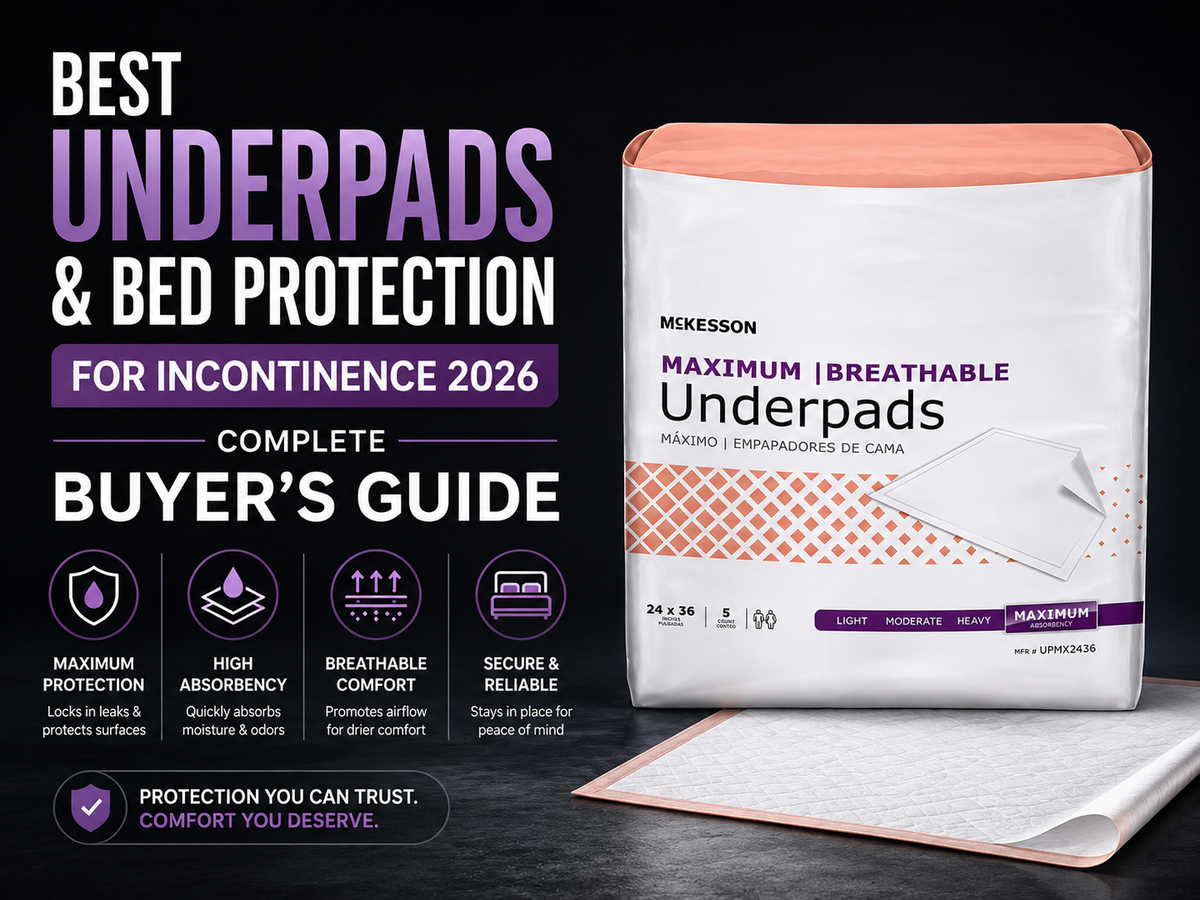
Best Underpads

Best Underpads & Bed Protection for Incontinence 2026: Complete Buyer's Guide

Margaret had been caring for her 81-year-old mother for two years when nighttime accidents started. The first time it soaked through to the mattress, she stayed up until 2 a.m. washing sheets and airing out the room. The second time, she called AllCare Store. Within a week, washable underpads were on the bed — and that middle-of-the-night scramble became history.

Underpads (also called "chux," "bed pads," or "draw sheets") are one of the most practical, cost-effective tools for managing incontinence at home or in care settings. Whether you're protecting a brand-new mattress, supporting a loved one through post-surgery recovery, or managing chronic urinary leakage, the right underpad makes daily caregiving dramatically easier.

Shop our full Underpads & Bed Protection collection at AllCare Store — with free shipping on every order.

Disposable vs. Washable Underpads: Which Is Right for You?

The first decision is disposable or reusable. Both have genuine advantages — your choice depends on frequency of use, budget, and lifestyle.

Disposable Underpads

Best for: Occasional use, travel, post-surgery recovery, situations where laundry is difficult.

Disposable underpads use a multi-layer construction similar to disposable diapers: a soft top sheet that wicks moisture away, an absorbent core, and a waterproof backing that keeps leaks from reaching the mattress. They're convenient — simply fold and discard after use. The drawbacks are ongoing cost and environmental impact with heavy daily use.

Key specs to compare when buying disposable underpads:

  • Absorbency (oz.): Light (8–12 oz.), moderate (20–24 oz.), heavy (32+ oz.), and maximum/overnight (48+ oz.) options are available. Match to actual leakage volume.
  • Size: Standard is 17"×24" (for beds, chairs, wheelchairs). Larger 23"×36" and 30"×36" sizes protect more of the mattress and are better for heavy sleepers or those who move during the night.
  • Top sheet texture: Quilted top sheets are softer against skin; fluff-filled cores hold more liquid. Both are acceptable.

Washable/Reusable Underpads

Best for: Daily use, long-term caregiving, cost-conscious households, environmentally conscious users.

Reusable underpads pay for themselves quickly — a set of 4–6 pads typically costs $60–$120 and can replace thousands of disposables over time. They use a soft cotton or polyester top layer, an absorbent inner layer, and a waterproof (usually polyurethane-laminated) backing.

Reusable pads wash easily in a standard washing machine and dry quickly. They're bulkier and require a laundry routine, but for families managing daily incontinence, the long-term savings are substantial — often $500–$1,000+ per year vs. disposables.

Key specs for reusable underpads:

  • Absorbency: Measured in cups or ounces. Look for at least 4 cups for heavy overnight use.
  • Wash durability: Quality pads are rated for 200–300+ washes. Check manufacturer ratings.
  • Size options: 18"×24" for chairs/wheelchairs, 34"×36" or 34"×52" for full bed coverage.
  • Backing type: Waterproof backing should be non-slip to keep the pad in place on the mattress or chair seat.

Absorbency Levels Explained

Level Capacity Best For
Light 8–12 oz. Minor drips, post-surgery recovery, light spotting
Moderate 20–24 oz. Regular urinary leakage, chair protection, daytime use
Heavy 32–40 oz. Significant incontinence, nighttime protection, bedridden patients
Maximum/Overnight 48+ oz. Overnight use, heavy bladder loss, full care settings

Choosing the Right Size

Size selection is often underestimated. A pad that's too small shifts during the night and fails to protect the mattress edges — exactly where leakage travels. Here's a practical size guide:

  • Chair/wheelchair protection: 17"×24" or 18"×24" — covers the seat and tucks under the cushion edges.
  • Single bed (twin) coverage: 23"×36" covers the middle third of the bed. Buy two for full protection.
  • Full/queen bed: 30"×36" or 34"×36" for generous coverage. For active sleepers, use two overlapping.
  • Hospital bed (full mattress protection): Look for 36"×54" or larger full-mattress waterproof covers in addition to an underpad.

Special Use Cases

Post-Surgery Recovery

After hip replacement, knee replacement, or abdominal surgery, temporary urinary or bowel incontinence is common. Disposable underpads in moderate to heavy absorbency are ideal for this period (typically 2–6 weeks) before returning to normal continence. Layer one under the fitted sheet and one on top for quick nighttime changes.

Bedridden or Mobility-Limited Individuals

For patients who are largely bedridden, large-format underpads (30"×36" or larger) with high absorbency are essential. Look for pads with a quilted, soft top surface to minimize friction against skin — pressure sores can develop where wet fabric contacts skin for extended periods.

Pet Use

Many customers use incontinence underpads for older dogs and cats. Standard disposable pads work well — dogs typically need 23"×24" or larger. Waterproof washable pads are ideal for pet crates and sleeping areas.

Maternity & Postpartum

Hospital-style underpads are commonly used during the last weeks of pregnancy (amniotic fluid leakage risk) and the first weeks postpartum (lochia). Light to moderate absorbency disposables work well.

Tips for Maximum Effectiveness

  1. Layer strategically: Place one underpad under the fitted sheet and one on top. This way a nighttime accident can be handled by pulling off the top pad without fully remaking the bed.
  2. Use a mattress protector underneath: An underpad is a first line of defense, not a guarantee. A waterproof mattress encasement underneath provides full protection.
  3. Non-slip backing matters: For bed and chair use, make sure the pad has a non-slip or "stay-put" backing. Pads that slide create both fall risk and leak risk.
  4. For caregivers: Keep a stack of pre-staged disposable pads and a change of nightwear on the bedside table for faster nighttime changes.
  5. Washing reusables: Wash in warm water with regular detergent. Avoid fabric softener — it reduces absorbency. Tumble dry on medium heat or air dry to extend waterproof backing life.

Shop Underpads & Bed Protection at AllCare Store

AllCare Store carries a complete selection of disposable and washable underpads from trusted brands including Medline, Cardinal Health, Prevail, and McKesson — in every absorbency level and size. We also carry waterproof mattress covers, incontinence briefs, and all related bed protection products.

Browse our Underpads & Bed Protection collection, our full Incontinence collection, and related Skin Care products at AllCare Store.

Free shipping on every order. Questions? Call us at 1-888-889-6260.

Frequently Asked Questions: Underpads & Bed Protection

What is the difference between an underpad and a mattress protector?

An underpad is a disposable or reusable absorbent pad placed on top of the mattress or under the patient — it absorbs fluids actively and can be changed without disturbing the entire bed. A mattress protector (or encasement) wraps around the mattress itself and provides passive waterproof protection. For best results, use both: a mattress encasement for full protection and underpads for easy changeouts.

How often should underpads be changed?

Disposable underpads should be changed after each episode of incontinence or at least every 8–12 hours. Leaving a wet underpad against skin increases the risk of skin irritation, rashes, and pressure sores. Reusable underpads should be laundered after each use. For overnight use, a fresh pad at bedtime is the standard practice.

Are washable underpads as absorbent as disposables?

High-quality washable underpads are comparable to or exceed disposables in absorbency. Premium reusable pads from brands like Medline and Kylie use multi-layer terry or fleece cores that hold 4–8+ cups of fluid. However, the feel is different — reusable pads wick moisture more slowly than the superabsorbent polymers in disposables, so some users prefer disposables for the dryer surface feel. Many families use both: disposables at night for ease, washables during the day.

Newsletter

A short sentence describing what someone will receive by subscribing



