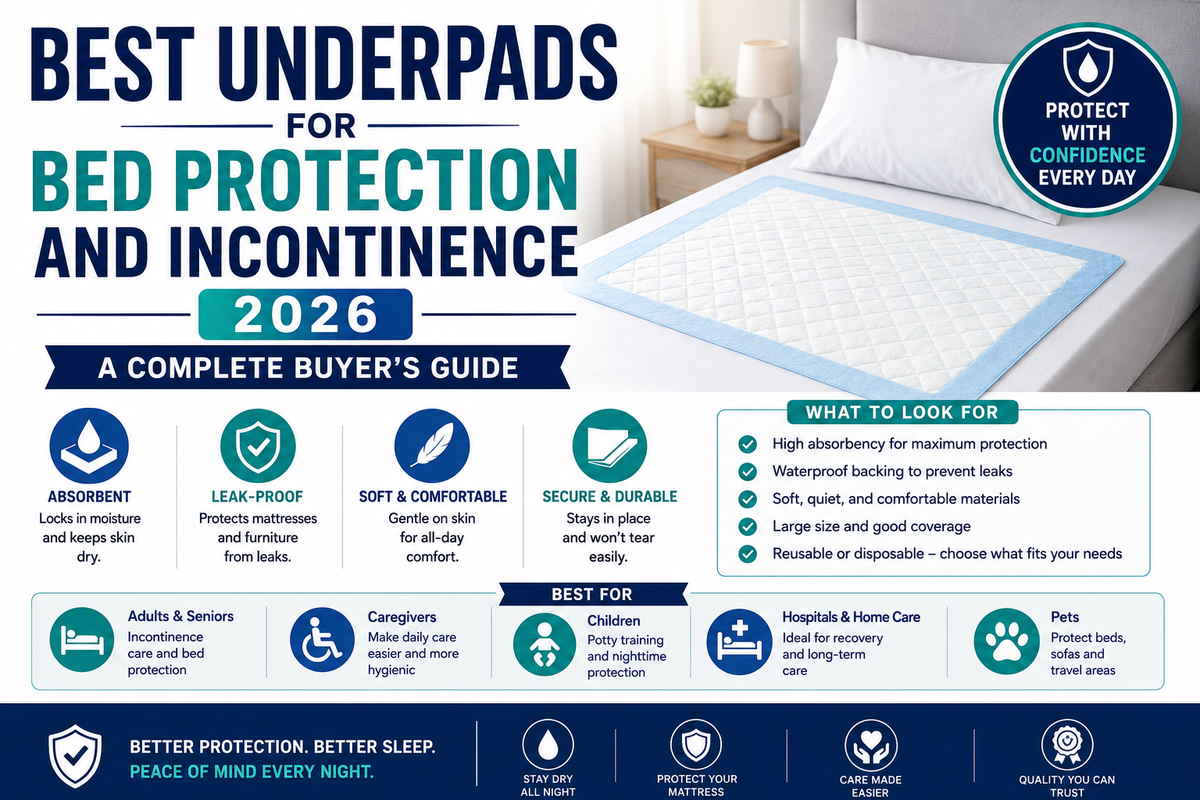
Best Underpads for Bed Protection and Incontinence 2026: A Complete Buyer's Guide

Medical Disclaimer: This article is for educational purposes only and does not constitute medical advice. If you or someone you care for is experiencing incontinence, consult a healthcare provider to identify the underlying cause and appropriate treatment options. Underpads are a management tool — not a treatment — for incontinence.

Best Underpads for Bed Protection and Incontinence 2026: Keep Nights Dry and Skin Protected

Why the Right Underpad Makes All the Difference

Sandra had been caring for her 84-year-old mother at home for two years. Her mother's nighttime incontinence had steadily worsened, and they'd gone through three mattresses in that time — each one stained and damaged beyond repair despite using thin pharmacy-brand disposable pads. A home health aide suggested switching to a heavy-absorbency underpad with a quilted top layer and proper leak guards. "The first night we used them, I finally slept through without waking up to check," Sandra said. "And her skin was dry in the morning for the first time in months."

Underpads — sometimes called "chux pads," bed pads, or incontinence pads — are protective sheets placed under a person to absorb urine and protect the mattress, furniture, or wheelchair seat beneath. They are among the most frequently purchased products in senior care, post-surgical recovery, and pediatric care settings, yet many families buy whatever is cheapest without realizing how much variation exists in quality, absorbency, and skin safety.

The wrong underpad means leaks reaching the mattress, wet skin sitting against saturated material, and caregiver exhaustion from changing sheets at 2 a.m. The right underpad means dry mornings, protected furniture, and dramatically easier overnight care. This guide covers everything you need to choose correctly.

Disposable vs. Reusable Underpads: Which Is Right for You?

Disposable Underpads

Disposable underpads are single-use pads with a soft top layer, absorbent polymer core, and waterproof backing. They are the dominant choice in hospital and nursing home settings, and widely used at home for their convenience.

Advantages:

  • No laundering required — simply dispose after use
  • Always clean and dry for each use
  • Convenient for travel, physician visits, and wheelchair outings
  • Wide absorbency range from light to ultra-heavy
  • Lower upfront cost

Disadvantages:

  • Higher ongoing cost vs. reusables for heavy daily use
  • Environmental impact of daily disposal
  • Some economy brands use thin, scratchy top layers that can irritate fragile skin

Best for: Acute care, post-surgical recovery, moderate-to-infrequent nighttime use, travel, and situations where laundering is not practical.

Reusable (Washable) Underpads

Reusable underpads are made with a quilted or terry-cloth top layer, multiple inner absorbent layers, and a waterproof backing (typically polyurethane-laminated fabric). They are machine washable and designed for hundreds of uses.

Advantages:

  • Significantly lower long-term cost for daily use
  • Soft, comfortable surface — better for skin integrity over time
  • More environmentally sustainable
  • Generally larger surface area than disposables
  • No ongoing supply orders to manage

Disadvantages:

  • Higher upfront cost (need 3–5 on hand for rotation)
  • Must be laundered regularly (adds to caregiver workload)
  • Absorbency degrades slightly over many wash cycles
  • Longer drying time

Best for: Daily overnight use, cost-conscious caregivers, environmentally-minded families, and long-term care situations where laundering is manageable.

Practical tip: Many experienced caregivers use both — reusables for the base layer and a disposable on top for added absorbency on heavy nights. The disposable catches most of the fluid, and the reusable underneath provides backup protection for the mattress.

Understanding Absorbency Ratings

Underpad absorbency is typically rated in ounces or milliliters of fluid the pad can absorb without leaking. Understand these general tiers:

Light Absorbency (up to 10 oz / 300 mL)

Designed for light dribbling or bladder leaks. Suitable for light urinary incontinence, post-surgical drainage protection, and pediatric use. These thin pads offer minimal protection for overnight adult incontinence.

Regular / Moderate Absorbency (10–20 oz / 300–600 mL)

The most common tier sold in pharmacies and general retail. Adequate for moderate daytime incontinence or light overnight use. May not be sufficient for heavy nighttime voiding, particularly in older adults who produce larger urine volumes overnight.

Heavy Absorbency (20–34 oz / 600–1,000 mL)

Suitable for heavy urinary incontinence overnight. The quilted polymer core holds significant fluid while wicking moisture away from the top surface. These are the most widely recommended for overnight adult incontinence management.

Ultra / Maximum Absorbency (34 oz+ / 1,000+ mL)

Designed for very heavy urinary output, fecal incontinence, or situations where a pad may not be changed for extended periods. Common in institutional settings. For home use, these provide the highest protection but are also the most expensive per pad.

Key insight: Most caregivers underestimate their family member's overnight urine output. The average adult voids 250–400 mL per overnight episode; someone with nocturia or poor bladder control may void 500–800 mL overnight. A pad rated for 10 oz will be saturated and leaking long before morning. When in doubt, buy one tier heavier than you think you need.

Size Matters: Choosing the Right Dimensions

Underpads come in several standard sizes. Choosing correctly prevents edge leaks — fluid that wicks to the pad's edges before the core can absorb it.

Small (17" x 24"): Appropriate for chair or wheelchair seat protection, limited bed use. Often too small for full overnight bed use unless the person remains very still.

Standard (23" x 36"): The most common size. Suitable for most chair and bed applications, light to moderate incontinence, and pediatric use.

Large (30" x 36"): Recommended for overnight adult incontinence in bed. Provides adequate coverage for restless sleepers and those with higher fluid output. This is the size most frequently recommended by home health nurses.

Extra Large (30" x 48" or larger): For bariatric patients, very active sleepers, or situations requiring maximum surface coverage. Also used horizontally across the width of the bed to protect both the person and the bed surface during transfers.

Top Layer Materials and Skin Health

The top layer of an underpad directly contacts skin for hours overnight — making material quality more important than most buyers realize.

Fluff Pulp with Polymer Core (Standard Disposables)

The most common construction in economy disposables. Adequate for most uses, but the top surface can feel rough on fragile or sensitive skin. Not all brands are equal — premium disposables use softer nonwoven top layers that feel distinctly more comfortable against skin.

Quilted Top Layer (Premium Disposables)

Premium disposables use a soft quilted nonwoven top layer that moves moisture rapidly into the core, similar to quality incontinence briefs. These significantly reduce the time skin is in contact with wet material — the most important factor in preventing incontinence-associated dermatitis (IAD).

Terry Cloth / Chamois (Reusables)

Quality reusable underpads use soft terry or chamois top layers that are gentle on fragile skin and remain comfortable even after many washes. The texture also provides gentle grip, reducing the tendency for the pad to shift during use.

For anyone with fragile, paper-thin, or reactive skin — which describes a significant portion of adults over 75 — the top layer material is not a minor consideration. IAD (incontinence-associated dermatitis) is a painful, common complication of prolonged moisture contact that significantly increases the risk of pressure injuries. Choosing a softer, quick-wicking top layer is a genuine clinical decision.

Waterproof Backing: What to Look For

The backing layer prevents moisture from passing through to the surface below. Quality varies considerably:

  • Thin polyethylene film (economy grade): Adequate waterproofing but can feel crinkly, noisy, and uncomfortable when the person shifts in bed. The crinkling noise can disrupt sleep for light sleepers.
  • Tissue-laminated backing: Softer, quieter, and more flexible than bare polyethylene. Standard in mid-tier products.
  • Non-slip backing: Some premium underpads include a textured or rubberized backing that grips the mattress and prevents the pad from shifting during sleep. This is a genuinely useful feature for active sleepers or those who are turned by caregivers during the night.

Specialty Applications

Chair and Wheelchair Protection

Standard bed underpads are often too large and awkward for chair use. Dedicated chair pads (typically 17" x 24" or 18" x 24") fit seat surfaces properly and include non-slip backings designed for smooth chair upholstery. Reusable chair pads with straps or tuck-under flaps prevent shifting during seated activity.

Post-Surgical and Medical Recovery

After procedures involving urinary catheters, surgical drains, or bowel preparations, underpads protect bedding during recovery. Disposable heavy-absorbency pads are standard for post-surgical home care. Sterile or medical-grade pads are available for wound drainage applications.

Pediatric and Toilet Training

Underpads are widely used under children during toilet training or for children with bedwetting. Smaller sizes and softer top layers appropriate for children's skin are available. Reusable pads are cost-effective for this use given the frequency of changes.

Pet Care

Many families use human underpads for aging pets with incontinence. Human-grade underpads are perfectly suitable for this use and are generally of higher quality than dedicated pet pads at comparable price points.

How to Maximize Effectiveness: Placement and Layering

Proper placement prevents the most common complaint with underpads: the pad bunching or shifting during the night, leaving the person on unprotected bedding.

  • Center the pad directly under the hips and lower torso — where the majority of urinary output lands during sleep
  • Tuck the edges slightly under the fitted sheet if the person moves significantly during sleep
  • For very active sleepers or those who require repositioning, consider anchoring the pad with the sheet tucked at the corners
  • The layering method (reusable underneath, disposable on top) provides backup protection and reduces the frequency of mattress pad laundering

AllCare Store: Everything You Need for Incontinence Care

At AllCare Store, we carry a comprehensive selection of underpads and incontinence products for home care and caregiving — both disposable and reusable options, in every absorbency level and size.

Browse our Incontinence collection for our full range of underpads, briefs, pull-ups, and incontinence accessories.

  • Free Shipping on every order — no minimums
  • Discreet Packaging — plain, unmarked boxes on every shipment
  • 30-Day Returns — full confidence guarantee
  • Expert Support — call us at 1-888-889-6260

Frequently Asked Questions: Underpads for Bed Protection

How often should underpads be changed?

Disposable underpads should be changed immediately after a significant wetting episode or at least every 6–8 hours in regular use. Prolonged skin contact with saturated pads is the primary cause of incontinence-associated dermatitis (IAD). For overnight use, change the pad in the morning regardless of visible saturation. Reusable pads should be laundered after each use and allowed to dry fully before reuse.

What size underpad do I need for overnight adult incontinence?

For overnight adult incontinence in bed, a minimum size of 30" x 36" is recommended. This provides adequate coverage for most adults, including those who shift position during sleep. For bariatric patients or very active sleepers, a 30" x 48" or larger pad is preferable. Using a pad that is too small is the most common cause of edge leaks reaching the mattress.

Are reusable underpads as absorbent as disposable ones?

High-quality reusable underpads can match or exceed the absorbency of mid-tier disposables. Premium reusables use multiple inner layers of terry, polyester fiber, and moisture-wicking materials that can absorb 20–34 oz of fluid. Their absorbency does decrease slightly over many wash cycles. For very heavy overnight output, some caregivers place a heavy-absorbency disposable on top of the reusable as a first-capture layer, using the reusable as a backup barrier.

How do I prevent an underpad from sliding around in bed?

Several strategies help: choose pads with non-slip textured backing, tuck the pad edges slightly under the fitted mattress sheet, or use a larger pad that extends further under the person's body weight. For caregivers who reposition patients during the night, consider reusable pads with tucking flaps designed to anchor under the mattress. Using a fitted mattress protector underneath also provides a gripping surface that reduces pad movement.

Can underpads help prevent pressure sores?

Underpads help prevent pressure sores indirectly by keeping skin dry and reducing moisture exposure — a major risk factor for skin breakdown and pressure injuries. However, underpads alone do not prevent pressure injuries; regular repositioning, appropriate support surfaces (pressure-relief mattresses and seat cushions), and thorough skin assessments are all required. Underpads with soft, smooth top layers are preferable as they create less friction during repositioning compared to rough or stiff materials.

Newsletter

A short sentence describing what someone will receive by subscribing