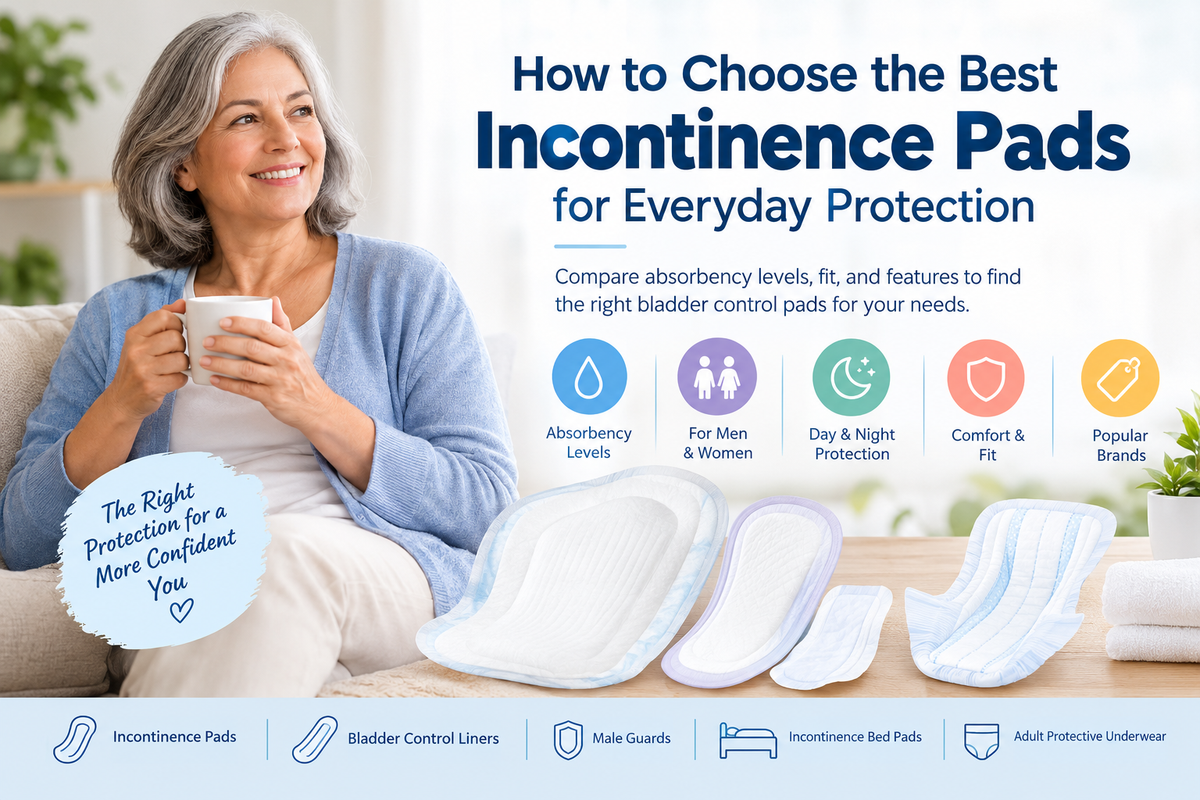
Choosing the right incontinence pad can make daily personal care more comfortable, convenient, and manageable. With different absorbency levels, sizes, shapes, and product designs available, finding the right option starts with understanding individual needs and daily routines.
Whether you are looking for incontinence pads for women, incontinence pads for men, lightweight bladder control liners, or heavy absorbency incontinence pads, comparing the available features can help you make a more informed decision.
In this guide, we explain how incontinence pads work, how to compare absorbency levels, and what to consider when selecting bladder control products for home care, travel, work, and overnight use.
Quick Comparison: Which Incontinence Pad Is Right for You?
| Type of pad | Best suited for | Key consideration |
|---|---|---|
| Light absorbency pads | Occasional, small-volume leaks | Thin, discreet design |
| Moderate absorbency pads | Regular, moderate leakage | Balance of coverage and comfort |
| Heavy absorbency pads | Larger-volume leakage | Higher capacity and longer coverage |
| Overnight incontinence pads | Nighttime use | Coverage, fit, and intended wear time |
| Male incontinence guards | Targeted protection for men | Anatomical shape and secure placement |
| Women's bladder control pads | Bladder leakage and daily routines | Shape, length, and underwear compatibility |
| Incontinence liners | Light protection or additional compatible coverage | Product design and intended use |
Explore the range of incontinence pads and bladder control liners at AllCareStore to compare different brands, sizes, and absorbency options.
What Are Incontinence Pads?
Incontinence pads are absorbent products designed to manage urinary leakage by absorbing moisture close to the body. They are available in different lengths, shapes, thicknesses, and absorbency levels to accommodate different needs.
Unlike standard sanitary pads, bladder control pads are specifically designed for urinary leakage. Many feature absorbent cores that draw in moisture, while selected products include odor-control features, moisture-wicking materials, or leak barriers.
Depending on the design, incontinence pads may be suitable for:
-
Everyday bladder leakage management
-
Light protection during work or travel
-
Personal care routines for older adults
-
Overnight bladder protection
-
Caregiving at home or in professional care settings
-
Targeted protection for men or women
It is important to select a product based on its stated purpose and absorbency rather than assuming that every pad provides the same level of protection.
1. Choose the Right Absorbency Level
Absorbency is one of the most important factors when choosing urinary incontinence pads. A product that is too small or has insufficient absorbency may need frequent changes, while a thicker pad may provide unnecessary bulk for lighter leakage.
Light Absorbency Incontinence Pads
Light absorbency incontinence pads are designed for small amounts of leakage. They are often thinner and easier to wear discreetly under everyday clothing.
Consider light absorbency options if you need:
-
Protection against occasional drips
-
A slim design for everyday activities
-
Lightweight coverage during errands or work
-
A compact product for carrying in a handbag or travel bag
Compare the stated absorbency, length, and fit before choosing a light bladder control pad.
Moderate Absorbency Incontinence Pads
Moderate absorbency pads provide a middle ground between lightweight liners and higher-capacity products. They may be suitable for people who experience more frequent or noticeable leakage throughout the day.
When comparing moderate absorbency products, look for an absorbent core, a suitable length, comfortable materials, and a design compatible with your underwear.
Heavy Absorbency Incontinence Pads
Heavy absorbency incontinence pads are designed for greater levels of leakage than light or moderate options. Some have longer coverage, wider designs, or additional leak barriers.
They may be worth considering when lighter pads do not provide sufficient coverage. However, the term “heavy absorbency” is not a universal measure of capacity. Compare product specifications and intended use instead of relying on the label alone.
If leakage frequently exceeds a pad's capacity, consider whether protective underwear or another incontinence product may be more suitable.
2. Compare Incontinence Pads for Men and Women
Different body shapes and product requirements can influence which pad fits best. Many manufacturers offer gender-specific designs, along with unisex products.
Incontinence Pads for Women
Incontinence pads for women are available in a variety of lengths, shapes, and absorbency levels. Some are designed to sit discreetly inside underwear, while others provide extended coverage for heavier leakage.
Features to compare include:
-
Length and width
-
Absorbency level
-
Secure placement inside underwear
-
Softness and breathability
-
Odor-control features, where available
A thinner bladder control pad for women may suit light leakage, while a longer or higher-absorbency option may provide more appropriate coverage for heavier leakage.
Incontinence Pads for Men
Incontinence pads for men include male guards and anatomically shaped absorbent products. These designs are intended to provide targeted coverage and may be particularly convenient under fitted clothing.
When choosing a male incontinence pad, consider the product's shape, absorbency, attachment method, and compatibility with the underwear you plan to wear.
Male guards are not interchangeable with every standard liner, so check the manufacturer's instructions for correct placement and use.
3. Find the Best Incontinence Pads for Overnight Use
Nighttime leakage may require different coverage from daytime use. During sleep, the wearer may change position, and the product may need to remain effective for several hours.
Overnight incontinence pads are available in longer lengths and higher absorbency options. When comparing products, consider:
-
Absorbency suitable for the expected amount of leakage
-
Coverage while lying down
-
Fit and movement during sleep
-
Moisture management and comfort
-
Recommended wear time and changing instructions
For people who experience frequent or substantial overnight leakage, absorbent underwear or tab-style briefs may provide more complete coverage than a small pad.
You can also consider using a suitable incontinence bed pad to protect a mattress or other sleeping surface. A bed pad is a surface-protection product, not a replacement for wearable incontinence protection.
4. Check Pad Size, Shape, and Fit
The correct fit helps an incontinence pad remain in place and provide the coverage for which it was designed.
A pad that is too short may not cover the required area, while an overly bulky product may feel uncomfortable under clothing.
Before purchasing incontinence pads for daily use, check:
-
Length and width: Compare the product dimensions with your coverage needs.
-
Shape: Contoured designs may provide a more suitable fit for particular users.
-
Attachment: Determine whether the product has adhesive strips or another placement method.
-
Underwear compatibility: Follow the manufacturer's instructions for the intended garment.
-
Pack quantity: Compare the number of pads per package or case when planning regular purchases.
Product dimensions and packaging information are particularly helpful when comparing different brands online.
5. Understand the Features of Modern Bladder Control Pads
Not all bladder control pads have the same construction. Looking beyond the product name can help you choose an option that better fits your preferences.
Absorbent Core
Many pads use fluff pulp, superabsorbent polymers, or a combination of materials to manage moisture. The specific construction varies by product.
Moisture-Wicking Surface
Some pads are designed to move moisture away from the skin-facing surface. Review product descriptions for details about the top layer and moisture-management features.
Leak Barriers
Selected products include raised or shaped barriers designed to help reduce leakage around the edges. Their effectiveness depends on correct fit, placement, and the amount of leakage.
Odor-Control Features
Some odor-control incontinence pads incorporate materials intended to help manage odors. Check the individual product specifications because these features are not present in every pad.
Discreet Design
Thin liners and contoured pads may fit more discreetly beneath clothing. The right choice depends on the absorbency needed and the wearer's preferred level of coverage.
6. Incontinence Pads vs. Adult Diapers vs. Underpads
Although these products are used in incontinence care, they serve different purposes.
| Product | Primary purpose | When to consider it |
|---|---|---|
| Incontinence pads | Wearable, targeted bladder-leak protection | When a pad provides sufficient coverage |
| Adult pull-up underwear | Wearable protection in an underwear-like design | When more coverage is needed |
| Adult diapers with tabs | Adjustable wearable protection | When assisted changing or adjustable fastening is useful |
| Incontinence bed pads | Protect beds, chairs, and other surfaces | As an additional layer of surface protection |
| Booster pads and inserts | Add absorbency to compatible products | When the manufacturer permits their use together |
A bladder control pad may be convenient for light or moderate leakage, depending on its specifications. However, people who need broader coverage or more absorbency may prefer a different product format.
Explore adult incontinence and toileting supplies for additional options, including protective underwear, briefs, underpads, and personal care products.
7. How to Choose Incontinence Pads for Seniors and Home Care
When selecting incontinence pads for seniors, consider both product performance and the person's everyday routine.
For someone who manages personal care independently, an easy-to-position pad with an appropriate fit may be convenient. For a person receiving caregiver assistance, packaging, changing frequency, and ease of handling may be equally important.
Use these considerations when comparing products:
-
Select an absorbency level that matches the person's needs.
-
Check the recommended fit and placement instructions.
-
Choose a product that can be changed as frequently as required.
-
Consider skin comfort, moisture exposure, and individual sensitivities.
-
Keep clean supplies and disposal materials accessible.
-
Follow appropriate hygiene practices during each change.
Wet or soiled products should be changed promptly according to the manufacturer's instructions and the person's care needs. Gently clean and dry the skin during changes, and seek professional advice if persistent redness, irritation, or skin breakdown develops.
If bladder leakage is new, worsening, painful, or accompanied by other concerning symptoms, consult a healthcare professional to determine the appropriate next steps.
8. Compare Popular Incontinence Pad Brands
AllCareStore's collection includes products from several recognized brands. Available styles and specifications vary by model.
-
TENA incontinence pads: Compare light, moderate, and higher-absorbency options, including products in the ProSkin and Sensitive Care ranges.
-
Poise bladder control pads: Explore different lengths and absorbency levels for everyday and overnight use.
-
Prevail incontinence pads: Compare daily and overnight products according to their listed specifications.
-
Attends incontinence pads: Review discreet liners and longer pads in different absorbency categories.
-
Abena incontinence pads: Compare San Premium products by size and absorbency.
-
Depend bladder control products: Explore targeted guards and other bladder-leak protection options.
-
Seni incontinence pads: Compare products designed for different coverage and absorbency requirements.
-
McKesson incontinence liners: Review liner dimensions, intended use, and package quantities.
Brand names alone do not determine which product is best. Always compare the exact model, absorbency, dimensions, and intended use before purchasing.
Browse the complete collection of incontinence pads at AllCareStore to review available products and compare their specifications.
9. Tips for Buying Incontinence Pads Online
Shopping online makes it easier to compare products, but it helps to evaluate several details before placing an order.
Check absorbency: Match the product's stated capacity and intended use to your needs.
Review dimensions: Compare pad length, width, and shape rather than choosing by product name alone.
Confirm the intended wearer: Make sure a male guard, women's pad, or unisex liner matches your requirements.
Compare pack sizes: A larger case may be convenient for regular use, but calculate the cost per pad and consider storage space.
Read product instructions: Check whether the product is disposable, reusable, adhesive-backed, or designed for a particular type of underwear.
Consider the full care routine: Pads may be used alongside adult protective underwear, cleansing wipes, and bed protection when appropriate.
Making these comparisons can help you find incontinence pads online that suit your budget, routine, and preferred level of protection.
Find the Right Incontinence Pads for Your Needs
Choosing the right incontinence pads starts with understanding the level of absorbency, coverage, fit, and intended use required. Light liners may suit occasional leakage, while longer or higher-absorbency pads can provide more coverage when needed.
For additional protection, consider whether adult protective underwear, tab-style briefs, or bed pads may be appropriate for your care routine.
Explore the Incontinence Pads collection at AllCareStore to compare available products from TENA, Poise, Prevail, Attends, Abena, Depend, and other brands.