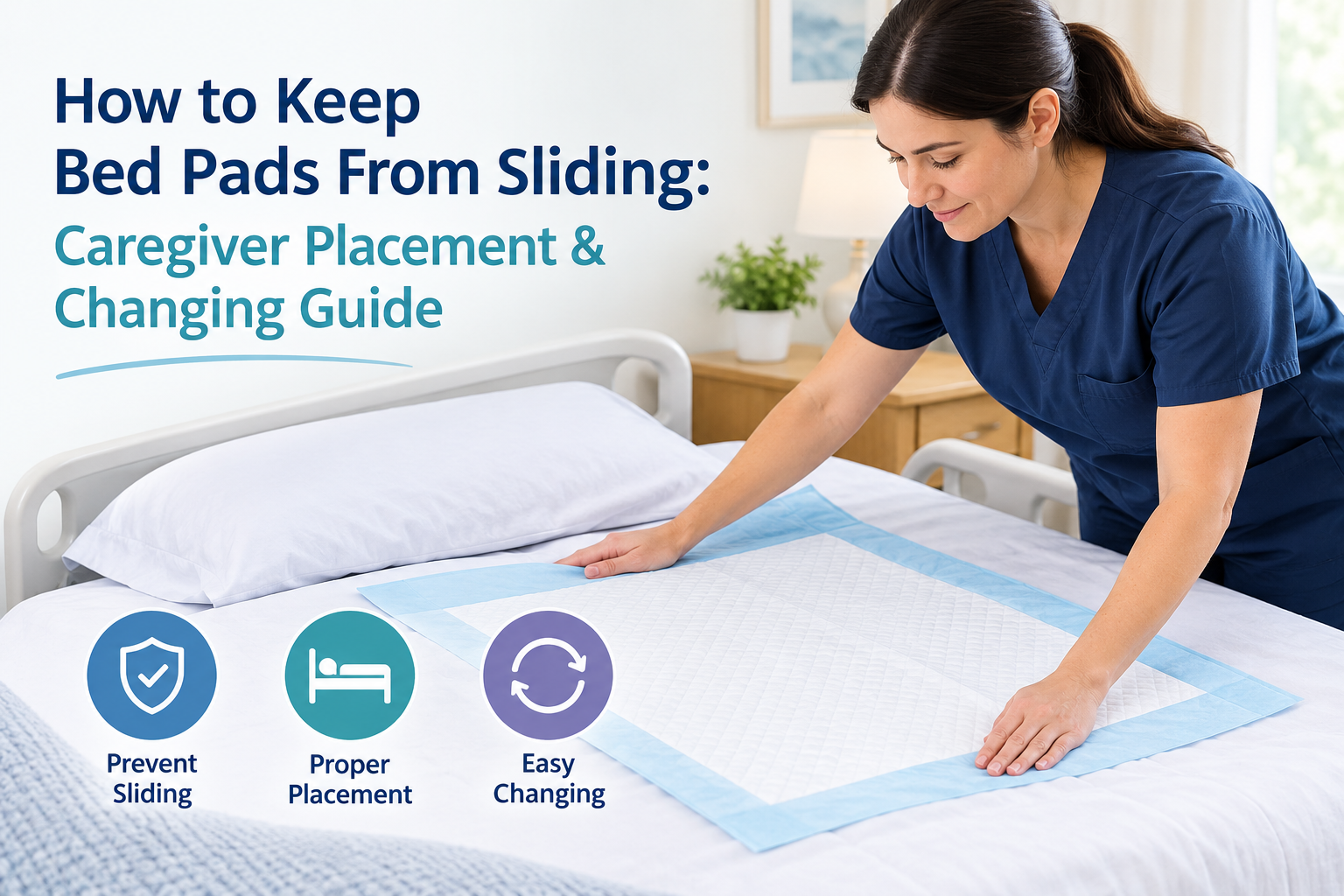
A bed pad can have excellent absorbency and still fail if it slides away from the area it is supposed to protect. Shifting is especially common when the sleeper moves frequently, transfers in and out of bed, or the pad rests on a slick surface.
This caregiver guide explains how to keep bed pads from sliding, where to position an underpad, and how to change one in bed with less disruption.
Why bed pads slide
Common causes include:
- the pad is too small for the movement zone;
- the pad has a smooth backing on a slick sheet or protector;
- the sleeper moves or rolls frequently;
- the pad was not centered under the hips;
- transfers pull the pad out of position;
- an oversized pad bunches instead of lying flat.
Position the pad under the hips
The pad should cover the area where leakage is most likely, generally around the hips and buttocks. For an active sleeper, choose enough coverage that normal movement does not carry the person beyond the edge of the pad.
Use our underpad sizing guide if coverage is the main problem.
Use a pad designed to stay in place
Some reusable underpads have tuck-in flaps, textured backings, or other features intended to reduce shifting. Product designs vary, so check the specifications rather than assuming every reusable pad has a non-slip surface.
Layer the bed in the right order
A practical setup is:
- mattress;
- waterproof mattress protector;
- fitted sheet;
- underpad on top of the fitted sheet.
The fitted sheet can provide more friction than placing the underpad directly on a slick waterproof surface.
Check the pad after transfers
Getting into or out of bed can pull the pad toward one side. After a transfer or major repositioning, check that the pad is still centered and flat.
Avoid wrinkles and folds
Wrinkled material can be uncomfortable and reduce the protected area. Smooth the pad flat whenever the person is repositioned.
How to change a bed pad with someone in bed
If the person can safely roll with assistance:
- roll the used pad inward toward the person's back;
- place the clean pad on the exposed half of the bed;
- help the person roll toward the clean side;
- remove the used pad;
- unroll and smooth the clean pad into position.
If turning requires more assistance than you can safely provide, ask a clinician, physical therapist, occupational therapist, or home-care professional for a safe technique.
Disposable vs reusable for sliding
Reusable pads may offer more anchoring options, while disposables are lighter and easier to replace. The best choice depends on the bed surface, sleeper movement, and caregiver routine.
Frequently asked questions
How do I stop a disposable bed pad from moving?
Use a size that fits the movement zone, place it on a fitted sheet rather than a slick surface, keep it flat, and recheck its position after transfers.
Should a bed pad go over or under the sheet?
For easy changing, the absorbent underpad usually goes on top of the fitted sheet, with a waterproof mattress protector beneath the sheet.
Where should the bed pad be positioned?
Center it beneath the hips and buttocks, with enough surrounding coverage for the person's normal movement.
Are tuck-in underpads better?
They can be useful for active sleepers because the extra material can help anchor the pad. Check the specific product design and mattress setup.
Shop bed pads and underpads: Browse AllCareStore underpads for disposable and reusable options.