Note: Always consult with a physical or occupational therapist before selecting a wheelchair to ensure the right fit and features for your specific needs.
Susan had been driving her father Raymond to his Tuesday cardiology appointments for three years. Raymond used a standard wheelchair, and every Tuesday morning followed the same exhausting ritual: wrestle the 42-pound chair into the trunk, drive to the clinic, wrestle it back out, unfold it, help Raymond transfer, and then reverse it all an hour later. By the time they got home, Susan's back was aching and Raymond could see the strain on her face.
Then their physical therapist mentioned transport wheelchairs. "You don't need all that chair for someone who's only being pushed short distances," she said. Three weeks later, Susan was loading a 19-pound folding transport chair into the trunk with one hand, and Tuesday mornings became manageable again.
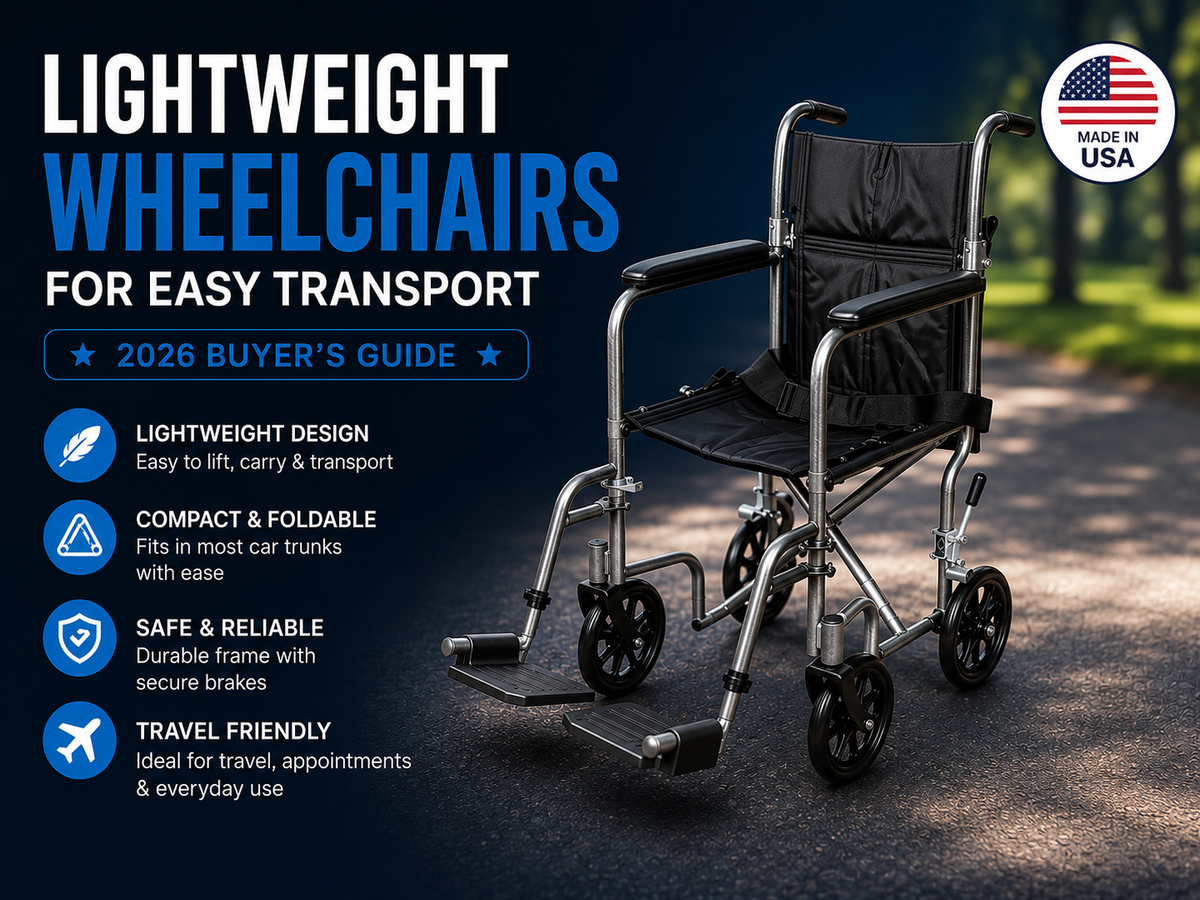
If you're in a similar situation — a caregiver transporting a loved one, or a traveler who needs a chair for airports and excursions — this guide will help you find the right lightweight option. Browse AllCare Store's Wheelchair Collection for a full range of lightweight and transport models.
Standard vs. Transport vs. Ultralight: What's the Difference?
| Type | Typical Weight | Who Propels It | Best For |
|---|---|---|---|
| Standard (self-propel) | 35–50 lbs | User or caregiver | Full-time wheelchair users with arm strength |
| Transport / Companion | 15–25 lbs | Caregiver only | Part-time use, appointments, travel, outings |
| Ultralight (K0004/K0005) | 12–22 lbs | User or caregiver | Active users who self-propel for extended periods |
| Travel/Airplane | 13–18 lbs | Caregiver | Airports, cruise ships, sightseeing |
The key distinction: transport wheelchairs have small rear wheels (usually 8–12 inches) and no hand rims, so the user cannot self-propel. They're designed to be pushed by a companion. Standard and ultralight chairs have large 24-inch rear wheels with hand rims for self-propulsion. If the user needs independence, a lightweight self-propel chair is necessary. If a caregiver is always present for mobility, a transport chair is lighter and easier to handle.
Key Features to Look For
Weight
The single most requested feature. Transport chairs range from about 13 to 25 pounds. Aluminum frames (most common) land around 18–24 lbs. Steel frames are heavier; titanium and carbon fiber frames are the lightest but also the most expensive. For most caregivers, 15–20 lbs is the sweet spot — light enough to lift into a trunk without strain, durable enough for daily use.
Folding Style
Cross-brace folding (the classic X-fold) is the most common: the chair folds flat side-to-side and is very compact for trunks. Rigid frames don't fold at all — used mainly in ultralight self-propel chairs for active users; they ride better but are harder to transport. Vertical folding (some transport chairs) folds front-to-back, which can fit more easily in some trunks. Check your vehicle's trunk dimensions before purchasing.
Seat Width and Depth
Fit matters more than almost anything else. A chair that's too wide causes side-to-side sliding; too narrow causes pressure sores and discomfort. Standard seat widths are 16", 18", and 20". Seat depth (front of seat to back) should allow about 2–3 finger-widths between the back of the knee and the seat edge. When in doubt, get a professional fitting from a physical or occupational therapist — insurance may cover a portion of the chair cost with a prescription.
Armrests
Fixed armrests are lightest and most durable. Flip-back or desk-length armrests make side transfers much easier — a major convenience if the user transfers in and out frequently. Removable armrests are excellent for caregivers who perform standing pivot transfers. Consider the user's transfer method when choosing.
Footrests
Swing-away footrests allow the footrest panels to pivot outward, making it easy to transfer straight forward from the chair — very useful when transferring to a toilet, car seat, or bed. Fixed footrests are lighter and simpler but limit transfer options. Elevating leg rests add weight but are essential if the user needs to keep legs elevated due to edema or circulation issues.
Seat Cushion
Most lightweight and transport chairs come with minimal sling-style cushioning. For comfort and pressure injury prevention, a quality cushion is essential — especially for users sitting in the chair for extended periods. Gel cushions, foam cushions, and air-cell cushions each have different pressure-redistribution properties. Browse AllCare Store's Wheelchair Cushion collection for options. We also have a detailed guide: Best Wheelchair Cushions for Pressure Relief 2026.
Weight Capacity
Standard transport and lightweight chairs typically support 250–300 lbs. Bariatric transport chairs are available for users up to 450–600 lbs, but they are heavier. Never exceed the stated weight capacity — it compromises the frame's structural integrity.
Travel and Airline Considerations
Traveling by air with a personal wheelchair? Under the Air Carrier Access Act, airlines must allow passengers with disabilities to bring their personal wheelchair in the cabin or checked as gate-checked luggage at no charge. Transport wheelchairs under about 18 lbs and compact fold can often be stowed in overhead bins on larger aircraft, allowing the user to use their own chair right up to the seat. Confirm with your airline before flying — policies vary by aircraft type.
For international travel and cruise ships, a transport chair folds small enough for ship elevators and narrow cruise cabin doorways (typical doorway: 24" wide). Measure your chair's folded width and cross-reference with your ship's cabin specifications if possible.
Matching the Chair to the Caregiver
Don't just consider the user — consider the caregiver's physical capabilities too. A shorter caregiver pushing a user may need adjustable-height push handles (standard height is around 36"; tall caregivers benefit from handles at 38–40"). Ergonomic handle grips reduce hand fatigue. If the caregiver has shoulder or back issues, look for chairs under 18 lbs. If loading into a vehicle is the main concern, test the folded dimensions against your actual trunk before purchasing.
Related Mobility Resources
If you're evaluating mobility options more broadly, explore our other guides:
- Best Walkers & Rollators for Seniors 2026
- Wheelchairs for Seniors: Complete Guide 2026
- Best Mobility Scooters for Seniors 2026
- Best Wheelchair Cushions for Pressure Relief 2026
Shop Lightweight Wheelchairs at AllCare Store
AllCare Store carries a curated selection of lightweight transport wheelchairs, ultralight self-propel chairs, wheelchair cushions, and mobility accessories — all with free shipping. Visit our Wheelchairs collection to browse, or call our team at 1-888-889-6260 for personalized guidance.
Frequently Asked Questions: Lightweight Wheelchairs
What is the lightest wheelchair available?
The lightest wheelchairs available are ultralight manual wheelchairs made from titanium or carbon fiber frames, some weighing as little as 10–13 pounds. However, these are typically custom-configured for active wheelchair users and are expensive. For transport/companion use, aluminum folding transport chairs typically start around 13–15 lbs. For most caregivers, a lightweight aluminum transport chair in the 15–19 lb range offers the best balance of weight, durability, and cost.
Can a transport wheelchair be self-propelled?
No. Transport wheelchairs (also called companion or attendant-propelled chairs) have small rear wheels — typically 8 to 12 inches — that are not designed for the user to grip and push. They must be pushed by a caregiver. If the user needs to self-propel, a standard wheelchair with 24-inch rear wheels and hand rims, or an ultralight wheelchair, is the appropriate choice.
Will Medicare cover a lightweight wheelchair?
Medicare Part B may cover a manual wheelchair classified as Durable Medical Equipment (DME) if a physician certifies medical necessity and the wheelchair is purchased from a Medicare-approved supplier. Coverage depends on the wheelchair's K-code classification (K0001 through K0005, where higher numbers indicate lighter and more complex chairs). A transport chair is generally not covered for independent community use by Medicare, but a lightweight manual wheelchair for self-propulsion may qualify. Always verify coverage with your provider and Medicare supplier before purchasing.
Medical Disclaimer: This article is for informational purposes only and does not constitute medical advice. Individuals at high risk for pressure injuries should consult a physician, occupational therapist, or certified rehabilitation engineer before selecting a wheelchair cushion.