MEDICAL DISCLAIMER: This article is for informational purposes only and is not a substitute for professional medical advice. Wheelchair cushion selection, especially for individuals at risk for pressure injuries, should involve a physician, physical therapist, or certified seating and mobility specialist. If you have an existing pressure injury (pressure sore), consult a wound care specialist before selecting or continuing to use any cushion.
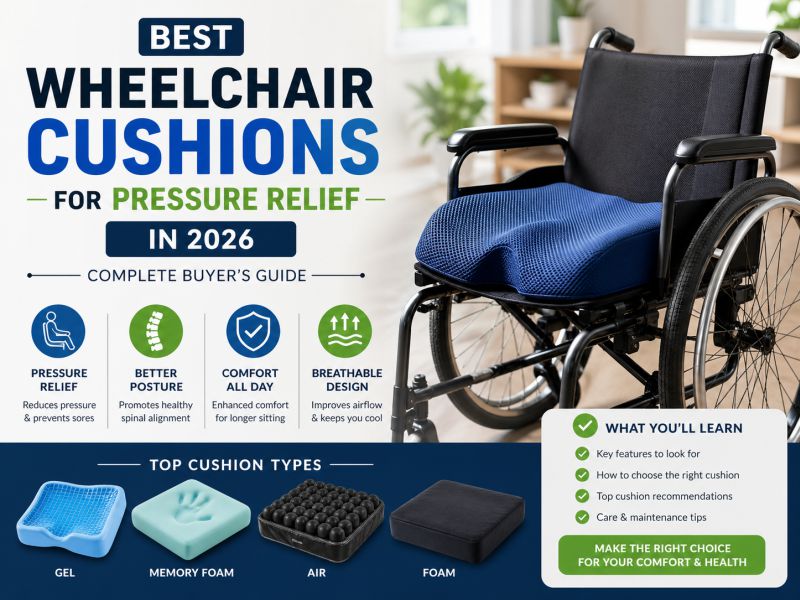
Best Wheelchair Cushions for Pressure Relief 2026: Your Complete Buyer's Guide

Robert's Story: The Day He Understood What a Cushion Could Do
Robert, 61, had been using a manual wheelchair for three years following a spinal cord injury. He was mobile, independent, and determined — the kind of person who had returned to community college after his accident and was working toward a degree in accounting. He pushed himself hard, sometimes twelve hours a day in his chair, and he told himself that the persistent discomfort in his tailbone area was just part of life now.
Then his doctor noticed the beginning of a stage-two pressure injury at Robert's coccyx — a wound that, if it progressed, could mean weeks of bed rest and set back every goal he had worked toward. His physiatrist referred him to a certified seating specialist. The specialist observed Robert's posture, measured his chair dimensions, and asked him to describe his daily routine. Then she handed him a hybrid gel-foam cushion and asked him to try it for thirty minutes.
"It was like sitting on something that knew where I was," Robert told us afterward. "The foam underneath gave me stability. The gel on top just... distributed. The pressure that had been concentrated in one spot for three years spread out across the whole surface. I sat there for thirty minutes, stood up, and there was no redness. None. I'd had redness every single day for three years."
Robert's wound healed without requiring bed rest. He graduated with honors eighteen months later. He also became an evangelist for proper seating. "Every wheelchair user I know," he says, "is sitting on the wrong cushion."
He may not be far off. The right wheelchair cushion is one of the most consequential mobility decisions a wheelchair user can make — and it is one of the most frequently made incorrectly. This guide is here to help you make it right.
Why Wheelchair Cushions Matter More Than You Think
When a person sits for extended periods, particularly without the ability to shift their weight naturally (as occurs with many wheelchair users), the tissues between bony prominences and the seat surface are compressed. Blood flow to those tissues is reduced. Without adequate oxygen and nutrients, tissue begins to break down — starting with redness and progressing, if uncorrected, to open wounds, deep ulcers, and in severe cases, infections that can be life-threatening.
Pressure injuries (also called pressure sores or decubitus ulcers) are among the most serious complications associated with wheelchair use. They are also largely preventable. The right cushion, properly fitted to the chair and the user's body, redistributes pressure across a larger surface area, reducing the intensity at any single point. It does not eliminate the need for weight shifts and position changes, but it buys meaningful time and dramatically reduces risk.
Beyond pressure relief, a good cushion affects posture, which affects breathing, digestion, upper extremity function, and fatigue levels. A user who is poorly positioned — tilted to one side, slumped forward, or rocked back — works harder to do everything. A cushion that provides proper pelvic positioning reduces that effort and can improve function across the entire day.
Types of Wheelchair Cushions
Foam Cushions
Foam is the most common and affordable cushion material. Standard foam cushions range from flat, dense sheets of polyurethane foam to contoured, multi-density designs that cradle the pelvis and ischial tuberosities (the "sit bones"). Foam cushions are lightweight, easy to transfer in and out of the chair, and often covered in a washable, moisture-resistant fabric.
The downside of basic foam is that it compresses over time and loses its pressure-relieving properties — a cheap foam cushion may need replacement every 6–12 months. Higher-quality visco-elastic (memory foam) cushions conform more precisely to body contours and last longer, but they are heavier and can retain heat.
Best for: Part-time wheelchair users, those with low-to-moderate pressure risk, users on a budget who replace regularly.
Gel Cushions
Gel cushions contain a viscous fluid layer (often silicone gel) that flows under pressure to conform to the body's shape and distribute weight across a wide surface. Gel doesn't bottom out the way foam can, and it maintains consistent pressure relief over long sitting periods. Gel cushions are also naturally cool — the gel dissipates heat, which is a meaningful benefit for users in warm climates or those prone to skin issues from moisture.
Pure gel cushions are heavy (often 6–10 pounds) and can be awkward to transfer. If the gel bladder is punctured, the cushion must be replaced. They also require periodic repositioning to ensure gel distribution is even.
Best for: Full-time wheelchair users at moderate-to-high pressure risk; users who need cooling properties; power wheelchair users where weight is less of a concern.
Air (Alternating Pressure) Cushions
Air cushions consist of an interconnected network of air cells. As the user shifts weight, air moves between cells, continuously varying pressure across the seating surface. High-end air cushions — such as the ROHO family of products — are considered the gold standard for individuals at the highest risk of pressure injury, including those with complete spinal cord injuries or prior stage III/IV pressure wounds.
Air cushions require regular inflation checks (typically once a day) and can be punctured. They demand a higher level of user engagement than foam or gel. They are also the most expensive category, often $300–$700 or more. For the right user, the investment is unequivocally worth it.
Best for: Full-time wheelchair users at high or very high pressure risk; users with prior pressure injury history; users advised by a seating specialist.
Hybrid (Gel-Foam or Air-Foam) Cushions
Hybrid cushions combine two materials to capture benefits from each. A gel-foam hybrid typically has a foam base for stability and postural support, with a gel layer on top for pressure redistribution and cooling. An air-foam hybrid pairs a foam structure with air cells in the highest-risk areas.
Hybrids are the fastest-growing segment of the wheelchair cushion market because they offer meaningful pressure relief without the full weight, cost, or maintenance demands of pure gel or pure air. They are a strong choice for most part-time and moderate full-time wheelchair users.
Best for: Full-time and part-time users with moderate pressure risk; users who want better performance than foam without the complexity of air; most first-upgrade buyers.
Contoured (Positioning) Cushions
Contoured cushions are molded with specific depressions and ridges — typically a pelvic cradle, ischial reliefs, and a pommel — that guide the pelvis into a neutral, properly aligned position. They prioritize postural stability as much as pressure relief. These cushions can be foam, gel, or hybrid, but what distinguishes them is their shape rather than their material.
Best for: Users with significant pelvic instability, hip adductor tightness, scoliosis, or postural challenges requiring structured positioning support.
Wheelchair Cushion Comparison Table
| Type | Pressure Relief | Weight | Cost Range | Maintenance | Lifespan |
|---|---|---|---|---|---|
| Basic foam | Low–moderate | Light | $20–$60 | Minimal | 6–18 months |
| Memory foam | Moderate–high | Moderate | $50–$150 | Minimal | 2–3 years |
| Gel | High | Heavy | $80–$250 | Low | 3–5 years |
| Air | Very high | Light–moderate | $200–$700+ | Daily inflation | 3–5 years |
| Hybrid (gel-foam) | Moderate–high | Moderate | $60–$200 | Minimal | 2–4 years |
| Contoured | Moderate–high | Varies | $80–$300 | Minimal | 2–5 years |
How to Size a Wheelchair Cushion Correctly
A cushion that is too wide allows the user to slip sideways off center. A cushion that is too narrow creates pressure at the edges. A cushion that is too thick raises the seat height, affecting footrest contact and desk access. Proper sizing is not optional.
Follow these steps:
- Width: Measure the seat pan width of the wheelchair (inside dimension, wall to wall). The cushion should be within 1 inch of this measurement — ideally matching or 1 inch narrower.
- Depth: Measure the seat depth (front edge of the seat to the back of the chair). The cushion should match or be within 1 inch shorter to prevent the edge from pressing into the backs of the knees.
- Thickness/Height: Standard cushions are 2–4 inches thick. Consider the total seat height — the distance from the floor to the top of the cushion, including the cushion. The user's feet should rest flat on the footrests without the hips rising above the knees.
If you're unsure, bring your chair measurements to a seating specialist, or call 1-888-889-6260 and our team can help you identify compatible options from the wheelchair accessories collection at AllCare Store.
Pressure Injury Risk: Who Needs the Most Support
Not all wheelchair users face equal pressure injury risk. Understanding your risk level helps you select the right cushion tier.
Lower risk: Part-time wheelchair users (less than 4 hours per day), users with intact sensation who can feel and respond to discomfort, users with good trunk control and ability to shift weight independently.
Moderate risk: Full-time wheelchair users with partial sensation, users with limited ability to perform weight shifts, elderly users with fragile or thin skin, users who have had minor skin redness in the past.
High risk: Full-time wheelchair users with absent sensation (complete spinal cord injury), users with prior stage II or higher pressure injuries, users with diabetes or poor circulation, users with incontinence (moisture accelerates skin breakdown), users with severe malnutrition or very low body weight.
High-risk users should involve a certified seating and mobility specialist (SMS) in their cushion selection. Many insurance plans, including Medicare, cover specialty seating for medically documented high-risk users. The process requires a physician's prescription and a seating evaluation, but it can result in a high-end air or hybrid cushion at little or no out-of-pocket cost.
Cushion Care and Maintenance
Even the best cushion becomes ineffective if it is not maintained properly. Follow these guidelines:
- Check for bottoming out (foam): Slide your hand under a seated user. If you can feel the bony prominences through the cushion with little resistance, the foam has compressed and the cushion needs replacement.
- Inspect gel cushions monthly: Press the gel to ensure it is evenly distributed. If gel is pooled or hard in one area, the bladder may be damaged.
- Check air pressure daily (air cushions): Air slowly escapes through the valve; check and adjust to the prescribed inflation level every morning.
- Clean covers regularly: Most cushion covers are machine washable. Follow manufacturer instructions. Moisture retention under a soiled cover is a major driver of skin breakdown.
- Replace on schedule: Even if a cushion looks intact, compressed foam that has lost its elasticity is not providing the pressure relief it was rated for. Replace foam cushions at least once per year for full-time users.
How Wheelchair Cushions Fit Into a Complete Seating and Mobility Plan
A cushion addresses the seat surface — but good wheelchair seating involves the whole system. Consider these related factors:
Back Support
A sling-style standard wheelchair back offers minimal postural support. An aftermarket back support — contoured foam, lateral supports, or a custom-molded back — improves trunk alignment and reduces fatigue. The right back support works in concert with the cushion to position the pelvis neutrally, which reduces pressure at the ischials and coccyx.
Armrest Height
Armrests that are too high force the shoulders up; too low causes a forward lean that shifts weight to the ischials. Armrests at a height where the forearm rests naturally while the shoulder is relaxed provide the best postural support.
Footrest Length
Footrests set too low dangle the feet, which increases posterior thigh pressure. Too high lifts the thighs off the seat, concentrating weight on the ischials. The footrest should support the thigh along its full length with the knee at approximately 90 degrees.
Weight Shift Routine
No cushion — not even the best air cushion — replaces regular weight shifting. Manual wheelchair users should perform a lean-forward, side-to-side, or push-up weight shift every 15–30 minutes. Power wheelchair users can use tilt-in-space or recline functions for the same purpose. Your seating specialist can prescribe a specific weight shift schedule based on your risk level.
Wheelchair Fit
A wheelchair that does not fit properly creates seating problems no cushion can fully correct. If you are experiencing persistent discomfort, skin issues, or postural problems, a full seating and wheelchair evaluation is worth pursuing. Browse the full wheelchair collection at AllCare Store, including lightweight manual wheelchairs and transport chairs.
Medicare and Insurance Coverage for Wheelchair Cushions
Medicare Part B covers wheelchair cushions as Durable Medical Equipment (DME) when medically necessary. Coverage requires a physician's written order documenting the medical need, and the cushion must be purchased from a Medicare-enrolled DME supplier. Coverage limits apply — a standard foam cushion may be fully covered under the base wheelchair benefit, while a specialty air or gel cushion may require documentation of elevated pressure injury risk.
Medicaid coverage varies by state. Many commercial insurance plans follow Medicare's coverage logic. Contact your plan directly and ask for the DME coverage policy for Group 2 or Group 3 wheelchair cushions (these are the Medicare product categories for specialty pressure-relieving cushions).
Frequently Asked Questions
How often should I replace my wheelchair cushion?
Basic foam cushions: every 6–12 months for full-time users. Memory foam and hybrid cushions: every 2–3 years. Gel and air cushions: every 3–5 years, or when the bladder shows damage or the cushion no longer maintains proper function. Always replace a cushion if you notice new or worsening skin redness after sitting.
Can I use a regular seat cushion in my wheelchair?
Standard seat cushions (couch cushions, office chair cushions) are not designed for wheelchair seating and typically do not provide meaningful pressure relief. They may also alter the chair's seat height in ways that affect posture and footrest contact. Use a cushion specifically designed for wheelchair seating.
What is the best cushion for someone who just started using a wheelchair?
For new or part-time wheelchair users without identified pressure risk, a quality hybrid gel-foam cushion is a strong starting point — better pressure relief than basic foam without the cost and complexity of a full air system. If the person will become a full-time user, a seating evaluation within the first few months is strongly recommended.
Do wheelchair cushions help with back pain?
Yes, indirectly. A cushion that properly supports pelvic alignment reduces compensatory curves in the lumbar spine and decreases muscle fatigue. However, if back pain is significant, a proper back support (not just a cushion) is usually needed as well. A seating specialist can evaluate both needs together.
Can I travel with my wheelchair cushion?
Yes. Most cushions travel easily in the chair. For air travel, note that pressurized cabins can affect air cushion inflation — adjust after landing. Gel cushions pass through airline security normally. When transferring to an airplane seat, bring the cushion with you rather than leaving it in the chair.
What should I do if I notice skin redness after sitting?
Persistent redness that does not resolve within 30 minutes of pressure relief is a warning sign of developing pressure injury. Stop using the cushion until you have spoken with a physician or wound care specialist. Do not assume the cushion is fine and the skin will toughen — this approach leads to serious wounds. Seek evaluation promptly.
Why Shop Wheelchair Supplies at AllCare Store
At AllCare Store, we carry a comprehensive range of wheelchair accessories, mobility products, and home care supplies from trusted brands including Drive Medical, Medline, Carex, and more. Our wheelchair and mobility collection includes standard and transport wheelchairs, accessories, and cushions. When you order from us:
- Free shipping on qualifying orders nationwide.
- Discreet packaging for privacy.
- 30-day returns for peace of mind.
- Expert guidance: call 1-888-889-6260 to speak with a real person who understands mobility products.
Also explore our mobility products collection and our guide to walkers and rollators for 2026.
The Right Cushion Changes Everything
Robert went back to his seating specialist a year after his degree ceremony to thank her. He brought her a photo of himself at graduation. "I almost didn't make it there," he said. "Not because of the injury. Because of the cushion. Because I sat on the wrong piece of foam for three years and didn't know I had any other option."
You have options. You always did. The difference between a pressure injury and a healthy skin check is often a matter of a few hundred dollars and a conversation with the right specialist. If you are a wheelchair user — or care for one — don't wait for redness to ask the question. Ask it now, while the stakes are lower and the solution is simpler.
The right cushion is not a luxury. It is the foundation everything else is built on.
Call 1-888-889-6260 or visit AllCareStore.com to explore our full range of mobility and seating products. Free shipping, discreet packaging, 30-day returns.
This guide was prepared by the AllCare Store editorial team. For personalized seating recommendations, consult a certified seating and mobility specialist, a physical or occupational therapist, or your healthcare provider.
Medical Disclaimer: This article is for informational purposes only and does not constitute medical advice. Individuals at high risk for pressure injuries should consult a physician, occupational therapist, or certified rehabilitation engineer before selecting a wheelchair cushion.