Medical Disclaimer: Lymphedema is a chronic medical condition requiring professional management. Compression garments for lymphedema should be fitted by a certified lymphedema therapist (CLT) or occupational/physical therapist trained in lymphedema management. This article is educational and does not replace individualized clinical assessment.
Susan finished her breast cancer treatment in 2024 and thought the hard part was behind her. Then, at a routine follow-up six months later, her oncologist noticed her left arm had swollen noticeably compared to her right. The diagnosis — lymphedema — came as a shock. She'd heard it was a risk of lymph node removal, but she hadn't expected to be managing a chronic condition at 52.
Lymphedema affects between 3 and 5 million Americans, most commonly as a consequence of cancer treatment involving lymph node removal or radiation. But it also occurs following trauma, infection, surgery, or as a primary condition (primary lymphedema). It is not curable, but it is manageable — and compression garments are the cornerstone of that management.
This guide explains how lymphedema compression garments work, what the different types and compression levels mean, how to get properly fitted, and how to choose products that provide effective, comfortable daily control. Browse our Compression Therapy and Compression Stockings collections at AllCare Store.
How Lymphedema Works — and Why Compression Helps
The lymphatic system is a network of vessels and nodes that collect fluid (lymph) from body tissues and return it to circulation. When lymph nodes are removed (as in cancer surgery) or damaged by radiation or other causes, the remaining vessels cannot handle the normal fluid load. Lymph accumulates in the tissue, causing persistent swelling, heaviness, and over time, fibrotic tissue changes that make the limb stiffer and more difficult to treat.
Compression garments work by applying external pressure to the swollen limb, providing the resistance that the damaged lymphatic vessels cannot generate on their own. This mechanical pressure helps move lymph fluid out of the tissue and toward functional lymphatic channels. Consistent daily compression — along with lymphatic massage (manual lymphatic drainage) and exercise — is the foundation of lymphedema management.
Types of Compression Garments for Lymphedema
Flat-Knit vs. Circular-Knit: A Critical Distinction
Unlike general compression hosiery for varicose veins or edema, lymphedema garments are almost exclusively flat-knit, and this distinction matters enormously.
Flat-knit garments are manufactured on a flat knitting machine and seamed at the back. This produces a stiffer, more durable fabric that provides consistent, even compression around irregular or large limbs. Flat-knit garments do not roll or migrate, maintain their shape throughout the day, and are the standard of care for established lymphedema — particularly when the limb is enlarged, has skin folds, or requires high compression.
Circular-knit garments are knitted in a continuous tube. While these work well for general compression and mild edema, their stretchy, even construction can create a tourniquet effect around irregular lymphedema limbs and may not provide adequate pressure in the right locations. Circular-knit garments are sometimes used in early-stage or mild lymphedema under the guidance of a therapist, but flat-knit is the professional standard for most lymphedema patients.
Arm Compression Sleeves and Gauntlets
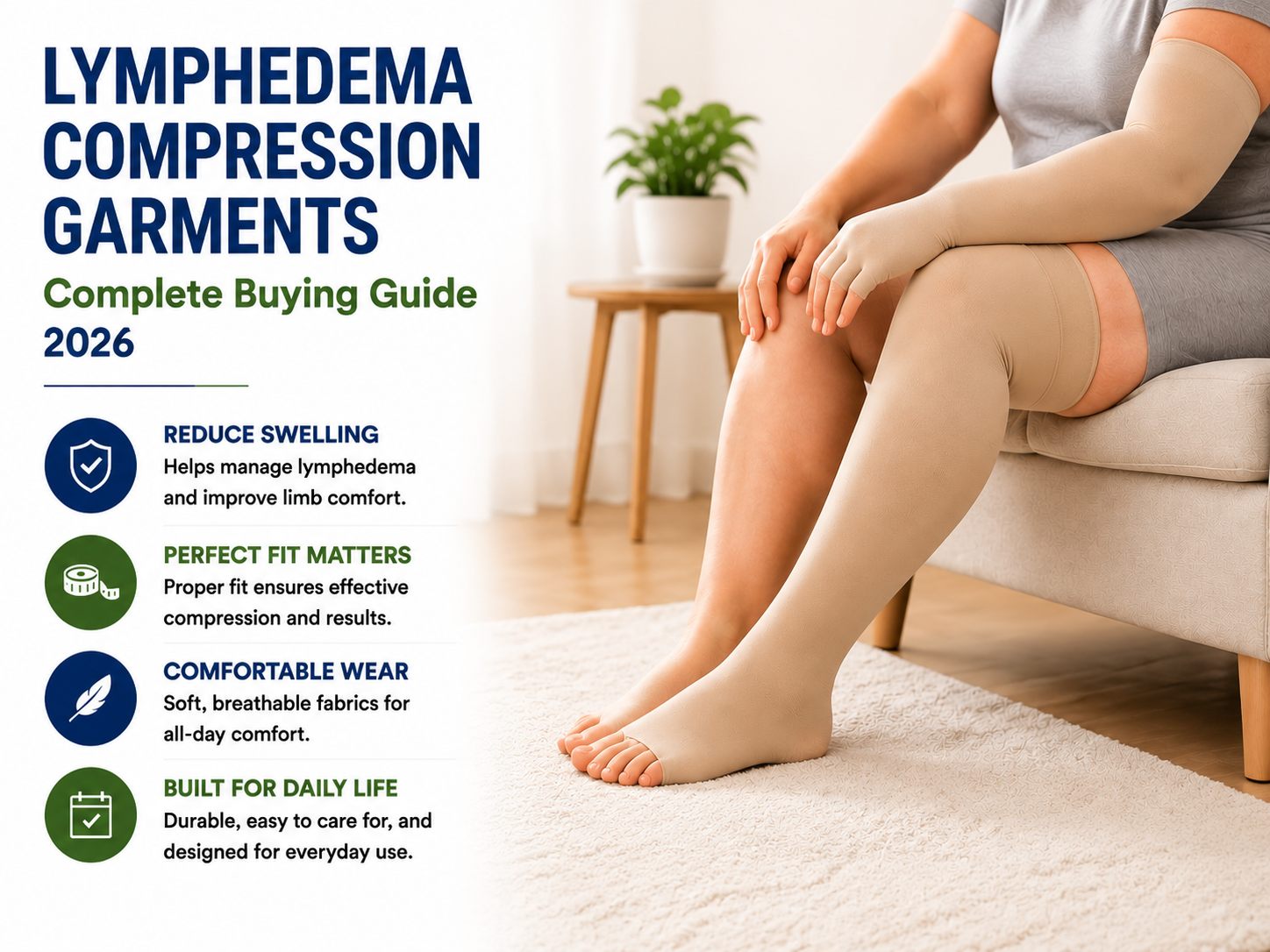
For upper-extremity (arm) lymphedema, which is common after breast cancer treatment with axillary node dissection, the standard garment is an arm sleeve — a tubular compression garment extending from the wrist to just below the shoulder or to the shoulder, depending on the extent of swelling. A separate hand piece (glove or gauntlet) is added when hand or finger swelling is present; most lymphedema therapists recommend wearing a glove/gauntlet with the sleeve at all times, as the sleeve alone can push fluid into an uncompressed hand.
Compression Stockings and Pantyhose for Leg Lymphedema
Lower-extremity lymphedema (common after gynecologic cancer, melanoma treatment, or primary lymphedema) is managed with compression stockings, knee-highs, thigh-highs, or pantyhose/tights depending on how high the swelling extends. Lymphedema stockings are almost exclusively flat-knit and available in higher compression levels than standard support hosiery.
Compression Bandaging (Phase 1: Decongestive Phase)
When lymphedema is first diagnosed or has flared significantly, the active treatment phase (Complete Decongestive Therapy, CDT) often uses multilayer short-stretch compression bandaging rather than garments. Short-stretch bandages are low-elasticity, providing high working pressure during movement and low resting pressure during sleep — the opposite of elastic bandages. Bandaging is applied by or under the guidance of a certified lymphedema therapist and is typically continued until limb volume has been sufficiently reduced to be fitted for a garment.
Night Compression Garments
During sleep, standard compression garments are not worn. However, many lymphedema patients benefit from lower-compression night garments — foam chip pads, quilted compression sleeves, or specialized night garments — that maintain some compression to prevent overnight rebound swelling. These are not standard compression garments; they are designed specifically for supine positioning. Ask your lymphedema therapist whether night garments are appropriate for your situation.
Compression Levels for Lymphedema
Compression for lymphedema is measured in millimeters of mercury (mmHg) for stockings or in a fabric classification system (Class 1–4 or similar) for arm sleeves. Lymphedema typically requires higher compression levels than general edema or varicose veins:
| Compression Level | mmHg Range | Typical Use |
|---|---|---|
| Class 1 / Mild | 20–30 mmHg | Mild lymphedema, maintenance phase, lymphedema prevention in at-risk patients |
| Class 2 / Moderate | 30–40 mmHg | Moderate lymphedema, most common prescription level, general daily management |
| Class 3 / Firm | 40–50 mmHg | Severe lymphedema, fibrotic changes, when lower classes are insufficient |
| Class 4 / Extra Firm | 50+ mmHg | Severe chronic lymphedema, elephantiasis; requires clinical prescription and assessment |
Important: Compression levels for lymphedema must be prescribed by or confirmed with a certified lymphedema therapist. Too little compression is ineffective; too much compression in patients with arterial insufficiency or certain medical conditions can be dangerous. Your therapist determines the right level based on your specific condition, limb measurements, skin integrity, and cardiovascular status.
The Critical Importance of Professional Fitting
Lymphedema compression garments must be custom-fitted or selected based on precise measurements by a trained fitter. An ill-fitting garment can:
- Create a tourniquet effect at one point, worsening swelling below it
- Fail to adequately compress the tissue, leaving the condition undertreated
- Cause skin breakdown, blistering, or wound formation
- Be impossible to don and doff independently, leading to non-compliance
A certified lymphedema therapist (CLT) or trained lymphedema fitter takes a series of circumferential measurements at multiple points along the limb and often limb length measurements. For patients with significantly irregular limb shapes, custom-fabricated garments from specialty manufacturers may be required rather than standard ready-to-wear garments.
Donning and Doffing Aids
High-compression garments — especially in Classes 2 and above — can be extremely difficult to put on (don) and take off (doff), particularly for patients with hand weakness, arthritis, or reduced dexterity. Donning and doffing aids are essential tools:
Rubber-grip gloves: Thin rubber or latex-free gloves (like kitchen gloves) dramatically improve grip on the garment and distribute the pulling force across the hand. An inexpensive but highly effective tool.
Stocking donners/butler devices: Wire or plastic frames that hold the garment open for the foot or hand to slide in, then allow the garment to be rolled up the limb with handles. Eliminates the need to grip and bunch the garment manually. Essential for patients with arthritis or upper body weakness.
Powered donning devices: Electric-assist devices for very high compression levels or patients with severe hand weakness. Less common but available for patients who cannot use manual aids.
Sliding boards and frames: For lower extremity garments in patients with mobility limitations, seated donning aids provide stability during application.
Browse compression therapy aids and donning tools at AllCare Store.
Garment Lifespan and Maintenance
Compression garments have a finite lifespan. The elastic fibers in compression fabric fatigue with use and washing, gradually losing their effectiveness. Most certified lymphedema therapists recommend replacing compression garments every 4–6 months, or sooner if:
- The garment has lost its shape or no longer fits snugly
- Swelling has increased despite consistent use
- The garment has runs, holes, or visible fabric breakdown
- The patient's limb volume has changed significantly
Washing instructions: Compression garments should be washed daily (or after each use) with a gentle detergent in warm — not hot — water. Heat degrades elastic fibers. Most garments can be machine washed in a mesh laundry bag on a gentle cycle; air dry flat or on a towel, never in a dryer or on a radiator. Follow the manufacturer's specific washing instructions, as custom garments may have specific requirements.
Insurance Coverage for Lymphedema Garments
Coverage for compression garments varies significantly by insurance plan. Historically, Medicare did not cover compression garments for lymphedema — a significant gap in coverage that many advocacy groups fought to close. The Lymphedema Treatment Act, signed into law in December 2022, mandated Medicare coverage for compression garments when prescribed for lymphedema treatment. Coverage began in 2024, making garments accessible to millions of Medicare beneficiaries for the first time.
Under the Lymphedema Treatment Act, Medicare Part B covers:
- Standard and custom-fabricated compression garments
- Bandaging supplies used in CDT
- Night garments when part of a prescribed treatment plan
Coverage requires a physician's prescription, a lymphedema diagnosis, and documentation of medical necessity. Contact your insurer to confirm your specific benefits; coverage parameters vary by plan, and commercial insurance coverage predates the Medicare change but varies by policy.
Lifestyle Tips for Lymphedema Management
Compression garments are essential, but effective lymphedema management is multifaceted:
Exercise: Muscle contractions help pump lymph fluid. Walking, swimming, and gentle resistance exercise — all while wearing compression garments — are recommended. Avoid strenuous, high-impact exercise without first consulting your lymphedema therapist.
Skin care: Lymphedematous skin is more susceptible to infection. Keep skin moisturized with pH-balanced, fragrance-free lotion. Avoid cuts, scratches, insect bites, and sunburn on the affected limb. Treat any skin breaks promptly; cellulitis in a lymphedematous limb requires immediate medical attention.
Elevation: When resting, elevate the affected limb above heart level to use gravity to assist lymphatic return.
Weight management: Obesity is both a risk factor for lymphedema and a factor that worsens severity. Weight loss in overweight patients can significantly reduce lymphedema severity and garment requirements.
Air travel: The low cabin pressure in aircraft can trigger or worsen lymphedema swelling. Always wear compression garments during air travel. If flying with arm lymphedema, wear both your sleeve and glove for the entire flight.
Shop Compression Garments at AllCare Store
AllCare Store carries compression sleeves, stockings, bandaging supplies, and donning aids for lymphedema management. Free shipping on every order. Questions about sizing or compression levels? Call us at 1-888-889-6260 — our team can help guide your selection based on your prescription and measurements.
Compression Therapy | Compression Stockings | AllCare Store
Frequently Asked Questions: Lymphedema Compression
How many hours a day should I wear my lymphedema compression garment?
Most lymphedema therapists recommend wearing compression garments during all waking hours — typically 12–16 hours per day. They are generally not worn during sleep; at night, many patients use specialized lower-compression night garments or foam padding to maintain some pressure. The exact wearing schedule depends on the severity of your lymphedema, your activity level, and your therapist's assessment. Consistency is key: removing garments for extended periods allows fluid to re-accumulate, potentially undoing progress. Follow your certified lymphedema therapist's specific recommendations for your situation.
Can I get compression garments without a prescription?
Ready-to-wear compression garments in lower compression classes (20–30 mmHg) are available without a prescription and are sometimes appropriate for mild lymphedema prevention in at-risk patients. However, for established lymphedema requiring 30 mmHg or higher compression, a prescription and professional fitting from a certified lymphedema therapist are strongly recommended. Incorrectly fitted or inappropriate compression can worsen lymphedema or cause injury. For Medicare coverage under the Lymphedema Treatment Act, a physician's prescription is required. Most lymphedema patients should work with a CLT to be properly assessed and fitted rather than selecting garments independently.
What is the difference between lymphedema compression and regular compression stockings?
Several important differences distinguish lymphedema compression garments from standard compression stockings for varicose veins or general edema. Lymphedema garments are almost always flat-knit (providing consistent, non-tourniquet pressure around irregular limbs) while standard compression stockings are typically circular-knit. Lymphedema garments are available in higher compression classes (40–50+ mmHg) needed for lymphatic management. Lymphedema garments may require custom fabrication for unusual limb shapes. Standard compression stockings can be purchased off the shelf; lymphedema garments typically require professional fitting and a prescription. Using standard compression stockings for lymphedema is generally not recommended without therapist guidance, as the garment construction may not provide appropriate compression for this condition.