Medical Disclaimer: This article is for informational purposes only and should not replace professional medical advice. Always consult your healthcare provider before making decisions about your health, especially regarding oxygen saturation readings or respiratory concerns. If you experience chest pain, severe shortness of breath, or confusion, seek immediate emergency medical attention by calling 911.
Robert's Story: Finding Peace of Mind With a Pulse Oximeter
Robert was 71 when pneumonia knocked on his door—a sudden, unexpected visitor that sent him to the hospital for five days. The infection settled deep in his lungs, and even after discharge, he was terrified. Every morning, he'd wake up wondering: "Am I getting better? Is my oxygen level okay?" He'd call his daughter in a panic over minor shortness of breath, unsure whether it was normal recovery or a sign of trouble.
His daughter, a nurse, suggested something simple: a pulse oximeter. "This little device," she explained, "will tell you exactly what your oxygen level is. No more guessing. No more fear."
Within days, everything changed. Robert could clip a small device onto his finger, wait three seconds, and have a clear answer. When his readings stayed above 95%, he relaxed. When they dipped to 90%, he knew to call his doctor. The numbers gave him power—not the power to diagnose himself, but the power to understand his own body and make informed decisions about his care.
Today, three months into recovery, Robert uses his pulse oximeter daily. It's become his trusted companion, the bridge between uncertainty and confidence. He's not alone in this journey. Millions of people living with chronic respiratory conditions, heart disease, and sleep disorders are discovering what Robert learned: a pulse oximeter isn't just a medical device—it's peace of mind in your pocket.
If you're like Robert, wondering whether a pulse oximeter is right for you, or if you already own one but aren't quite sure you're using it correctly, this guide is for you.
What Is a Pulse Oximeter and How Does It Work?
A pulse oximeter is a small, non-invasive device that measures two critical pieces of information about your health in seconds: your heart rate (pulse) and your blood oxygen saturation level, commonly called SpO2 or oxygen saturation.
Most pulse oximeters are fingertip devices—small clips about the size of a clothespin that light up when you place your finger inside. Some versions are wrist-worn, while others are tabletop devices. Regardless of the style, they all work on the same basic principle: light.
The Science Behind the Glow
Inside your pulse oximeter are tiny LED lights—usually red and infrared light—and a photodetector on the opposite side. Here's what happens when you place your finger in the device:
The LED lights shine through your fingernail and the skin beneath it, traveling through the blood vessels in your fingertip. Oxygenated blood (blood rich in oxygen) absorbs light differently than deoxygenated blood (blood low in oxygen). The photodetector on the other side measures how much light passes through and how much is absorbed.
The pulse oximeter's microprocessor analyzes these light absorption patterns and calculates two readings:
1. SpO2 (Oxygen Saturation): The percentage of your red blood cells that are carrying oxygen. A reading of 95% means 95% of your blood cells are saturated with oxygen. 2. Pulse Rate: Your heart rate, measured in beats per minute (bpm).
The entire process takes just 3-5 seconds, and the device displays both readings on a small screen. No needles, no blood samples, no pain. This non-invasive elegance is why pulse oximeters have become such an essential part of modern healthcare.
Understanding SpO2: What Do Those Numbers Mean?
If a pulse oximeter is your window into your body's oxygen status, then SpO2 is the view. But what are you actually looking at? Let's break down what different oxygen saturation levels mean.
| SpO2 Reading | Status | What It Means |
|---|---|---|
| 95-100% | Normal | Healthy oxygen levels. Your lungs are working well and efficiently delivering oxygen to your bloodstream. |
| 90-94% | Mild Low | Slightly below normal. Monitor your reading and consult your doctor if this persists. May occur with altitude, mild illness, or anxiety. |
| 80-89% | Moderate Low | This level needs attention. Contact your healthcare provider. May indicate a respiratory or cardiac issue. |
| Below 80% | Critical | Emergency situation. Seek immediate medical attention or call 911. Do not delay. |
Important Context: These general guidelines apply to most healthy adults at sea level. However, your personal "normal" may vary based on your age, health conditions, altitude, and medical history. Some people with chronic lung disease may have a lower baseline SpO2 that's normal for them. This is why it's crucial to establish your own baseline with your healthcare provider and understand what readings are normal for YOUR body.
Who Needs a Pulse Oximeter?
You might think pulse oximeters are only for hospital patients hooked up to machines. Think again. Today, millions of people benefit from at-home pulse oximeters, including:
People With Chronic Respiratory Conditions
If you have COPD (chronic obstructive pulmonary disease), asthma, bronchitis, or emphysema, a pulse oximeter is your early warning system. These conditions affect your lungs' ability to oxygenate your blood, and monitoring your SpO2 helps you catch problems before they become serious. Many respiratory specialists recommend their patients use a pulse oximeter daily to track trends and recognize when symptoms are getting worse.
Heart Disease Patients
Heart failure, arrhythmias, and other cardiac conditions can affect how efficiently your heart pumps blood and delivers oxygen. Monitoring oxygen saturation helps you and your cardiologist understand how well your treatment plan is working.
Sleep Apnea Sufferers
Sleep apnea causes you to stop breathing repeatedly during sleep, dropping your oxygen levels. Many people use pulse oximeters overnight to monitor their SpO2 and recognize whether their sleep apnea treatment (like a CPAP machine) is effective.
COVID-19 Recovery Patients
The pandemic brought pulse oximeters into millions of homes. COVID can cause "silent hypoxemia," where your oxygen drops without you feeling short of breath. Many doctors recommended pulse oximeters for at-home COVID monitoring, and the practice has stuck around for other respiratory illnesses too.
Diabetics
Diabetes increases your risk of heart and lung complications. Regular SpO2 monitoring can help you catch problems early.
Athletes and Fitness Enthusiasts
Some athletes use pulse oximeters to monitor their bodies' response to training, altitude, and exertion. A sudden drop in SpO2 during exercise could indicate you're pushing too hard or that there's an underlying health issue.
Elderly Individuals
As we age, our bodies become more vulnerable to infections and complications. Older adults recovering from pneumonia, flu, or other illnesses benefit from pulse oximeter monitoring to ensure their oxygen levels stay healthy.
Anyone Traveling to High Altitude
At high altitudes, there's less oxygen in the air, and your SpO2 naturally drops. A pulse oximeter helps you recognize altitude sickness and know when it's time to descend.
If any of these situations apply to you, or if you've been advised by your healthcare provider to monitor your oxygen levels, a pulse oximeter belongs in your home healthcare toolkit.
How to Use a Pulse Oximeter Correctly
A pulse oximeter is simple to use, but "simple" doesn't mean "carefree." Using it correctly ensures you get accurate readings. Here's the right way:
Step 1: Prepare Your Finger
Choose a finger—typically your index finger or middle finger works best. If your nail is wet or has dark polish, wipe or remove it (dark nail polish can interfere with light detection). Your finger should be clean and dry. If your hands are cold, warm them up first by rubbing them together or placing them in warm water for a minute. Cold fingers can temporarily reduce blood flow, affecting readings.
Step 2: Position the Device
Hold your hand at heart level—this ensures accurate blood pressure dynamics and prevents gravity from affecting readings. Insert your finger into the pulse oximeter's finger slot smoothly but not forcefully. The device should fit snugly but comfortably; there should be no pain.
Step 3: Stay Still and Relax
Don't move your finger or hand. The device needs to detect the light bouncing through your blood vessels. Movement disrupts the reading. Breathe normally and try to relax. Anxiety or tension can actually lower your SpO2 temporarily.
Step 4: Wait for the Reading
Most pulse oximeters take 3-10 seconds to calculate a reading. Wait until the numbers stabilize on the screen. Some devices beep or flash when they have a stable reading. Once you see steady numbers and they haven't changed for a few seconds, you have your reading.
Step 5: Record It (Optional but Recommended)
For ongoing monitoring, write down your readings with the time and date. This information is gold for your healthcare provider—it shows trends over time. Many modern pulse oximeters connect to smartphone apps that automatically track readings, but simple pen and paper works too.
Pro Tips for Best Results:
- Take readings at the same time each day for consistency
- Don't measure immediately after exercise, caffeine, or nicotine—wait 10 minutes
- Avoid bright sunlight, which can interfere with sensors
- If a reading seems oddly low, wait 2 minutes and try a different finger
- Check that the device's battery is fresh (weak batteries can cause inaccurate readings)
- Keep the device clean—dust and dirt on the sensors reduce accuracy
Common Mistakes That Affect Your Readings
Even when you own the best pulse oximeter, mistakes can lead to inaccurate readings. Here are the most common culprits:
Mistake #1: Dark Nail Polish
Dark nail polish blocks the light from penetrating your nail bed. This is the number one reason for falsely low SpO2 readings. Remove dark polish before measuring, or use a different finger.
Mistake #2: Cold Hands
When you're cold, blood vessels in your fingers constrict to preserve core body heat. This reduces blood flow and can make your SpO2 reading lower than it actually is. Warm your hands first.
Mistake #3: Movement and Fidgeting
Even slight movement can disrupt the device's light sensors and give you an unstable reading. Stay as still as possible during measurement.
Mistake #4: Poor Fit
If the device is too loose, light escapes and you get a false reading. Too tight, and you restrict blood flow. The fit should be snug but comfortable.
Mistake #5: Measuring After Stress or Exercise
Your body's stress response can temporarily affect oxygen levels. After a stressful event or right after exercise, your readings may be artificially elevated or depressed. Wait 10-15 minutes before measuring.
Mistake #6: Forgetting Your Baseline
Not establishing what "normal" looks like for you personally. Some people naturally run at 94-95% while others run at 98%. Work with your doctor to understand your personal normal range.
Mistake #7: Poor Lighting or Low Battery
Bright sunlight can interfere with readings, as can a weak battery. Use the device in normal indoor lighting and check batteries regularly.
When to Seek Medical Attention Based on Your Readings
You have your pulse oximeter, you're taking readings correctly, and you see a number. Now what? When does that number warrant a call to your doctor versus a trip to the emergency room?
Call Your Doctor If:
- Your SpO2 is 90-94% and stays there for more than a few minutes
- Your SpO2 drops below your established baseline without explanation
- You're experiencing shortness of breath along with a normal SpO2 reading (which suggests a different problem)
- Your readings show a downward trend over several days
- You have other symptoms like chest pain, persistent cough, or fever with low SpO2
- You've recently been sick and your SpO2 isn't improving as expected
Seek Immediate Medical Attention (Call 911 or Go to ER) If:
- Your SpO2 drops below 80%
- You have severe shortness of breath you can't speak in full sentences
- You experience chest pain
- You feel confused or lose consciousness
- Your lips or fingertips turn blue
- You have SpO2 in the 80-89% range that doesn't improve with rest
Remember: A pulse oximeter is a monitoring tool, not a diagnostic tool. It tells you WHAT is happening (your oxygen level), but not WHY it's happening. Always involve your healthcare provider in interpreting your readings and making decisions about your care.
Types of Pulse Oximeters: Finding the Right One for You
Fingertip Pulse Oximeters
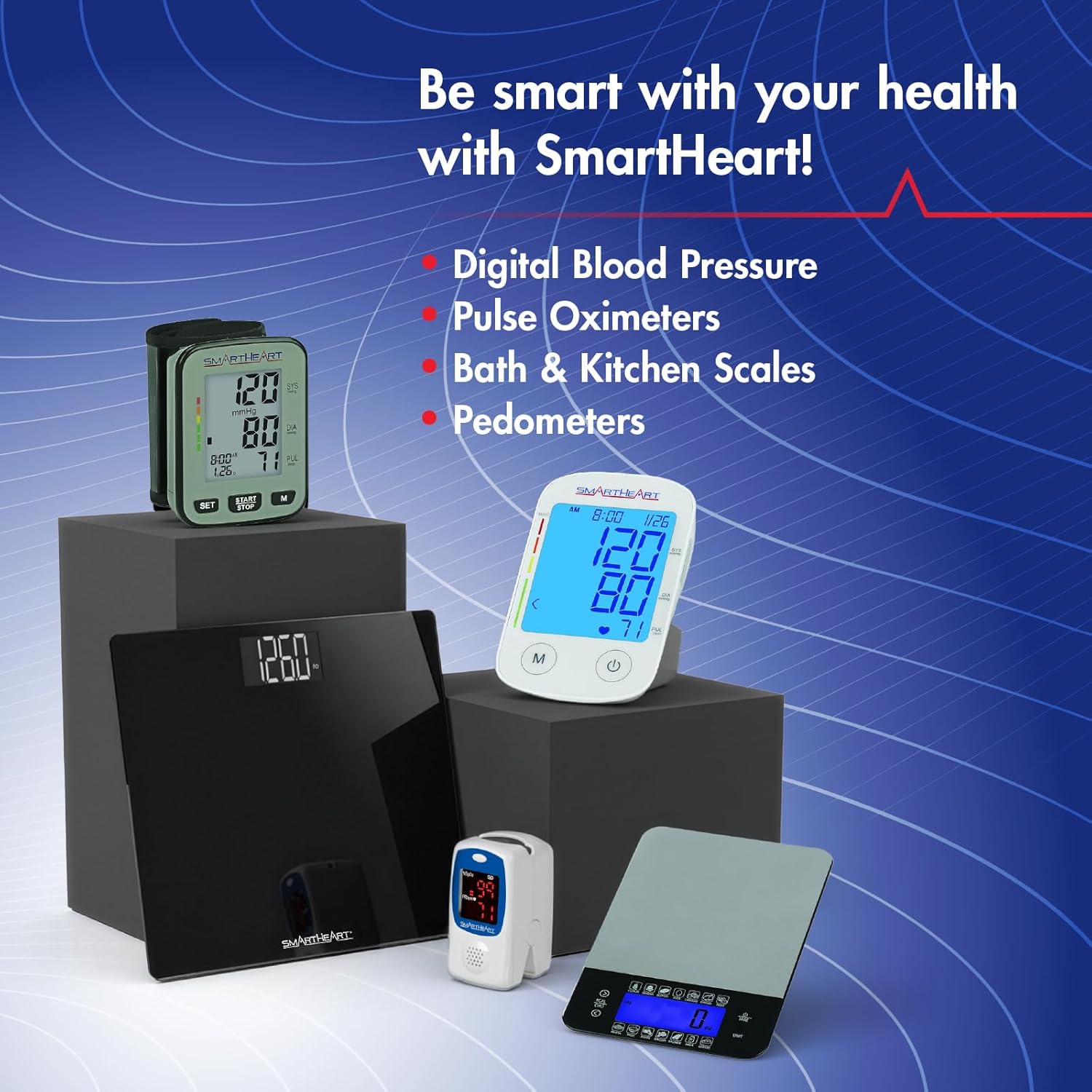
The most common type. These clip onto your finger like a clothespin. They're portable, affordable ($25-100), and accurate. The SmartHeart Talking Pulse Oximeter is a popular choice that even announces readings aloud for users with vision difficulties. Best for: People who want portability and affordability.
Wrist-Worn Pulse Oximeters
These function like smartwatches and continuously monitor your SpO2 and heart rate. Many allow for overnight monitoring without the discomfort of a clip on your finger. Some integrate with smartphone apps for easy tracking. Best for: People with sleep apnea, athletes, and those wanting continuous monitoring.
Tabletop/Desktop Pulse Oximeters
Larger devices that sit on a table or nightstand. Often more accurate than fingertip devices due to better sensors. Some can monitor multiple people. Best for: Families, long-term home care, and people wanting maximum accuracy.
Handheld Pulse Oximeters with Larger Displays
For elderly users or those with vision problems, larger screens make readings easier to see. Some include features like alarm sounds when SpO2 drops too low. Best for: Elderly individuals and people with vision impairment.
Features to Look for When Buying a Pulse Oximeter
Accuracy and FDA Approval
Look for devices that are FDA-cleared. Not all pulse oximeters sold online have the same accuracy standards. FDA-cleared devices have proven reliability.
Battery Life
Fingertip devices typically use AAA or button-cell batteries lasting 30-40 hours of use. Choose a device that clearly shows battery status.
Display Size and Brightness
If you have vision problems, a large, bright display is essential. Some screens show three pieces of information: SpO2, pulse rate, and pulse strength. Better visibility means better compliance with daily monitoring.
Alarm Features
Some devices beep when SpO2 drops below a set level. If you monitor overnight or need alerts, this is valuable.
Durability
You'll be clipping this device onto your finger repeatedly. It should withstand daily use without breaking. Look for reviews mentioning durability.
Portability
If you travel or want to carry your oximeter everywhere, a lightweight, compact fingertip device wins. If home use is your priority, tabletop models offer more features.
App Integration
Modern devices may connect to phone apps to automatically track readings. This removes the need for manual recording but requires Bluetooth and smartphone compatibility.
Pulse Oximeters and Respiratory Care: The Connection to Nebulizers and Oxygen Products
If you have a chronic respiratory condition, your pulse oximeter is just one part of your overall care toolkit. Many people using oxygen monitors also use complementary respiratory care devices.
The Synergy of Monitoring and Treatment
Imagine you have moderate asthma. Your pulse oximeter tells you when your oxygen level drops. But what brought it down? Sometimes it's an asthma flare-up requiring your nebulizer treatment. A nebulizer like the MedNeb Compressor Nebulizer delivers medication directly to your airways, helping you breathe easier and raising your SpO2 back to normal. Your pulse oximeter shows you whether the treatment worked.
For people with severe lung disease or those requiring supplemental oxygen, an oxygen conserver like the Oxymizer Pendant can help you use oxygen more efficiently. Your pulse oximeter monitors whether you're getting the oxygen you need.
If you use a nebulizer with pediatric patients, the nebulizer mask kit for children ensures medication reaches small lungs effectively. Pairing it with SpO2 monitoring gives parents peace of mind.
Your pulse oximeter and your respiratory care devices form a complete picture of your lung health. One tells you what's happening; the others help you respond. Learn more about maintaining your respiratory care devices in our detailed guide.
Building Your Home Health Monitoring Routine
Owning a pulse oximeter is just the first step. The real benefit comes from using it consistently and understanding what you're measuring. Here's how to build a sustainable home monitoring routine:
Establish Your Baseline
On healthy days, take readings at the same time daily for a week. Write them down. This becomes your personal "normal." Everyone's normal is slightly different.
Create a Schedule
If you have a chronic condition, your doctor might recommend measuring once daily (often in the morning), or multiple times throughout the day. Write this on your calendar or set phone reminders.
Use a Log or App
Whether it's a notebook or a smartphone app, track your readings with dates and times. Add notes about how you felt, any symptoms, what you ate, or activities you did. This context helps your doctor spot patterns.
Share With Your Doctor
Bring your log to appointments. These trends over weeks or months are far more valuable than a single reading. Your doctor might adjust medications or treatments based on your monitoring data.
Don't Obsess Over Single Readings
One low reading doesn't mean crisis. One high reading doesn't mean you're fine. Look for patterns and trends instead.
Frequently Asked Questions About Pulse Oximeters
Can dark skin tone affect pulse oximeter accuracy?
Research has shown that some pulse oximeters may be less accurate on people with darker skin tones. This is an important equity issue in healthcare. When choosing a pulse oximeter, look for FDA-cleared devices tested on diverse skin tones, and discuss accuracy concerns with your healthcare provider. Consider requesting a baseline SpO2 reading at your doctor's office to compare with your home device.
Is 94% oxygen saturation normal?
For most healthy adults, 94-100% is considered normal. However, some people naturally have slightly lower baselines (as low as 92-93%) and are perfectly healthy. What matters is understanding your personal normal and recognizing changes. If 94% is normal for you and you've been running 95-96%, the downward trend is worth investigating even if 94% itself is acceptable.
Can anxiety affect pulse oximeter readings?
Yes. When you're anxious, your body's stress response can temporarily affect breathing patterns and oxygen levels. If you're worried about a reading, take three deep breaths, relax for a minute, and try again. Readings taken during panic may be artificially low. This is another reason why observing trends is more important than reacting to single readings.
How often should I replace my pulse oximeter?
With proper care, a quality pulse oximeter lasts 3-5 years. Over time, the sensors may become less accurate. If you notice consistently unusual readings or the device stops working, it's time for a replacement. Keep your device away from extreme heat, cold, and moisture to extend its lifespan.
Is there a difference between medical-grade and consumer pulse oximeters?
Medical-grade devices are held to stricter accuracy standards and undergo more rigorous testing. However, FDA-cleared consumer devices are also reliable for home monitoring. The difference is mainly in durability and features rather than accuracy. For home use, an FDA-cleared consumer device is typically sufficient unless your doctor specifies medical-grade equipment.
Can I use a pulse oximeter if I have artificial nails?
Artificial nails can interfere with readings, especially if they're thick or dark-colored. Try using a different finger where artificial nails don't extend as far, or temporarily file down the nail area. If artificial nails cover your natural nail bed completely, readings may be inaccurate regardless of effort.
Why AllCare Store is Your Trusted Partner in Home Health Monitoring
At AllCare Store, we understand that managing your health at home requires reliable equipment and trustworthy guidance. We've been helping customers like Robert monitor and manage their respiratory health for years. Here's what sets us apart:
Wide Selection of Quality Devices
We carry a curated selection of pulse oximeters tested for accuracy and reliability. Whether you need a simple fingertip device or a feature-rich wrist-worn monitor, we have options for every need and budget.
Competitive Pricing and Shipping
We offer free shipping on orders over $50, so you can get the pulse oximeter you need without hidden costs. Our AllCare Store commitment to affordability means quality health monitoring is accessible to everyone.
Discreet Packaging
We respect your privacy. All orders arrive in unmarked packaging, so your neighbors won't know what's inside. Your health is personal, and we treat it that way.
30-Day Returns Policy
Not happy with your pulse oximeter? Return it within 30 days for a full refund. We stand behind the quality of our products because we use them ourselves and recommend them to our families.
Expert Guidance
Our team has helped thousands of customers choose the right respiratory care products. When you call 1-888-889-6260, you reach someone who understands your needs and can answer your questions.
Real People, Real Results: Beyond the Numbers
We could fill this article with medical statistics about oxygen saturation and respiratory physiology. But at the heart of every pulse oximeter is a person like Robert—someone managing their health, wanting to live fully, and needing confidence that they're making the right decisions.
A pulse oximeter is more than a device that clips to your finger. It's a conversation between you and your body. It's the ability to know, in three seconds, that you're okay. It's the peace of mind to pursue activities you love without constant worry. It's partnership with your healthcare provider, giving them the information they need to help you thrive.
Whether you're recovering from pneumonia like Robert, managing COPD, monitoring sleep apnea, or simply wanting to understand your body better, a pulse oximeter deserves a place in your home health toolkit.
Take Your Next Step Toward Better Respiratory Health
You've learned what a pulse oximeter is, how it works, and how to use it correctly. You understand SpO2 readings and when they warrant medical attention. You know the different types available and the features that matter most.
Now it's time to take action. If your healthcare provider has recommended pulse oximeter monitoring, don't delay. If you're managing a respiratory condition and don't have one yet, ask your doctor whether one would be helpful for your situation.
When you're ready to choose a quality pulse oximeter, AllCare Store is here for you. Explore our complete collection of oximeters and oxygen monitors. Find the device that fits your needs, your budget, and your lifestyle.
Ready to take control of your respiratory health?
Call our expert team at 1-888-889-6260 to discuss which pulse oximeter is right for you. We're available to answer questions, help you compare options, and ensure you get the device that will give you confidence in managing your health.
Or browse our online selection today at AllCare Store. When you order, you'll receive:
- Fast, discreet shipping to your door
- Free shipping on orders over $50
- 30-day return guarantee—no questions asked
- Access to our expert support team
Your health matters. You deserve tools that help you understand it, manage it, and protect it. A quality pulse oximeter from AllCare Store is that tool.
Order yours today and join thousands of customers who have taken control of their respiratory health. Because when you know your oxygen level is good, you can breathe easy—literally and figuratively.