Most advice about mobility aids is organised around how steady someone is on their feet. That is the right starting point, but it leaves out the thing that shapes daily life just as much: how far a person can go before they run out of energy.
Two people can be equally steady and need completely different equipment, because one can manage a mile and the other is finished after fifty yards. This guide looks at the choice through that lens — distance and stamina — and at why many older adults end up using more than one aid rather than trying to find a single device that does everything.
Start by Measuring the Day, Not the Person
Before comparing equipment, spend a week noticing what actually happens. It is worth writing it down, because memory tends to record the good days.
- How far can they walk before they need to stop? Measure it in something real, like "to the end of the drive" or "halfway down the frozen aisle".
- What ends the walk: unsteadiness, breathlessness, pain, or general fatigue? These point to different solutions.
- How long does it take to recover afterwards? Five minutes on a bench is very different from an afternoon in a chair.
- Which outings have been quietly given away? Church, the shops, visiting a friend, walking the dog.
- Is fatigue steady, or does it collapse suddenly with no warning?
- How far is it from the car park to the door at the places they go most?
That last question decides more outings than any product feature. If the walk from the car to the supermarket entrance uses up the whole energy budget, the shopping trip is already over before it starts.
Short Distances: A Frame Is Usually Enough
For someone whose walking is mostly bedroom to bathroom, chair to kitchen, and house to car, a walking frame does the job. Distance is not the constraint here, steadiness is.
- A standard frame or a two-wheel walker gives firm support over short indoor trips
- There is no need for a seat, because there is nowhere far enough away to need resting on the way
- A compact frame is easier to manoeuvre in a bathroom or a narrow hallway
If this is your situation, the choice between frame types is the important decision, and our guide to standard walkers, two-wheel walkers and rollators covers it properly.
Medium Distances: Where a Seat Changes Everything
This is the largest group and the one where the right choice makes the most visible difference. These are people who can walk reasonably well but who tire, and who have gradually stopped going places because of it.
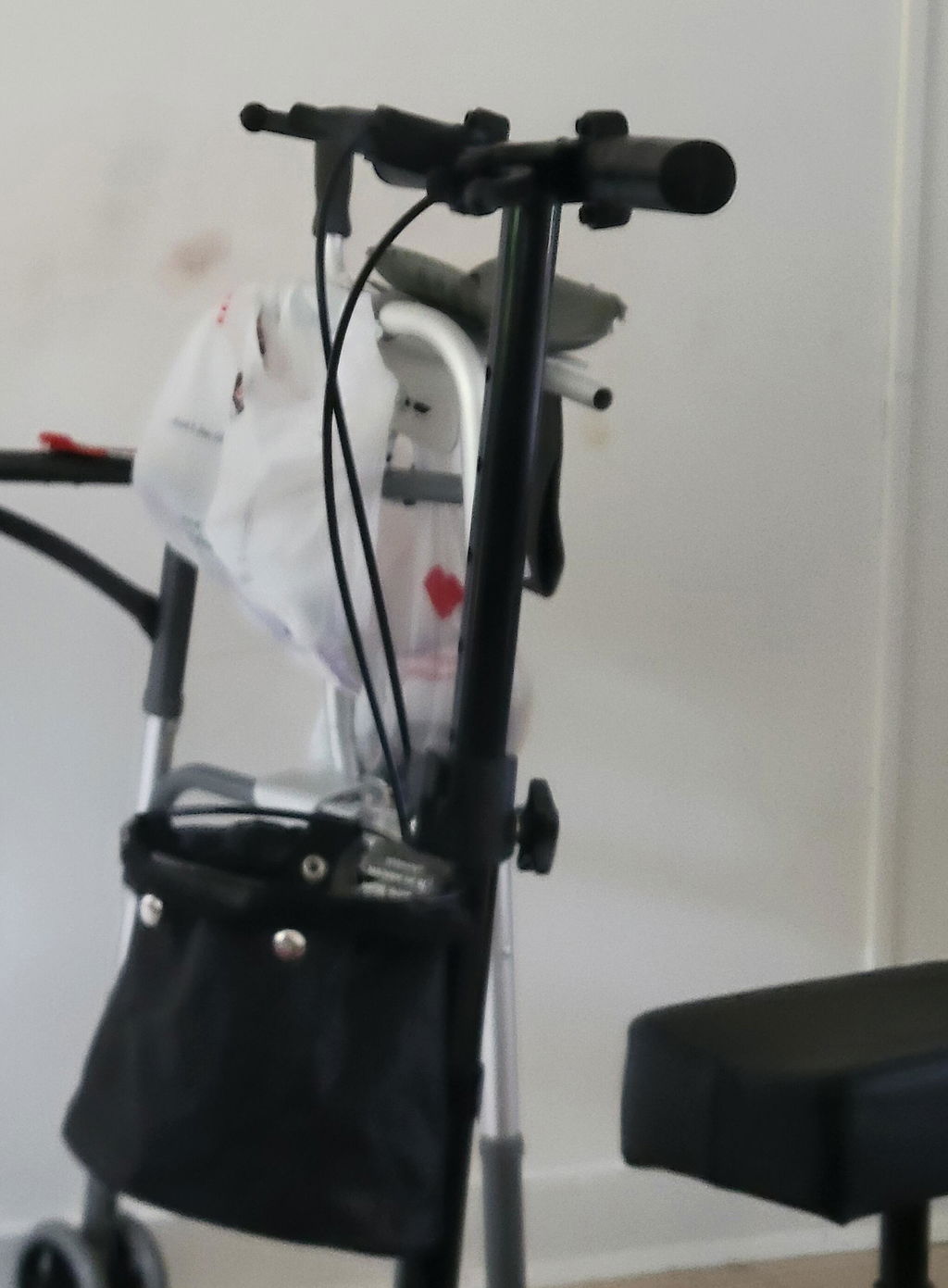
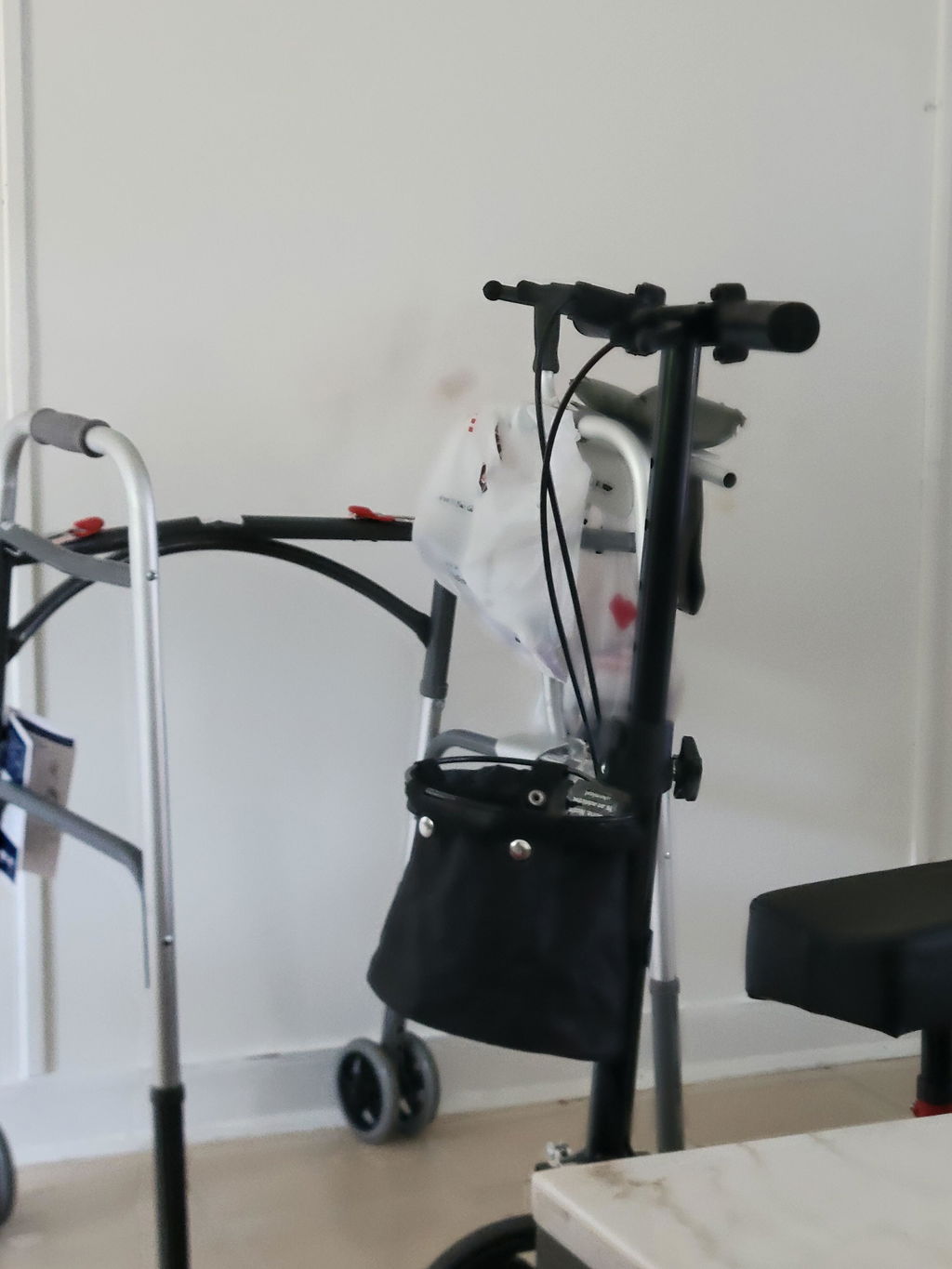
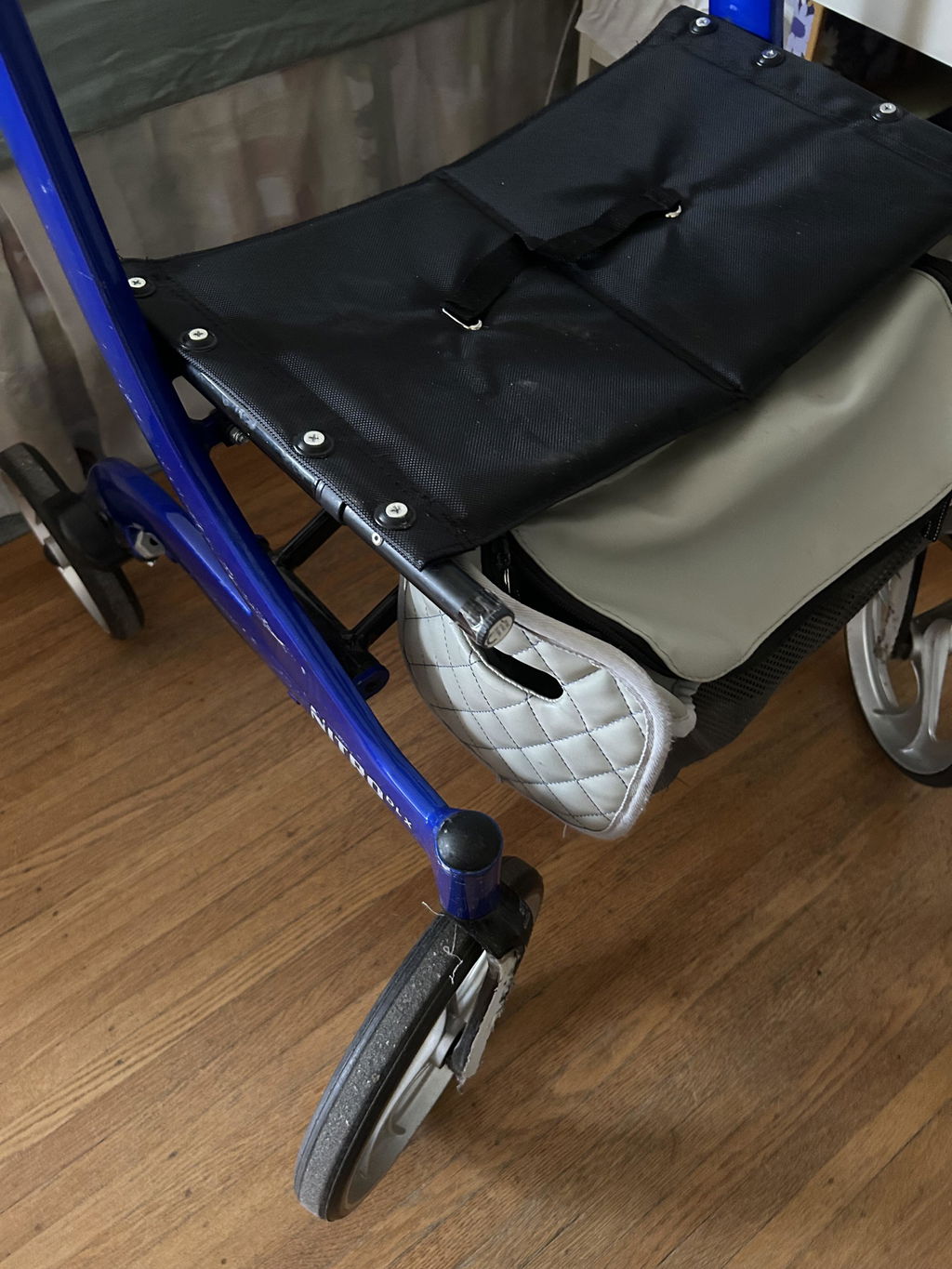
A rollator with a seat does something a plain frame cannot: it lets the walk be broken into pieces. Someone who cannot walk three hundred yards in one go can very often walk it in three stretches of a hundred with a sit-down between each. The total distance covered goes up substantially, and with it the number of places that stay within reach.
What to look at if this is you
- Seat height. A seat that is too low is hard to rise from, which defeats the point. Sit on it in the shop and stand back up.
- Wheel size. Larger wheels handle kerbs, paving joints and gravel far better. Small wheels are fine indoors and frustrating outside.
- Brakes. They must be squeezed and held reliably, and locked before sitting. Every single time.
- Weight and folding. If it cannot be loaded into the car, it will only ever be used at home.
- A bag or basket. Being able to carry things restores a surprising amount of independence.
One serious caution: a rollator suits someone who is steady but tires. It does not suit someone who leans heavily on the handles, because four free-rolling wheels can slide forward under load. If real weight goes through the arms, a rollator is the wrong tool no matter how tiring walking has become.
Longer Distances: When Walking Is Not the Answer
At some point, no amount of resting makes the distance manageable. That is not a failure and it does not mean walking is over. It means walking is no longer the right way to cover that particular distance.
Transport chairs
Light, narrow, four small wheels, pushed by someone else. Not designed for self-propelling. Ideal when there is always a companion and the chair is only needed for the long stretches: the airport, the museum, the hospital corridor. Easy to fold and load.
Manual wheelchairs
Larger rear wheels with hand rims so the user can propel themselves. This preserves independence but requires arm strength and stamina, and pushing yourself any real distance is genuinely hard work. Suits someone with good upper-body strength who wants to move on their own terms. Browse manual wheelchairs to see the range of weights and configurations.
Power wheelchairs
Battery driven, controlled with a joystick. Removes the effort entirely and is the right answer when upper-body strength is limited or when a chair is needed for most of the day. Heavier, more expensive, and needs thought about transport and home turning space. Our guide to manual versus electric wheelchairs goes through that comparison in detail.
Mobility scooters
Worth separating from power wheelchairs, because they suit a different person. A scooter is for someone who can walk, stand and transfer reasonably well, but who cannot walk far. It has a tiller rather than a joystick, requires reasonable arm and shoulder function and enough trunk control to sit upright without support, and it is generally used to travel to a place rather than to move around within it. Many scooter users walk into a shop and use the scooter only to get there.
Scooters have real limits worth knowing before buying: they turn wide, so they are poor indoors and in tight aisles; they need somewhere to charge and somewhere to park; and they are heavy, so transporting one usually needs a ramp, a hoist or a model that dismantles. If a scooter is on your list, our guide to riding electric mobility scooters outdoors covers safety and practical handling.
Using More Than One Aid Is Normal
Families often treat the choice as a single permanent decision, and it rarely needs to be. Common and sensible combinations include:
- A firm walking frame indoors, where turning space is tight, plus a rollator for pavements and shops
- A rollator for everyday outings, plus a transport chair kept in the car boot for airports, hospitals and days out
- A walker at home, plus a scooter for the journey to the shops, walking once inside
- A cane for good days, a walker for bad ones
Nobody expects one pair of shoes to cover every occasion. Mobility equipment is the same, and using a chair for long distances is what allows someone to keep walking for the short ones, because they are not arriving exhausted.
Match the Aid to the Reason the Walking Stops
This is the most useful diagnostic question in the whole article, because the same distance limit points to different equipment depending on the cause:
- Unsteadiness or fear of falling points towards a firmer frame and towards balance work with a therapist, not towards wheels
- Breathlessness points towards a seat to rest on, and towards a conversation with the doctor about the underlying cause
- Joint pain often responds well to a rollator seat and to pain management, and the distance may improve
- General fatigue or low stamina points towards powered options for the long stretches, keeping energy for what matters at the destination
- Cognitive changes mean wheels and brakes need careful thought, because equipment that depends on remembering to brake may not be safe
Get the Fit and the Choice Assessed
A physiotherapist or occupational therapist can watch someone walk, measure how far they genuinely manage, and recommend the right category. This matters practically: a walker set to the wrong height increases fall risk, and a wheelchair of the wrong seat width or depth causes pressure problems and poor posture over months of use.
A therapist will also catch the situations that are easy to get wrong from home, such as someone being given a rollator when they lean too heavily for one, or a scooter being bought for someone who cannot transfer on and off it safely. Ask for that assessment before spending money, not after.
Practical Things That Decide Whether Equipment Gets Used
- Can it be loaded into the car by whoever is actually there?
- Where will it live at home, and is that spot on the way in and out?
- Does it fit through the narrowest doorway in the house?
- If it charges, is there a socket where it will be parked?
- Can the person get it out and set it up without help?
- Who checks the wheels and brakes, and how often?
Equipment that is awkward to fetch stays in the shed. Our guide on setting up a home so a walker or wheelchair actually works covers doorways, thresholds, rugs and storage.
The Short Version
Ask how far the person needs to go, and what stops them. Short indoor distances need a frame. Medium distances with fatigue need a seat to rest on. Long distances need wheels that someone or something else drives. Most people are best served by two aids rather than one compromise, and the right combination is the one that keeps them going to the places they care about. Browse mobility aids once a clinician has helped you settle which category you are in.