If you have ever watched someone hunch over a traditional walker, shoulders rounded and eyes fixed on the floor, you have seen the biggest problem with old-school mobility aids. They keep you moving, but they force your body into a posture that creates new pain while solving an old one. An upright walker changes that completely. Instead of leaning forward on your wrists, you rest your forearms on padded supports at chest height and walk fully upright, eyes ahead, spine straight, breathing easy.
For millions of seniors across the USA, this simple design shift has been life-changing. In this guide, we will cover how an upright walker works, who benefits most, how it compares to a standard rollator, what features actually matter, and which models deliver the best value in 2026.
What Is an Upright Walker?
An upright walker, also called a stand-up walker or stand rollator, is a four-wheel mobility aid with elevated padded armrests and vertical handgrips. Rather than gripping low handles and bending forward, you place your forearms on the cushioned supports positioned just below your elbows. Your body weight transfers through your forearms instead of your wrists and hands, and the tall frame keeps you walking in a natural, fully upright position.
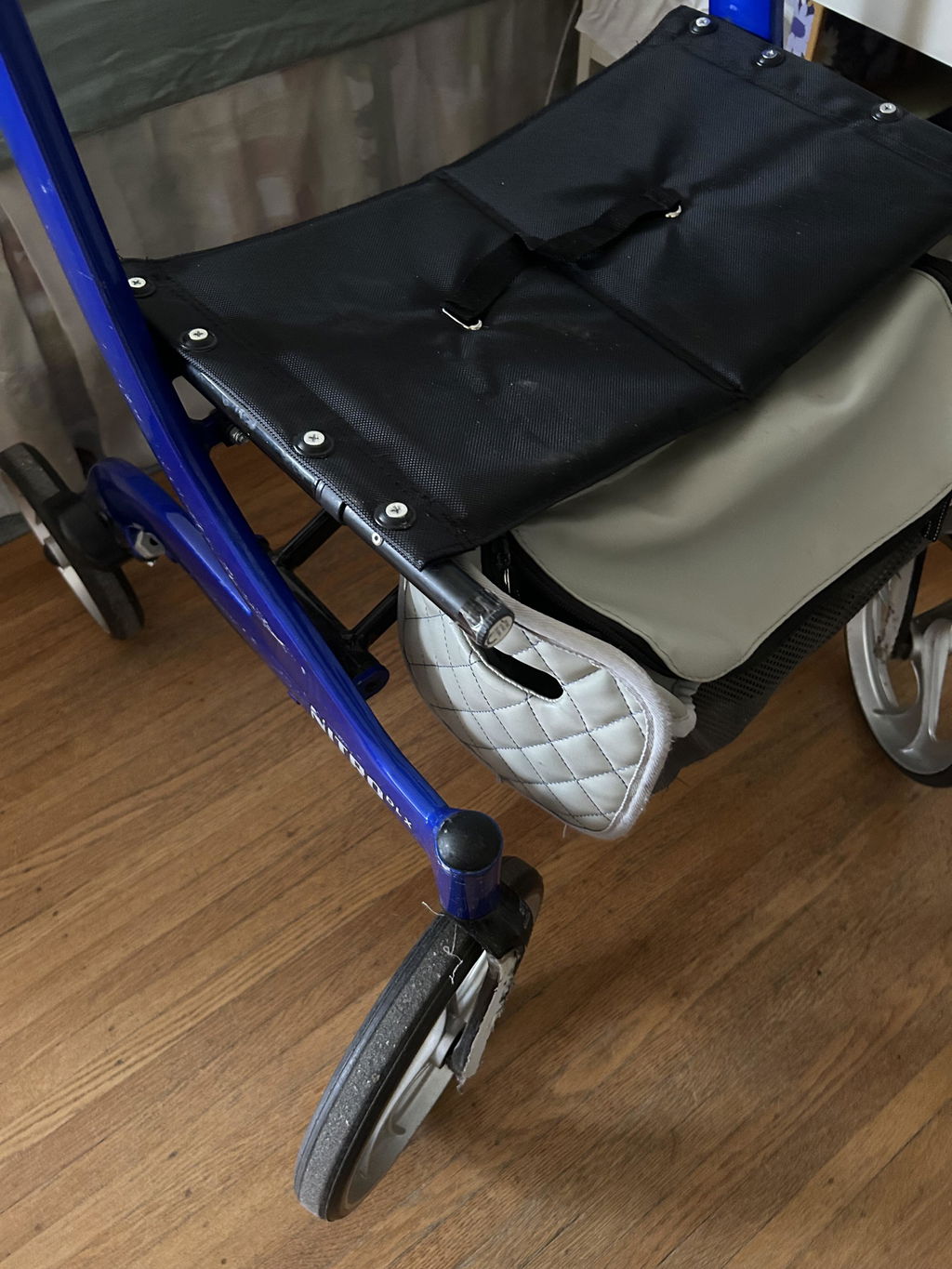
Most upright walkers also include hand brakes built into the grips, a padded seat with backrest for rest breaks, a storage bag for personal items, and a folding frame for car trunks and closets. Think of it as a rollator redesigned around your posture rather than against it.
Why Posture Matters More Than You Think
Falls are the number one cause of injury among Americans aged 65 and older, and posture plays a direct role. When you hunch over a traditional walker, your center of gravity shifts forward, your field of vision drops to the ground, and your balance becomes harder to control. Over time, that forward lean also compresses the spine and strains the neck, shoulders, and lower back.
An upright walker addresses all three problems at once. The elevated armrests keep your weight centered over your legs, your head stays up so you can see obstacles ahead, and your spine stays aligned instead of curled. Many users report walking longer distances with less fatigue simply because their bodies work with gravity rather than against it.
Key Benefits of an Upright Walker
1. Less Back, Neck and Shoulder Pain
The forearm support design removes the constant forward flexion that causes soreness with standard walkers. Users with compressed vertebrae, spinal stenosis, or chronic back pain often find upright walkers far more comfortable because they never have to bend over the frame.
2. Relief for Wrists and Hands
Traditional walkers concentrate pressure on the wrists and palms. Upright walkers shift that load to the forearms, which is a major relief for anyone with arthritis, carpal tunnel, or weak grip strength. You guide the walker rather than carry your weight on your hands.
3. Better Balance and Fall Prevention
With your weight centered and your eyes forward, you naturally walk with a steadier, more controlled gait. Dual hand brakes let you slow down on slopes and lock the wheels completely before sitting, adding another layer of security.
4. More Confidence for Neurological Conditions
People managing Parkinson's disease, multiple sclerosis, or post stroke weakness often gain real confidence from the wraparound support of a post-stroke frame. The continuous forearm contact provides steady feedback that helps with balance and rhythm.
5. Built-In Seat for Rest Breaks
Every quality upright walker includes a padded seat and backrest. If you tire quickly, you can stop, lock the brakes, and sit safely anywhere, at the park, in a store line, or halfway through a long hallway.
6. Indoor and Outdoor Freedom
Large wheels, typically 8 to 12 inches, roll smoothly over sidewalks, grass, gravel, and door thresholds. All-terrain models with solid flat free tires never go flat and absorb shocks, which makes neighborhood walks and outdoor errands realistic again.
Upright Walker vs. Standard Rollator: What Is the Real Difference?
Posture: A standard rollator has low handles that encourage a forward lean. An upright walker holds you fully vertical with forearm supports.
Weight bearing: Rollators load your wrists and hands. Upright walkers load your forearms, which are stronger and less prone to joint pain.
Visibility: Upright users look ahead naturally, while hunched rollator users tend to watch the floor, which increases trip risk.
Size and weight: Upright walkers are taller and usually a few pounds heavier, around 20 to 29 pounds. Most still fold flat for car trunks.
Price: Expect to pay somewhat more than a basic rollator, though prices have dropped significantly in 2026 and the posture benefits often justify the difference.
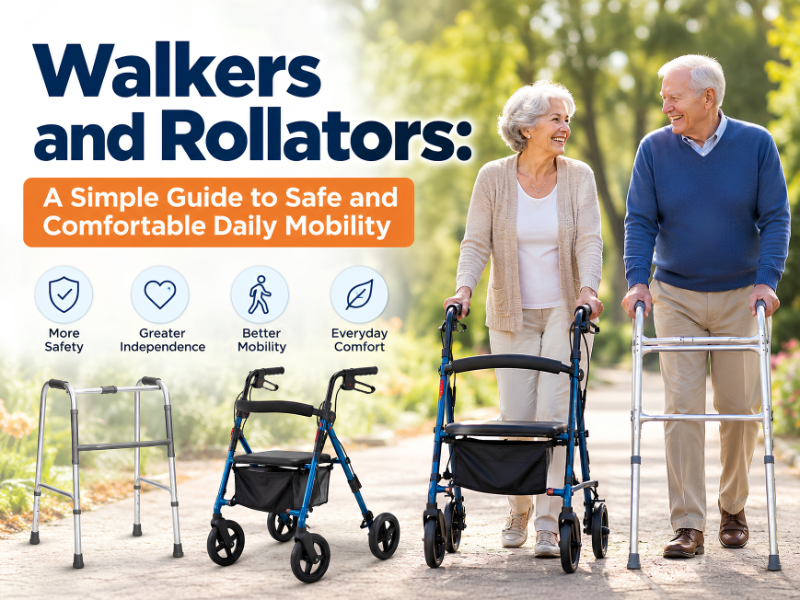
If you mainly need something light for occasional indoor support, a basic rollator or folding frame may be enough. Read our Folding Walker Guide 2026 for that side of the decision. But if back pain, poor posture, or fatigue limits your walking, an upright walker is usually the smarter long-term choice.
Top Upright Walkers to Consider in 2026
ELENKER All Terrain Upright Rollator Walker
The ELENKER All Terrain Upright Rollator Walker is built for people who refuse to let uneven ground keep them indoors. Its 112-inchsolid polyurethane tires are flat-free and shock-absorbing, gliding over grass, gravel, dirt, and sidewalk gaps. A curb climber bar helps you roll over thresholds and curbs, and the dual braking system gives you full control on slopes. Adjustable handlebars and soft padded armrests keep your forearms at a natural level, and the breathable mesh seat with wide backrest offers a comfortable rest stop anywhere. The compact flat folding design fits most car trunks, and a zipper storage bag plus cane holder keep your hands free.
VOCIC Z22 Upright Rollator Walker
The VOCIC Z22 Upright Rollator Walker takes comfort a step further with GelCool armrests that distribute elbow pressure evenly while absorbing shock and staying cool against the skin. The reinforced triangular frame supports up to 300 pounds, the 8 inch all terrain wheels handle both indoor floors and outdoor paths, and the patented flip-out armrest design gives you extra seating width when you take a break. A cup holder, cane holder, and reflective storage bag round out one of the best value upright walkers available in the USA this year.
How to Choose the Right Upright Walker
- Height range: Check the adjustable range fits you. Most models accommodate users from about 4 feet 8 inches to 6 feet 4 inches.
- Weight capacity: Standard models support 300 pounds. Confirm the rating comfortably exceeds your weight.
- Wheel size: Choose 10 to 12-inch wheels for outdoor use, 8 inches for mostly indoor use.
- Armrest comfort: Padded or gel armrests matter since your forearms rest there constantly.
- Braking system: Look for squeeze-to-slow and push-down-to-lock dual brakes.
- Folding size: Make sure the folded dimensions fit your car trunk and storage space.
- FSA/HSA eligibility: Many upright walkers qualify, and Medicare Part B may cover a walker with a doctor's prescription. Confirm details with your plan before ordering.
How to Use an Upright Walker Safely
Set the armrest height correctly. Stand straight with your shoulders relaxed. Your forearms should rest on the pads with your elbows bent at roughly 90 degrees. If you find yourself shrugging or leaning, adjust the height.
Practice indoors first. Spend a few days on flat, consistent flooring. Practice smooth starts and stops, deliberate turns, and engaging the brakes before sitting. Upright posture slightly changes your stride, so give your body time to adapt.
Always lock before sitting. Push the brake handles down to lock the rear wheels every single time you use the seat.
Keep pathways clear. Most walker-related falls come from clutter, loose rugs, and poor lighting rather than the device. A quick home safety check goes a long way.
Who Should Choose an Upright Walker?
An upright walker is an excellent fit for seniors with back, neck, or shoulder pain, users with arthritis or weak grip, anyone with a stooped posture who wants to walk straighter, people managing Parkinson's or MS, and active adults who want to keep walking outdoors without fatigue. If you need maximum weight-bearing support after surgery, a standard frame may serve you better in the short term, and our guide to the best walkers and rollators for seniors compares every category in depth.
Final Thoughts
Walking should not mean staring at the floor with an aching back. An upright walker lets you move the way your body was designed to, standing tall, seeing ahead and staying steady, whether you are crossing your living room or exploring a park trail. With flat-free all-terrain wheels, comfortable forearm supports, and built-in seating, the 2026 generation of stand-up walkers delivers independence that older designs simply cannot match.
Ready to walk taller? Explore our full range of walkers and rollators at All Care Store, plus our complete lineup of mobility products built to keep you moving with confidence.