In This Article
When a doctor or therapist says "you should start using a walker," the next question is almost always the same: where do I actually get one? The pharmacy down the road has two models on a dusty shelf. A medical supply store has more, but higher prices. Online there are hundreds of choices, and it is hard to know which listings are trustworthy.
Where you buy matters almost as much as what you buy. The right place helps you get the correct size and type, saves you money through insurance or tax-free accounts, and makes returns easy if the first choice is not right. This guide compares every main option so seniors and caregivers can shop with confidence.
1. Before You Shop: Know What You Need
Walk into any store without a plan, and you will likely leave with whatever is on the shelf. Answer these questions first, ideally with input from a doctor or physical therapist:
- Which type? Standard walker, two-wheel walker, rollator with a seat, hemi walker, knee walker, or a wheelchair walker combo
- What weight rating? Most walkers are rated 250 to 350 pounds; bariatric models go up to 500 pounds
- What height? Measure from the floor to the crease of the wrist while standing upright with arms relaxed
- Where will it be used? Indoors only, outdoors on pavement, or rough ground like grass and gravel
- Does it need to travel? If it goes in a car or on a plane, folded size and weight matter
- How will you pay? Out of pocket, Medicare, private insurance, or an FSA or HSA card
Tip: ask your doctor to write the walker type on a prescription even if you plan to pay yourself. It helps with insurance, FSA or HSA claims, and makes sure everyone agrees on what is needed.
2. Where to Buy a Walker: Your 6 Main Options
1. Local pharmacies
Chain pharmacies usually carry a few basic folding walkers and rollators. They are convenient when you need something the same day, for example, after an unexpected hospital discharge.
Pros: fast, easy to see and touch the product. Cons: very limited choice, rarely any bariatric, hemi, or combo models, and staff are not usually trained in fitting.
2. Medical supply and DME stores
Durable medical equipment (DME) suppliers specialize in mobility aids. Many are enrolled with Medicare and can bill insurance directly.
Pros: expert advice, fitting help, insurance billing. Cons: prices are often higher, stock varies, and you may need to wait for special orders.
3. Hospitals and rehab centers
Some hospitals and rehab clinics provide a walker at discharge, usually through a partner supplier.
Pros: fitted by a therapist, matched to your exact needs. Cons: often a basic model, limited choice of features or colors, and not always the cheapest option.
4. Big box stores
Large retail stores often stock a small home health section with entry-level walkers and rollators.
Pros: low prices, easy to find. Cons: few specialty models, little product knowledge, and quality can vary.
5. Specialist online medical stores
Online stores that focus on medical and mobility products, such as All Care Store, give you the widest range in one place: standard walkers, rollators, hemi walkers, knee walkers, bariatric frames, and 2-in-1 combos from brands like Drive Medical, McKesson, Dynarex, Stander, and VOCIC.
Pros: large selection, detailed specs, easy price comparison, home delivery. Cons: you cannot try it before buying, so measurements and return policies matter more.
6. Rentals, loan closets, and second-hand
Some medical suppliers rent walkers, and many community centers, churches, and senior groups run free loan closets. Used walkers are also sold online.
Pros: very low cost, good for short-term needs like a few weeks after surgery. Cons: limited choice, unknown wear on brakes and tips, and fit may not be right.
3. Side-by-Side Comparison
| Where to Buy | Selection | Price | Expert Help | Best for |
|---|---|---|---|---|
| Pharmacy | Small | Medium | Low | Same-day basic walker |
| DME / medical supply store | Medium | Higher | High | Medicare billing, fitting help |
| Hospital or rehab | Small | Varies | High | Walker at discharge |
| Big box store | Small | Low | Low | Budget basics |
| Specialist online store | Large | Low to medium | Detailed specs, support | Specialty types, comparing models |
| Rental or loan closet | Very small | Very low | Low | Short-term recovery |
The short version: for a quick basic walker, a pharmacy works. For Medicare billing and hands-on fitting, use a DME supplier. For the widest choice and specialty models, a specialist online store is usually the best value.
4. Buying a Walker Online the Smart Way
Read the specs, not just the photos
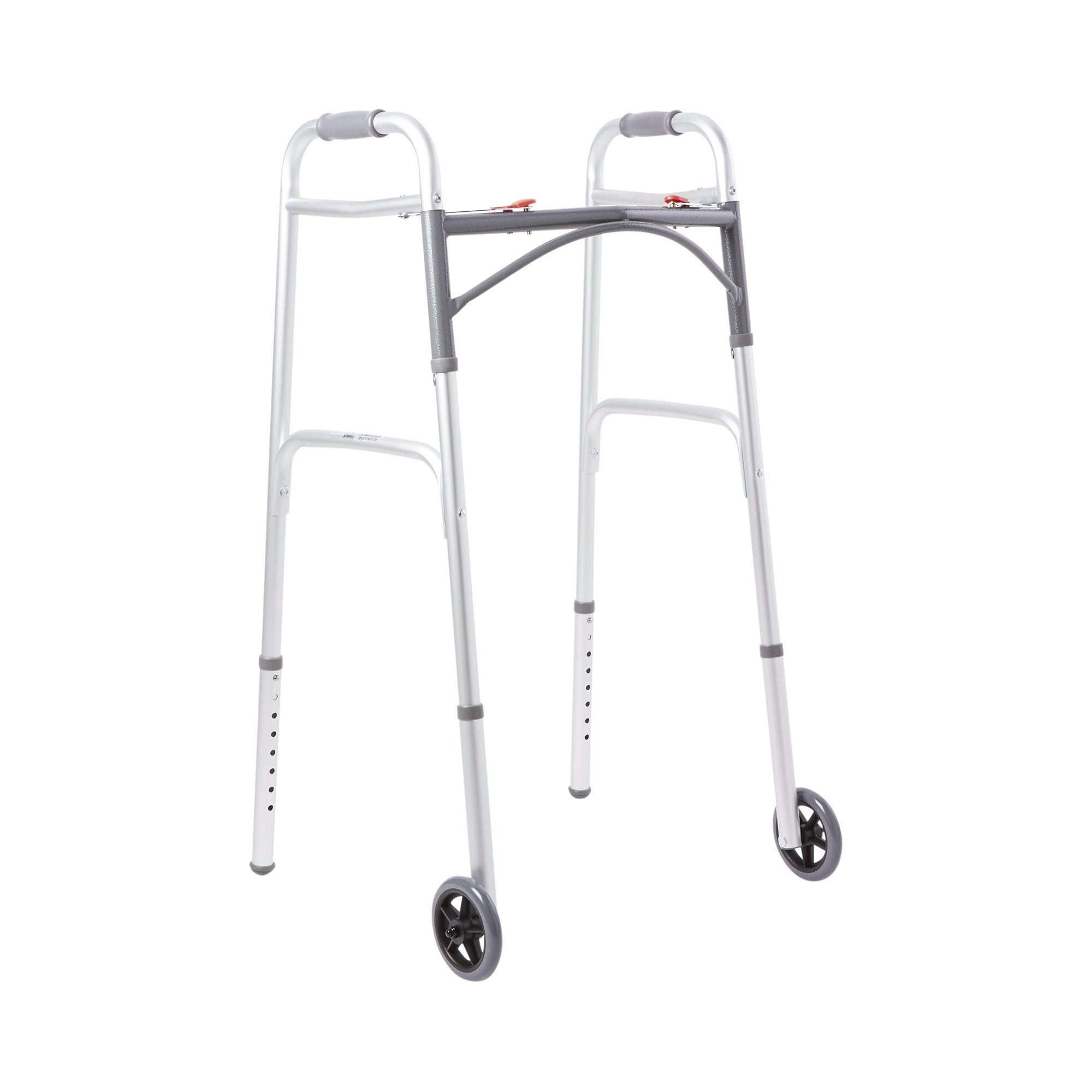
Check the weight capacity, handle height range, recommended user height, product weight, wheel size, and folded size. Good listings spell all of these out. For example, the McKesson Dual Release Folding Walker with Wheels lists a 350-pound capacity, a 32 to 39 inch height range, and a recommended user height of 5 feet 4 inches to 6 feet 2 inches.
Match the type to the person
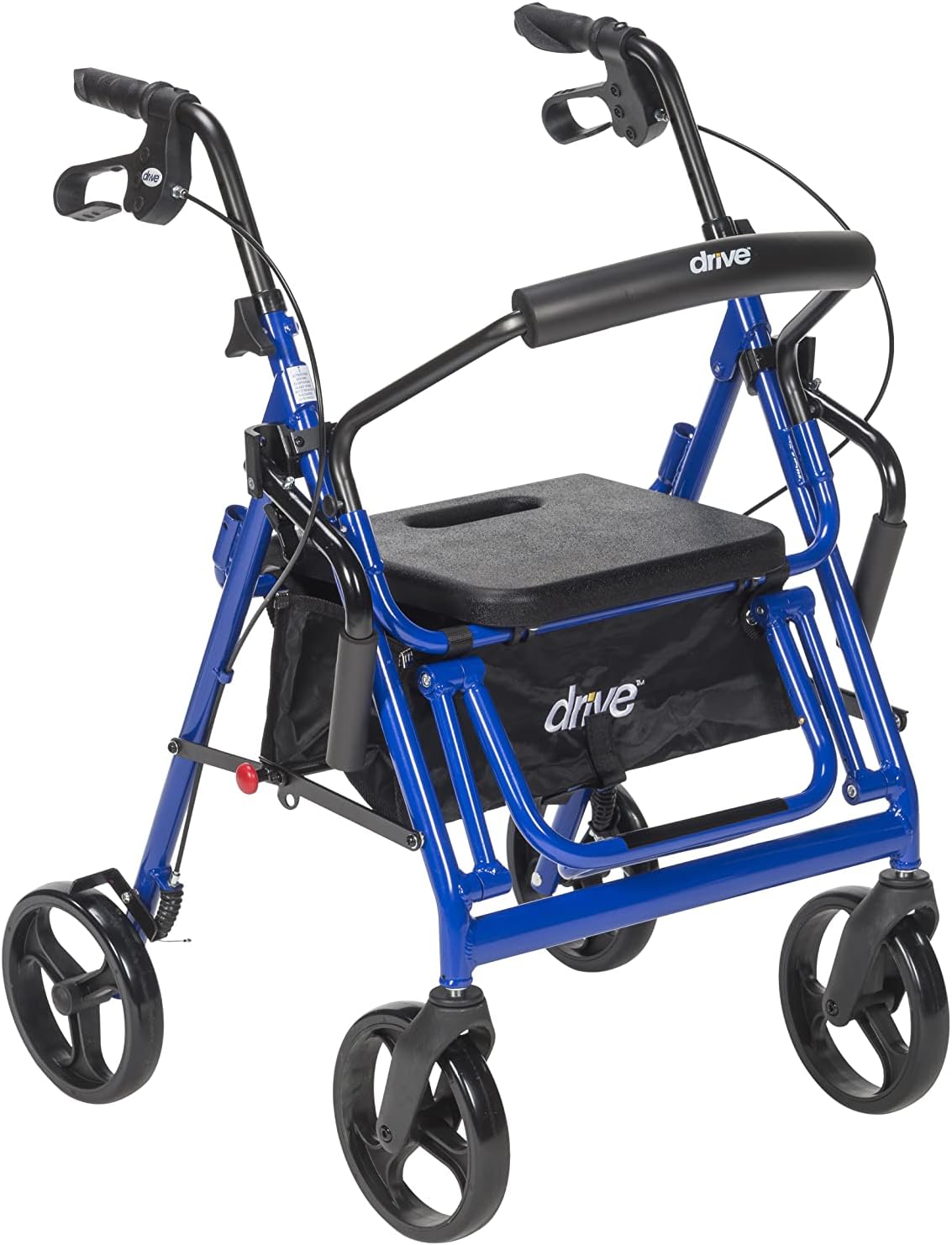
Online stores make it easy to filter by need. Someone with one-sided weakness after a stroke can go straight to a hemi walker like the Drive Side Step Folding Hemi Walker. Someone who walks a little but tires quickly can look at a 2-in-1 model like the Drive Duet Rollator and Transport Chair. Larger users can filter for bariatric frames like the McKesson Bariatric Folding Walker, rated to 500 pounds.
Check the brand and warranty
Stick with known medical brands. Many offer strong warranties, for example, the Drive Duet carries a limited lifetime warranty from Drive Medical. A warranty tells you the maker stands behind the frame and brakes.
Look at shipping and returns
Because you cannot try the walker first, a clear return window is essential. All Care Store product pages list free shipping and a 30-day return period, which gives you time to check the fit at home. Keep the box and packaging until you are sure it is the right one.
Read reviews carefully
Customer reviews often reveal things specs do not, such as how easy a rollator is to fold or whether a seat feels firm. Look for reviews from people with similar needs to yours.
5. Paying With Medicare, Insurance, FSA or HSA
Medicare Part B covers walkers as durable medical equipment when a doctor prescribes one as medically necessary. You usually pay 20 percent of the Medicare-approved amount after meeting the Part B deductible, and the supplier must be enrolled in Medicare. If you want Medicare to pay, buy from a Medicare-enrolled DME supplier and ask before ordering whether they accept assignment.
Private insurance and Medicare Advantage plans often cover walkers too, but rules vary. Call your plan to ask which suppliers are in network and whether you need prior approval.
FSA and HSA accounts can be used for walkers and rollators, since they are qualified medical expenses. Several walkers on All Care Store are marked FSA-eligible on the product page. Save your receipt in case your plan asks for proof.
Worth knowing: a basic standard walker often costs less than many insurance deductibles and copays. In those cases, buying directly online can be faster and simpler than going through insurance.
6. What a Walker Should Cost
Prices change, but these are typical ranges you will see when shopping:
- Standard and two-wheel folding walkers: usually under $100
- Hemi walkers: usually under $75
- Bariatric walkers without a seat: usually around $80 to $120
- Rollators with a seat: usually $100 to $300
- Wheelchair walker combos: usually $250 to $350
- Knee walkers and bariatric rollators: usually $250 and up
You can compare current prices across every type in the All Care Store walkers and walkers and rollators collections.
7. Common Buying Mistakes to Avoid
- Buying on price alone: the cheapest walker is no bargain if it is the wrong type or height
- Ignoring the weight rating: always stay under the listed capacity for safety
- Skipping measurements: measure wrist height and doorway widths before you order
- Choosing a rollator for heavy leaning: rollators roll freely; a standard walker is safer for heavy weight bearing
- Forgetting the car: check the folded size if the walker will travel
- Not checking returns: buy from a store with a clear return policy in case the fit is wrong
Bottom line: know the type, size, and weight rating you need before you shop. Use a DME supplier if you want Medicare to pay, and a specialist online store like All Care Store when you want the widest choice, clear specs, and home delivery.