Medical Disclaimer: This article is for informational purposes only and does not constitute medical advice. Consult your physician, physical therapist, or occupational therapist before choosing a mobility aid. The right walker type, height adjustment, and features depend on your specific mobility needs and medical history.
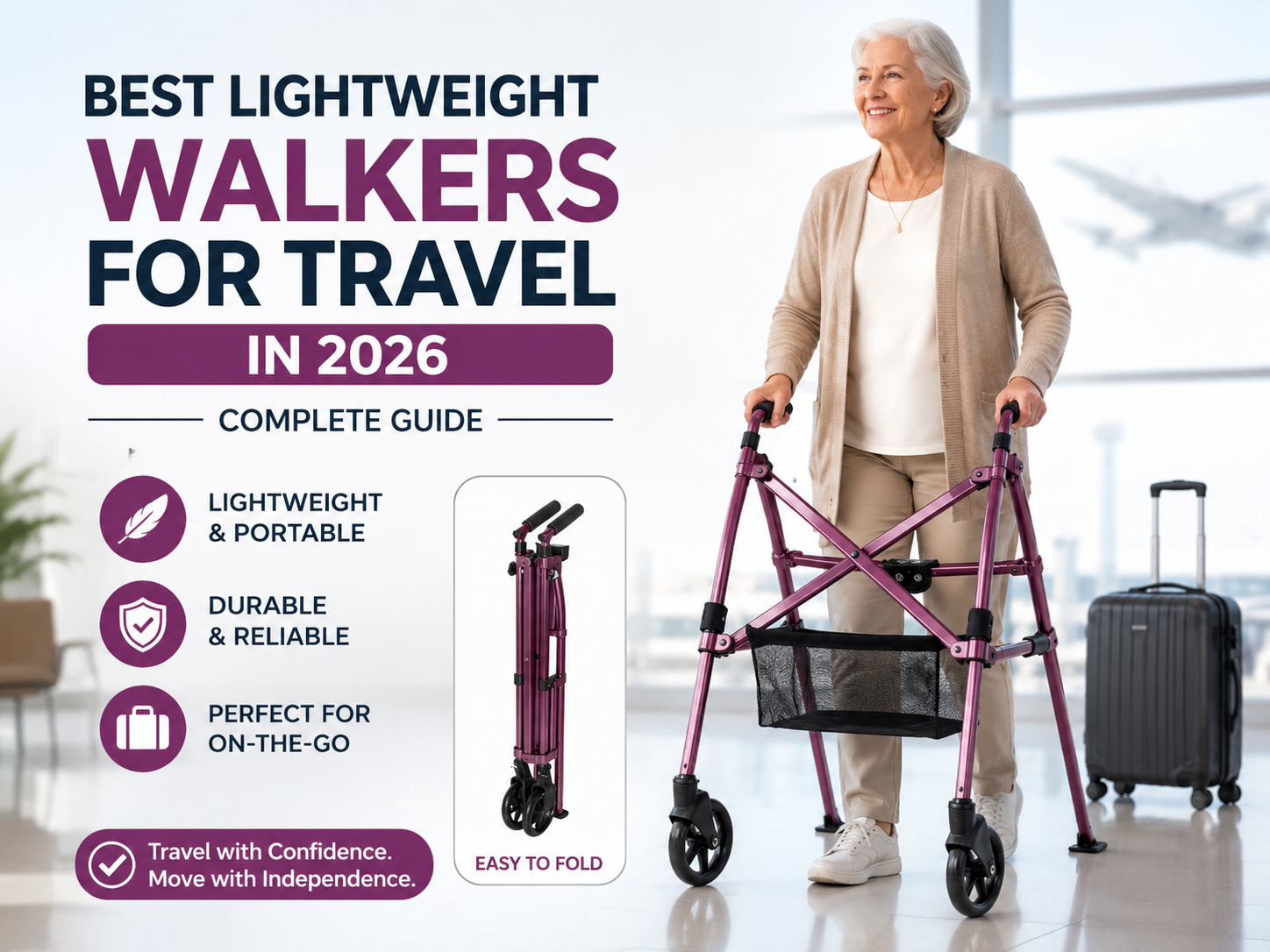
A walker is only truly useful if you'll take it with you. For many people who rely on a walker for stability and balance, travel presents a real challenge — standard walkers are bulky, heavy, and awkward to fold, making them difficult to manage in airports, hotels, and unfamiliar terrain. Lightweight travel walkers solve this problem by combining sturdy support with compact, foldable designs that fit in overhead bins, car trunks, and tight spaces.
At AllCare Store, we carry a full selection of walkers and rollators including the most popular lightweight models designed for travel. This guide explains the key differences between walker types, what features matter for travel, and how to choose the right option for your situation.
Types of Walkers: Which Is Right for Travel?
Not all walkers are the same, and the type you choose significantly affects how manageable it is for travel. There are four main categories to consider.
Standard folding walkers (also called pickup walkers or front-wheeled walkers with no wheels) are the most basic type — you lift and advance them with each step. They're stable and lightweight, but require the user to fully lift the walker with each step, which can be tiring over long distances. Standard walkers fold flat and pack easily, making them travel-friendly from a size standpoint.
Two-wheel walkers have wheels on the front two legs only, with rubber-capped rear legs that drag. This allows a smoother, more natural walking motion — you push forward rather than lifting — while the rear caps provide resistance and braking. Two-wheelers are an excellent compromise between the stability of a standard walker and the gliding ease of a rollator. Weight is typically 5–7 lbs.
Rollators (four-wheel walkers) have four wheels, hand brakes, and typically a seat and under-seat basket. They're the most comfortable for walking longer distances and offer a rest seat, which is invaluable for travel. The trade-off is that they're heavier (typically 13–20 lbs for standard models) and larger to fold. Lightweight rollators (7–14 lbs) made from aluminum or carbon fiber have become popular specifically for this reason.
Hemi walkers and quad canes are one-handed options for people with unilateral weakness — not the same category, but worth mentioning for users who only need one-sided support.
What Makes a Walker Good for Travel?
Several specific features distinguish a travel-friendly walker from one designed for home use only.
Weight is the most obvious factor. Lifting a 15-lb rollator overhead into an airplane bin — or even in and out of a car trunk repeatedly — is exhausting and potentially unsafe for many users. Look for walkers under 15 lbs; the best lightweight travel options are 7–13 lbs. Some ultralight models built from aircraft-grade aluminum weigh as little as 5.5 lbs (standard two-wheel walkers) or 13 lbs (rollators).
Fold mechanism matters enormously. Some walkers fold flat top-to-bottom for easy stacking. Others fold by collapsing the frame inward. Rollators often fold both ways — the legs collapse and the seat folds flat, or they feature a cross-brace fold that produces a narrow profile. Look for a walker that folds in a single, intuitive motion with no extra steps, since you'll be doing this in airport security lines and busy parking lots.
Folded dimensions determine whether the walker fits in an airplane overhead bin (typically 22" x 14" x 9") or meets airline carry-on policies. Many lightweight folding walkers qualify as carry-on luggage under most airline policies when folded, though rollators may need to be checked. Confirm with your airline before flying.
Handle height adjustability is critical for proper ergonomics — handles set at the wrong height cause shoulder and back strain. Most quality walkers offer push-button height adjustment. For travel with multiple users, a wide adjustment range (32"–39" handle height is typical) accommodates more body types.
Terrain capability: standard walkers with rubber-capped legs are not suitable for outdoor terrain, cobblestones, or uneven surfaces. If you plan to explore outdoor destinations, a rollator with larger wheels (6" or 8" rather than 5") handles uneven terrain significantly better.
Best Lightweight Walker Options for Travel (2026)
Drive Medical Nitro Rollator
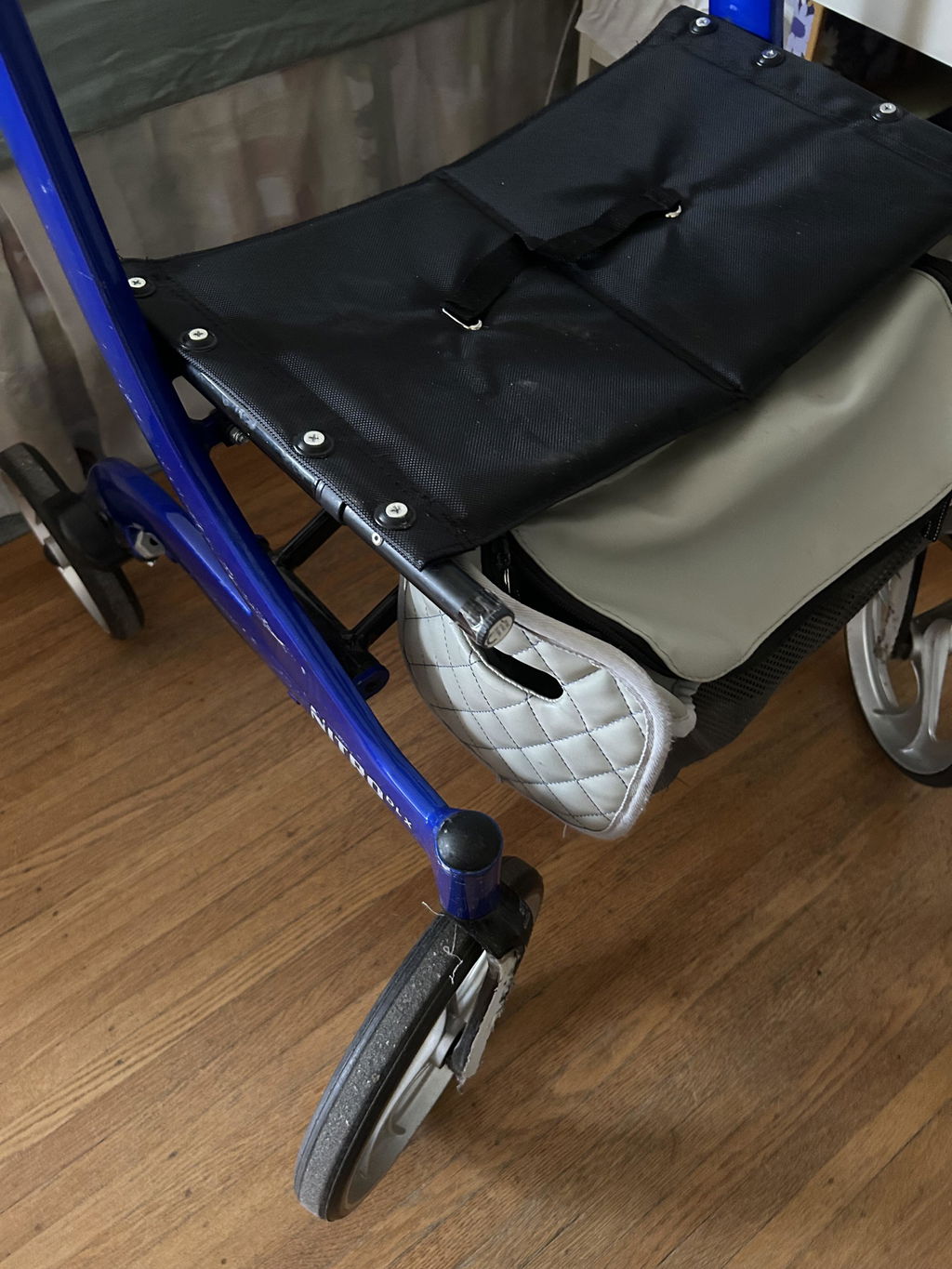
The Nitro is consistently among the top-rated travel rollators for its combination of light weight (about 14 lbs), low-profile folded dimensions, and sporty design. Its loop-lock hand brakes fold against the frame when collapsed. The Nitro features 10" front wheels for outdoor capability and a comfortable padded seat. It folds to a slim profile that fits in most car trunks and can be stored vertically to save space.
Hugo Mobility Explore Side-Fold Rollator
The Hugo Explore uses a unique side-fold mechanism that produces an exceptionally narrow 9.5" folded width — narrow enough to fit in aircraft overhead bins. It weighs approximately 16 lbs and includes a removable under-seat bag and padded seat. The side-fold design also allows it to be carried by a strap like luggage. Available in multiple colors with 6" wheels suitable for indoor use and light outdoor terrain.
Medline Ultralight Rollator
The Medline Ultralight is one of the lightest rollators available at approximately 13 lbs, constructed from lightweight aluminum with a durable powder coat finish. It folds in one motion for easy transport, with 6" wheels, loop-lock brakes, and an under-seat basket. An excellent option for travel primarily in airports, hotels, and urban environments.
Standard Drive Medical Two-Wheel Walker
For users who don't need a seat or basket, a standard two-wheel folding walker offers exceptional lightweight portability — typically 5.5–7 lbs. The Drive Medical two-wheel walker folds flat for easy storage in overhead bins or car trunks, adjusts from 32" to 39" handle height, and supports up to 300 lbs. At under $50, it's the most affordable and lightest option for travel where a rollator's extras aren't needed.
Comparison: Lightweight Walker vs Standard Walker for Travel
| Feature | Two-Wheel Folding Walker | Lightweight Rollator |
|---|---|---|
| Typical weight | 5–7 lbs | 13–16 lbs |
| Built-in seat | No | Yes |
| Hand brakes | No | Yes |
| Basket/storage | Usually no | Yes (under seat) |
| Outdoor terrain | Flat surfaces only | Better (larger wheels) |
| Airplane carry-on | Usually yes | Check with airline (often must check) |
| Price range | $30–$70 | $80–$200+ |
| Best for | Shorter trips, minimal fatigue | Longer travel, need to sit and rest |
Flying with a Walker: What to Know
The Air Carrier Access Act (ACAA) requires U.S. airlines to accommodate passengers with disabilities, including providing assistance with boarding and stowing mobility aids. Standard folding walkers that meet carry-on size limits (typically 22" x 14" x 9" or similar) can be brought aboard as carry-on at no charge. Rollators that exceed carry-on dimensions must be checked, but the airline is required to transport them at no additional fee and prioritize them for return at the jet bridge on arrival — not in baggage claim — upon request at check-in.
Before flying, contact your airline's accessibility desk to confirm their specific mobility aid policies, preferred boarding procedures, and gate check process. Arriving early (2–3 hours for domestic flights) gives you time to arrange pre-boarding and assistance without rushing.
Tips for Traveling with a Walker
Consider attaching a small bag or tote to your walker for carrying essentials — many rollators include an under-seat bag, but standard walkers can use clip-on accessory bags sold separately. When navigating airports, request wheelchair assistance for long distances even if you use a walker — it saves energy for your destination. For international travel, verify that your destination's power infrastructure is compatible if you use any electric or electronic mobility aids. Always keep your walker in the overhead bin above your seat, not at the back of the plane, so you have it available when deplaning.
Shop Lightweight Travel Walkers at AllCare Store
AllCare Store carries a wide selection of walkers and rollators including lightweight folding models ideal for travel. All orders ship free. Visit AllCare Store or call 1-888-889-6260 to speak with a specialist about finding the right travel walker for your needs.