Medical Disclaimer: This article is for informational purposes only and does not constitute medical advice. Wheelchair selection — especially for primary mobility — should involve an occupational therapist, physical therapist, or certified rehabilitation technology supplier who can assess the user's posture, strength, functional goals, and environment. Improper wheelchair selection can cause pain, postural problems, and injury.
A Common Mistake — and How to Avoid It
Robert's family bought him a transport wheelchair from a medical supply store after his hip replacement surgery. It was lightweight, folded easily into the car, and looked like it would work fine. The problem emerged after a few weeks: Robert had more strength and independence than expected during his recovery, and he wanted to propel himself around the house. But the transport chair's small rear wheels made that impossible — it was designed to be pushed by a caregiver, not self-operated. They ended up buying a second chair.
This is a common scenario. Transport wheelchairs and standard wheelchairs look similar at a glance, but they are designed for fundamentally different situations. Understanding the distinction before you buy saves time, money, and frustration — and ensures the person using the chair gets the right level of independence.
At AllCare Store, we carry both types, and this guide will help you understand which one fits your needs.
The Core Difference: Rear Wheel Size
The most visible — and functionally important — difference between a transport wheelchair and a standard wheelchair is the rear wheel size.
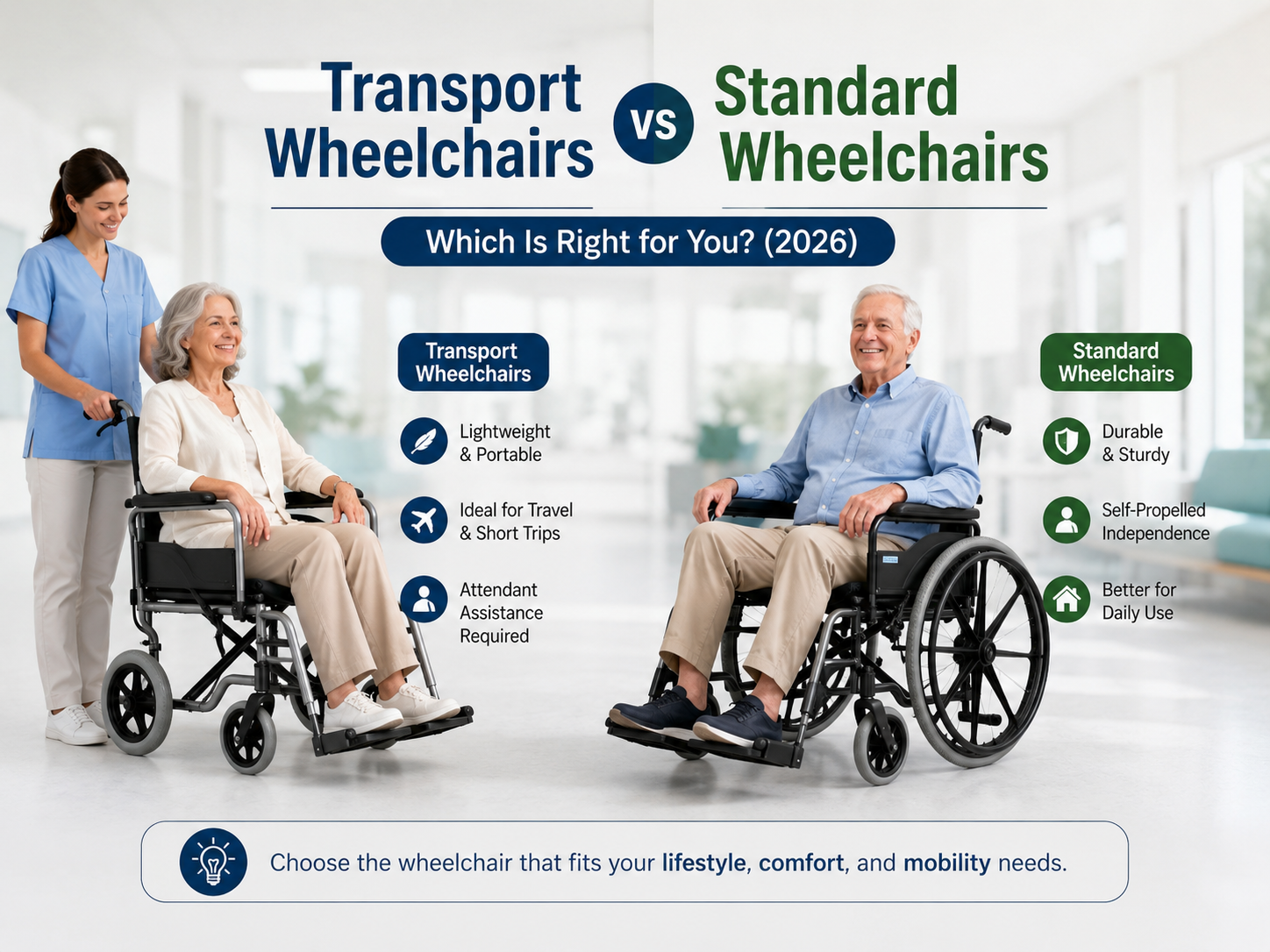
A standard (self-propel) wheelchair has large rear wheels, typically 24 inches in diameter, with handrims (the outer metal or plastic rings) that the user grabs to push themselves forward. This allows independent mobility without any caregiver assistance. The larger wheels also navigate outdoor terrain, curb cuts, and uneven surfaces more effectively.
A transport wheelchair (also called a transport chair or companion chair) has small rear wheels, typically 12 inches in diameter — similar in size to the front caster wheels. There are no handrims. A transport wheelchair cannot be self-propelled; it must be pushed by a caregiver or companion. The small rear wheels make the chair significantly lighter and more compact, which is the tradeoff.
Side-by-Side Comparison
| Feature | Standard Wheelchair | Transport Wheelchair |
|---|---|---|
| Rear wheel diameter | 24 inches (large) | 12 inches (small) |
| Handrims | Yes — for self-propulsion | No |
| Self-propulsion | Yes | No |
| Typical weight | 25–40 lbs | 15–25 lbs |
| Folded size | Larger | Smaller / more compact |
| Outdoor terrain | Better | Limited — best on smooth surfaces |
| Price | Higher (typical range $150–$600+) | Lower (typical range $80–$300) |
| Best use | Primary mobility, independent users | Occasional transport, caregiver-assisted only |
When a Transport Wheelchair Is the Right Choice
A transport wheelchair is appropriate when the person using the chair does not need to propel themselves and will always have a caregiver or companion to push them. Specific situations where a transport wheelchair makes sense:
Medical appointments and short outings. Many families use a transport chair exclusively for getting from the car to a clinic entrance or navigating an airport or theme park. The chair lives in the trunk and comes out when needed. For this use, the lightweight design and compact fold are major advantages.
Post-surgery short-term use. After hip or knee surgery, many patients need wheelchair assistance for a limited period before returning to walking with a cane or walker. A transport chair is often sufficient and avoids the cost and bulk of a full standard chair for a temporary need.
Cognitive impairment where self-propulsion is unsafe. For individuals with advanced dementia or other conditions where self-operated mobility would create safety risks, a transport chair ensures the caregiver maintains full control of movement.
Supplemental chair in a care facility. Facilities sometimes use transport chairs to move residents who have their own mobility device, for transport to dining rooms or therapy appointments.
When a Standard Wheelchair Is the Right Choice
A standard self-propel wheelchair is the right choice whenever the person will spend significant time in the chair and has meaningful upper body strength and function. Key indicators:
Primary mobility device. If the wheelchair is the person's main way of getting around their home or community — not just for occasional transport — a standard wheelchair with self-propulsion capability is essential for independence. Being able to move yourself around your own home without waiting for assistance is a fundamental quality-of-life difference.
Rehabilitation goals. Standard wheelchair propulsion provides upper body exercise that supports cardiovascular health and strength maintenance. Physical therapists typically prefer self-propel chairs for patients who are building toward greater independence.
Outdoor use and varied terrain. The larger rear wheels of a standard wheelchair navigate cracked sidewalks, mild slopes, carpet, and outdoor terrain far more effectively than a transport chair's small rear wheels. For any meaningful outdoor mobility, a standard wheelchair is substantially better.
Extended periods of sitting. Standard wheelchairs typically have better-quality seating, more adjustability for postural support, and more accessories available (lateral supports, anti-tippers, pressure cushions). For someone spending many hours per day in the chair, the seating quality difference matters.
Weight and Portability Trade-offs
The transport wheelchair's key practical advantage — for families, not for the user — is its weight. A typical lightweight transport chair weighs 15–19 lbs, compared to 25–35 lbs for a standard folding wheelchair. For a caregiver who lifts the chair into a car multiple times per week, that 10–15 lb difference is significant over time. Back injuries from lifting are a real caregiver risk.
However, there are now lightweight standard wheelchairs — sometimes called "ultra-lightweight" or "transport-ready" standard chairs — that weigh as little as 19–22 lbs while retaining the large rear wheels and self-propulsion capability. These represent a good middle ground for families where weight is a genuine concern but some independence for the user is also desired.
Seat Width: Getting This Right
Both transport and standard wheelchairs come in multiple seat widths, most commonly 16", 18", and 20" (measured between the armrests at the seat level). Selecting the right width matters for both comfort and safety. The user should be able to sit with approximately 1 inch of clearance on each side — enough room to prevent pressure against the armrests, but not so much room that the user slides laterally or has no lateral postural support.
To measure: seat the person on a firm surface and measure across the widest part of their hips or thighs. Add approximately 1–2 inches to that measurement to get your starting point for chair seat width. If between sizes, an occupational therapist can help determine which fits the specific person's posture and needs better.
Accessories and Customization
Standard wheelchairs have a richer ecosystem of accessories and customization options: elevating leg rests, removable desk-length armrests (which allow closer approach to tables), anti-tip wheels, cushion systems, lateral supports, and more. Transport wheelchairs have more limited accessory availability due to their simpler design.
If pressure injury prevention is a concern — particularly for someone spending many hours per day in the chair — a quality wheelchair cushion is important regardless of chair type. Standard wheelchairs offer more cushion options and are easier to fit with custom seating.
Medicare and Insurance Coverage
Medicare Part B covers manual wheelchairs as Durable Medical Equipment (DME) with a physician's order documenting medical necessity. Coverage is typically 80% of the approved amount after meeting the Part B deductible, with the remaining 20% covered by supplemental insurance or paid out of pocket. Both transport and standard wheelchairs may qualify depending on the physician's documentation and the specific Medicare guidelines. A DME supplier who participates in Medicare can walk you through the documentation process.
AllCare Store Wheelchair Options
At AllCare Store, we carry transport wheelchairs, standard folding wheelchairs, lightweight and ultra-lightweight models, and a full range of seating accessories and cushions. Every order includes:
- Free Shipping on every order — no minimum required
- 30-Day Returns for complete confidence
- Wide Selection across multiple seat widths, weight capacities, and configurations
Browse our Wheelchairs collection or call us at 1-888-889-6260 for help choosing the right chair for your situation.