In This Article
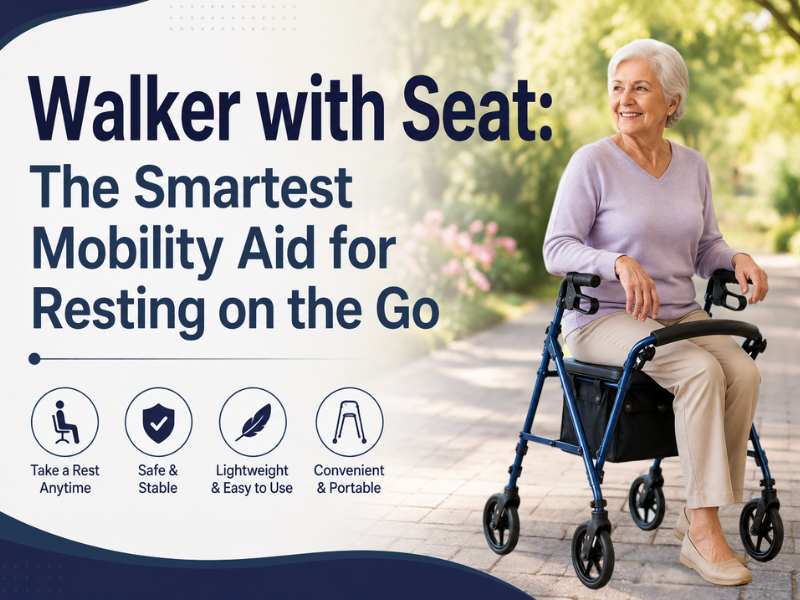
There is a moment almost every walker user knows well. You are halfway through the grocery store, or standing in a pharmacy line, or walking a little farther than usual on a nice afternoon, and your legs simply say enough. With a standard walker, your only options are to push through or hunt for a bench. With a walker with seat, you stop, lock the brakes and sit down right where you are.
That single feature is why sit and rest walkers have become the most popular mobility choice among American seniors in 2026. This guide explains how they work, how they differ from basic walkers, what to look for before buying and which models deliver the best value today.
Why a Walker with Seat Changes Everything
A walker with a built in seat does more than provide a place to rest. It expands how far you are willing to go in the first place.
It removes the fear of getting stranded. Many seniors quietly shrink their world because they worry about running out of energy away from home. Knowing a seat travels with you removes that anxiety and keeps you socially active.
It supports heart, lung and joint conditions. If you manage COPD, heart failure, arthritis or post surgical fatigue, pacing matters. Short, planned rest breaks let you cover more total distance in a day than pushing straight through ever would.
It reduces fall risk. Fatigue is one of the strongest predictors of falls in older adults. Tired legs shuffle, and shuffling catches on thresholds and rugs. Sitting before exhaustion sets in is genuine fall prevention, not just comfort.
It carries your things. Nearly every rollator walker with seat and basket includes storage underneath or behind the seat, so your phone, water, medications and small purchases ride along while both hands stay on the grips.
Walker with Seat vs Rollator with Seat
Shoppers often use these terms interchangeably, but the difference matters.
A folding walker with seat is built on a traditional walker frame with two front wheels and rear glides, plus a small integrated seat. It offers more weight bearing support because the rear legs stay in contact with the ground. This is usually the better choice right after surgery or when balance is a serious concern.
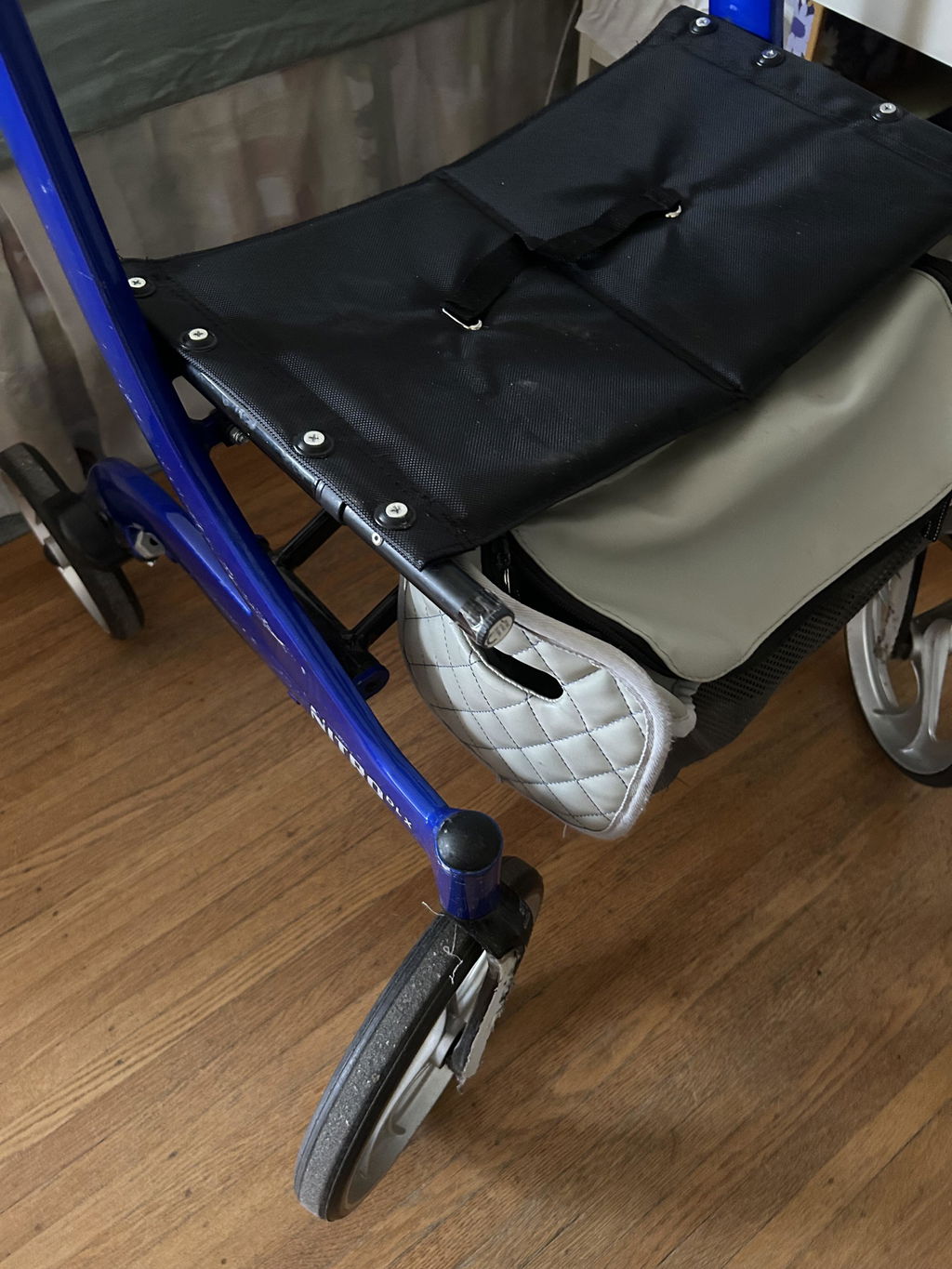
A rollator with seat has four wheels, hand brakes, a padded seat and a backrest. It rolls continuously without lifting, covers ground faster and offers a far more comfortable seat. It requires reasonable hand strength to control the brakes, but for most active seniors it is the better everyday tool.
If you are still deciding between a wheeled and a non wheeled frame entirely, our guide on rollator vs standard walker breaks that comparison down in detail.
Types of Walkers with Seats
Standard Four Wheel Rollator with Seat
The most common category. Padded seat, backrest, storage bag and 8 inch wheels that handle sidewalks and indoor floors. Best all round choice for daily errands and neighborhood walks.
Lightweight Travel Rollator
Designed to fold small and load easily into a car trunk or overhead bin. Slightly lower weight capacity in exchange for real portability, ideal for travelers and anyone loading the rollator alone.
Folding Walker with Wheels and Seat
A traditional walker frame with an added seat. More stable, more affordable, smaller seat. The right pick for post surgery recovery and users who need maximum support.
Upright Rollator with Seat
Elevated forearm supports keep you standing tall instead of hunched forward, plus a seat for breaks. Excellent for back, neck and wrist pain.
Bariatric Walker with Seat
Reinforced frames and extra wide seats rated far above standard capacity. Essential safety equipment for larger users, never optional.
All Terrain Rollator with Seat
Large solid tires that roll over grass, gravel and sidewalk gaps without going flat. Built for people who refuse to stay indoors.
4. Full Comparison Table
| Type | Wheels | Typical Capacity | Seat Comfort | Best For |
|---|---|---|---|---|
| Folding walker with seat | 2 front wheels | 300 lbs | Basic | Post surgery, maximum stability |
| Standard rollator with seat | 4 wheels, 8 inch | 300 to 330 lbs | Padded with backrest | Everyday errands and walks |
| Lightweight travel rollator | 4 wheels, 6 inch | 250 lbs | Padded, compact | Travel, small cars, flights |
| Upright rollator with seat | 4 wheels, 8 to 12 inch | 300 lbs | Padded with backrest | Back, neck and wrist pain |
| All terrain rollator | 4 wheels, 10 to 12 inch | 300 lbs | Mesh or padded | Grass, gravel, outdoor use |
| Bariatric walker with seat | 4 wheels, reinforced | Up to 500 lbs | Extra wide | Larger and taller users |
Top Picks at All Care Store
Best Value: VOCIC Z21 Rollator Walker with Seat
The VOCIC Z21 Rollator Walker proves budget friendly does not mean basic. Its ergonomic seat cushion disperses roughly 85 percent of sitting pressure, and the 105 degree wraparound backrest actually supports your back instead of just touching it. The widened frame with triangular bracing holds up to 330 pounds, the 8 inch anti skid tires handle mixed terrain, and five level adjustable armrests plus a reflective storage bag round it out. One button folding makes loading it into a car simple.
Best for Travel: EZ Fold-N-Go Rollator with Seat
The EZ Fold-N-Go Rollator Walker with Seat folds up to three times smaller than a standard rollator and stands upright on its own once collapsed. At roughly 14.5 pounds with a 250 pound capacity, aircraft grade aluminum frame, 6 inch wheels and locking hand brakes, it fits car trunks, restaurant corners and many airplane overhead bins. Customers consistently praise how easily it loads into a vehicle.
Best Walker Style Seat: Clever-Lite LS Folding Walker
The Clever-Lite LS Folding Walker with Wheels and Seat from Drive Medical gives you traditional walker stability plus an integrated seat. The dual release mechanism folds each side independently, useful for narrow doorways, and the aluminum frame supports 300 pounds with an unusually wide 29.5 to 39 inch height range that suits both shorter and taller users.
Best for Posture: VOCIC Z22 Upright Rollator
The VOCIC Z22 Upright Rollator Walker uses GelCool armrests that spread elbow pressure while absorbing shock, letting you walk fully upright instead of hunched over. The reinforced triangular frame supports 300 pounds, and the flip out armrest design widens the seating area when you stop to rest.
Best for Outdoors: ELENKER All Terrain Upright Rollator
The ELENKER All Terrain Upright Rollator Walker runs 12 inch solid polyurethane flat free tires that shrug off grass, gravel, dirt and sidewalk gaps. A curb climber helps you clear thresholds, the dual braking system locks securely, and the breathable mesh seat with wide backrest makes outdoor rest stops comfortable.
Best Higher Weight Capacity: Drive Medical 4 Wheel Rollator
The Drive Medical 4 Wheel Rollator with Adjustable Height stands out with a 350 pound capacity, higher than most standard rollators on the market. Handles adjust from 31 to 37 inches, the built in padded seat and backrest give you a comfortable rest stop, and ergonomic hand brakes keep stopping secure. The 6 inch wheels roll smoothly indoors and on pavement, and the frame folds flat for storage and transport.
Which One Should You Choose?
Check the weight capacity first. Your body weight should sit comfortably below the rating, not near it. If you are close to a standard 300 pound limit, move to a bariatric model. This is a safety rule, not a preference.
Measure your car trunk. A rollator you cannot load is a rollator you will not use. If you drive a compact car or load it yourself, prioritize a lightweight folding model.
Set the height correctly. Stand with arms relaxed. The handgrips should meet the crease of your wrist, with elbows slightly bent. Wrong height causes shoulder and wrist pain within weeks.
Match wheels to your world. Six inch wheels are fine indoors and on smooth pavement. Eight inch wheels handle most sidewalks. Ten to twelve inch tires are what you want for grass, gravel and rougher ground.
Test the brakes. Squeeze to slow and push down to lock is the standard. If hand strength is limited, look for larger brake levers or an upright design that shifts load off the wrists.
Consider the seat itself. Seat width, cushioning and backrest support vary widely. If you plan to rest often, a padded seat with a real backrest beats a thin bench every time.
Safety, Care and Durability
Always lock both brakes before sitting. This is the single most important habit with any walker with seat. Never sit on an unlocked rollator, and never sit on one positioned on a slope.
Do not use the seat as a transport chair. Standard rollator seats are not designed to be pushed with someone sitting on them unless the model is specifically built as a transport combination.
Inspect monthly. Check brake cable tension, wheel wear, glide tips and all height adjustment pins. Tighten anything loose. Replacement wheels, tips and seat parts are available in our mobility accessories and parts collection.
Keep it clean and dry. Wipe the frame after wet weather to prevent corrosion around brake hardware, and store it indoors when possible.
Know your coverage. Medicare Part B may cover a walker or rollator as durable medical equipment when prescribed by your doctor for use at home. Many models are also FSA and HSA eligible. Confirm details with your plan before ordering.
Ready to compare in person? Browse the full walkers and rollators collection, or explore everything in mobility, transportation and transferring at All Care Store, with free shipping across the USA.