Medical Disclaimer: This article is for general informational purposes only and does not constitute medical advice. Incontinence can have underlying medical causes that benefit from treatment. If you are experiencing new or worsening urinary incontinence, consult a healthcare provider to discuss diagnosis and management options.
Margaret, 68, had managed her bladder leakage during the day for over a year with thin liners and careful scheduling. But nights were a different story entirely. She woke up at 2 a.m. to find her sheets soaked through — again. The pad she'd been using, marketed for "moderate" absorbency, had shifted during the night and overwhelmed completely. She changed the sheets quietly, trying not to wake her husband, and lay back down dreading the morning.
"I was embarrassed to tell anyone how bad it had gotten," she said later. "I thought pads were pads. I didn't know there was such a difference between products."
Margaret's experience is far from unusual. Nighttime incontinence presents unique challenges that daytime products aren't designed to handle: longer wear time, horizontal body position, heavier flow during sleep, and no opportunity to make a bathroom run every two hours. The right overnight pad changes everything — and the wrong one means disturbed sleep, skin irritation, and the exhausting routine of nighttime sheet changes.
At AllCare Store, we've put together this guide to help you find the protection that lets you sleep through the night with confidence.
Why Overnight Incontinence Pads Are Different
During sleep, several things change the demands on a pad significantly. You're horizontal — and fluid flows differently when lying down. A pad designed for upright wear may leak at the sides or back when you're on your side. You typically go 7–9 hours without changing, so total absorbency capacity matters more than per-hour performance. Skin is in prolonged contact with the pad, making moisture-wicking and breathable materials essential to prevent rashes and breakdown. And many people experience heavier leakage during sleep, particularly those with an overactive bladder or who take diuretic medications in the evening.
The best overnight pads address all of these factors together.
Key Features to Look For
Absorbency Level
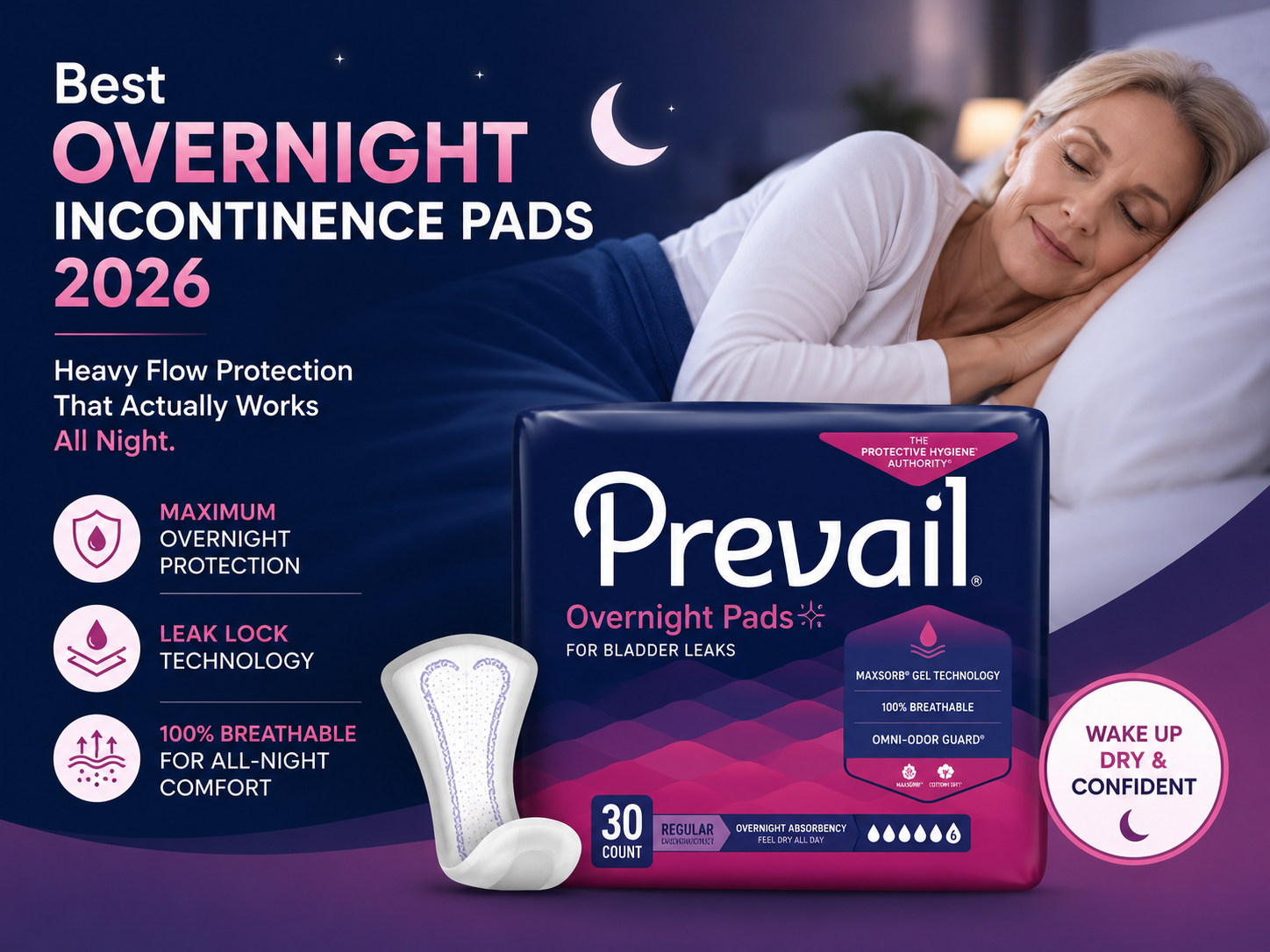
Absorbency is the most important variable, but manufacturer terms aren't standardized. What one brand calls "maximum" another calls "moderate." The most reliable guide is the ounce or milliliter capacity on the package — for overnight heavy flow, look for pads rated to absorb at least 10–16 ounces (300–480 ml) or more. Clinical-grade products often list absorbency in grams, with overnight heavy-flow products typically rated 700–1,200+ grams.
Length and Coverage
Standard-length pads (12–14 inches) work for most daytime needs, but overnight pads benefit from extended length — 16 to 20 inches or more — to provide coverage in the back and front during sleep position changes.
Leak Guards
Look for raised barriers along the sides of the pad. These soft barriers (sometimes called leg cuffs) prevent fluid from escaping laterally — especially important for side sleepers. Products without them may perform fine upright but leak badly during sleep.
Wetness-Wicking Core
High-quality overnight pads pull moisture away from the skin and lock it inside a superabsorbent polymer (SAP) core. This keeps the skin surface dry even as the pad absorbs more fluid. Products without effective moisture-wicking leave skin in prolonged contact with wetness during 8+ hour wear, which causes irritation and breakdown.
Skin-Friendly Materials
For nightly use, prioritize products that are fragrance-free, latex-free, and dermatologically tested. Hypoallergenic materials significantly reduce the risk of contact dermatitis with repeated wear.
Types of Overnight Incontinence Pads
| Type | Best For | Capacity Range |
|---|---|---|
| Overnight Bladder Guards/Pads | Light to moderate overnight leakage; worn inside regular underwear | 4–10 oz |
| Maximum Absorbency Overnight Pads | Moderate to heavy overnight leakage; longer length with leg cuffs | 10–18 oz |
| Booster Pads | Adding capacity inside a protective brief or underwear | Varies |
| Disposable Protective Underwear (Overnight) | Heavy flow or those preferring full brief coverage overnight | 16–32 oz |
| Tab-Style Briefs (Overnight Rating) | Very heavy flow; limited mobility; clinical settings | 24–48 oz+ |
Browse our full Incontinence Pads & Liners collection and Adult Diapers & Protective Underwear collection to compare options.
Skin Health During Extended Overnight Wear
Skin in contact with a pad for 8+ hours every night needs regular care to stay healthy.
Barrier cream: Apply a thin layer of zinc oxide barrier cream before putting on an overnight pad. This creates a physical barrier between skin and any residual moisture — particularly important for those with sensitive skin or a history of skin breakdown.
Brief air time: Allow skin 15–30 minutes of air exposure when switching from your nighttime to daytime product in the morning. This helps skin recover from prolonged coverage.
Gentle cleansing: Use mild, fragrance-free cleansers rather than regular soap, which strips protective skin oils. Disposable incontinence washcloths are gentler than rough towels for skin that's changed daily.
Explore our Skin Care collection for barrier creams, protective wipes, and gentle cleansers that complement your overnight routine.
Additional Nighttime Strategies That Help
A good pad is the core of overnight protection, but a few additions can dramatically reduce the impact of nighttime leakage. A waterproof mattress protector safeguards the mattress against any leakage and is far easier to launder. Discussing medication timing with your doctor may help — if you take a diuretic, taking it earlier in the day can reduce overnight urine output. And keeping supplies organized at the bedside (pads, a change of underwear, gentle wipes) minimizes disruption if you do need to change during the night.
When to Talk to a Doctor
Incontinence products provide essential protection and comfort, but nighttime incontinence often has treatable underlying causes. A conversation with your doctor is worthwhile if leakage is new or significantly worsened, if you wake multiple times to urinate (nocturia), if you notice other urinary symptoms such as burning or urgency, or if nighttime incontinence is significantly disrupting your sleep. Pelvic floor physical therapy, medications, and minimally invasive procedures can reduce or resolve incontinence for many people — and for most, a combination of medical management and quality products provides the best long-term outcome.
How AllCare Store Supports Your Overnight Care
At AllCare Store, we carry a broad selection of overnight incontinence pads and protective products — from everyday guards and pads to maximum-absorbency clinical-grade options. We understand this is a personal category, and we're committed to providing quality products with the discretion you deserve.
- Free Shipping: Every order ships free — no minimum required
- Discreet Packaging: All orders arrive in plain, unmarked packaging
- 30-Day Returns: Shop with full confidence
- Wide Selection: From light overnight liners to maximum-absorbency brief systems
Browse our Incontinence Pads & Liners and Protective Underwear collections, or call us at 1-888-889-6260.
Visit AllCare Store — your trusted partner in home health and wellness.