Medical Disclaimer: This article is for informational purposes only and does not constitute medical advice. People with diabetes should consult their physician, registered dietitian, or certified diabetes care and education specialist (CDCES) before making changes to their nutrition plan or adding new supplements.
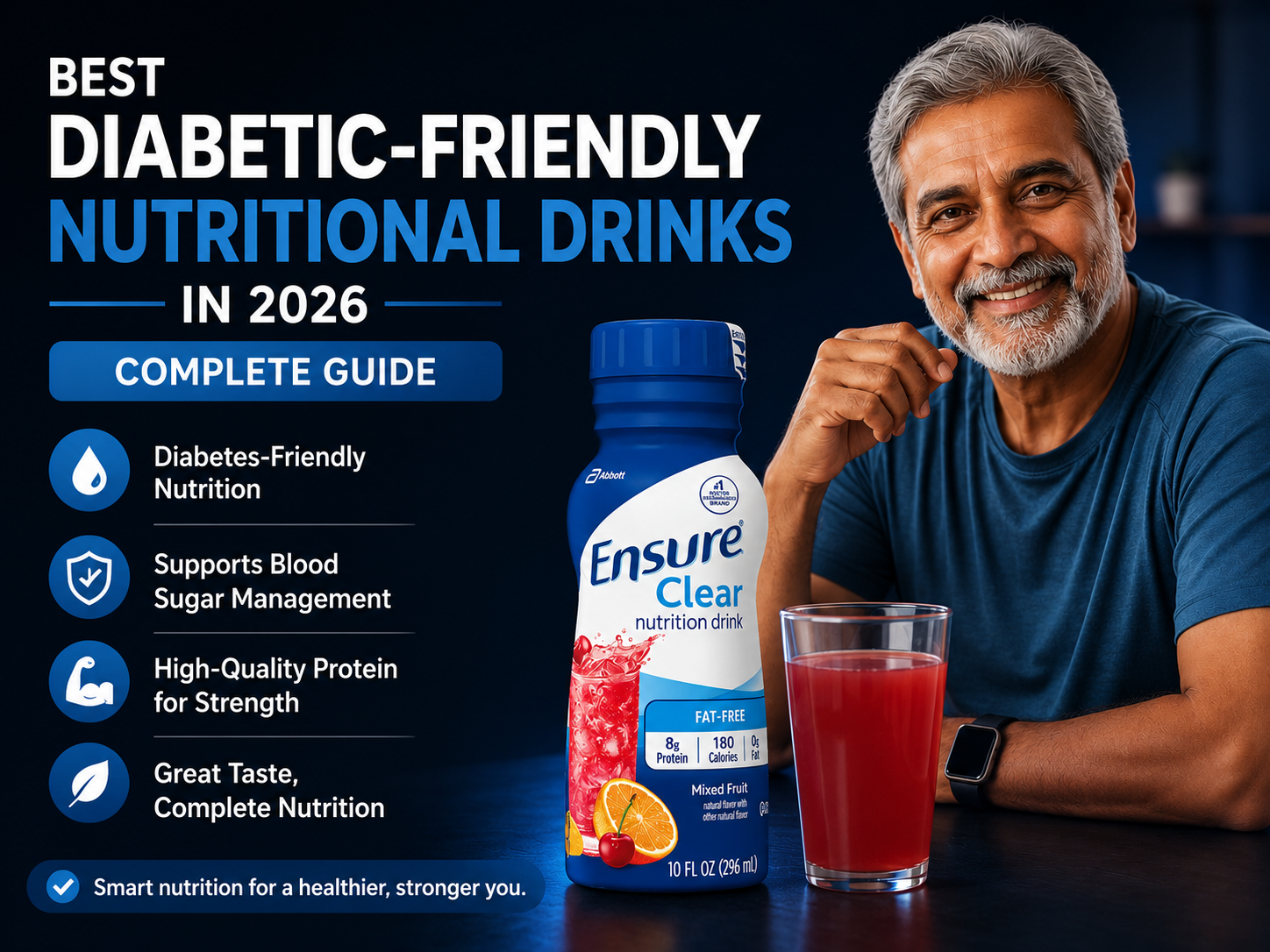
For people living with diabetes — whether Type 1, Type 2, or prediabetes — choosing the right nutritional drink can be surprisingly complicated. Most standard shakes and supplements are loaded with fast-digesting carbohydrates and sugars that cause blood glucose to spike. Diabetic-specific formulas are engineered differently, using slower-digesting carbohydrate blends, fiber, and specific micronutrient profiles to support better glycemic control.
At AllCare Store, we carry a curated selection of nutritional drinks and shakes formulated for people with diabetes and those managing blood sugar. This guide explains what to look for, how leading formulas compare, and how to choose the right product for your needs.
Why Standard Nutritional Drinks May Not Work for Diabetics
Many popular nutritional shakes — particularly those marketed for meal replacement or general wellness — contain 30–50 grams of carbohydrates per serving, often from sources like maltodextrin, corn syrup solids, or sucrose. These rapidly digestible carbs can cause significant postprandial (after-meal) blood glucose spikes in people with impaired insulin response.
Diabetic-specific formulas take a fundamentally different approach. They use a combination of slow-digesting carbohydrates (such as isomaltulose, resistant starch, or a proprietary slow-release glucose system), added fiber (soluble fiber like inulin or fructooligosaccharides that slows carbohydrate absorption), reduced total sugar content, and balanced protein to help moderate the glycemic response. Clinical studies on formulas like Glucerna have shown measurably lower blood glucose response compared to standard nutritional drinks — typically 30–40% lower peak glucose in controlled trials.
Key Nutritional Labels to Evaluate
Before choosing a diabetic-friendly nutritional drink, review these label elements carefully. Total carbohydrates matter, but the breakdown between sugars, fiber, and sugar alcohols is equally important — a drink with 25g of carbs and 5g of fiber has an effective glycemic load much lower than one with 25g of carbs and 1g of fiber. Look for products where fiber makes up a meaningful portion of the carb count.
Glycemic Index (GI) and Glycemic Load (GL): some manufacturers publish GI/GL data for their products; a GI under 55 is considered low. Protein content (15–20g per serving) helps slow gastric emptying and stabilizes blood glucose. Sugar alcohols (such as maltitol or sorbitol) are often used to add sweetness with less glycemic impact, but they vary — erythritol has near-zero glycemic impact, while maltitol has about half the glycemic impact of sugar. Saturated fat should be limited, as cardiovascular risk is elevated in people with diabetes.
Top Diabetic-Friendly Nutritional Drink Formulas (2026)
Glucerna (Abbott Nutrition)
Glucerna is the most clinically studied diabetic nutritional drink formula on the market. Its proprietary CARBSTEADY blend uses slowly digestible carbohydrates — primarily isomaltulose (also called palatinose) — to produce a flatter, more gradual blood glucose curve compared to standard formulas. Each 8 oz serving of Glucerna Shake provides approximately 190 calories, 23g of carbohydrates (3g fiber, 6g sugars), and 10g of protein. It's available in Chocolate Delight, Homemade Vanilla, Strawberry, and Butter Pecan flavors. Glucerna is also available in a Rich Chocolate and 220-calorie Hunger Smart line for greater satiety.
Boost Glucose Control (Nestlé Health Science)
Boost Glucose Control is specifically formulated to help manage blood glucose levels and is a direct competitor to Glucerna. Each 8 oz serving provides 190 calories, 25g of carbohydrates (3g fiber, 16g sugars), and 16g of protein — notably higher protein content than Glucerna. The formula uses a mix of carbohydrate sources to moderate the glucose response. Available in Chocolate, Vanilla, and Strawberry flavors. The higher protein content makes it particularly suitable as a meal supplement for people who are also managing muscle mass.
Glucerna Nutritional Snack Bar
For users who prefer solid food formats, Glucerna also produces snack bars using the same CARBSTEADY technology. These are convenient for between-meal blood sugar management on the go and contain roughly 150 calories per bar with 20g of carbohydrates and 4g of protein.
Ensure Enlive (Abbott Nutrition)
While not specifically formulated as a diabetic drink, Ensure Enlive is worth mentioning for people with diabetes who also have concerns about muscle loss (sarcopenia). It provides 20g of protein and HMB (beta-hydroxy-beta-methylbutyrate) per serving to support muscle health, with a relatively moderate carbohydrate profile. People with tightly controlled blood glucose targets should monitor their response carefully, as it is not designed for the same glycemic control as Glucerna.
Glucerna vs Boost Glucose Control: Which Is Better?
| Feature | Glucerna Shake | Boost Glucose Control |
|---|---|---|
| Calories | 190 | 190 |
| Carbohydrates | 23g | 25g |
| Fiber | 3g | 3g |
| Protein | 10g | 16g |
| Key carb technology | CARBSTEADY (isomaltulose-based) | Proprietary blend |
| Clinical studies | Extensive published literature | Moderate |
| Best for | Glycemic control focus | Glycemic control + muscle support |
Both formulas provide meaningful glycemic benefit over standard drinks. If protein intake and muscle support are a priority (common in older adults with diabetes), Boost Glucose Control's higher protein content may be advantageous. If clinical evidence of glucose response is the priority, Glucerna has a larger body of supporting research. Your registered dietitian can help you choose based on your complete nutritional picture.
When Are Diabetic Nutritional Drinks Appropriate?
Diabetic nutritional drinks are most commonly used as a meal supplement when appetite is poor or reduced — common in older adults, people recovering from illness, or those with swallowing difficulties. They serve as a between-meal snack to prevent hypoglycemia in insulin-dependent diabetics with long intervals between meals. They are also used as a convenient, controlled-carbohydrate option for travel or situations where meal preparation isn't possible, or as a post-exercise recovery drink when a measured glucose response is important.
They are not meal replacements in the long-term sense — a balanced diet of whole foods remains optimal. But for the situations above, they provide a reliable, clinically studied nutritional option. Consult your care team about how many servings per day are appropriate for your individual calorie and carbohydrate targets.
Tips for Using Diabetic Nutritional Drinks Effectively
Monitor your blood glucose before and 1–2 hours after consuming a new formula to see your individual response — everyone's glycemic reaction differs based on insulin sensitivity, medications, and other factors. Drink them slowly (over 15–20 minutes) rather than gulping quickly, as rate of consumption affects glucose absorption speed. Pair with a small amount of fat or additional protein (such as a handful of nuts) if you find your glucose still rises too quickly — fat slows gastric emptying further. Refrigerate opened cartons and consume within 24–48 hours. Avoid consuming more than recommended — more calories and carbohydrates, even from a slower-acting source, will eventually raise blood glucose.
Shop Diabetic Nutritional Drinks at AllCare Store
AllCare Store carries Glucerna, Boost Glucose Control, and a full range of nutritional supplements for people with diabetes and special dietary needs. Every order ships free. Visit our nutritional drinks and shakes collection at AllCare Store, or call 1-888-889-6260 for personalized recommendations.